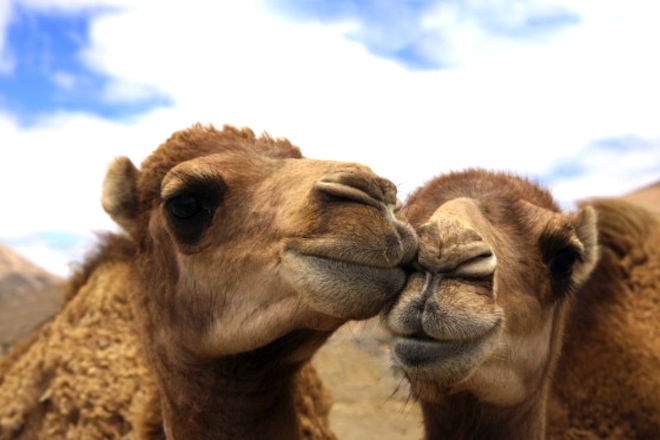
Two years ago, the western world didn’t know much about camel milk, even though Bedouins across the Middle East have long understood its role in preserving good health. Now it’s the next best thing since Morocco’s Argan oil.
Two years ago, the western world didn’t know much about camel milk, even though Bedouins across the Middle East have long understood its role in preserving good health. Now it’s the next best thing since Morocco’s Argan oil.
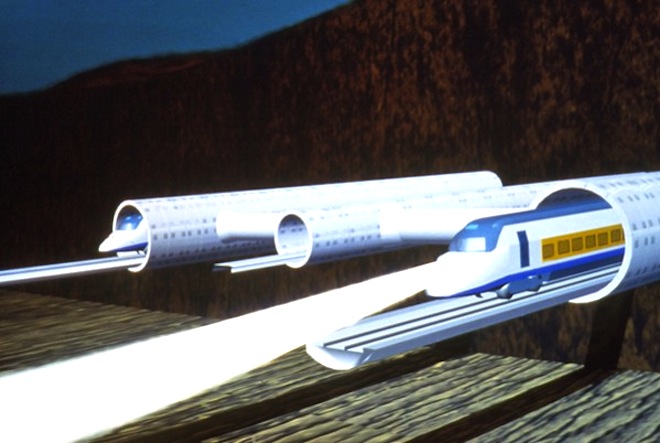
The United Nations Economic and Social Council (ECOSOC) is pushing to revive a thirty year old plan to build a submarine rail link between Morocco and Spain, local Moroccan press reports.

A particularly virulent strain of stem rust that first struck Uganda’s wheat crops in1999 before it spread up into Sudan and Yemen, Ug99 might have met its match in a 5,000 year old weed.

 Last night at dinner, two seasoned lacto-vegetarians exchanged an ingredient slap-down about seemingly animal-free foods that really aren’t. My friends talk endlessly about vegetarianism. They can be evangelical, comical and tedious. Don’t hear me wrong. I’m omnivorous, but eat mostly plants. I love eating and I love eating with friends, but I hate talking about what my friends and I are eating. But this conversation was an eye-opener.
Animal products often hide in processed foods. As example, dairy derivatives whey and casein, included in commercial baked goods, may be acceptable to vegetarians but avoided by vegans. Where you draw the line is a personal choice, but those choices need to be informed.
How many of these veggie-imposters surprise you?
This duplicity has nutritional, philosophical and religious implications: a triple motivation for the buyer to beware. It comes down to buying organic, single ingredient foods. Or making your own food using these ingredients. Or reading the labels with a dictionary handy.
More reasons for ditching processed foods.
Image of a veggie dog from Shutterstock.
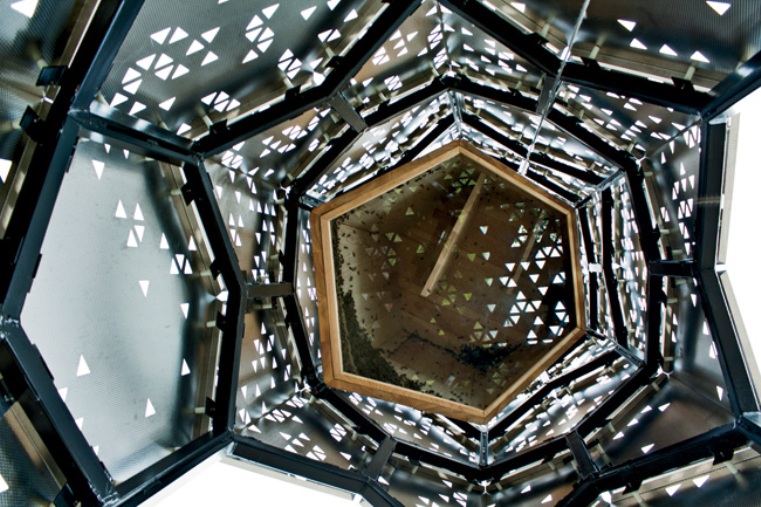
Animals have a hard life in the Middle East. Working beasts endure grueling outdoor elements and pet culture is unfamiliar. In a region where millions of displaced people lack adequate housing, is it an indulgence to create comfortable homes for critters?
Tucking into sushi at one of Amman’s rooftop restaurants; the sinking sun painting distant hills pinkish gold. The adhan – Islamic call to prayer – wafting on gentle breezes, and then came the barking, baleful and persistent, from a large dog chained to a pipe on a roof across the street. The black roof surface looked molten, and there was no water bowl or shade for the pup. It broke my heart and ruined my meal.
Soonafter, I read a story about architects designing bespoke housing for animals.
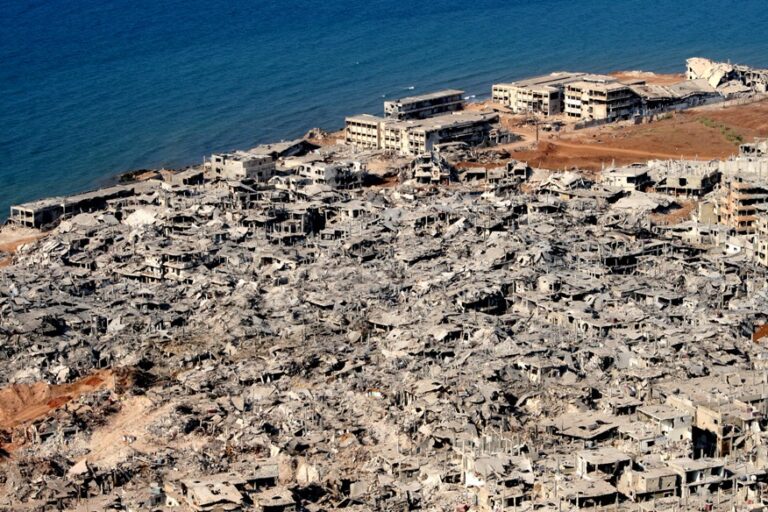
 Why do we love “makeovers”? What draws us to images of women dunked in hair dye and better lighting, or old furniture stylin’ after sanding and new hardware? The reconstruction of the Nahr el-Bared Refugee Camp in Tripoli, Lebanon is an architectural “before” and “after” with improvements far deeper than a slap-on of fresh paint. The project is a contender for a 2013 Aga Khan Award for Architecture, a $1 million award to be awarded in September.

Mexican farmers have been fighting drought with Solid Rain for more than a decade, but the powdered water designed by chemical engineer Sergio Jésus Rico Velasco only hit the American market last year. A highly absorbent substance with a potassium base, Solid Rain stores one liter of water in just 10 grams!
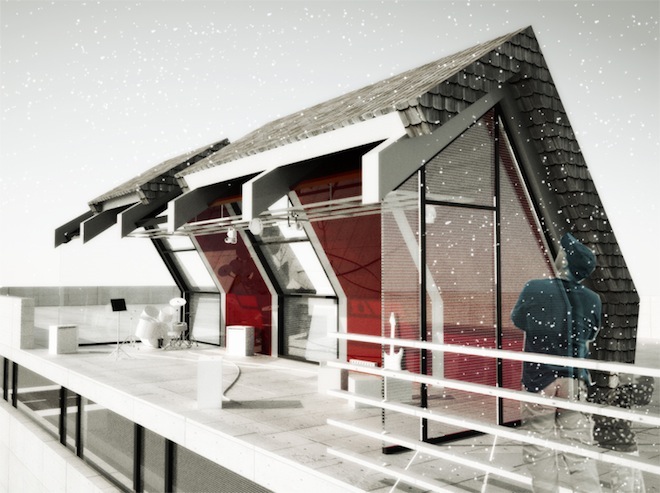
Onat Öktem, Ziya Imren and Zeynep Öktem are among the most exciting eco-minded architects working in Turkey, and Bird’s Nest is also among their most unique projects. Eschewing the bigger is better thought pattern, this solar-powered accessory dwelling “perches” on existing buildings to create extra space.

Earlier this year I decided to visit a strange looking waste management site in Um Al Quwain – one of seven emirates in the United Arab Emirates. From satellite imagery it looked like raw sewage was being dumped in the desert, just a couple of kilometres from Um Al Quwain’s precious mangrove estuary.
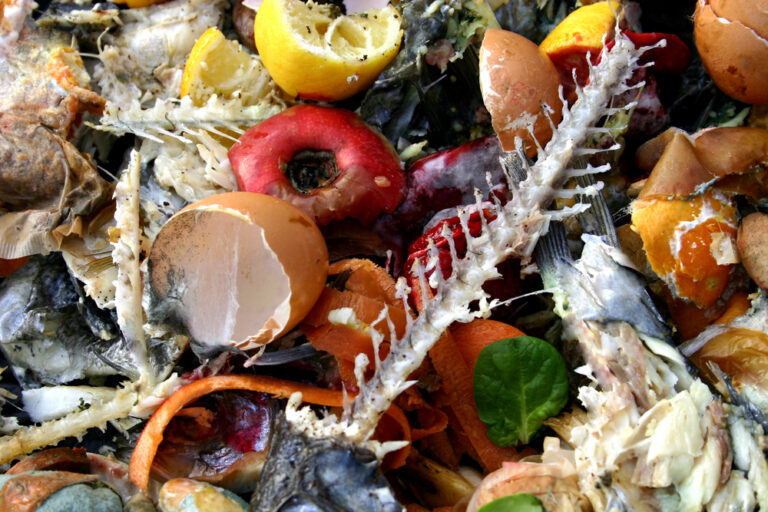
 Imams at mosques across Abu Dhabi recently coordinated on a consistent message to urge people not to waste food. Worshipers at every mosque in the United Arab Emirates capital were given a pre-Ramadan message, prepared in cooperation with the Environment Agency Abu Dhabi (EAD), advising them to think twice before cooking up too much food and to ponder the food-miles embedded in every ingredient.

HUSH is a brilliant seating pod designed by Freyja Sewell that creates a small tucked away spot anywhere – even in the most crowded cities. A Brighton designer who finished her studies at Nagoya University in Japan, Sewell knows what it’s like to crave a quiet space that makes her feel comforted and safe.
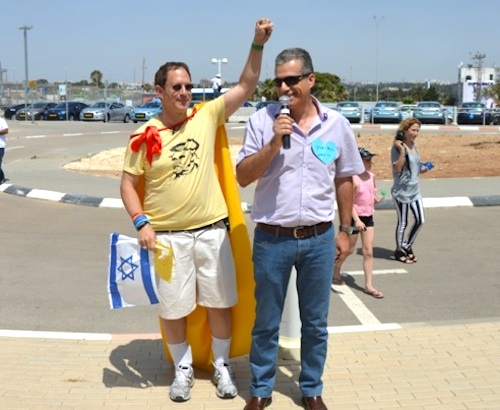
The Better Place electric vehicle network was always an ambitious dream, and now it doesn’t have to die thanks to the man known as Captain Sunshine.
The company declared bankruptcy in May, but today an Israeli court awarded the liquidation of its Israel-based assets and Swiss-based intellectual property to Yosef Abramowitz and a union of Better Place car owners, who are determined to continue building an open, national technology and serve platform for all current and future electric vehicles.
Better Place founder Shai Agassi had a great vision when he set out to bring both electric vehicles and state of the art battery charging systems to Israel.
He raised an extraordinary amount of money to realize his vision, which culminated in the construction of 37 charging stations, 2,000 curbside charging stands, and 1,000 electric vehicles driving around.
But it was expensive to build what is currently the world’s largest network of EV battery switching stations. Each cost $500,000, such that by the time the company called it quits, they had lost $800 million, according to the Times of Israel.
Plus the management team had lost site of its own vision and nobody, nobody being government officials, was willing to work with them.
Abramowitz, who founded Arava Power and Energiya Global in order to spread good will and solar energy as far and wide as possible, explained to the paper that Shai Agassi was trying to build a monopoly, instead of a national network that would benefit as many EV owners and developers as possible.
And with the country’s richest man, Idan Ofer, at the helm, the government was unwilling to offer any tax breaks. So they failed.
First Agassi was fired from the company he started, and then Better Place officially declared bankruptcy in May, after which the court swiftly appointed a liquidator to find a buyer for the company’s assets.
In the meantime, the 900 or so EV owners who had purchased a $44,000 Electric Renault Fluence from the company were very happy with their purchase and decided to form a lobby or union just before the company’s fall in order to protect not just their financial interests, but also the company’s original ideology.
If they are eventually charged with energy produced by the renewable energy, which is what Abramowitz proposed when Shai Agassi first got started, EV’s could go a long way to reversing some of the environmental damage we have done with gas guzzling cars.
“We are committed to maintaining the 2,000 charging spots and basic battery swap services for all current and future EV drivers in Israel,” said Efi Shahak, Chairman of the EV Drivers Association. “We thank the Court and liquidators for giving Israel a second chance to get it right.”
Whereas Agassi seemed to hoard his idea, Captain Sunshine and Shahak want to bust it open so that it functions as a cooperative that benefits not only Better Place cars, but all electric vehicles that will inevitably enter the country.
“Our vision is to transform the charging network into an open, national technology and service platform for all current and future EVs,” said Abramowitz.
“We look forward to Israelis soon driving and charging Teslas and other EVs that will save money for both drivers and government, fight climate change and keep our air clean.”
They have inherited a broken system, but they have also inherited a lot of intellectual property and investors have already committed to giving them 25 percent of the funds they will need to keep the company running for the next two years.
But they will need more.
“The Company is currently seeking new investment of up to $36 million (USD) by offering both equity and convertible debt participation. We are saving a dream here, so the valuation and terms will be investor-friendly,” said Abramowitz, who will co-chair the Company along with Shahak.
Already so well connected with government officials with whom he has cooperated to get his solar energy projects off the ground, Abramowitz is keen to help build a system that aims to do good, instead of a system whose main goal is to make money.
They expect to break even within 24 months.
Read more about Better Place:
A Better Place Owner on Tesla’s Battery Swap Tech
Uncertain Future for Better Place ZE Owners
Better Place Bankruptcy is a Sad Day for Electric Car Industry

Eleven-year-old Abdul Muqeet, a student at Abu Dhabi Indian School, says his life mission is to save the environment. His project to create carrier bags from discarded newspapers earned him the nickname Paper Bag Boy, which in turn got him a 2011 Abu Dhabi Environment Award. This pre-teen dynamo is energizing friends and strangers to work together to create a greener world.
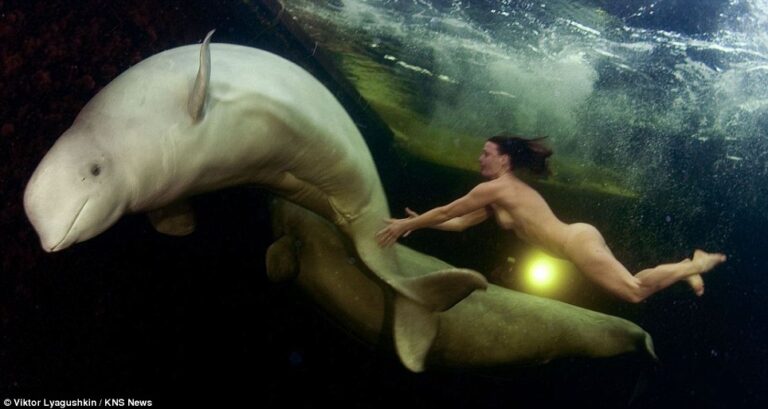
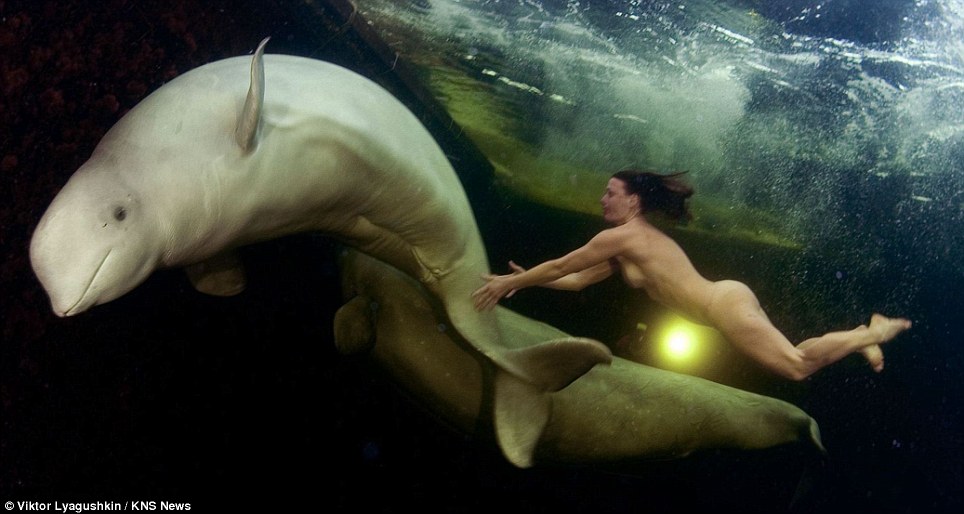
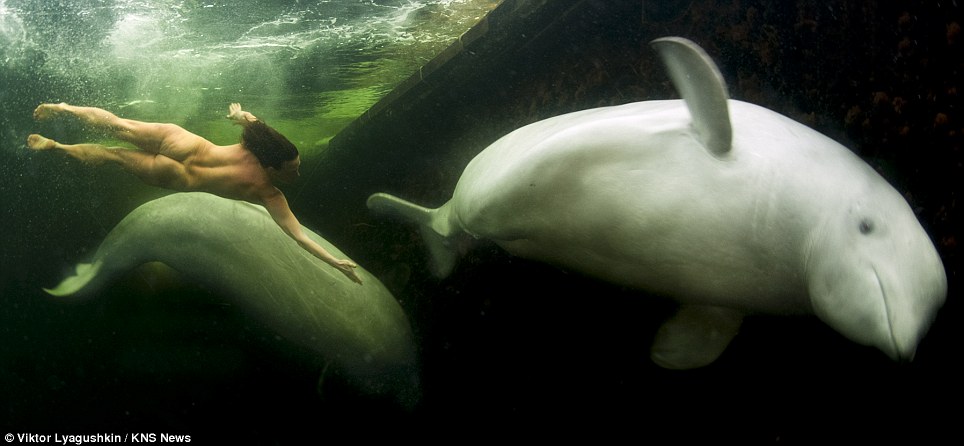
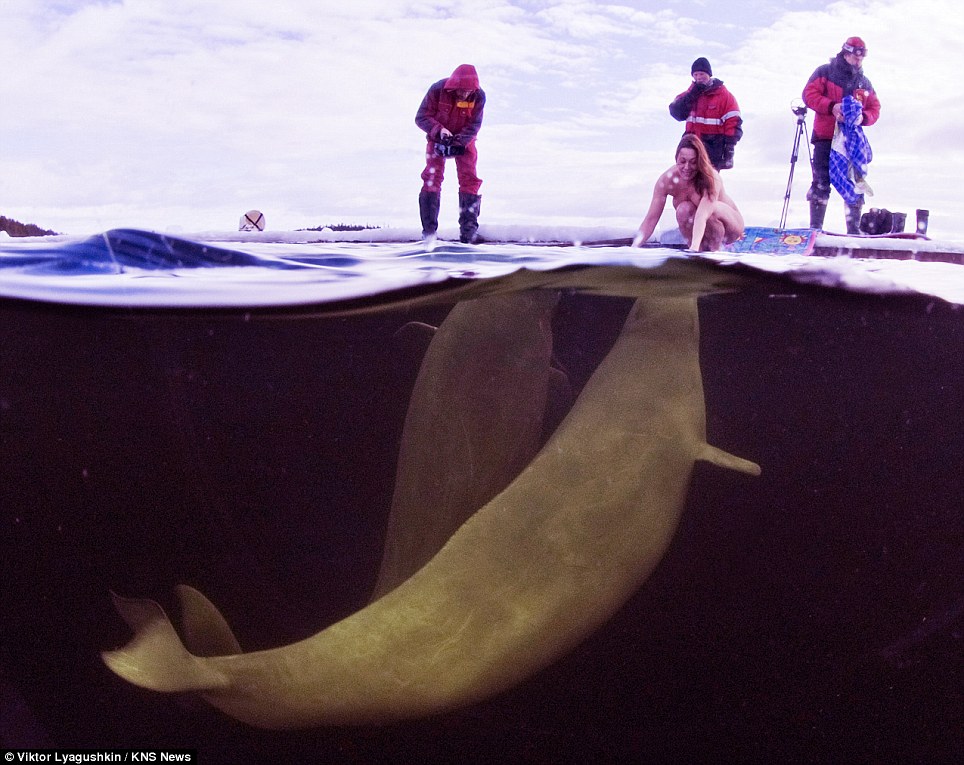
A naked Russian diver plunged into freezing Arctic seas to frolic with Beluga whales. Was it a (literally) splashy media event or legitimate scientific experiment to tame the shy beasts? What’s remarkable in either case is that Natalia Avseenko survived ten minutes of swimming in temperatures of -1.5 °C. Five minutes in sub-zero water should knock you dead.
The experienced diver with a passion for white whales used yoga breathing techniques to prolong her swim, so maybe the real story is the power of meditation.
Some scientists believe Belugas dislike contact with artificial materials such as diving suits. The experiment allegedly tested if removing the clothing barrier would improve chances of inter-species connection.
Unlikely this experiment will be repeated at Saudi Arabia’s Red Sea Research Center in Thuwal, on the eastern shore of the Red Sea. Inaugurated in 2011 at King Abdullah University of Science and Technology, the center has a mission to formulate fuller understanding of the Sea and its creatures. Its marine biologists are undertaking the world’s largest project to tag the poorly understood whale shark to determine population demographics, sharks’ site fidelity, and potential connections with populations outside of the Red Sea.
Gentle giants, whale sharks aren’t kept in aquariums, so naked divers need not apply – although the balmy temperatures of the Red Sea would surely allow longer immersions.
Back at the Arctic Circle, whales and dolphins are caught in pens and “tamed” by instructors at the controversial Utrish Dolphinarium located along the White Sea in north-western Russia. Domestication occurs before the animals are transported to aquariums around the world.
There are an estimated 100,000 Belugas in the wild. They are also in aquariums and sea parks across Europe, North America and Asia: the first to be held in captivity was at Barnum Museum in New York in 1861. It’s a practice that many animal conservationists consider cruel. No Middle Eastern aquarium houses Beluga whales.
These animals seemingly enjoyed their skinny dip with Avseenko, responding with their famously distinctive range of facial expressions. Their flexible bone structure allows them to mimic a large range of human-like looks.
Speaking to extreme sports blog Ant Williams, Avseenko said, “My Polar Circle story was a spiritual one. I tried to see how my concepts of open mind and heart, of ‘inner-smile’, work in extreme conditions, and how they can help people in their everyday lives. We can see now they really work. I had a great experience at the White Sea. We wanted to see what would be the reaction of Beluga whales to a human being who is vulnerable in front of Nature and society.”
While it is confirmed that the whales “smiled”, there’s no news if they also blushed.
All images by Viktor Lyagushkin/KNS News
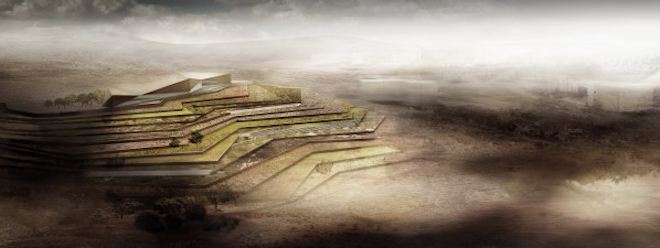
Dublin’s Heneghan Peng has designed a new museum for Palestine that is topped with a series of unfolding green terraces planted with vegetation that also grows in the surrounding hills.

Have news to share? Renewable energy news, architectural, artificial intelligence, biotech, sustainable design ideas, eco-architecture, green travel?
Email us: [email protected]
Get important news delivered directly to your inbox and stay connected!
© 2007 to 2026 Green Prophet, All Rights Reserved