Sweet tea is ubiquitous throughout the Middle East, but the go-to drink to fuel us through the workday is coffee. Here’s a stone-cold fact for you java freaks: the costliest coffee in the world is shit. We’re not talking Turkish-brewed or cardamom-laced Arabic. But kopi luwak, or cat poo coffee.
This is no swipe at a Seattle-based chain, either: Kopi Luwak coffee is the world’s most expensive, but its price is not its most startling quality. The beans for this brew come from animal poop. Turns out it is a cruel coffee too.
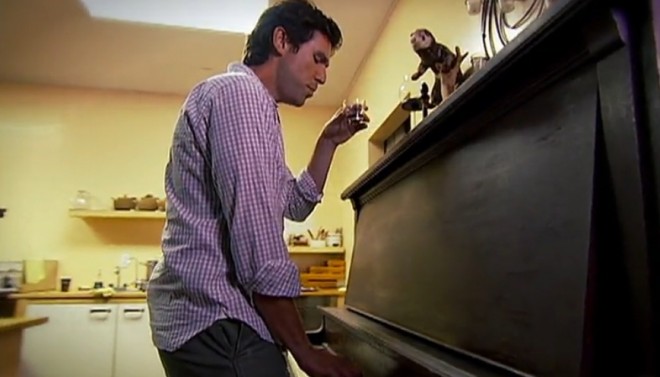
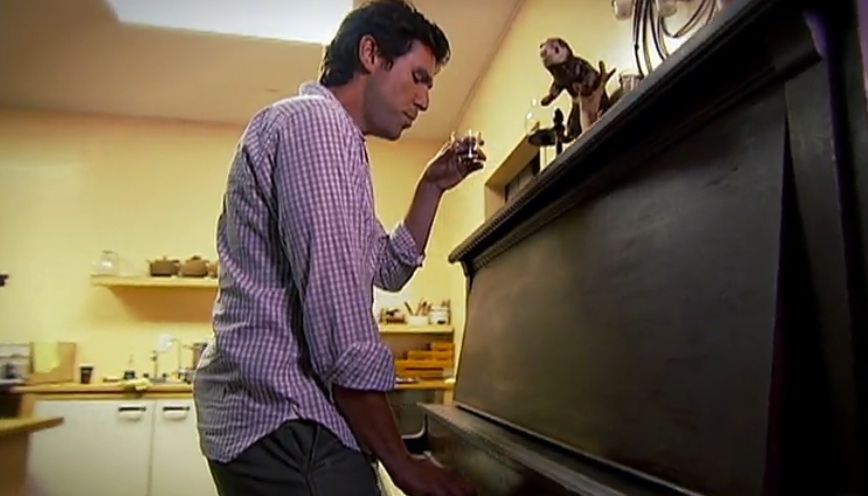
Watch the video below of the supposedly “wild” sourced civet coffee animal abuse. Above is a screenshot of the video where the host drinks a cup of kopi lewak coffee and sings its praises on the piano.
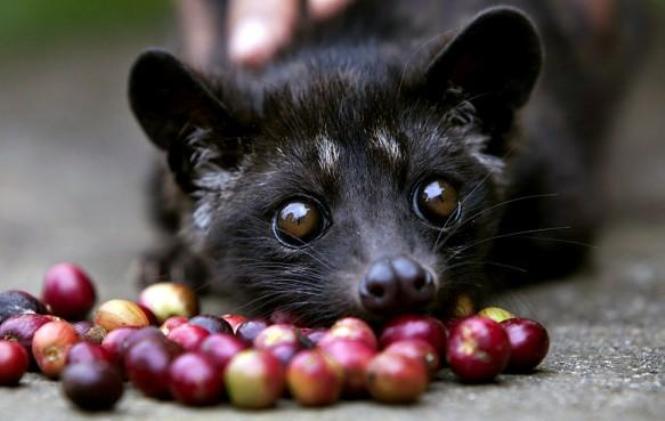
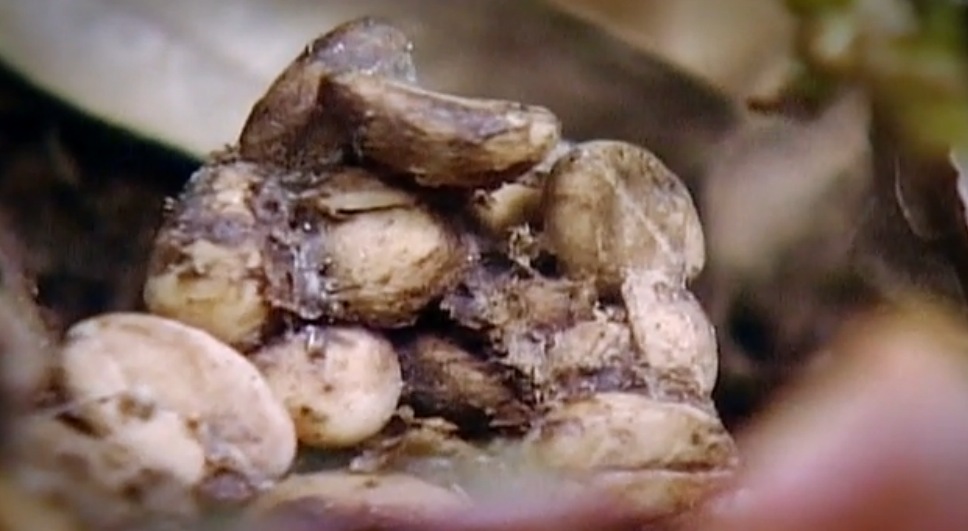
I ran across this stuff in a story in the Economist, it’s a bona fide commodity. Kopi Luwak starts with high-quality beans, which are fed to palm civets, cousins to the mongoose. The beans are digested and collected when they come out the other end. I kid you not.
“Processed” beans are then cleaned, fermented, dried, roasted, and finely ground. Once brewed, a cup can sell for $80 bucks.The appeal seems to be a unique flavor imbued to the beans by chemical reactions in a civet’s stomach. (Here’s where I decide to switch to tea.)

Screenshot above from Animal Planet video on kopi lewak coffee
Price fluctuates based on availability as only about 100 pounds are produced each year. Seems coffee connoisseurs will dig deep for their favorite brew, this link describes the planet’s most expensive coffees.
It’s gained extreme popularity, which invites a robust secondary market in counterfeit trade, especially since there’s no way for a consumer to reliably differentiate between real and fake Luwak.
Enter Japanese chemist Eiichiro Fukusaki.
Along with colleagues in Indonesia, he’s developed a chemical test that can detect “civet essence” in coffee. According to his study published in the Journal of Agricultural and Food Chemistry, the team tested batches of civet feces and undigested beans taken from plantations in Bali, Java and Sumatra.
They roasted and ground the beans, then mixed them with water, methanol and chloroform to extract those chemicals that give coffee its flavor. The extracts were then tested to see what they contained.
Here’s an animal “lover” from Animal Planet enjoying a cup of what he says is “most complex coffee that money can buy.”
$400 a pound for this coffee. “and it’s so natural.”
Kopi Luwak turns out to have chemical fingerprint composed of four substances: citric acid, malic acid, pyroglutamic acid and inositol in different ratios to traditional coffee. Those differences are so large that even a 50:50 blend of civet coffee to traditional could be identified, allowing detection of adulterated brews.
Interesting science, but it’s unlikely to find wide commercial application. The discovery may instead inspire counterfeiters to tweak their products with chemical additives, as if I needed another reason to avoid this drink.
I mentioned this story to a food-importer friend. “I’ve heard about shit beans before”, said Agnes, “Maybe they should start this business using the human digestive system. I’m sure many people in poor countries would sign up and eat coffee instead of a handful of rice each day. And be paid for their crap.”
I wonder if the Economist will run that story.
Meanwhile the office guy in Amman, Jordan where I live, boils grinds all day, serving up thick sludge in tiny cups or dissolving equal parts Nescafe and sugar for a faster kick.
Update 2024: this coffee is still being sold in Indonesia. The animals are still suffering, so who is buying?