Home Blog Page 296

Enzootic makes male prawn fish farming a greener business

0

male prawn enzootic
There are evolutionary reasons why Tarzan is bigger than Jane. Most males of any species –– birds, bugs and prawns included –– grow bigger than their female counterparts. The phenomenon is called sexual dimorphism.
A new Israeli-American company, Enzootic, is taking sexual dimorphism and the ability to control it to the dinner table.

Waterways helps water tech make “soft” landing in Africa


waterways-ornit-avidar
Ask any African who lives off the land, and they’ll tell you that water is life. But when the wells and rivers dry up, or become so polluted or full of disease that it kills their children and livestock, water can also be a great cause of sorrow.

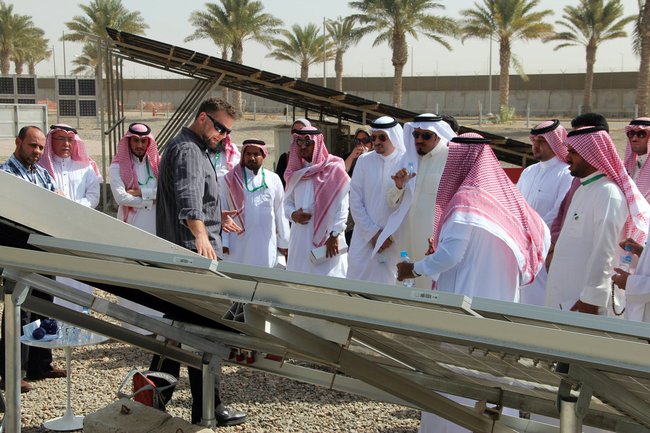
Energiya Global to solar power up 8% of Rwanda using clean energy

0

energiya-global-solar-power


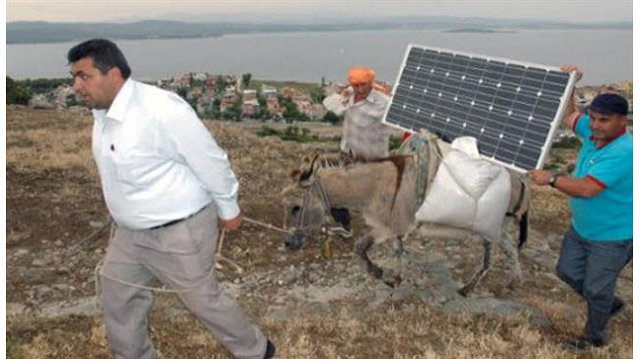
Yosef Abramowitz is always up to something good. The Israeli-American solar energy pioneer and cofounder of Arava Power Company in Israel, has begun making inroads into solar-powering Africa. I interviewed him about some new progress in Africa.

Catalyst Agtech can defuse persistent pesticides at the source

0

catalyst agtech israel pesticide
When I interviewed CEO Shalom Nachshon, he told me that in a perfect world, his new Israeli company would go out of business. But as the world’s population expands, with more hungry mouths to feed, Catalyst Agtech is trying to make the best out of an imperfect world.

Say hello to healthier fast food delivery in the Middle East?

5

hellofood lebanon delivery
We love grandmothers and we love what they do, especially when they know how to cook well using traditional recipes. While we like to support the food and lifestyle of yore, we do not think that not everything fast is bad for you.

Cuteness is a curse for the adorable Fennec Fox

16

Travel, Tunisia, Fennec Fox, desert, Sahara Desert, desert tourism, conservation, National Geographic, IUCN red list

With its oversized ears and soft brown eyes, the world’s smallest canid is also probably the cutest. But being adorable has turned out to be lethal for the Fennec Fox in Tunisia, where both locals and tourists are loving the species to death. 

AIDS cured with Egypt’s magical “kebab” machine, army claims

1

Egypt-aids-curing-machine
About 36 million people have died from AIDS around the world, with about the same number of people living with the disease. In a desperate attempt to regain the public’s confidence, the Egyptian military says it has invented a “kebab” like machine to cure AIDS/HIV and Hepatitis C.

Gen. Dr. Ibrahim Abdel-Atti, chief of the medical branch has announced on Youtube. “We defeated AIDS, and rest assured, we defeated AIDS,” he said at a press conference. “And indeed, I conquered AIDS with the blessings of my Lord, glory to him, with a rate of 100%.”

The “Complete Cure Device” draws blood from a patient, breaks down the disease and returns the purified blood back to the body, says Dr. Ihsan Hanfy Hussein, a member of Abdel-Atti’s research team.

She said it cures the ailments in as little as 16 hours.

“I will take the AIDS from the patient and I will nourish the patient on the AIDS treatment. I will give it to him like a skewer of Kofta to nourish him,” Abdel-Atti said, referring to a dish made of ground meat. “I will take it away from him as a disease and give it back to him in the form of a cure,” he said. “This is the greatest form of scientific breakthrough.”

The pioneering method extracts the disease and breaks it down into amino acids, killing the virus in 20 days, “so that the virus becomes nutrition for the body instead of disease. This is a miracle in scientific research.”

“And I conquered the ‘C’,” Abdel-Atti added, referring to the Hepatitis C disease. “You will never find a patient suffering from the Hepatitis C virus after today, God willing!”

Some 8 million people in Egypt are living with Hepatitis C.

“This is the first jump, God willing. Conquering AIDS worldwide, conquering AIDS worldwide, God willing.”

Most people would find a cure within the prescribed 20 days, but for others it would take up to six months. Presumably time enough for the military to gain better control of the country, and to attract those seeking medical tourism in the faltering economy.

In a CCTV Africa report Abdel-Atti telling a patient, “Your lab report says you had AIDS. And now you don’t. You are cured.”

“We thought that until today, there was no cure for the disease,” said Dr. Nadia Ragab at a press conference. “But the research was so strong that our medical consultants gave us the green light for the human trial. We precisely followed the patients every three months. The results were astonishing to the extent that we had to repeat the lab work in different locations just to be sure.”

The device is called The Complete Cure and it works like a dialysis machine.

Meanwhile the science community in the rest of the world haven’t been impressed by Egypt’s bold medical claims.

University of Glasgow infectious disease specialist Emma Thomson told the BBC: “I can find no evidence to support the claims that this device detects hepatitis C or any other viruses as mentioned in the patent, nor any clear theoretical rationale for how it would work.”

Casablanca’s ‘Gardens of Anfa’ are wrapped in bougainvilleas and jasmine

1

Gardens of Anfa, Edouard Francois Designs, Casablanca, Morocco, vertical garden, urban planning, green design, sustainable design, mixed-use complex, gentrificationMaison Edouard François designed a colorful new mixed-used residential master plan for Casablanca, a cosmopolitan Moroccan city made famous by a movie with the same name.

These guys think coffee can do a green roof good

35

coffee-green-roof-in-haifa
We know that coffee can be both good and bad for our bodies, depending on who you ask. I know that ants are repelled by my used Turkish coffee grounds, and that the stuff makes a great fertilizer for mushrooms. But could used coffee grounds be good for your plants? University of Haifa scientists are planning to answer that question.

No Muslims on Mars, if this fatwa comes to pass

5

Mars one colony homes
Muslims have signed up to travel to Mars on the outrageous one-way journey being proposed by Mars Ones. People of all faith from nations around the world have signed up, including Israelis, Turks, Egyptians, Iranians, Iraqis and those from Saudi, the UAE and Qatar. But a Muslim-issued fatwa may bar any Muslims from entering the red planet.

Mars-One-habitat

Mars One is aiming to send an initial four people to Mars by 2024, ten years from now. The first people will go there to start a colony. According to local press in the United Arab Emirates, the General Authority of Islamic Affairs and Endowment of the United Arab Emirates is publicly barring any Muslims from embarking on the mission to the red planet.

mars-one-holland

Because the trip will be one way and no doubt stressful, the fatwa says that any Muslim passengers who would go on the trip would be sacrificing their lives for no good reason. And that the punishment that awaits them in the afterlife will be akin to those who commit suicide.

Travellers to Mars will be expected to terraform, and undergo all sorts of manual labor to prepare a future colony for more humans.

MarsOne-Astronaut-colony

The Netherlands-based Mars One replied and encouraged people of all faiths to apply. The organization said it would be a great service to humanity to set up a colony 39 million miles from earth. Prayer times as well as providing the direction to Mecca for those prayers will be provided for Muslims, it was asserted.

If making the commitment to Mars is too much, there is always Charles Branson’s Virgin Galactic offering flights to space on track for this year at a cost of about $250,000 a ride, with Branson and his family to be among the very first passengers. If it works, the flight could make the trip between Dubai and LA a mere 45 minutes, according to some estimates.

Aganetha Dyck works with bees to create incredible honeycomb art

0

honeycomb bee art sculpture

Canadian artist Aganetha Dyck knows honeybees not just as pollinators that ensure the rest of the world has food on the table, but as architects and designers who build these incredible honeycomb sculptures.

Alvaro Siza makes it easier to visit the spectacular Alhambra palace in Spain

0

The Alhambra Gate, Alvaro Siza, Granada, Spain, Moors, Moorish architecture, eco-tourism, world heritage site, sustainable designThe Alhambra palace and fortress in Granada, with its mesmerizing series of courtyards, gardens and vistas that turn light and shadow into toys, may be the Moors’ crowning achievement. But the world heritage site has become so popular, visitors must wait hours just to get inside. Portuguese architect Álvaro Siza hopes to change that.

5 unusual and environmental places to stay in Dubai

3

dubai guy sits on a bench

It’s no trouble to find a place to stay overnight in Dubai. Hotels and luxury is begging and calling. But what if you are the green and eco persuasion? You’ve promised to replace your polluting air miles with a softer landing. Green Prophet gives you 5 earth friendly hotel alternatives in Dubai.

1. Surf couches in Dubai. Yes it’s possible. Not all Dubai couches are lined with gold. Well, maybe faux gold (not like the white gold Mercedes here). Read our backgrounder on couch surfing in the Middle East and surf away. Who knows maybe you’ll meet a Middle Eastern prince. Tafline shows you how it’s done.

2. Camp in Dubai. Pack your tent on the plane and get set to camp in Dubai. You might feel out of place running into the jet set with sand under your fingernails, but you will feel what it’s like to be a desert nomad, for a least a couple of days. For the spoiled ones, this list even suggests some place where you can do 5 star camping. Our fearless traveller Tafline has even spent nights out in her car, while travelling in the United Arab Emirates.

3. Rent a house, apartment, yacht, cave, caravan… you name it, on AirBnB. In the real world, most of the actual listings in Dubai are for rooms with views (like of Burj Dubai) in luxury buildings, but it’s certainly softer to tread on the planet this way.

4. Hostel it. Some of the rooms offered are at a school campus in Ajman for about $15 a night. Other rooms in small hostels are from $50 to about $100 a night. My experience with youth hostels in the Middle East is that they are not only used by youth but also by foreign workers and male travellers from other Middle East countries. If you are comfortable with the clash of cultures, go for it.

5. Like Green Prophet’s Tafline who has been on a sailing journey for months, it is possible to sail or boat into Dubai on a modest sailboat or a luxury cruise ship. We prefer the modest options, obviously, but we’d be okay with your ship if it were powered by renewable energy like this one.

Ski the Middle East with a natural born skier

3

On ski slope

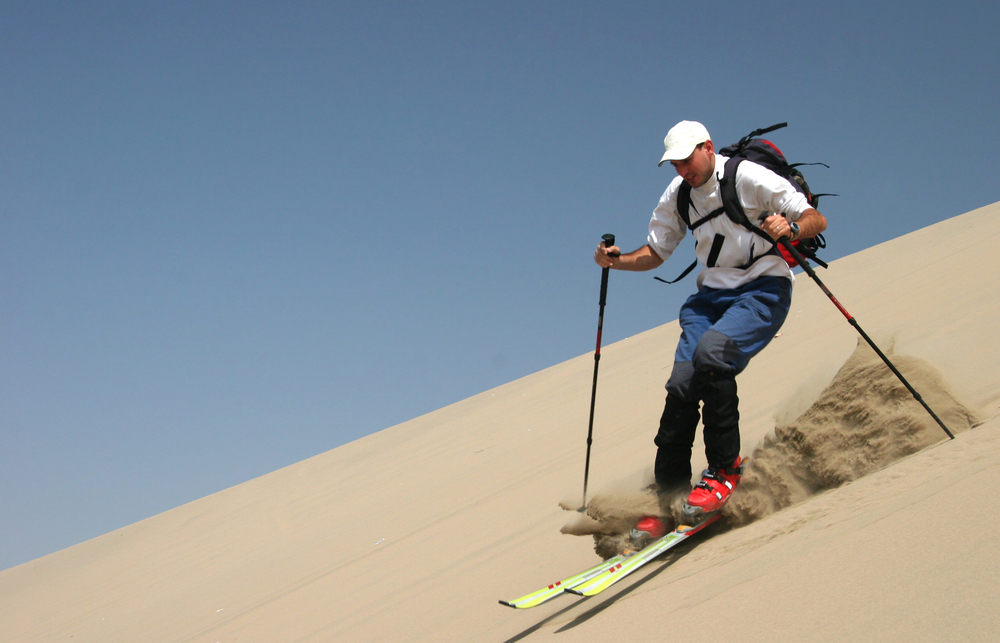
The Middle East, in spite of unusual indoor places like Ski Dubai is not exactly on the main track of international ski sites and resorts like Cortina in Italy or Aspen.  But the Middle East has some stunning and relatively unknown locations worth hitting. Ever think about skiing Iran? Or sliding down slopes in Lebanon? 

How pesticides kill your brain

0
DDT your brain, spraying kerala, India
Patients with Alzheimer’s disease have significantly higher levels of DDE, the long-lasting metabolite of the pesticide DDT, in their blood than healthy people, a team of researchers has found. DDT will last years. Eat Organic.

The tragedy of two little girls dying from pesticide poisoning in Jerusalem, while their older brothers fight for their lives highlights the immediate daners of pesticides.  This tragic incident has finally succeeded in bringing to the forefront the seriousness of overuse of pesticides in a country whose best loved vegetables carry heavy pesticide loads.

Health issues from pesticides on crops and in the home is nothing new. Whether or not these toxic chemicals are directly sprayed on food, they eventually reach our underground water supplies and are present in the air we breathe as well.

The end result of exposure to various types of pesticides, especially DDT,  is now being ascertained in studies made by medical authorities in the USA which found correlations between people who had been exposed to the pesticide DDT having greater chance to be afflicted with neurological disorders like Alzheimer’s disease and dementia later in life.

Studies carried out by Jason Richardson, from the Robert Wood Johnson Medical School in Piscataway, New Jersey found that although the debilitating mental condition known as Alzheimer’s disease is linked genealogical and lifestyle factors, being exposed to pesticides like DDT may also be contributing to mental deterioration later in life.

Altzheimer’s patients had 4 times the amount of DDT vs control

“DDE can last in the body for a number of years,” said lead author Jason Richardson of Rutgers-Robert Wood Johnson Medical School. “When you are looking at DDE levels, it is basically a snapshot of a person’s lifetime exposure to DDT as well as DDE in the environment.”

Jason Richardson, DDT brain researcher

The findings were published in the journal JAMA Neurology.

Richardson said that while he expected to see a correlation between Alzheimer’s and DDE levels, he did not expect it to be so dramatic. The average amount of DDE in the serum of the 86 people in the Alzheimer’s group was four times greater than the average amount in the control group of 79.

The studies found that those people who were exposed to DDT and related pesticides had much higher levels of a substance called DDE, which is a broken down form of DDT.

“More than likely you’re looking at complex gene-environment interactions. What we found really gives us a starting off point. Now we can use that information to try to understand who is at risk, when and ultimately, why,” said Richardson.

“This is one of the first studies identifying a strong environmental risk factor for Alzheimer’s disease,” says co-author Allan Levey, MD, PhD at Emory University School of Medicine. “The magnitude of the effect is strikingly large — it is comparable in size to the most common genetic risk factor for late-onset Alzheimer’s.”

Another researcher, Kathleen Hayden of North Carolina’s Duke University says that researchers would want to follow people prospectively to see whether or not they later  become afflicted by Alzheimer’s disease or dementia.

“DDT exposure is not destiny that you’re definitely going to get Alzheimer’s disease. These are things that might increase your risk,” Hayden adds.

The use of DDT was banned in the USA during the 1970’s; but is still in use today in many parts of the world.

People known as “baby boomers” in the USA who were exposed in their youth to DDT and other strong pesticides are now reaching their 70’s and this may account for the rise in mind related illnesses.

In Israel, many immigrants during the 1950’s were literally hosed down with DDT by health works when arriving, due to fears that these people carried lice and other forms of vermin in their hair and on their bodies.

By far, the heavy use of pesticides like DDT being sprayed on crops in some countries is an issue that requires public attention as to what affect these pesticides have on humans.

From the tragedy of the deaths of two little girls, aged 1 1/2 and 4 from pesticide poisoning, the effects on humans of pesticides can be very sad indeed. The take home message is support organic agriculture, and even better yet buy products that support organic regenerative agriculture. And if possible, grow your own food. Start with a Victory Garden.

victory garden grow food

More on pesticides, including those in food:

Pesticide Poisoning Kills Two Kids in Jerusalem

Sustainable Table Film Shows what’s on Your Plate

Israel’s Best-Loved Vegetables Carry Heavy Pesticide Loads

Pesticides in Pregnant Jerusalemites Higher Than NYC Counterparts