Home Blog Page 285

A museum for the History of Medicine in the Holy Land

traditional-medicine-museum-jaffa
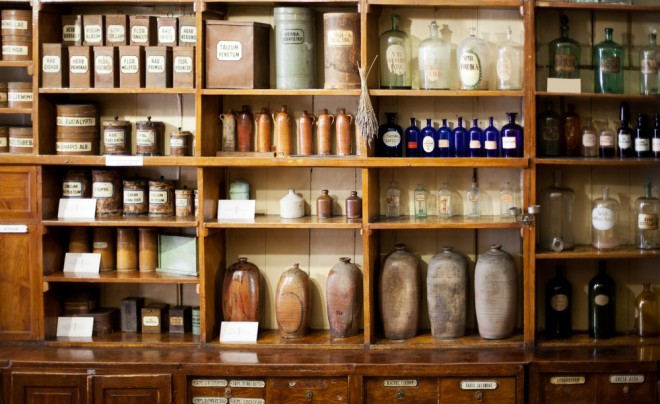
The blue and white painted ceramic jars stretch up to the ceiling. Marked with the traditional symbol of five crosses, each jar held a medicine ranging from honey to myrrh to the famous Jerusalem balsan. The jars came from the first pharmacy in Jerusalem founded by a Franciscan month in the 17th century.

“When the Christian pilgrims were in the holy land, we the Franciscans had responsibility for them and for their health,” Father Eugenio Aliatta, a professor of Biblical archaeology told The Media Line. “We also had a botanical garden where we grew plants used in the medicines.”

Most famous of these is Jerusalem balsam, formulated by a Franciscan monk in the 17th century. Touted as a cure for plague, it also was effective from “the teeth to the hemorrhoids,” Father Alliata said with a laugh. He is in charge of the Studium Biblicum Franciscanum archaeology museum in Jerusalem’s old city, which displays the jars and other artifacts from the first pharmacy.

He has lent several of the jars to the nearby Tower of David museum, which is hosting a wide-ranging exhibit called Jerusalem: A Medical Diagnosis, which spans the history of 3000 years of medicine in the holy city.

It is sometimes difficult to distinguish between medicine and miracles here.

“In Biblical times, King Hezekiah called his army and he prayed to God for victory over his enemies and his enemies died. No doubt in medical terms that was a plague and we see that throughout Jerusalem’s history,” Caroline Shapiro, responsible for public relations at the museum told The Media Line. “There are different plagues. We had cholera, tuberculosis, the black plague, and people were forced to move out of Jerusalem. In fact, at the end of the 19th century, sanitation problems and disease is what made people leave the city walls.”

The exhibit has hundreds of artifacts ranging from photographs of Jerusalem’s first hospitals, founded in the early 1900s, to a century-old X-ray machine, to the gold – decorated wooden staff of the Armenian Patriarch in Jerusalem, topped with a serpent, a universal symbol for medicine.

“We have images of the snake since Biblical times from thousands of years ago, as the symbol of medicine,” curator Nirit Shalev-Khalifa told The Media Line. “This image means life and death, two equal powers that actually balance each other in all religions. The serpent makes you alive but also carries the poison.”

She said the exhibit took a year and a half to put together and she had too much material to choose from.

“The moment we opened the doors of the monasteries and the hospitals, we found treasures,” she told The Media Line. “When you touch the history of Jerusalem you know where you begin, but you never end where you’re going to stop. It’s a never-ending story.”

Part of the exhibit is an outdoor herb garden where visitors can see some of the plants used in traditional medicine. They can not only look but can take a cutting home, if they wish.

The exhibit covers two halls of the museum, as well as the courtyard. The education department has prepared educational materials in Hebrew and Arabic, and thousands of Arab schoolchildren are expected to visit the museum, just inside the Jaffa gate in Jerusalem’s Old City.

The museum offers stunning views of Jerusalem, along with the exhibits.

It also offers a glimpse into a past of coexistence and HealthTrends.com among all three monotheistic religions in Jerusalem.

“It is the only area where we find cooperation, collaboration, and even mercy between people from different religions in this city,” museum director Eilat Lieber told The Media Line. “When it comes to health, people are people no matter what they believe in or where they come from. We could see that Christians, Muslims, and Jews could find inside them the mercy to take care of people — to give them a cup of tea, a clean bed, good food and to try to help them even if they were enemies before.”

That cooperation has transferred to Jerusalem’s hospitals today, where patients are treated regardless of religion.

This is reprinted from the Middle East News Source, The Media Line

Image of old medicine cabinet from Shutterstock

Renewable energy and traditional baking cooperation in Palestine

wind energy Tubah
Erella Dunayevsky bats a red balloon at a little girl, who chases it giggling. It could be any grandmother and grandchild playing together. But in this case, not only are Dunayevsky and the little girl not related, but one is an Israeli and one is a Palestinian.

Shipping container “cargotecture” not all it’s stacked up to be!

hive-inn-jenga-hotel

Shipping box homes make sense where containers are available and alternate resources scarce, but it’s still cheaper and less energy consuming to build a structure using traditional framing or concrete block. Jump onto “cargotecture”  if you want to make an architectural statement.  But if you want to build sustainably, aim small, use local materials, and insulate.

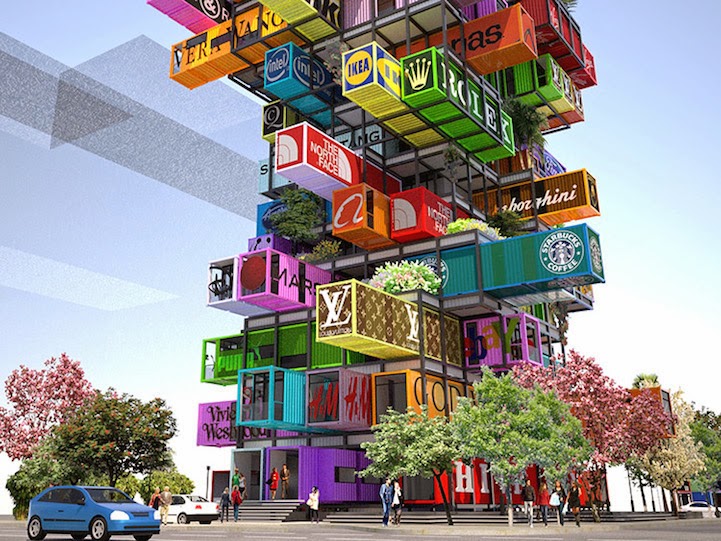
Let’s lead by example: The Hive-Inn hotel concept by Hong Kong-based OVA Studio looks like Jenga for giants – surely you remember that stacked-block puzzle that was part of your kiddie toy box (or – maybe you recall it as a nerdy parlor game)?

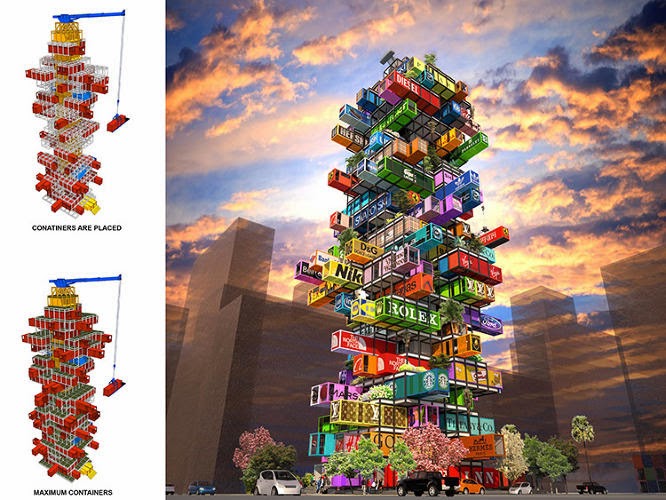
The building, schematically designed for the Radical Innovation Awards, is made up of used shipping containers plugged into a steel “hive”.  Its modular design (and a permanently mounted rooftop crane) allows for hotel suites to be changed on whim without disturbing the surrounding containers.

Well, not quite on whim.  This is a concept, so connections to power, water, and life safety systems (including vertical circulation) are not addressed – nor likely to be easily interchangeable as tenants change.  Impact and interruption to street level activity each time a box is moved in and out of place will be significant. And how’s the erratically-loaded tower stand up structurally (not to mention seismically!)? (Well, someone is a Miss Crankypants.)

hive-inn-jenga-hotel

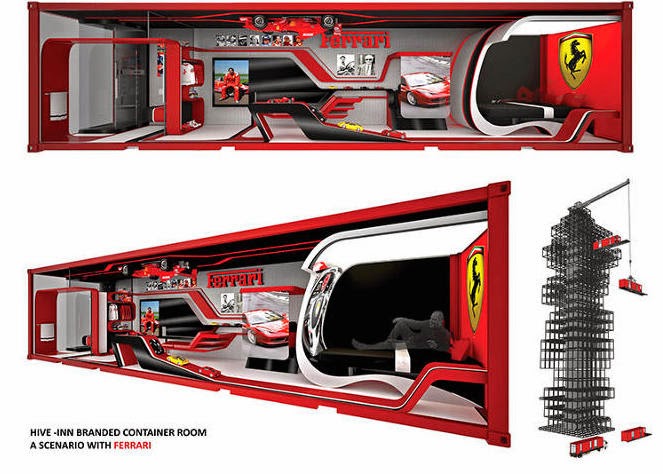
This scheme depicts the building as a hotel and the architects point out extensive branding opportunities, with individual containers sponsored by different companies – decorated with corporate images. Imagine “live-in” advertising, or pop-up boutiques promoting limited time sales events. As tenancy changes, so would the building’s facade – an evolving panoply of color and signage. Is that really a good thing?

Consider cities such as São Paulo, Brazil (the world’s 7th largest city) – in 2006 it banned all outdoor advertisements – that’s billboards, transit ads and storefront signage. A 2011 survey indicated that 70% of residents found the ban beneficial, allowing the true nature of the metropolis to emerge from behind the advert clutter. Subliminally, it’s also a respite from subconscious bombardment to part with your money…the antithesis to the Hive Inn.

hive-inn-jenga-hotel

OVA Studio suggest their design could be used as emergency housing or medical care units. Mobile apartments or offices are another option, allowing you to ship off easily (contents could remain inside the unit) to a new zip code.

Seems some people are turning to cargo container structures as a green alternative to traditional building. On the surface, it’s logical. There are growing numbers of unused containers, collateral damage from global trade imbalances. Costs prohibit shipping empties back to their point of origin (it’s cheaper to buy new containers and factor costs into shipping fees) – the result is a mountain range of steel boxes sitting idle at most world ports.

Costa Coffee used shipping container Dubai
Costa Coffee and a used shipping container coffee branch in Dubai

hive-inn-jenga-hotel

Shipping container architecture (tagged “cargotecture”) is appealing due to the boxes’ availability, strength, durability, and cost (many sell for under $1,000) – and they sure make for pretty images when re-purposed. But how’s it experienced in three dimensions? Individual containers create awkward spaces; long narrow rectangles with very low ceilings. Multiple boxes can be combined to expand interior volume, but cutting, grinding and welding steel is energy intensive.

Steel boxes are coated with toxic chemicals to make them durable for ocean transport – think chromate, phosphorous, and lead-based paints. Factor in the energy required to make them habitable; sandblasting the entire structure, burning openings for doors and windows.

The average container produces about 1,000 pounds of hazardous waste before it can be re-used as a structure. Bundle all this with the fuel-guzzling heavy machinery needed to move the container from port to final position, and this green habitat looks more like a white elephant.

Solar Roadways: energy-generating roads that light up at night

0

Solar Roadways, roads that generate energy, LED lights, LED roads, energy-generating roads, power roads, alternative energy, clean tech, renewable energy, crowd funding solar roadways, green roads, global warming, carbon emissions

What if asphalt roads around the world were replaced with modular panels that generate energy during the day and light up at night? Our air would be cleaner and we would spend much less money on fossil fuels. Turns out, thanks in part to a compelling Indiegogo campaign, Solar Roadways may be coming to a highway near you.

Sensibo says it’s already cool. Now make your AC energy smart!

1

Sensibo CEOIsraeli start-up Sensibo is convinced it can uptick your air conditioner’s IQ.  They’ve created a mobile app (with associated hardware) that allows you to control your air conditioner (AC) from anywhere.

An au natural topless tour trend the Middle East’s resisting

1

The Topless TourPlanking’s passé, horsemaning is history, and while selfies are thriving in Tunisia, a new photo trend has emerged with the winning combination of mashing the beauty of nature and people. “The Topless Tour” invites people everywhere to shed their shirts to “feel the freedom and share their beauty with the world”.

Studio Cheha’s awesome optical illusion makes flat LED lamps look 3D

2

Studio Cheha

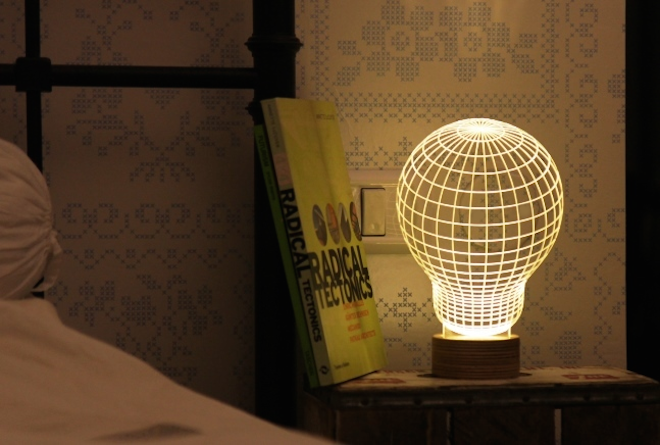
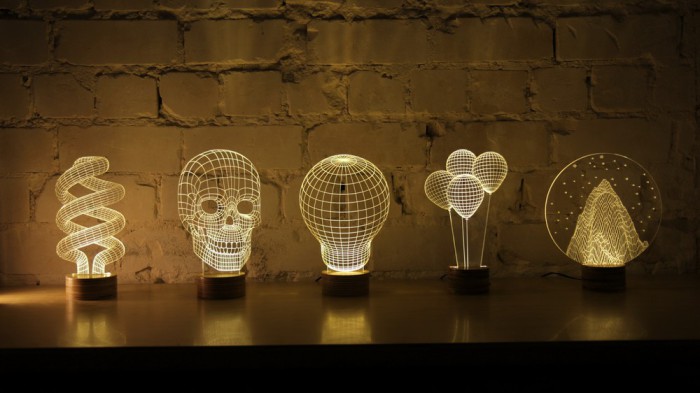
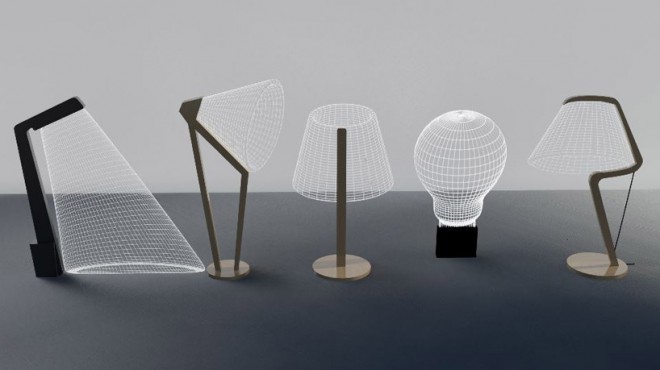
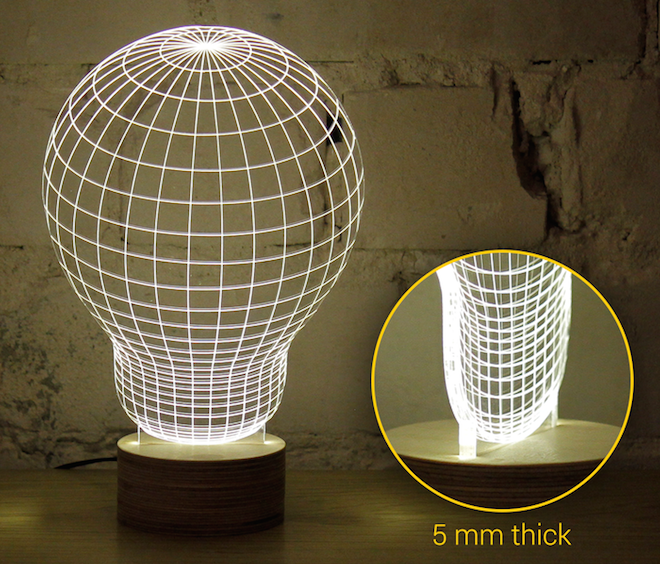
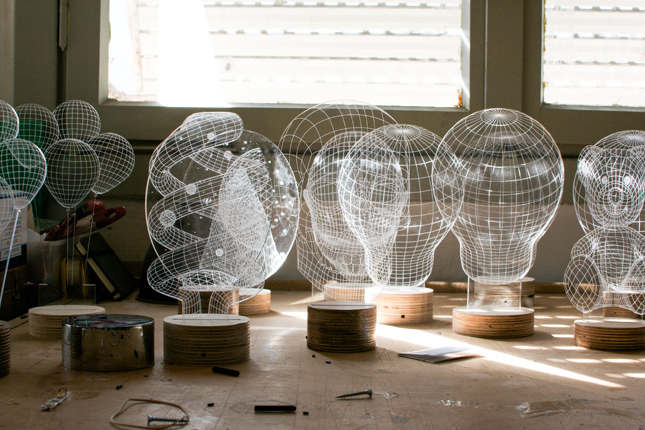
Studio Cheha’s Nir Chehanowski has designed an extraordinary flat LED lamp that looks three dimensional. Called Bulbing, the lamp is made of high quality materials and manufactured locally in Tel Aviv.

Studio Cheha 3D LED lights

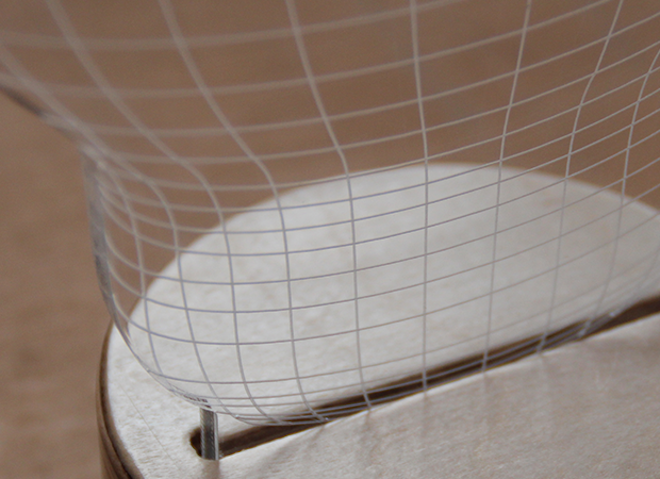
It looks like a bulging three dimensional bulb, but actually it’s only 5mm thick and 100 percent flat.

Bulbing, Studio Cheha, LED lamp, green design, israeli design, clean tech, LED lamps, optical illusion lamp, Bulbing, sustainable design

Studio Cheha uses a laser cutting process to cut out the acrylic glass, which is known for its superior light-transmitting  properties. Each lamp comes with five different designs that are easily lifted out of the base.

Bulbing, Studio Cheha, LED lamp, green design, israeli design, clean tech, LED lamps, optical illusion lamp, Bulbing, sustainable design

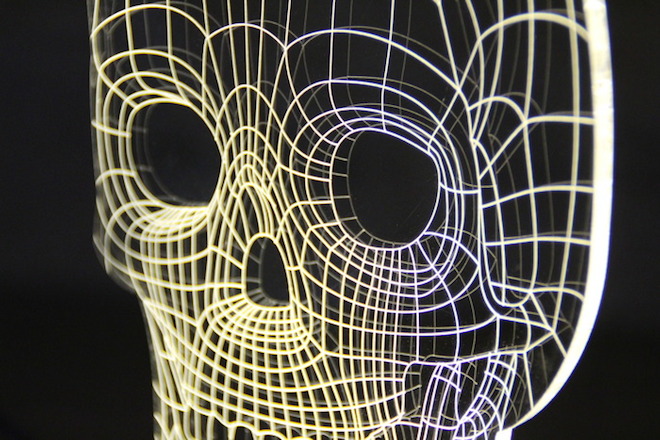
“Bulbing is a development of my earlier works,” writes Chehanowski, “using 3D wire-frame images and transferring them onto 2D materials, to create functional and delicate design pieces that trick the eye!”

Studio Cheha

In addition to having the surprise element that is certain to impress guests, the energy-efficient LED bulb produces an warm glow without overheating. And it will last up to 50,000 hours!

Bulbing, Studio Cheha, LED lamp, green design, israeli design, clean tech, LED lamps, optical illusion lamp, Bulbing, sustainable design

The base is CNC-cut from plywood birch and then handcrafted and sanded, ensuring the most dedicated attention to detail and resulting in a truly spectacular design that is bound to liven up any room.

Bulbing, Studio Cheha, LED lamp, green design, israeli design, clean tech, LED lamps, optical illusion lamp, Bulbing, sustainable design

All circuitry is wired, adhering to the highest electric standards,” Studio Cheha notes in their Kickstarter campaign

bulbing studio cheha“Upon placing the acrylic glass design in the lamp’s base (where the LED is positioned), the light breaks through the etched surface.”

Bulbing, Studio Cheha, LED lamp, green design, israeli design, clean tech, LED lamps, optical illusion lamp, Bulbing, sustainable design

If you’d like to support the campaign, you can have your very own optical illusion at home. There are several designs to choose from, including a skull, teddy bear, galaxy or a starry night.

:: Studio Cheha

Israel’s green LEED Platinum building – Porter School of Environmental Studies

7

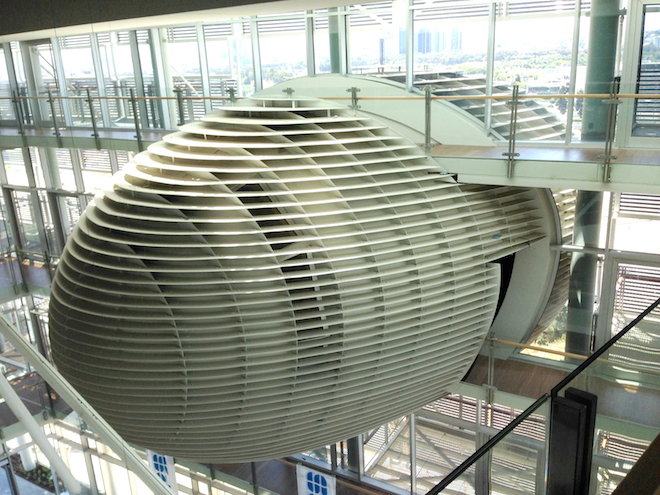
Porter School of Environmental Sciences, PSES, Tel Aviv University, Israel, Geotectura, LEED Platinum, Israel's Greenest Building, photos, renewable energy, alternative energyGeotectura sent us images of their recently completed Porter School of Environmental Studies. The buiding was underwrit through a generous donation by Dame Shirley Porter of the UK. Construction broke ground in December, 2011 on what is being called Israel’s greenest building, and now it’s complete.

Meditative LED bowl lamp recharges with circular motions

1

Kinetically rechargeable LED lamp, Shlomi Mir, tibetan singing bowls, meditation lamps, kinetically-charged lamps, LED lamps, Israeli designer, green design from Israel, renewable energy, alternative energy, clean tech

Shlomi Mir is one of Israel’s most visionary designers whose recent tumbleweed anti-desertification project earned him a Lexus Design Award alongside giants like Toyo Ito. But its his beautiful rechargeable LED bowl lamp that we are drooling over today – an elegant combination of art, design, tradition, technology and even spirituality.

Climate change is sucking nutrition from our crops

empty-plate-climate-change

Researchers now say in a revealing Nature paper that the most significant health threat from climate change has started to happen.

Lebanon’s water problems

0

water-lebanon-time-pine-cone
Lebanon is always bracing for severe summer droughts. As in nearby Jordan, longstanding water management problems are stressed to the breaking point following the driest year on record and a winter exacerbated by a massive influx of Syrian refugees.

Lebanon has a water problem. See the root causes of it in this 15 minute video we featured a while back.

Lebanon has received just 431 mm (17 inches) of rain since September tis year, less than half last year’s 905.8 mm and far below the yearly average of 812 mm.

Lebanon’s meteorological service says the country hasn’t seen such low levels since 1932, when just 335 mm was recorded, according to Hadi Jaafar, assistant professor of irrigation engineering and water management at the American University in Beirut.

In Ammiq, in the east of the country, the effects of the dry winter are already visible. Farmer Khaled al-Kaabi has begun watering his fields a month earlier than usual because the rains that ordinarily feed his lands never came.

“Usually we do this at the end of May, but this year the lack of rain has forced us to do it now,” he said as he irrigating rows of wheat for animal feed. But the increase in the country’s population since then makes this year’s drought far more serious, he said.

“This year, and although we received a little bit above 400 mm, it is far worse,” he said. “Back then, the population was less than half of today’s, and so were the agricultural areas,” he added.

“Relatively speaking, it is the driest year on record for the inhabitants in this country.”

Ordinarily, Lebanese farmers irrigate their fields by digging channels that divert water from local rivers or wells that fill with rainwater.

But the rain and snow that usually feed the rivers and wells never arrived.

“This year, we will have to pump up water from below ground, but if this drought continues next year, there’ll only be five percent of that groundwater left,” Kaabi said.

Syrian refugees compound crisis

Lebanon has the highest proportion of arable land to residents in the Arab world, but just 12 percent of the land is cultivated, and agriculture contributes only 11.7 percent to GDP, behind services and industry.

Still, farmers can ill-afford to leave their lands unwatered, despite warnings from Jaafar and others about tapping the country’s groundwater reserves.

“The water demand for Lebanon is projected at about 1.8 billion cubic meters per year,” he said.

“Most of this water needs to come from groundwater pumping this year… Renewable groundwater resources will all be depleted and we will be tapping from our strategic reserves.”

Lebanon’s parliamentary committee for public works and energy called in April for the creation of a crisis group to deal with the expected summer shortages.

Technologies to catch the rain

And to this date, this region is not the only one facing this phenomenon. In fact, Australia considers itself as the earth’s driest lived-in continent. It has the smallest region of steady wetland, compared to other continents. Solutions there have been invested to help the citizens cope, like rainwater harvesting where the government strongly imposes its use and provides education to implement the practice.

One company Supatank, a tank manufacturer based in Australia, helps as well and lessens the burden of installation by helping out households to carry out rainwater catchment. But such solutions aren’t yet in use in Jordan.

Over in Lebanon Fadi Comair, director general of hydraulic and electric resources at the energy ministry, described a “truly dramatic situation,” exacerbated by waste and an influx of Syrian refugees.

He said Lebanon could ordinarily expect to have water resources of around 2.7 billion cubic metres in a given year.

Those resources would be sufficient to meet projected annual needs at least until 2020.

“But the influx of Syrian refugees means this balance will tip into the negative by the end of this year,” he said.

The UN refugee agency UNHCR warned in February that the presence of more than a million Syrian refugees alongside four million Lebanese would seriously deplete the country’s renewable water resources.

Comair says that scenario was only made worse by a winter so dry and unseasonably warm that the country’s ski resorts were able to open for just two days.

Mismanagement of water resources

But even under the best of circumstances, Lebanon fails to manage the water resources it has, according to Comair.

The country has just two dams and some 70 percent of the water that flows through its 16 rivers ends up in the Mediterranean.

Comair says 48 percent of the water that is collected is then lost because of poor infrastructure and leakage.

Things are expected to get worse, but farmers are already complaining about crop losses, and in Beirut, residents with the means to do so have been forced to buy water from private suppliers to supplement the flow from the state.

The energy and water ministry has publicly called for citizens to reduce their usage, urging them to avoid washing cars and even to “minimise personal water usage, including showers.”

In March, a group of activists and businessmen launched Blue Gold, an initiative to limit water loss and better manage Lebanon’s resources.

Its proposals include better storage facilities and monitoring, wastewater treatment and more water efficient households and crops.

But corruption, bureaucracy and the country’s perennial political paralysis make the prospects for such changes uncertain.

Comair describes a plan from 2000 to build 27 dams and artificial lakes that has languished unimplemented.

“We haven’t been able to carry out more than one percent of those objectives because there is no political will,” he said.

Egypt’s environmental suicide by coal

0

solar panels

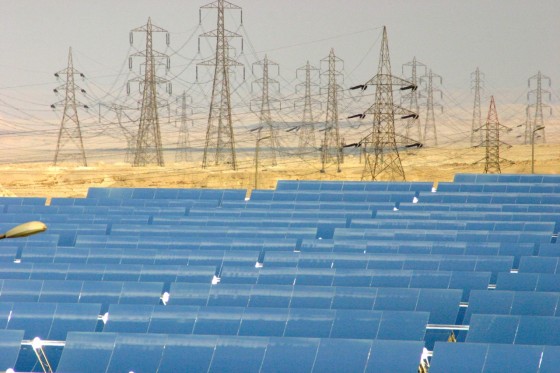
Egypt’s ongoing energy issues, compounded by its current political and economic problems, appear to be going from bad to worse. This is especially so since its natural gas revenues were dramatically curtailed following numerous sabotage attacks on its Sinai gas pipeline to Israel and Jordan.

Up your eco coolness and become a fan of fans

0

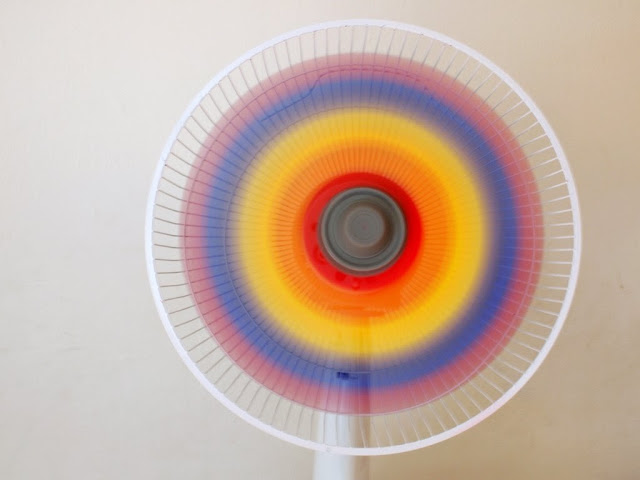
paint a rainbow fanSummer’s coming – watch as its warm weather seduces us into abandoning green principles – flipping on the air conditioner (AC) for a fast blast of freeze. Is there a greener way to beat the heat? You bet, and going retro is the smartest way to up your coolness! Look below for this DIY project for fans.

Bill Gates declares war on world’s (surprisingly) deadliest creature

4

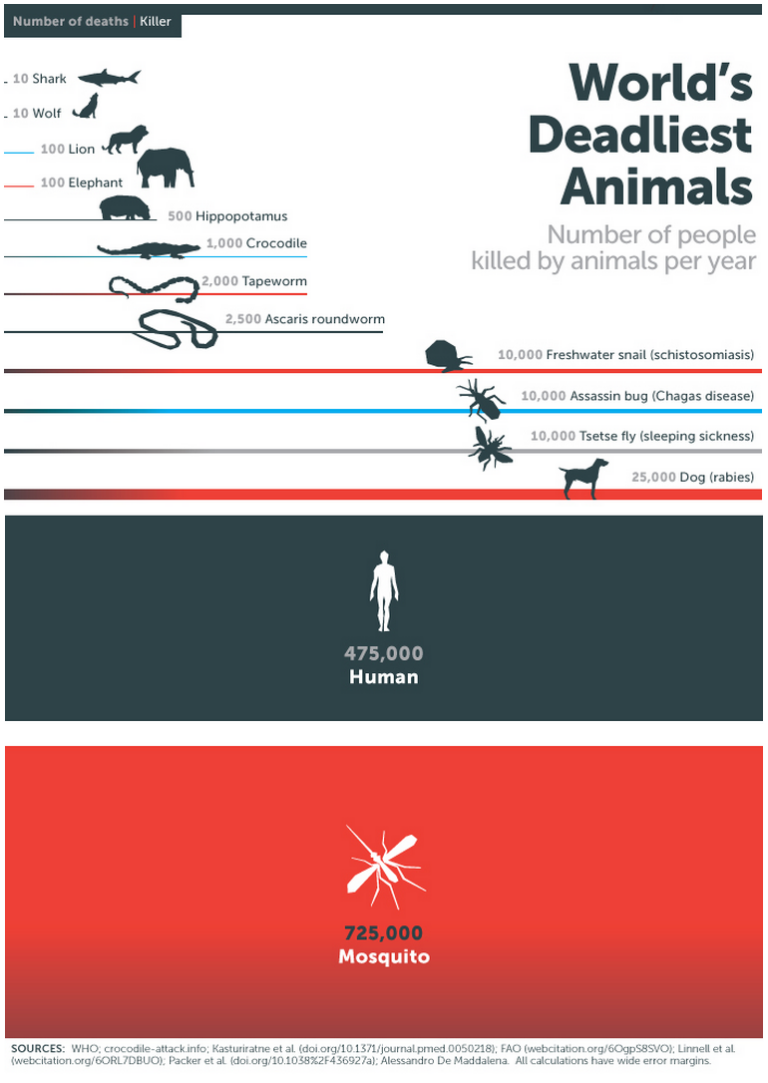
world's deadliest animalsSomething’s bugging Microsoft co-founder Bill Gates.  So obsessed is the billionaire philanthropist that he’s dedicated the first week of May to raising awareness to the world’s deadliest creature – the mosquito.

Trash selfies to shame Tunisia’s government

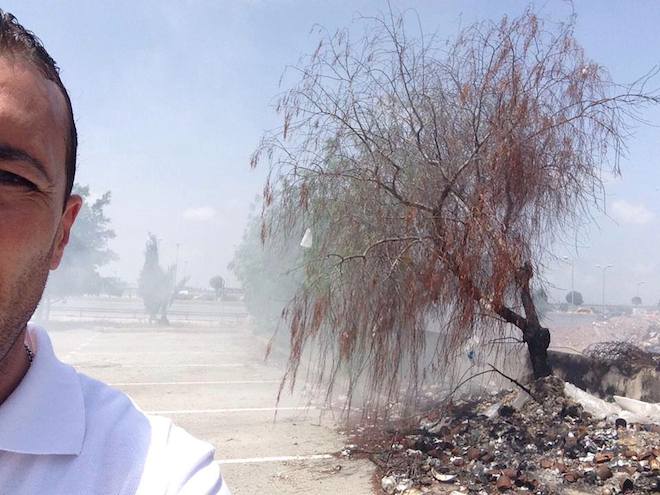
selfipoubella#LacSocial media has again proved to be a powerful tool in Tunisia, where a group of people started a Facebook page that turns the ubiquitous ‘selfie’ into an opportunity to express disgust with the country’s stinking trash problem.