Home Blog Page 269

Pirate3D’s 3-D printed photos help the blind see

0

3D printed photographs let the blind see

Photographs are visual reminders of past events, at least for those of us who can see. Scan a stack and stimulate long-forgotten memories. But what artifacts help the visually impaired to stroll through their histories?

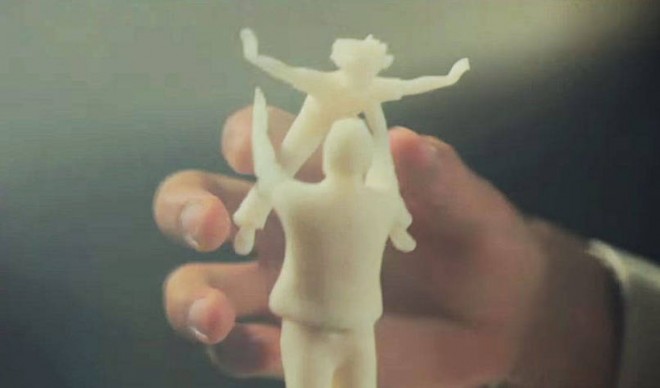
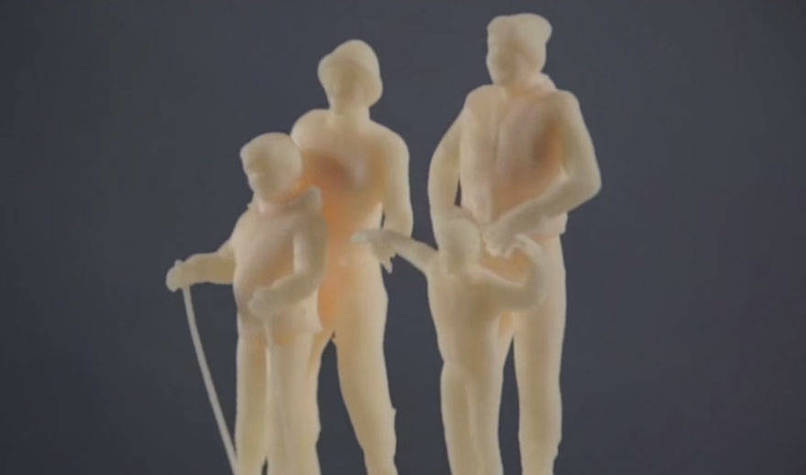
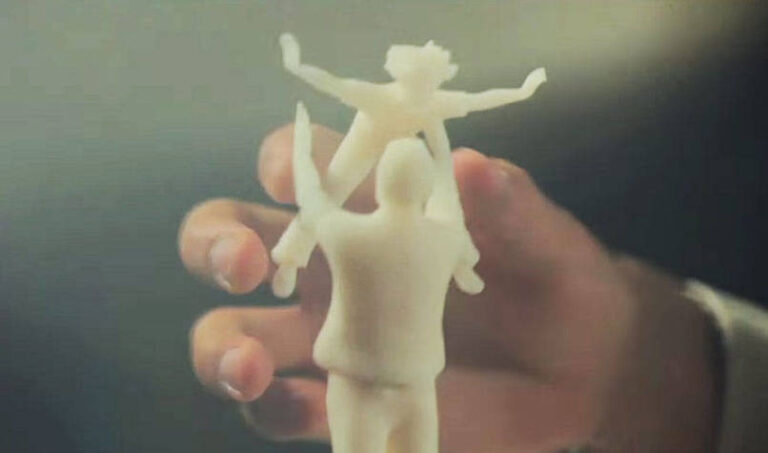
Singapore-based tech company Pirate3D is helping the blind to “see” photographs through their innovative 3D printing project, “Touchable Memories”.  It began as an experiment in which regular print photographs are 3D printed into sculptures. Just as Braille allows the blind to interpret written text, this project intends to allow them to interpret photographs.  Now the blind get to experience photographs in their own way.

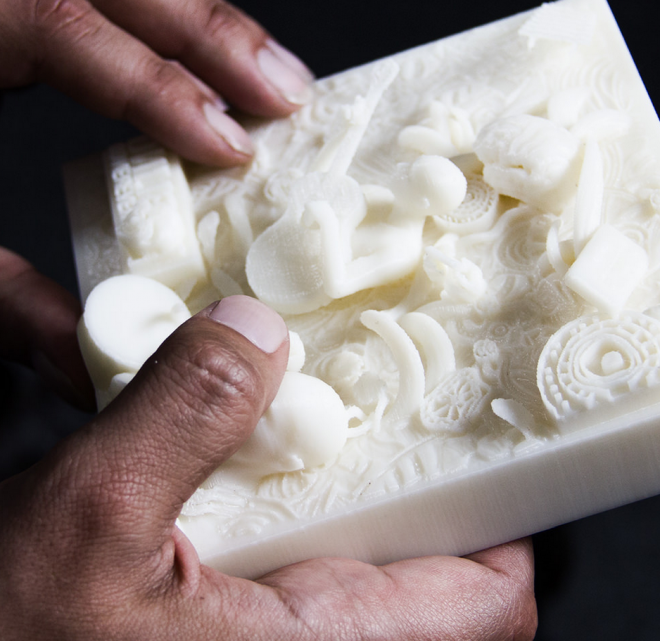
3D printed photographs 4The image above is the cover art of a blind musician’s album. He specified the concept to the artist, but relied on trust and verbal description to conjure up an image of the final artwork. Through 3D printing, and his sense of touch, he is now able to know what the cover art looks like. (See image of 3D “photo” below.)

3D printed photo Pirate3D

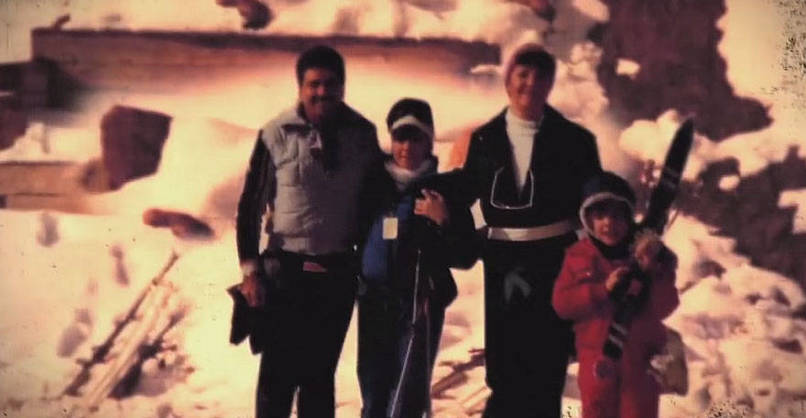
A former Director of Photography, blinded as an adult,  got the chance to know how a scene from his film turned out. A woman got to relive a long-ago ski trip, childhood memories popped back into life as she touched the three-dimensional family “portrait”.

3D printed photographs 2

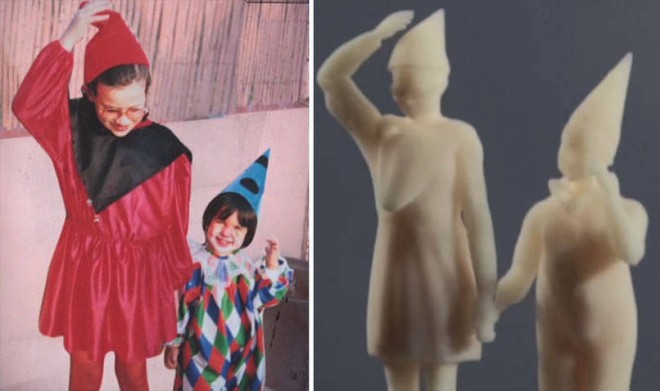
3D printed photographs 1Still another flashed back to a fancy dress party, recalling instantly the funny cone hats she and her sister wore when she felt the tiny sculpture in her hands.

3D printed photographs 3

Check out this moving video:

[youtube]http://www.youtube.com/watch?v=f-4AmztnIYw[/youtube]

Three dimensional imaging is growing fast in applications to daily life.  Originally, products focused on to small, wearable jewelry items. There have been questionable applications such as art student Yariv Goldfarb’s plastic poop and Cody Wilson’s printed guns. The technology aspires to use in bio-medical engineering and on-demand production of spare parts for space missions. Green Prophet’s brought you environmental examples of its potential, as in UAE renewable energy giant Masdar’s printer for making solar cells.

While this story has little to do with green living, nor in fact, with the Middle East (although the featured blind musician is Arab), we do applaud the power of new technology to significantly improve the human experience – and to make us smile.

Glowing bike path gives Dutch cyclists a green starry night

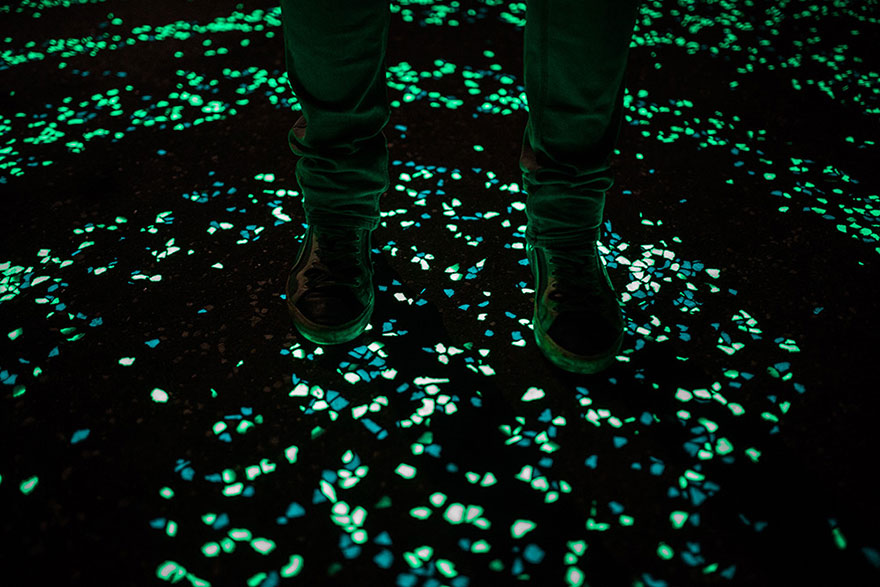
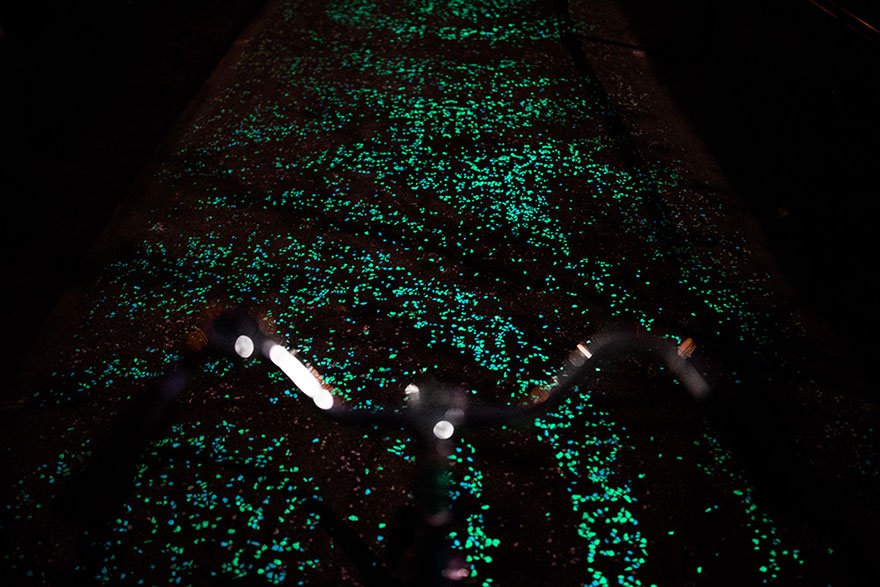
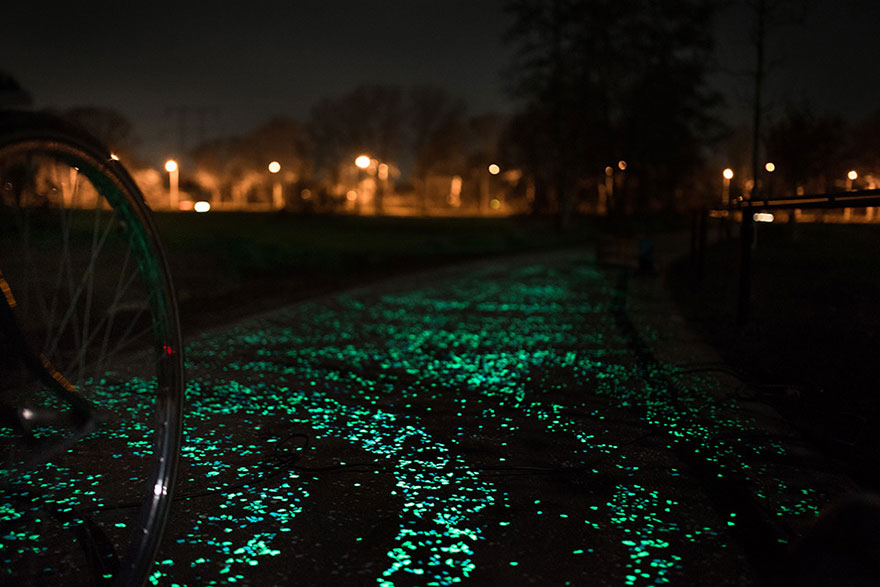
van-gogh-starry-night-glowing-bike-path-daan-roosengaarde-6
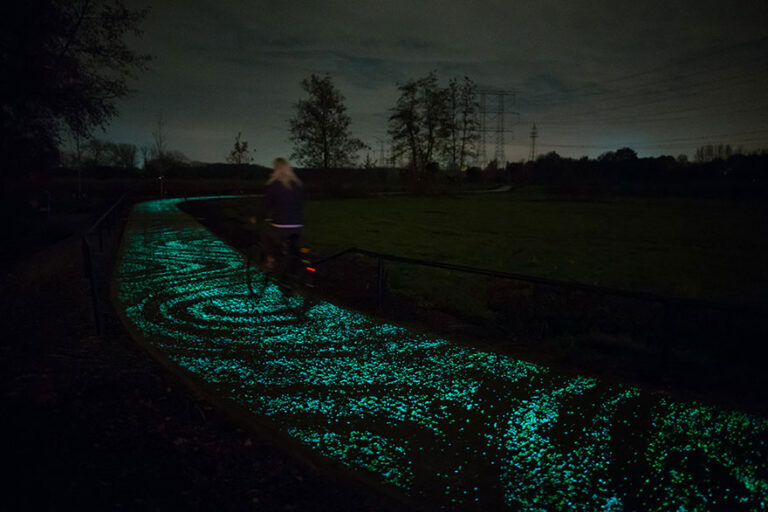
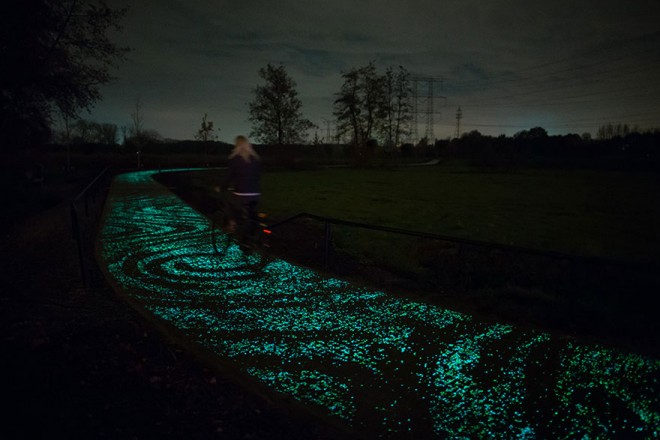
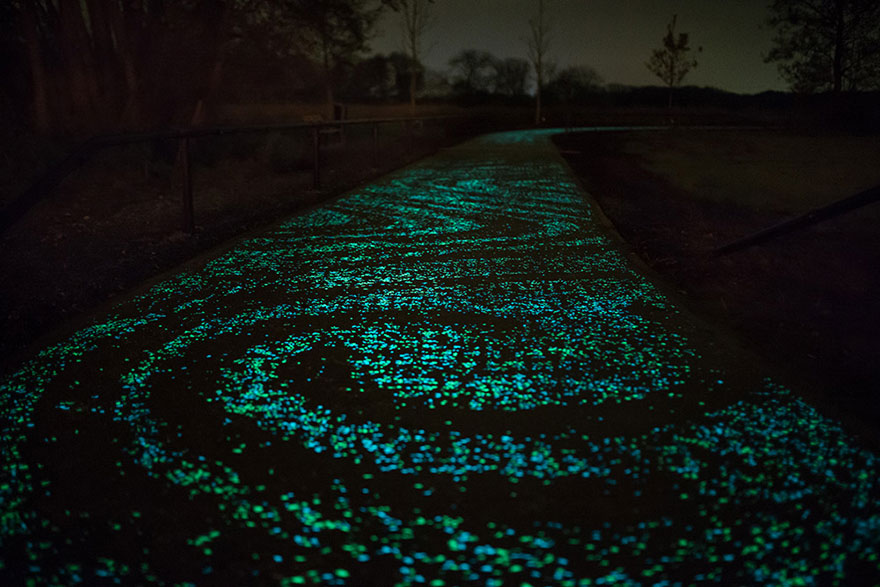
Dutch designer Daan Roosegaarde has created an LED-lit  glowing bike path that. The solar-powered LED lights glow at night, and give cyclers a trippy ride that looks like Van Gogh’s Starry Night painting.

The path is less than a mile long, and was created using both glow-in-the-dark tools and solar-powered LEDs. Find it in Brabant, the Dutch county where Van Gogh was born and raised.

The Dutch, blessed with flat ground and a love for the simpler things in life, love cycling and sports like skating. Activities that get us to places in a very sustainable way. After Israel’s solar powered tree which lights up at night, we want to see more artists like this developing ways to make our travels more extraordinary!

van-gogh-starry-night-glowing-bike-path-daan-roosengaarde-7

van-gogh-starry-night-glowing-bike-path-daan-roosengaarde-8

van-gogh-starry-night-glowing-bike-path-daan-roosengaarde-3

solar powered glow bike path van-gogh-starry-night-glowing-bike-path-daan-roosengaarde-5

Israeli surfer’s make circle for Doc Paskowitz, the man who brought surfing to the Middle East

paskowitz-doc-dorian
Dr. Dorian Paskowitz was a Jewish physician and an unconventional guy from the United States who raised his large family in a trailer and who brought surfing to the Middle East.

The unconventional American Jewish physician and surfer Dorian Doc Paskowitz died earlier this month on November 10 at an old age. He started a surfing Odyssey with his family, a wife and camper full of kids, and came to Israel in 1956 bringing with him the first surfboard which he showed to locals on the Frishman Beach in Tel Aviv.

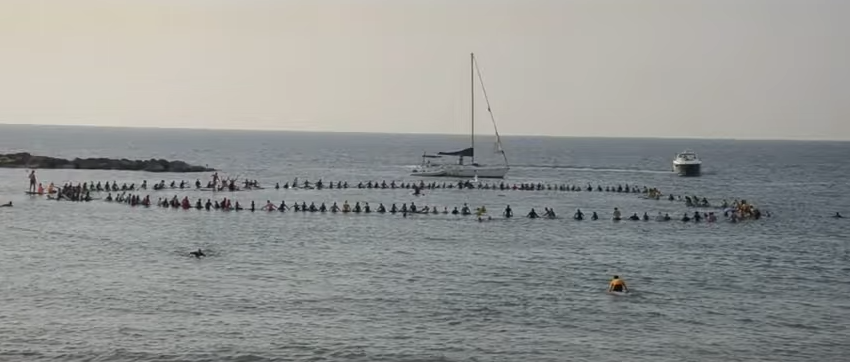
israel-surf-circle-doc-peace-tel-aviv
Circle of Peace in Tel Aviv. Sending doc off in the traditional surfer way.

By 1957, with a failing marriage, he’d moved to Israel to live on a kibbutz. He started teaching lifeguards how to surf.

Years later, he came back to Israel with a message of peace, showing how surf can unite people, even Israelis and Palestinians.

He formed Surfers for Peace with Kelly Slater in 2007, and some years later I met surfer Grant Shilling in Tel Aviv carrying this torch of giving Gazans boards for surfing.

Raskovin and many other Israelis are longing to make a bridge of peace in the Middle East –– whether it’s done with a longboard or a short one.

Raskovin plans on meeting with Lebanese surfers in Marseille, France. “Our bigger project is the Med Surf Cup to collect people from all over the Mediterranean –– a network of surfers in constant dialogue.”

Today Doc’s mission rings true in Israel where surfers like Arthur Rashkovan run surfing coexistence programs in the Mediterranean. This past Friday Israeli surfers came together to build a surfer’s ring at sea to pay tribute to their beloved Doc who was known to have said:

“First I’m a surfer, then a Jew, then a doctor.

Lower photo via @pitchon

Made in the shade with simple, cheap urban design for Tel Aviv

2

urban-shade-Serpantina-Model
Until you’ve cycled high noon in the Middle East summer you’ll have no idea how incredibly hard it is to live without shade. I live in Jaffa, Israel – a Mediterranean Middle East city that will fry eggs on cars most days of the year. If you dare to venture out during the summer days, you’ll come home covered in a layer of sweat and sunburn.

I dream of shade everywhere I walk, run or cycle and wonder why cities in hot climates don’t make a point to put shade everywhere. Sunny side of the street for me? Nope, I follow the paths that cast shadows from trees or nearby buildings. You get the point.

As we humans grow to understand why we need to make cities walkable, and comfortable, the big issue of shading hot cities is a big one.

Architects building shady, flowery canopies for Hajj got the message. And now, Israel’s Design Museum of Holon started a competition for encouraging architects to develop projects for urban shade.

Winners were Point Supreme Architects, an architecture firm from Athens, Greece.

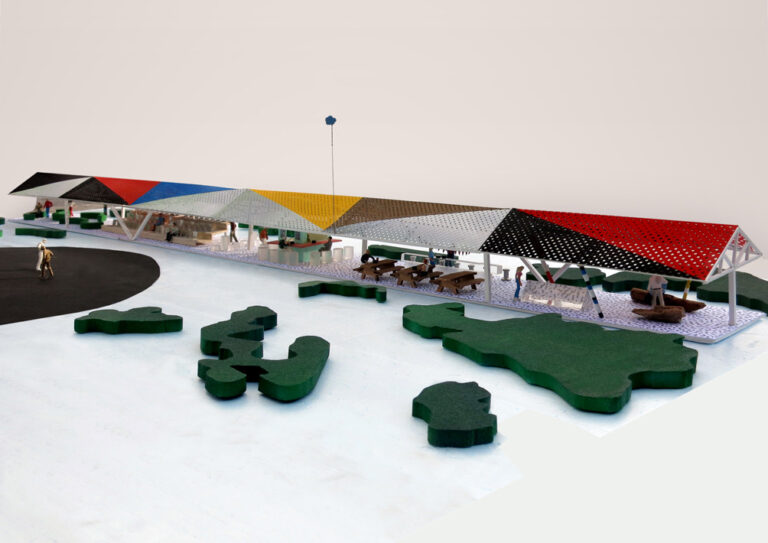
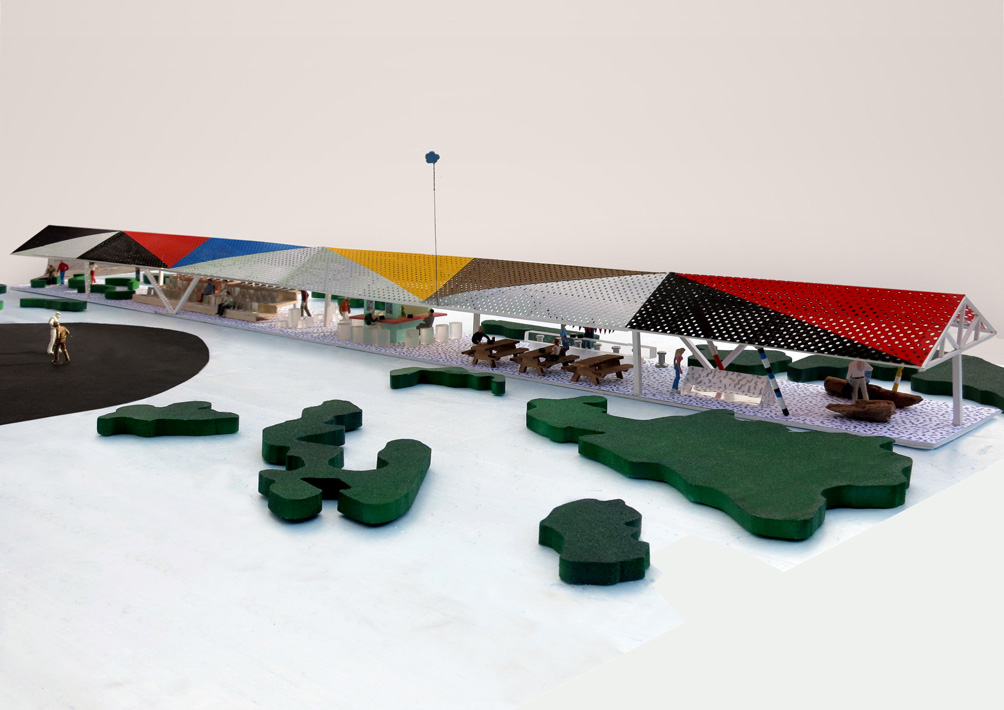
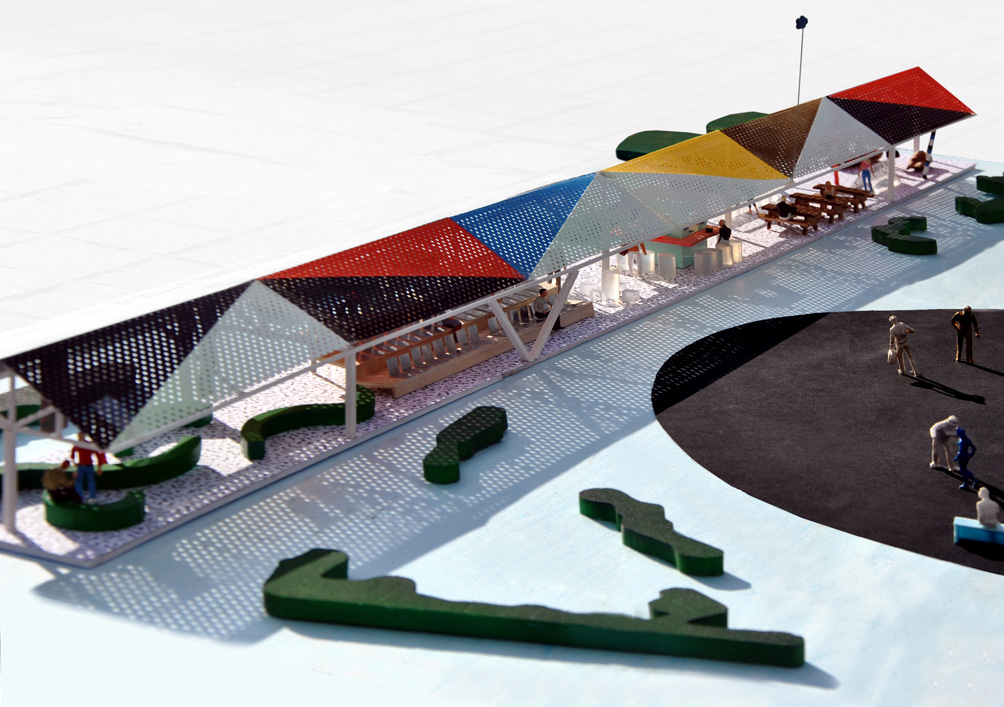
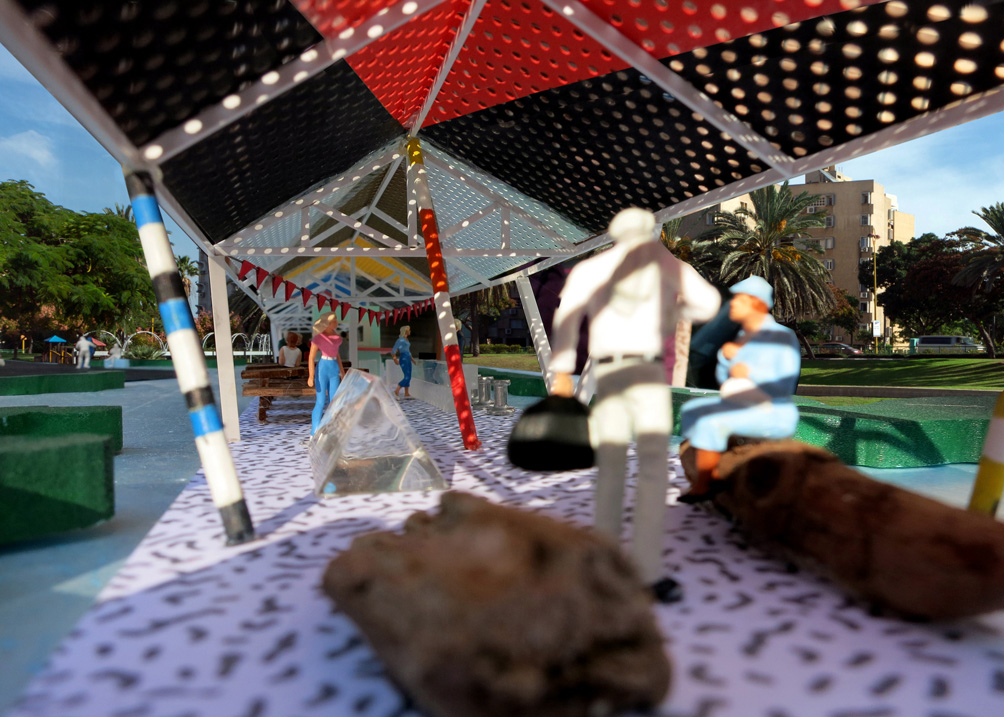
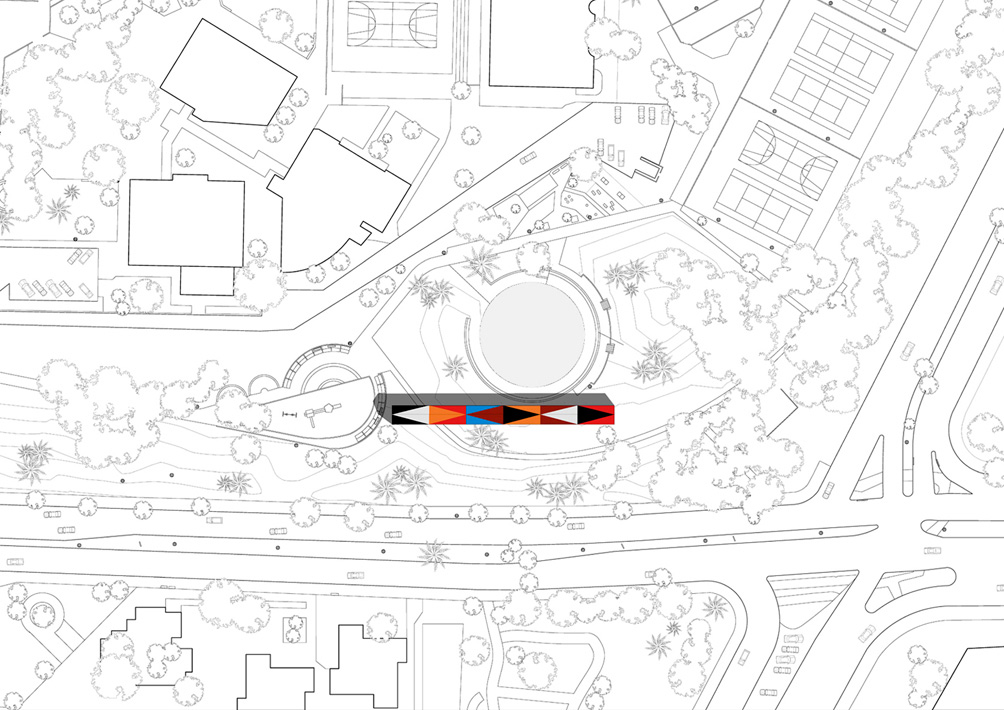
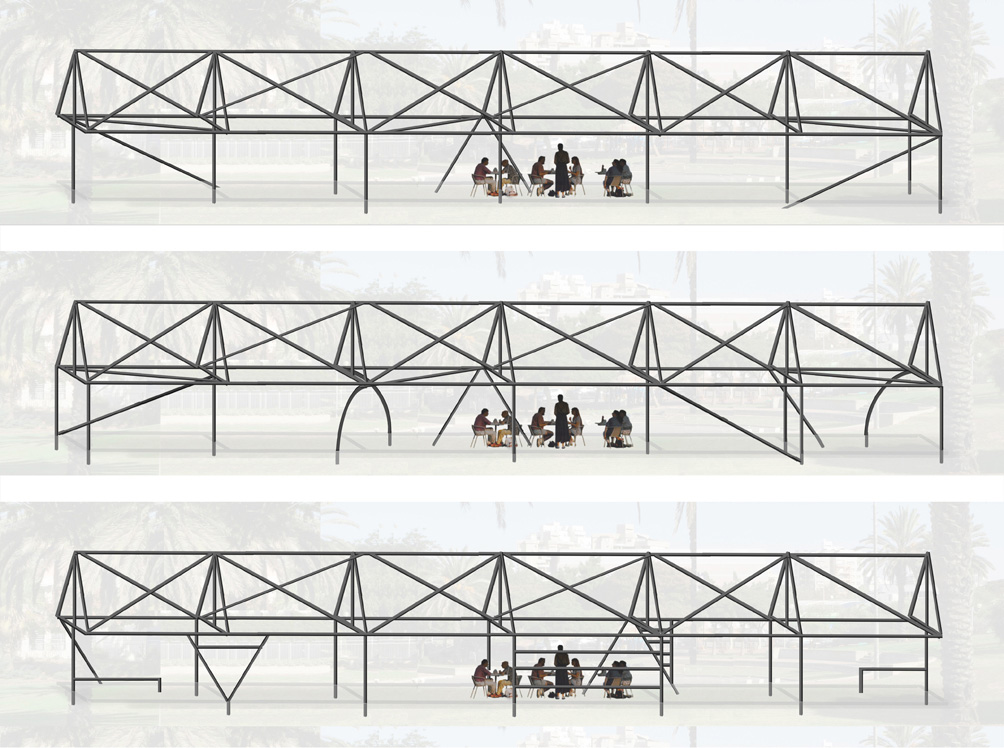
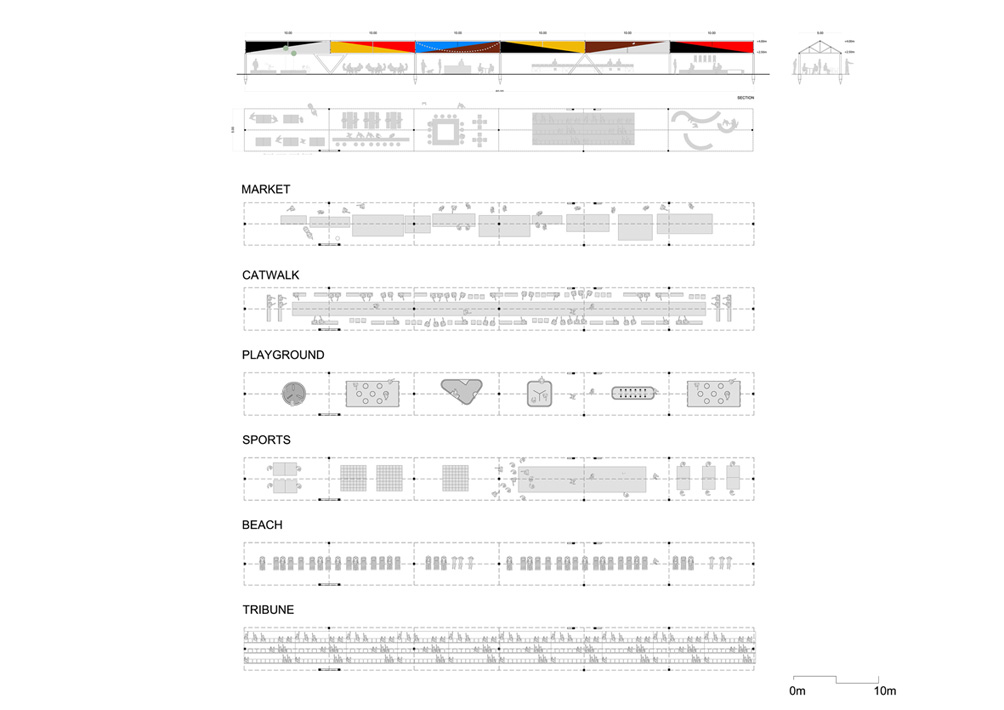
See the sketches above and below for their winning design Serpantina:  public urban spaces that could be made in the shade.

The design is expected to be built in Tel Aviv, Israel by next year.

02-Serpantina-Modelurban-shadeSerpantina-Model


07-Serpantina-Model


urban shade tel aviv


Urban Shade


urban shade

Serpantina is a simple linear element made up of modules of standard metal profiles and sun shading fabrics widely available in the market that can be both easily reproduced, adapted to different locations, transported and assembled on site.

More details:

Project details:

status: competition 1st prize
area: 300 m2
location: Tel Aviv, Israel
structural engineer: Athanassios Kontizas
local architect: Robert Ungar
collaborator: Reineke Otten
client: Beracha Foundation and Design Museum Holon
expected completion: June 2015


Jordan fourth most miserable nation in the Middle East

1

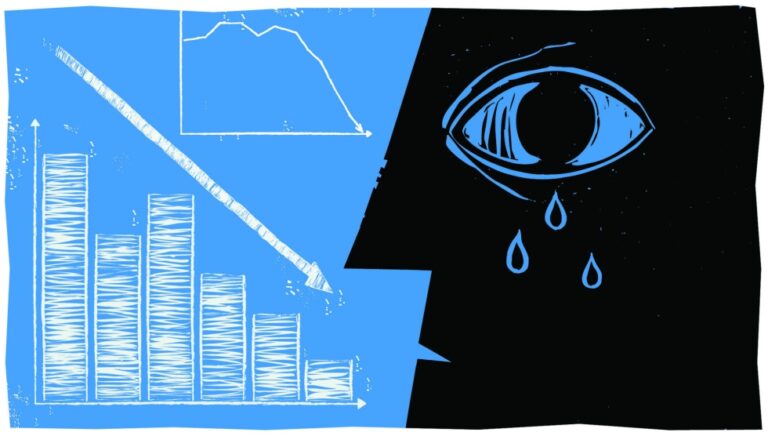
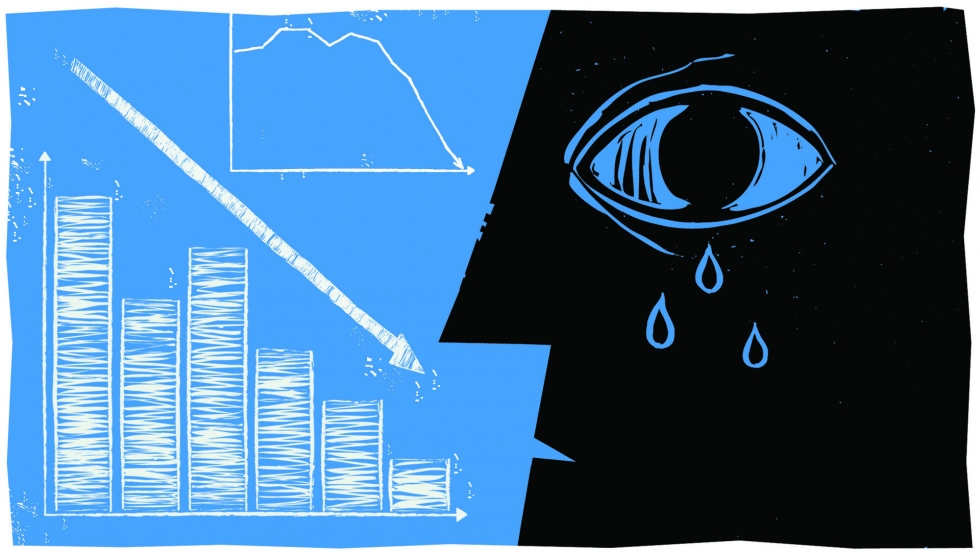
World Misery IndexOpen a newspaper in the Middle East and expect to be whacked with some bad news. Still, I wasn’t prepared to read that – according to the World Misery Index (the name was a tip-off to what was coming) – Jordan (where I live) is the fourth most miserable country in the Arab world. Regionally, only people in Syria, Sudan, and Egypt are more dejected. And consider that Syria also weighed in as most-miserable in the world!

The index was published by the Troubled Currencies Project at the US-based Cato Institute, which compiles data from the World Bank, the International Monetary Fund and the National Bureau of Labor Statistics.

The project ranked one hundred and nine nations from most miserable (1) to least-miserable (109) based on the ability of each country to reduce unemployment, inflation, and lending rates, while increasing gross domestic product per capita.

Jordan earned 24.2 points out of a possible 109; unemployment is to blame. Jobless figures stood at 11.4 per cent in the third quarter of 2014, reaching 9.2 per cent among men and 22 per cent among women. According to the Jordan Department of Statistics, overall unemployment  in that time period decreased by 0.6 per cent compared with the second quarter of 2014.  Compare that to third quarter 2013 when unemployment hit a record high of 14 per cent, and things seem to be slowly ticking upwards.

Ranked 32nd globally, Jordan performed better than Spain, which ranked 11th, and Turkey, which ranked 27th.

Among Arab states, Bahrain was rated the least miserable country, followed by Qatar, Kuwait, Morocco and Algeria. The world’s least miserable country is Switzerland, trailed by Japan and China.  Perhaps Jordanians can try skiing, or add more rice to their diet.

Image from South China Morning Post

بلديات الأردن غارقة – بالنقد

0

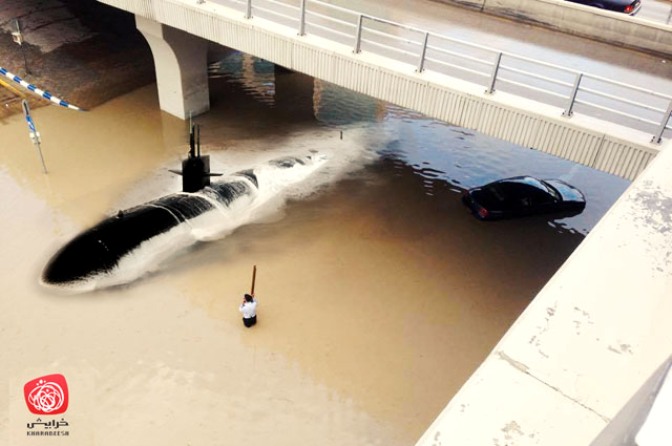
Amman-Jordan-floods-by-Kharabeesh

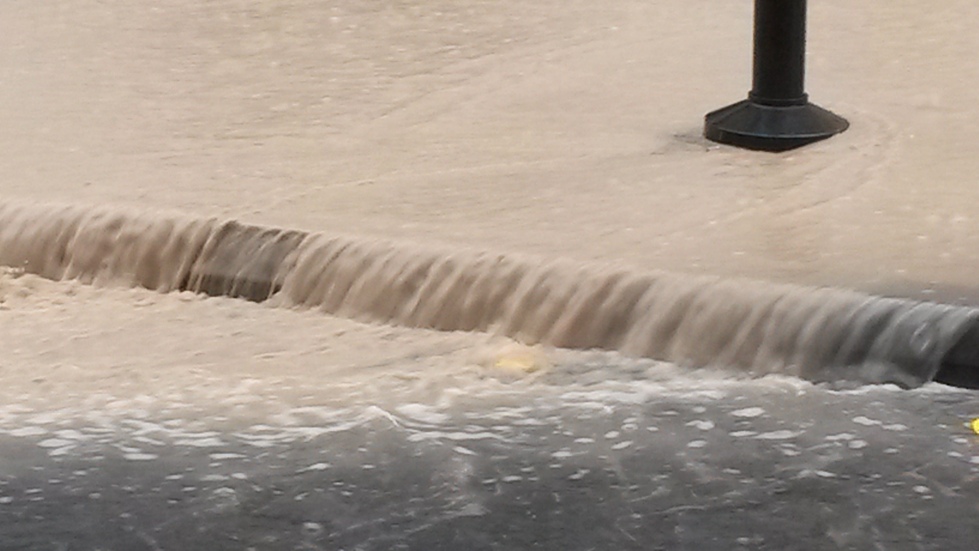
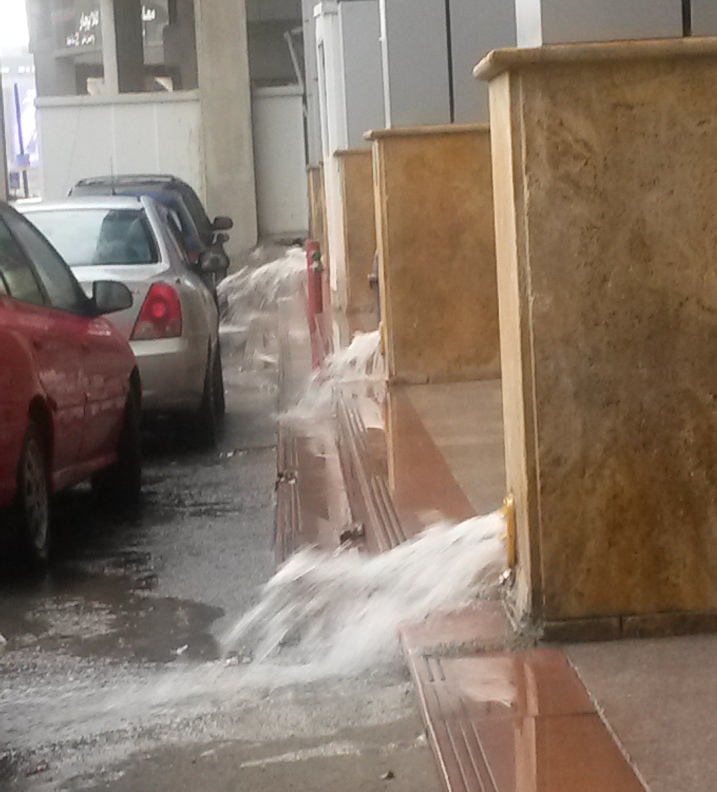
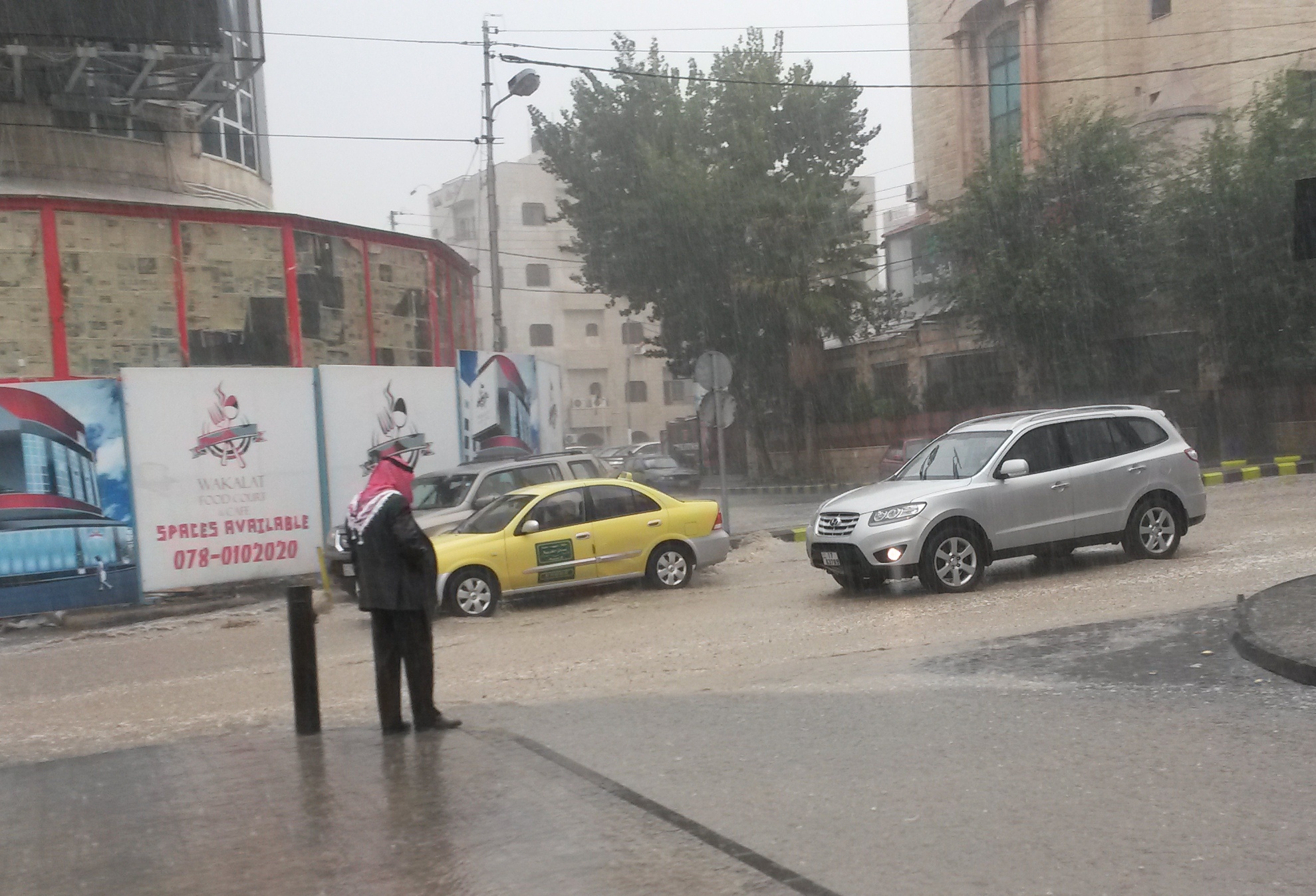
اكتظت مواقع التواصل الاجتماعي بصور لمخلفات فياضان عمان الأخير من سيارات و أنفاق غارقة بمياه الأمطار، بعد أن أطلقت السماء عنانها يوم الاثنين الماضي على العاصمة الأردنية، طافحة بذلك مجاري الأمطار و محولة الطرقات إلى أنهار فائضة. و كان الفياضان تذكرة للعمانيين بغضب الطبيعة، خاصة في بلد يعد من الأشح بالمياه على مستوى العالم

و قد سارع موقع خرابيش الساخر بنشر صور معدلة فنيا على صفحته على الفيسبوك كالمرفقة أعلاه. و لحق بركب السخرية هذا عدد من الناشطين على تلك المواقع، من مغردين و مدونين و خلافه، متهمين أمانة عمان العامة بعدم الاستعداد للتصدي لهكذا حالة من أمطار غزيرة و فياضانات. و قد اختار البعض الكوميديا للسخرية من هذا الإهمال بنشر الصور، أما البعض الآخر فكان أكثر حزما بالتعبير عن السخط إزاء عجز الهيئات المسئولة عن البنية التحتية في المدينة، خصوصا بعد حادثة هطول الثلوج الكثيفة و الغير مسبوقة في ديسمبر الماضي، و التي أدت إلى شل أحياء كاملة في المدينة لأسابيع

و كانت قد نشرت صحيفة جوردان تايمز الإلكترونية بعض التغريدات الغاضبة، و التي عزى أصحابها الشلل الذي أصاب المدينة جراء الفياضان إلى الفساد المالي و الإداري في أروقة المؤسسات الحكومية، و اتهمت تغريدات أخرى أمانة عمان العامة بالتقاعس عن واجبها منذ أكثر من عشر سنوات، ذلك الذي يطفوا عيانا كلما ألقت السماء حملها

Record floods in Amman Jordan

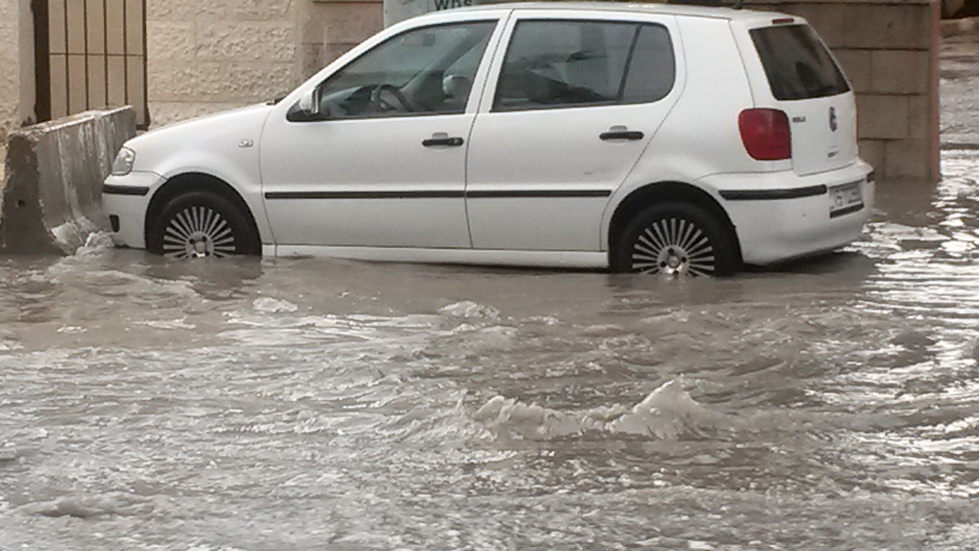
و قد تسائل البعض عن حال المناطق الأخرى في ظل الفياضان، خصوصا بعد الذي خبروه في عمان الغربية الاكثر حداثة نسبيا. و كما هو متوقع، أدت عاصفة يوم الاثنين إلى غرق عدة شوارع رئيسية و أنفاق تحت مياه الأمطار المتدفقة، و التي احتاج عمال الأمانة لساعات عديدة لتجفيفها. وقد صرح ياسر عطيات، و هو مسؤول في أمانة عمان العامة – قسم الأشغال العامة، في مذكرة إعلامية قائلا أن الحياة عادت إلى طبيعتها بعد ساعتين فقط من توقف الأمطار في معظم مناطق المدينة. أما في الحقيقة، فقد استمرت الأزمة في حركة السير إلى ما بعد المساء حتى لاحت بوادر الانفراج

Amman Jordan flooding

أما أحمد خريسات، مدير قسم الطرقات في أمانة عمان العامة، علل التأخير في إعادة الأمور إلى مجراها في بعض الأنفاق الرئيسية إلى انقطاع التيار الكهربائي الناتج عن الفياضان، مما أدى إلى تعطيل عمل المضخات في الموقع. و مما زاد الطين بلة، انجراف كميات كبيرة من مواد البناء و الرمال و استقرارها في مداخل شبكة الصرف الصحي، مؤدية إلى انحصار مياه الفياضان في الطرقات

Amman-rainstorms-cause-serious-flooding

و قد ألقى خريسات باللوم على مواقع البناء العديدة في عمان، قائلا أن المدينة تفقد قدرتها على امتصاص مياه الأمطار كلما نقصت المساحات المفتوحة فيها. و أضاف أنه بينما تعمل الأمانة العامة على تحسين شبكة الصرف الصحي للتصدي للأمطار الغزيرة، هنالك أسئلة كثيرة متعلقة بالتنظيم المدني يجب على العمانيون التوقف عندها: كيف تتعامل هيئات التخطيط مع المشاريع الجديدة و تضمن عدم إثقال البنية التحتية للمدينة كمجاري مياه الأمطار؟ من يضمن أن شبكة الطرقات المحلية تستطيع خدمة المباني الجديدة دون تعطيل حركة السير؟ لماذا لا يتم مراجعة قوانين البناء لإدراج مواد أصرم تضمن هندسة المياه السطحية من تجميع و تحكم في حال فياضان كهذا؟

Jordan-rainfall-causes-significant-floods.

و على صعيد آخر، استطاعت فرق من هيئة الدفاع المدني إنقاذ تسعة أشخاص في مدينة إربد الشمالية كانت قد غزت المياه مساكنهم. و في عمان، استطاعت الفرق أيضا ضخ المياه من داخل عشرات البيوت، و اقفلت المحلات أبوابها في الطابق الأرضي من أحد المراكز التجارية التي طالتها المياه

Serious flooding caused by Amman Jordan rain

و قد أدى الفياضان إلى وفاة ثلاث أشخاص على الأقل، و قد وُجد جثمان امرأة على بعد ثلاث كيلومترات من منزلها. و في وادي صقرة في عمان، صعق رجلان حتى الموت جراء الفياضان الذي حمل التيار الكهربائي إلى داخل مسكنهما. و قد شهدت إربد انجرافات عديدة في الأراضي أدت إلى سد الطرقات، و اقتلاع شجر الزيتون و مساحات من الغابات المحاذية للمدينة. و قد حُذر المزارعون من قطف الزيتون في هذه الأجواء -الباردة و الممطرة على غير عادة في هذا الوقت من السنة، و ذلك مخافة أن يؤدي القطف إلى اختلال في تماسك التربة

الشتاء على الأبواب. الله يستر


Halloumi cheese kebabs recipe

2

image haloumi kebabsWhat’s vegewarian, anyway? Answer: it’s selecting sustainable dishes based on non-meat foods at least once weekly.

Halloumi is said to have originated long ago in Cyprus. Cheesemakers spread the Halloumi technique abroad of compacting milk fresh curds and curing them in brine, and now many Middle Eastern countries produce the cheese. It may be made from goat’s, sheep’s, or cow’s milk, or a mixture of milks. Its flexible texture and  high melting point make the firm, salty cheese ideal for frying and grilling. This easy recipe calls for skewering and grilling it with colorful vegetables. A little chili in the seasoning gives it some Middle Eastern heat. And by the way, we like the occasional cheese and vegetable dish, but here are two intriguing ways to combine cheese with dates.

“Drop-a-brick” in your toilet to defer regional drought

2

Join-the-Bowl-Movement-and-Drop-A-BrickDrop-A-Brick is a clever PR campaign to cut water waste in severely parched California, a state with dwindling aquifers that is experiencing its worst drought in 500 years. It’s a project that can be implemented everywhere there is indoor plumbing, and the concept is sound – displace some tank water and over time, save buckets of the wet stuff. This is an ideal solution for those of us put off by the “if it’s yellow, let it mellow” credo, yet not yet ready to pee in our shower. Let’s not just read about water conservation and, instead, actually act to save some!

Jordan municipalities flooded with criticism following record rain

0

Amman-Jordan-floods-by-KharabeeshSocial media websites are awash with pictures of flooded underpasses and traffic snarls caused by exceptionally heavy rainfall in West Amman, Jordan. The skies ripped open late yesterday morning, quickly dropping several inches of rain across the capital city, overwhelming storm sewers and turning roads into raging rivers. I was there – it was a remarkable reminder of nature’s power, especially in this 4th-most-water-starved nation on earth.

Jerusalem’s on fire, but these “enemies” put faith in ecology

1

faith-ecology
Jerusalem’s been boiling over with violent and deadly conflicts over the last half a year. But faith leaders intent on ecological ideals as a peace bridge have met again at the the Faith and Ecology conference in Jerusalem last week.

Green Prophet has attended meetings in the past (see our coverage from 2011) and a photo of our founder Karin Kloosterman, below, at the event in 2012.

And we are happy to hear that the annual event is still building trust and those much-needed green bridges between Jews, Muslims and Christians in the Holy City.

karin-kloosterman-interfaith-conference-2012
Yonathan Neril, a Jewish rabbi, started the idea of using green faith as a lever for peace about five years ago. Since, his organization the Interfaith Center for Sustainable Development aspires to bring the “enemies” of Jerusalem together to create peaceful initiatives.

He also creates green teaching tools to help faith leaders inspire their devoted.

yonathan neril

Neril is the leading drive behind the regular conference and the initiative of bringing faith and green together in Jerusalem.

In 2007, this is the very same reason why Kloosterman founded Green Prophet.

Specifically in the Holy Land, members of the three Abrahamic traditions all share the importance of being stewards of creation.

Because Jerusalem is a gate to heaven

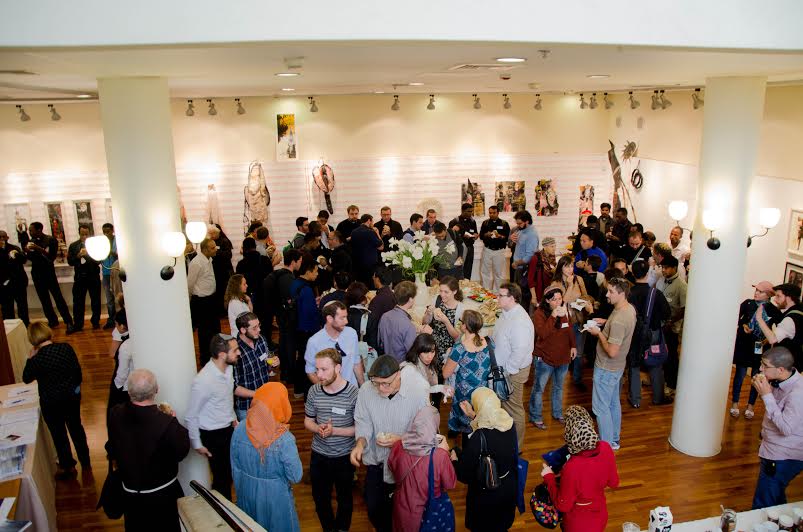
The recent conference happened last week, where over 100 clergy, seminary students, and others and provided tools and inspiration to expand faith-based environmental teaching and action.

Rabbi Michael Melchior, former Member of Knesset (israel’s parliament) and co-founder of the Knesset environmental caucus, said that “the holy city of Jerusalem sometimes goes astray to points of violence, but really we can make it a gate to Heaven.

rabbi-priest-ecology-faith-jerusalem

“The world really belongs to God, and all of us are temporary residents in this world, which we have been given to take care of.”

Speakers included Jerusalem-area priests, rabbis, imams, and a scientist, such as Bishop William Shomali, the Latin Patriarchate of Jerusalem,  Rabbi Yuval Cherlow head of Yeshivat Hesder Petach Tikva and Dr. Nurit Hashimony Yaffe from the Academic College of Tel Aviv-Yafo.

faith-ecology-israel-green-prophet

The group participated in interactive workshops, an outdoor session, and a video session featuring pre-recorded addresses from the Dalai Lama, Archbishop Desmond Tutu, and Rabbi Lord Jonathan Sacks.

Part of the event was dedicated to generating action plans within each faith community, which resulted in commitments for continued collaboration on the environment.

This event was part of the United Planet Faith & Science Initiative, which brings faith and science leaders together to catalyze shifts in society to address climate change. It is part of a series of events in late 2014 taking place on three continents in New York, Jerusalem, and Lima.

The events coincide with UN climate talks and aim to generate tangible environmental action within faith-based communities.

The Conference was held at the Mishkenot Sha’ananim Conference Center in Jerusalem, and was co-organized by the Konrad Adenauer Foundation, the Interfaith Center for Sustainable Development, and the Salesian Pontifical University.

More on greening pilgrimages:

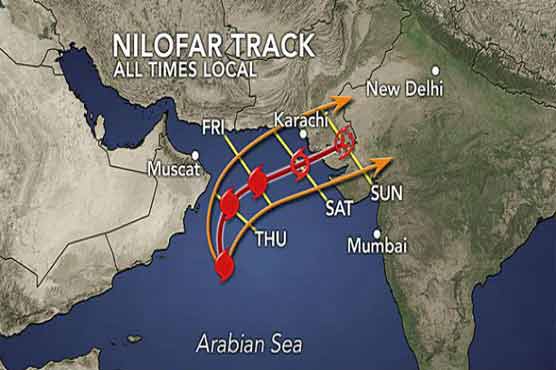
Cyclone Nilofar is Oman’s new meteorological nemesis

0

Image courtesy of http://www.thefrontierpost.com/

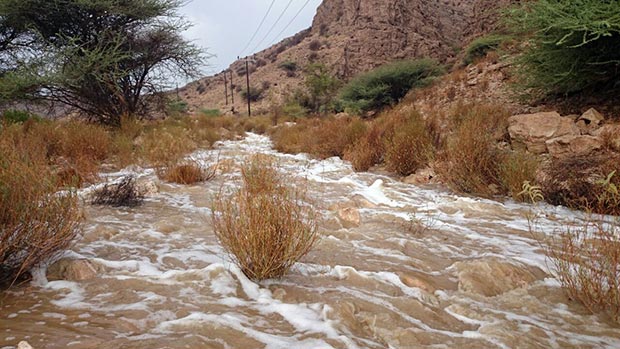
Although the tropical cyclone Nilofar has been veering away from Oman’s coast downwind towards Pakistan and India, it had inundated the infrastructure of several areas in the country, including Muzra, Dabab, Al Khabourah, Al Seeb, Al Khoud, Rusayl, Jalan, Sur and Al Ashkara.

Nilofar is a Persian baby name and it means lotus or water lilly.

Flooded valleys have claimed the lives of three people already, including a child, while another person was reported missing. The silver lining is that five people were rescued after their vehicle was swept away by flash flooding in Wadi Hoqain, wilayat of Al Rustaq. The numbers of those injured or stranded without power, and the dollar value to the damages are yet to be determined.

Flooded Valley

The cyclone had crept some 450 kilometers closer to Masirah Island, before deviating towards Pakistan’s Karachi and India’s Gujarat. India’s Meteorological Department has predicted the storm will bring winds of up to 130 km/h (80 mph).

In response, The Royal Oman Police issued multilingual pictorial advisories to the public to remain safe and to avoid crossing overflowing valleys.

However, and given the country’s history of exposure to cyclones, the Omani authorities have yet to enhance its emergency response protocols, and rethink its infrastructure preparedness for such events, specially in rural areas.

A brief recent history of Oman’s meteorological disasters include:

  • Cyclone Keila in 2011: 14 fatalities were reported, most of them caused by drowning due to floods

  • Cyclone Phet in 2010: 24 fatalities were reported, most of them caused by drowning due to floods, and a reported incident of electrocution in surging water

  • Cyclone Gonu in 2006:  50 fatalities were reported

Let alone the hundreds went missing, hundreds of thousands affected, and billions of dollars lost in damages to property, and the halting of oil and gas coastal and off-shore operations.

Images via The Frontier Post, Rthmc

Carved ghost turnip head way scarier for Halloween

8

cary turnip head, carved turnip into a jack O LanternThere are calls for Halloween to be banned in the Middle East and other parts of the Muslim and Christian world where this ancient solstice tradition is misunderstood. Halloween of today is a mutt of a holiday. It combines ingredients from stone-age Celts Irish and Scottish Catholics, native American harvest festivals and marketing from candy and decoration companies.

Samhuinn is Scotch gaelic for the month of November, the traditional end of Celtic summer. This time marked the boundary between light and dark, life and death, good and evil. It was believed that the veil between this world and the next was thinnest at this time of year.

Fires were lit to guide spirits of the dead through the transition and chase away the bad spirits. This pagan holiday was so intertwined with Celtic traditions that the Roman Catholics couldn’t crush it, so they adapted it and adopted it as “All Soul’s Day” or “All Saint’s (Hallows) Day and the night before, “All Hallow’s Eve” we now know as Halloween.

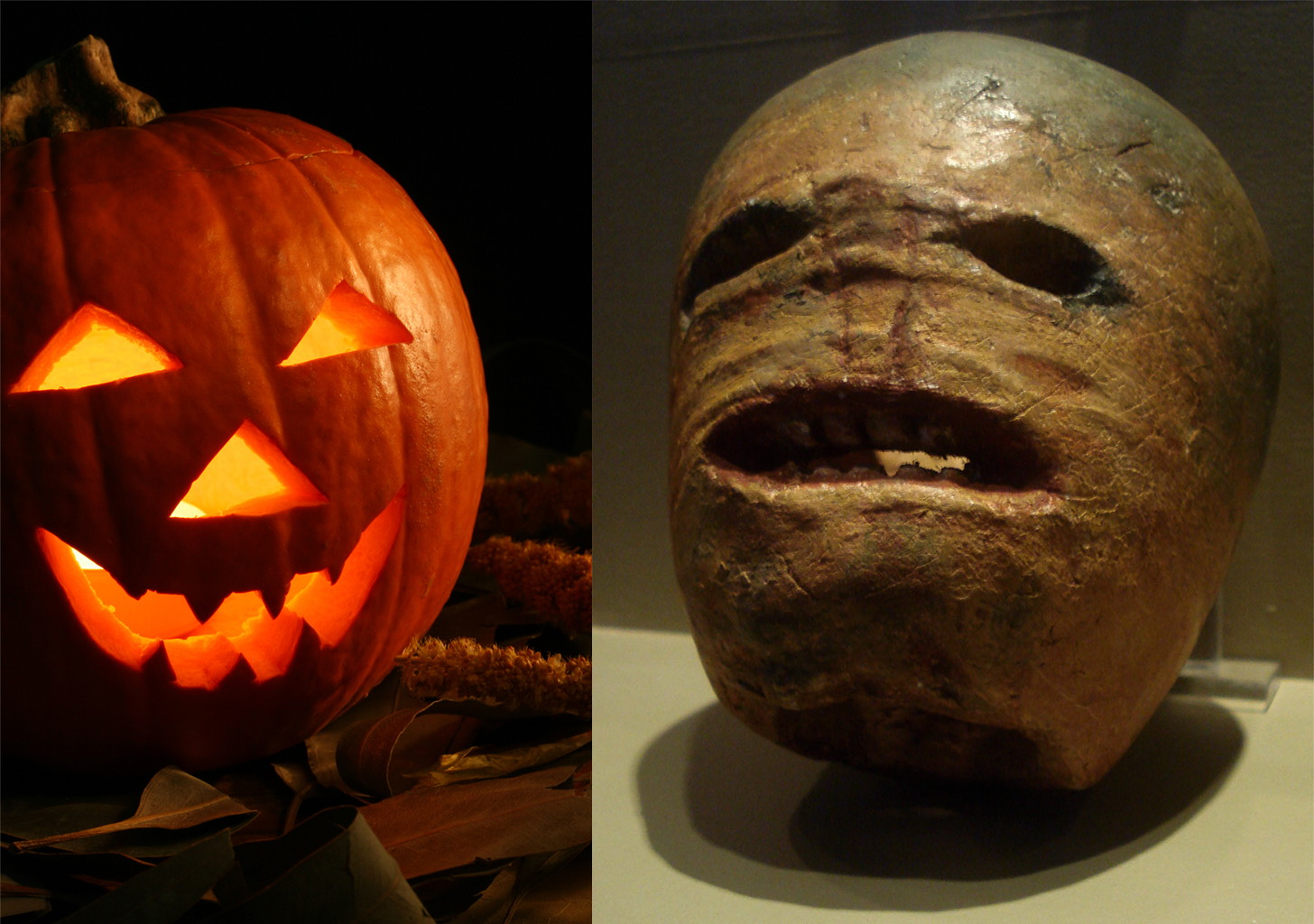
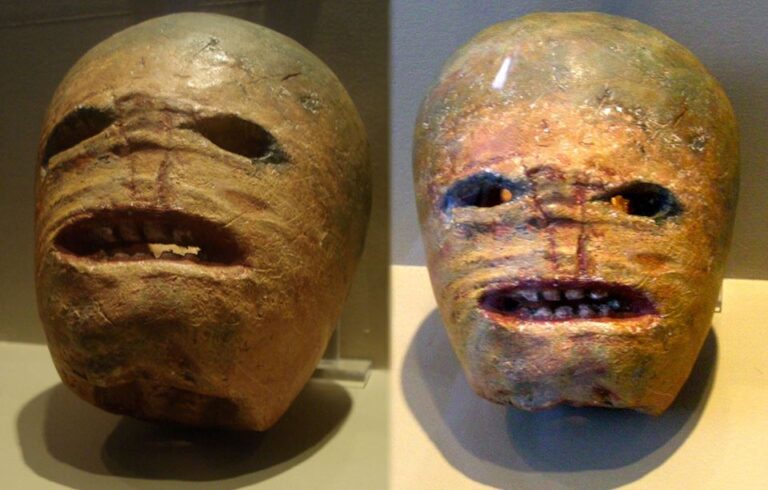
Carved turnips way more frightening than pumpkins


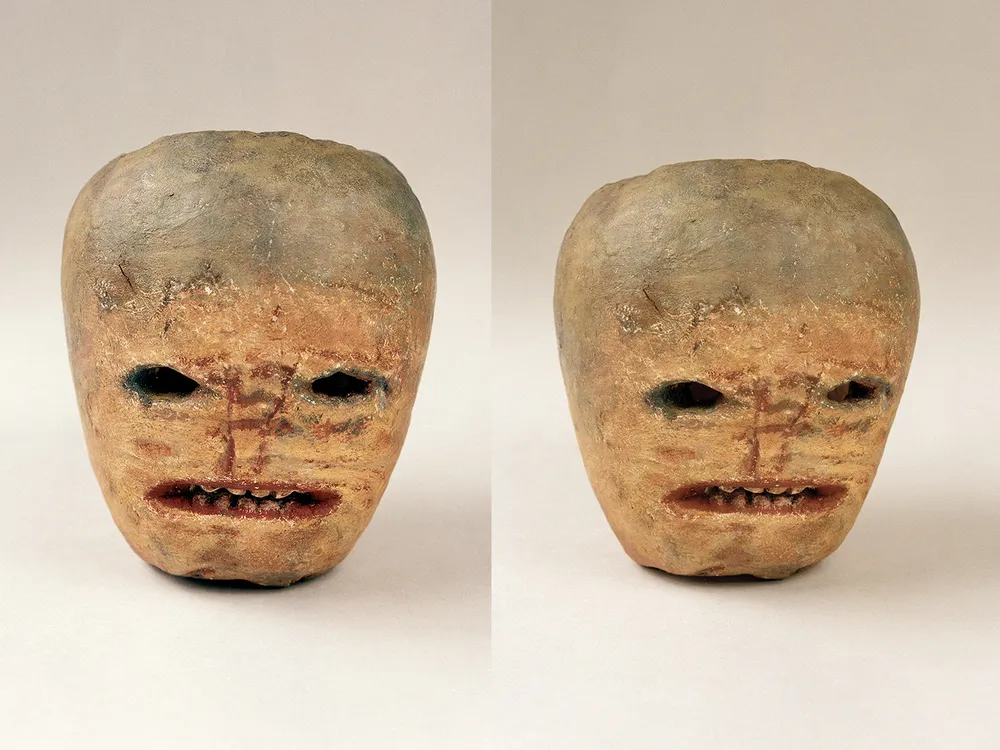
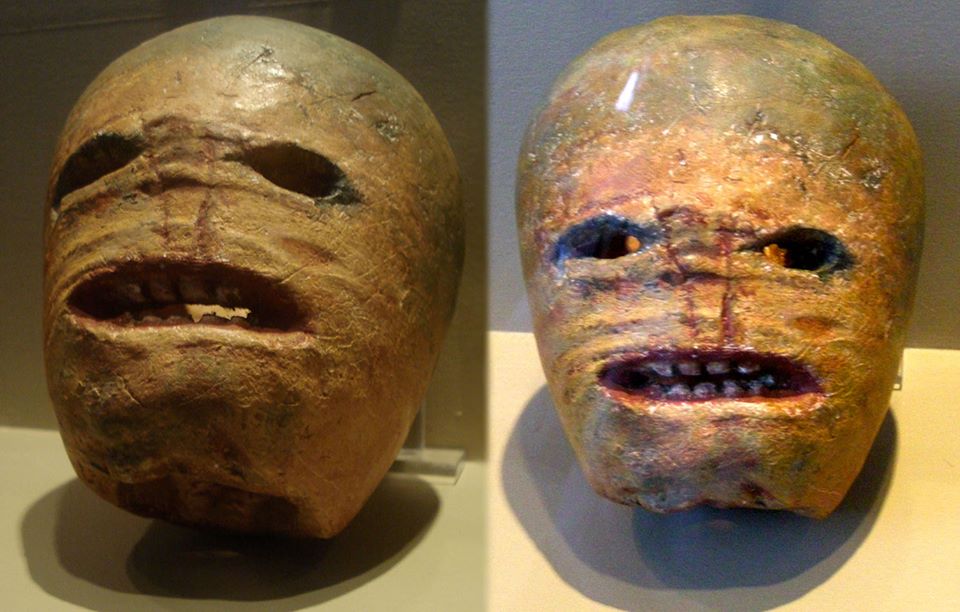
Ghost turnip from the Smithsonian. A terrifying alternative to a carved pumpkin.

Christian fires burned on hilltops where pagan fires had burned for 1000 years. The Irish made lanterns out of turnips (see photo above) to guide ‘Stingy Jack’ and other wandering souls caught in the netherworld while warding away the evil spirits with frightening masks and Jack O’ lanterns made from carved turnips.

But when Scottish and Irish people emigrated to America, they found that turnips weren’t as plentiful in the new world as pumpkins — a traditional native American harvest food.

Add Aztec chocolate, cheap plastic decorations, costumes and customs from around the world and you have modern Halloween.

This strangely modified holiday has only recently been re-imported to the Celtic regions where it was born. Now it is enjoyed around the world as far away as Japan and China by those who don’t read too much into a melting-pot tradition which celebrates nothing more than a chance to pretend to be someone else for an evening.

And if you are wondering about the picture above: Photo of Jack O’Lanterns, carved from turnips from the National Museum of Ireland, Museum of Country Life, Castlebar, Co Mayo

Halloween goes green with fantastic DIY costumes you can recycle (PHOTOS)

1

Lauren Conrad mermaid costume
Halloween landed on a Friday this year, meaning your “I have to work tomorrow” excuse for not dressing up becomes as flimsy as a ghost.  So, with a few hours to prep before tonight’s parties begin, how do you devise a spooktacular costume without buying more polyester (most likely shipped over from China) to crap up the planet?

Here in Jordan, the government just banned all Halloween festivities, fearing backlash from fundamentalist groups who view the celebrations as Satanic and homosexual.

The home ministry issued a statement explaining that all holiday activities are forbidden to prevent a repeat of the rioting that occurred during the last two Halloweens.

So while I can’t use any of the following ideas for fancy-dress-on-a-shoestring in Amman; nothing is stopping you from making the holiday “Hallow-GREEN”. Buy some tools if you don’t have any at home and get creating!

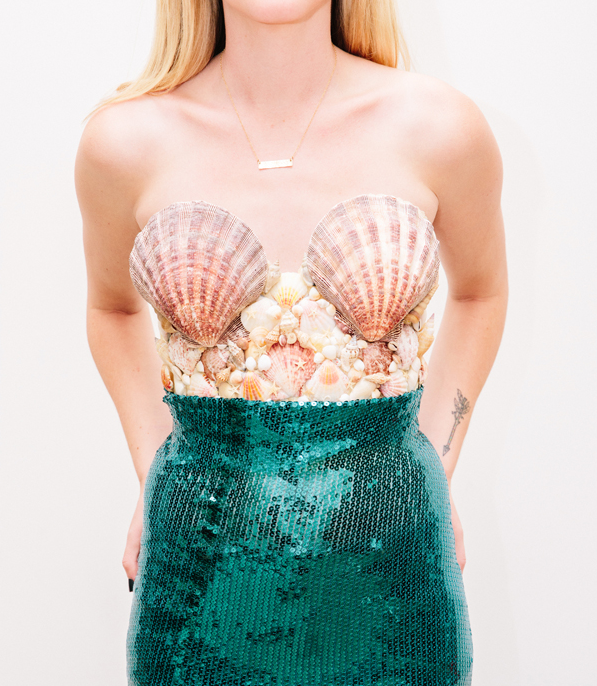
American celeb Lauren Conrad is a self-proclaimed Queen of Halloween.  Park aside her shameless self-promotion, and I’ll admit I’m sort of loving her do-it-yourself mermaid costume which can be whipped up pretty quickly with a bucket of shells and a glue gun. (That’s her get-up in the image above – she shares a step-by-step process for making the costume on her blog.)

Cardboard ballgown

cardboard skirt
A similar time investment can produce a cardboard ballgown like the one above – but you’ll have to improvise as the website that offered instructions has spookily disappeared!

GarbageDress08
A simpler solution is a garbage bag dress, a la multi-disciplinary artist Robin Barcus Slonina (pictured above).

She creates site-specific, interactive “dress” sculptures in a project entitled “States of Dress”.  Drive home a point about plastic pollution without saying a word (and help clean up after the party too).

Dress like acid rain!

acid rain costume
I  may steal this stunner for a future year – what a spectacular depiction of acid rain!  it could be easily recreated from plastic bags and cut up clear bottles. What’s scarier than environmental degradation?

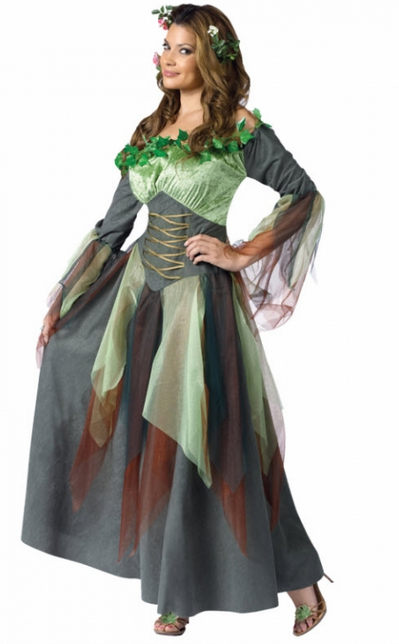
Be Mother Nature Herself?

womens-mother-nature-costume

Dress up in a women’s mother nature costume 

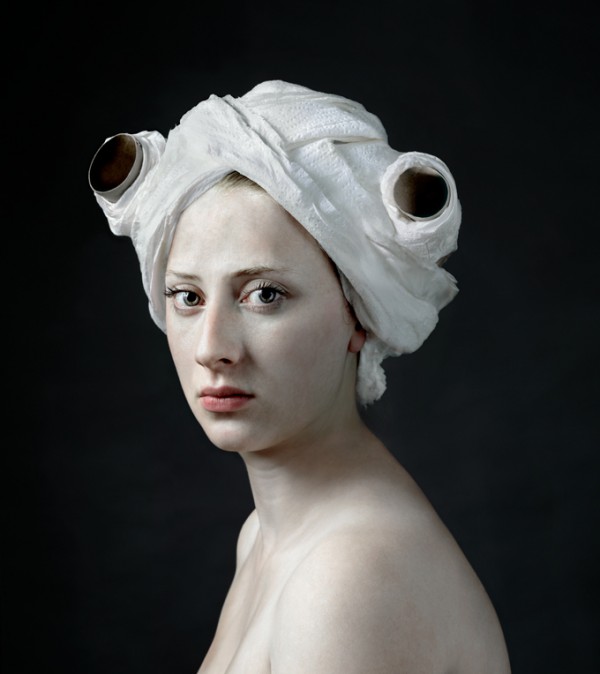
Dress up like a Renaissance painting

Henrik-Kerstens portraiture
I stumbled across Dutch photographer Hendrik Kerstens who creates stunning portraits using everyday objects. Do your head up like his Renaissance “painting” -simple make-up and some rolls of toilet paper can morph you into a work of art.

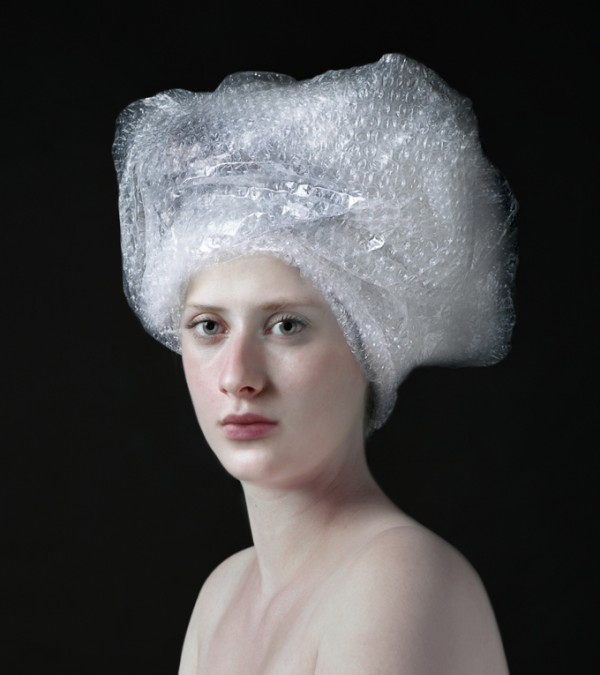
art from everyday objects
Or use bubble wrap to transform yourself into a medieval beauty.  His images might inspire you to pull the vent duct from your dryer (you should be air-drying clothes anyhow!), pop a dishtowel on your head and make yourself into a modern-day Rembrandt.

art from everyday objects
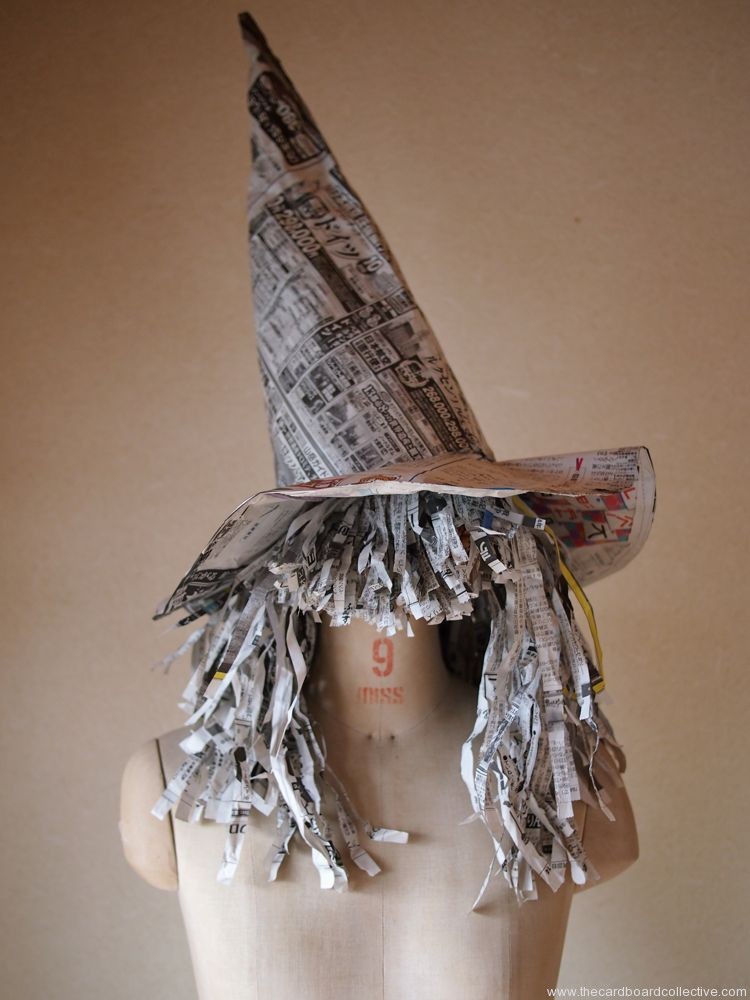
But let’s be practical.  You need a costume now.  Yesterday’s news can be tonight’s prize-winner if you craft a classic witch’s hat out of newsprint.

newspaper witch hat
Or opt for long tresses made from the same stuff. The folks at Martha Stewart Omnimedia can get you stylin’ in paper curls in about the same time as a real hair appointment.

newspaper-wigs-martha-stewart
And we haven’t forgotten the kids.  Pull a pair of plastic bottles from your recycling bin and make a jet pack for your tiniest rocketeers.

Rockets from soda bottles

plastic bottle rockets
And here’s a no-sew ballerina tutu that takes minutes to make with plastic shopping bags.

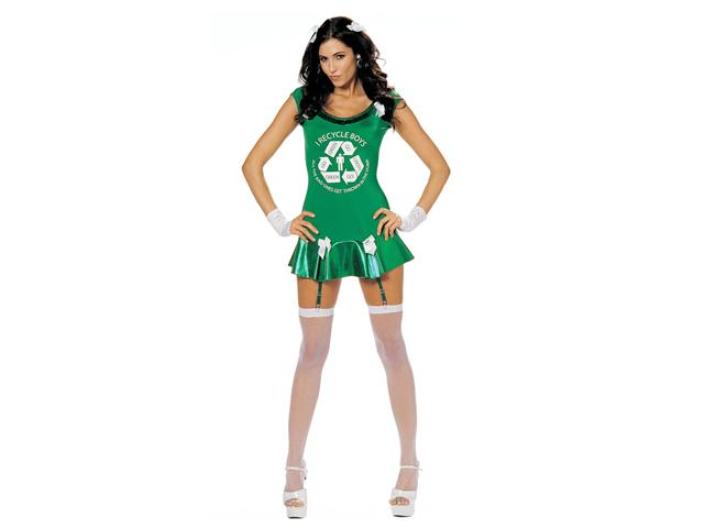
plastic bag tutuInspiration abounds online. Get cracking, don’t delay – or you may be stuck in the lines at the party store, left with this cringe-inducing “sexy environmentalist” costume.  The image is as awful as the concept – the message on the dress reads, “I recycle boys” and “Recyclers do it twice”.  Suddenly Jordan’s ban makes a certain sense.

If you do craft your own costume? Just be sure to drop the duds in the recycling bin when the party’s over.

sexy environmentalist

Images and their sources are: Lauren Conrad mermaid; cardboard hoop skirt; Robin Barcus Slonina; acid rain “Goddess of Depression” costume;  three Hendrick Kerstens portraits;  witch hat; newsprint wigs; bottle rockets; plastic tutu; and sexy environmentalist by jezebel

6 things “green” businesses should know about barcodes

0

green-bar-code-sustainable
All round the globe and most importantly the business world, the use of barcodes has been emphasized in areas other than the traditional stock identification. Barcodes are more than just codes anymore. They can help us trace materials, sources of production and pollution, and even help sustainable businesses manage stock.

But the way we use barcodes is changing. Do you have a green business? Sustainable or otherwise, every business should be ready to embrace these existing changes and be ready to either innovate in the line of barcodes or also embrace any future innovations that will hail from the barcode.

Know that every business should be aware of a number of things about barcodes. These are:

1. Barcodes for product identification.

Even if you are producing honey or fair trade handmade goods: From the inception barcodes were more or less designed for this role. It is important that each and every business finds it necessary to put product identification on its products. Product identification is important in the following ways. First it puts the business in a position that it is aware of what it holds as stock. Using barcodes to identify your products will entail that no single product can the premises, unless it has been passed through the barcode scanner. This is only done when an item has been sold.

Second is that the same product identification will help in the management of inventory, this is by the essence that barcodes can be generated with date tags. This will ensure that only those products that came first are put on the counters for sale first.

According to Entrepreneur Magazine, “For buyers, it gives you access to more information that removes the shopping inertia,” Muse says.

2. Barcodes for asset management.

In many organizations, asset management is something that has been presenting a lot of challenges. Barcodes present a simple solution to this where every thing is put on track from the identity of the assets, the control of use for the asset, the responsibility liable of the assets (should something go wrong or get spoilt) and the movement of the asset. Using barcodes for your assets will imply that a business can easily identify its asset, as the barcode tags act like names in its asset inventory system.

Therefore the business is practically aware of how many assets it has and can to a spot check of the asset any time with ease. According to an article in Entrepreneur Magazine, controlling the use of the asset is also made easy with the barcode; a business can tag this on basis of time, such as it is made clear that the authority to use a business asset is not granted after business operating hours.

It is important to note that the act of identifying products using barcodes can come in handy in case the business asset is lost or stolen, or products are not used with counterfeit goods or slave labor.

The recovery of the assets is simplified and more so once the asset has been recovered, identifying and claiming the asset, as belonging to the business is made easier. With the use of barcodes that are unique to the business of which this can be proved easily.

3. Barcodes for order management.

In most emerging businesses and already existing ones, the issues of stock quantity management have been causing a lot of problems. Not managing stock correctly can result in a lot of supply chain waste. The main issue at hand being that management will try not to hold too much in stock versus the fear of running out of stock. Services like the Shopify barcodes can be integrated to the inventory system to clearly tell the management from time to time when they have reached their reorder levels and when they need not order a particular item.

4. Barcodes for service management.

There are businesses that put a lot of emphasis on the value of service being rendered to them mostly by their own staff. Measuring service is something that cannot be done easily as it is subject to personal liking and individual character. The most probable way to put a measure on this is if we track the quantities of the materials they use. Businesses can use barcodes for this and actually put value to the cost of materials an individual is using to finally come up with a cost of service.

5. Barcodes for marketing.

Barcodes, especially QR codes, can be used as a marketing campaign. From billboards and advertising windows it is no lie that QR codes are gaining popularity in advertisements all around the world. According to Entrepreneur Magazine, Mike Podlesny of Burlington, N.J., used QR codes on bumper stickers in order to promote his gardening business, Mike the Gardener Enterprises Generating barcodes.

Businesses should also explore the option of generating their own barcodes. There are websites that offer this immediately rather than fully opting for the purchase of the same, which is also highly advised.

6. Guiding consumers and supply chain customers on the how to scan barcodes.

If a business chooses to use barcoding advertisement as part of their marketing campaigns, it is important to ensure that their consumers or customers in the supply chain are all around trained or guided on how to scan these codes.

Secret gardens planted by Syrian refugees in Jordan

4

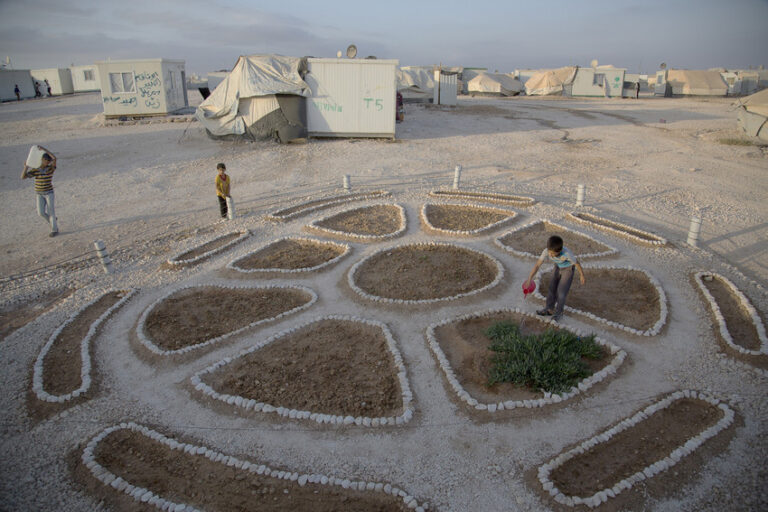
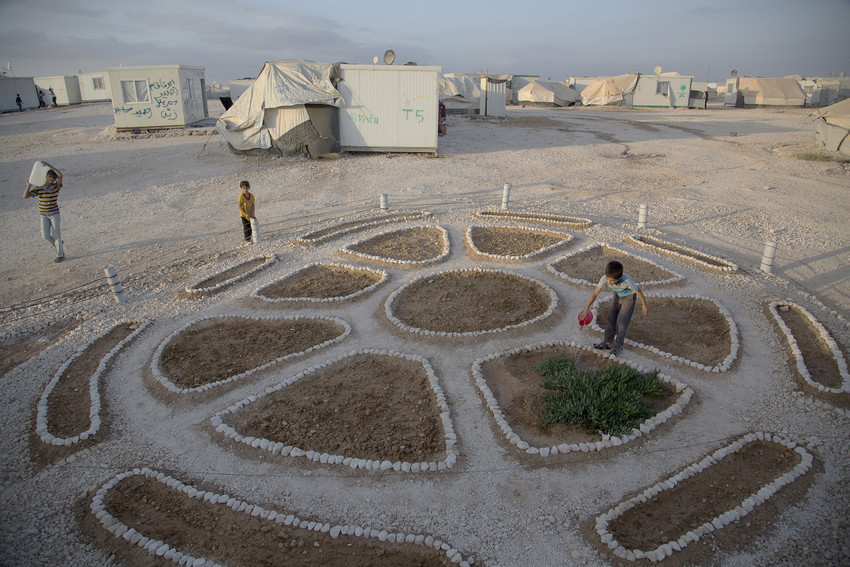
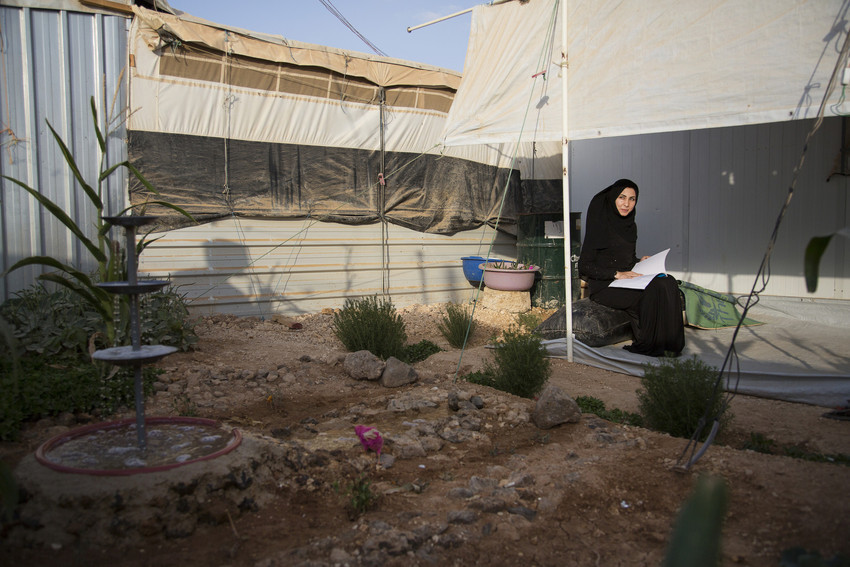
syria-refugee-secret-garden

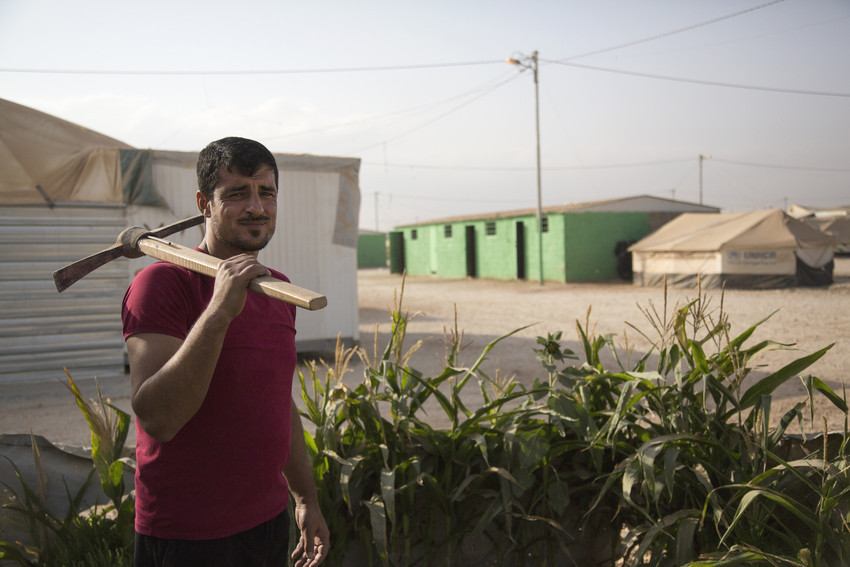
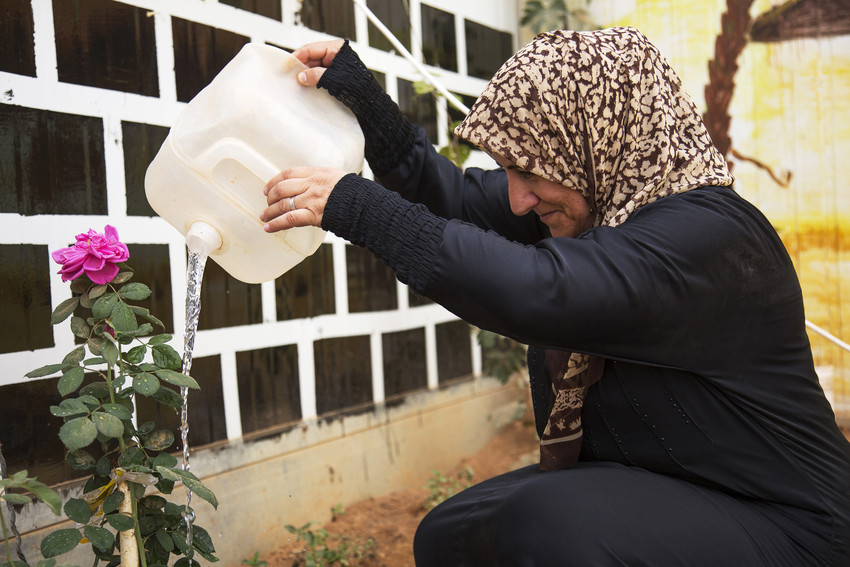
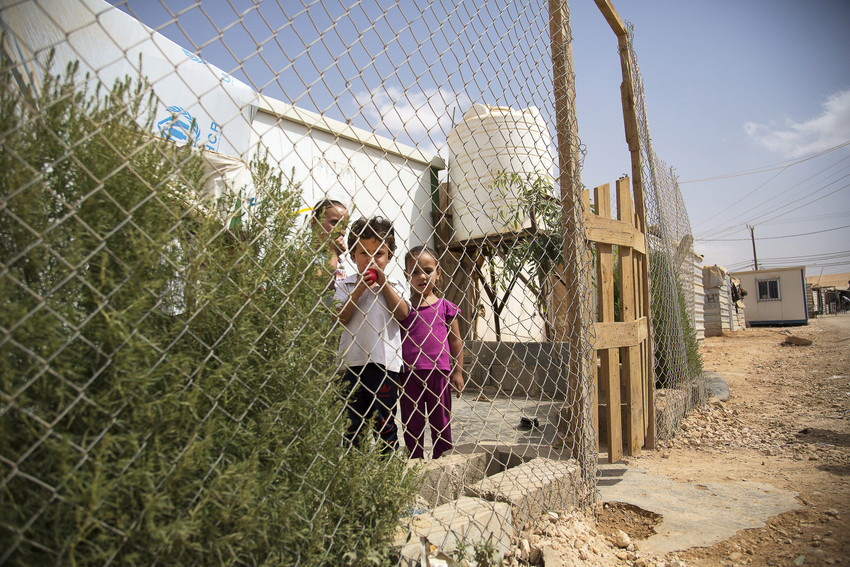
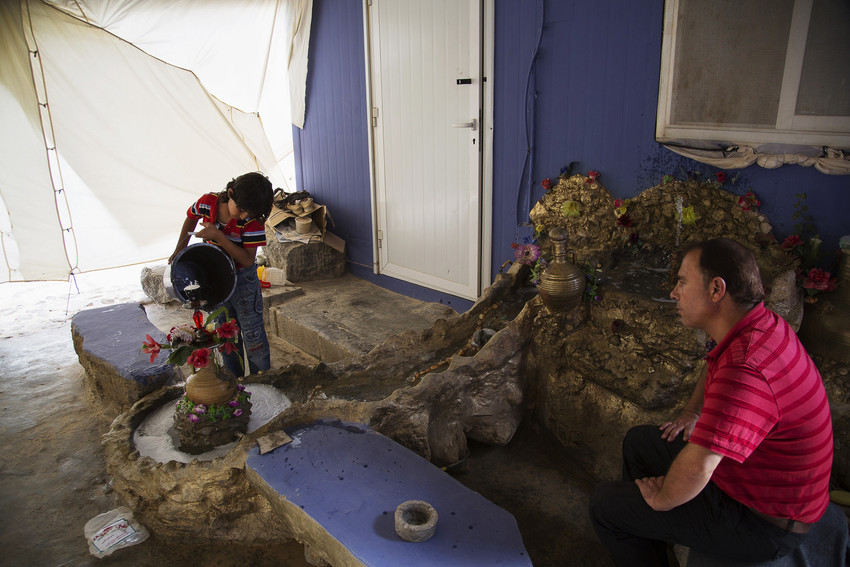
Mostly we hear stories of pain and tragedy from Syrian refugee camps. But the Za’atari Syrian refugee camp in Jordan, a place where Green Prophet’s Laurie Balbo is knitting together and flying hope, there are new sprigs of hope.
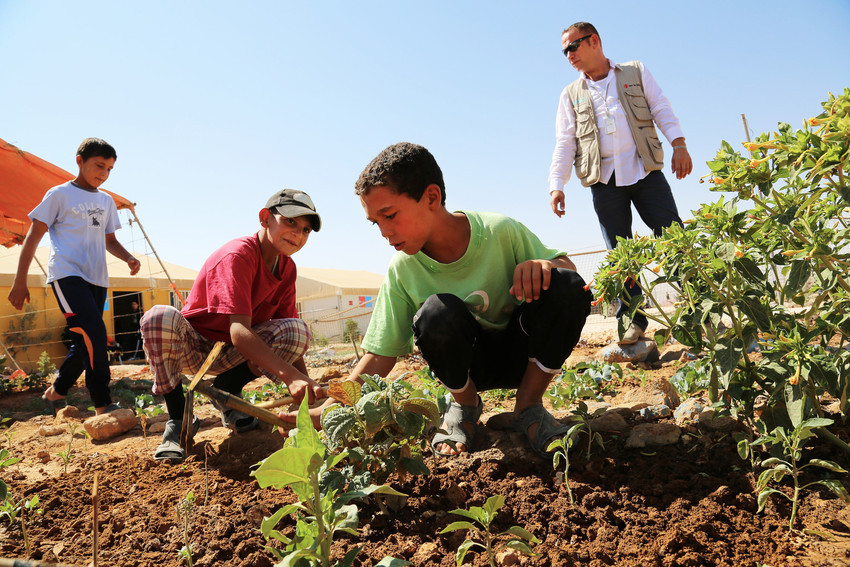
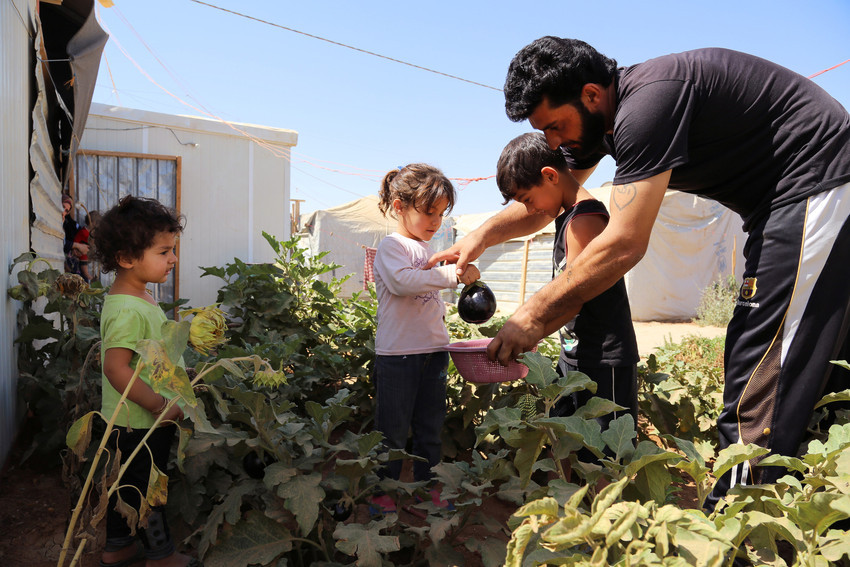
The non-profit organization Save the Children is teaching some of the camp’s 800,000 refugees how to garden. The group is giving the Syrian refugees who have fled their homes during the civil war in Syria to Jordan, lessons on landscaping and gardening.

syria-refugee-secret-garden-10

“Gardening allowed them to make something with their hands, and gave them a sense of accomplishment. We have seen an incredible change in them,” said Mohammad Abu Farah, the gardening teacher from Save the Children.

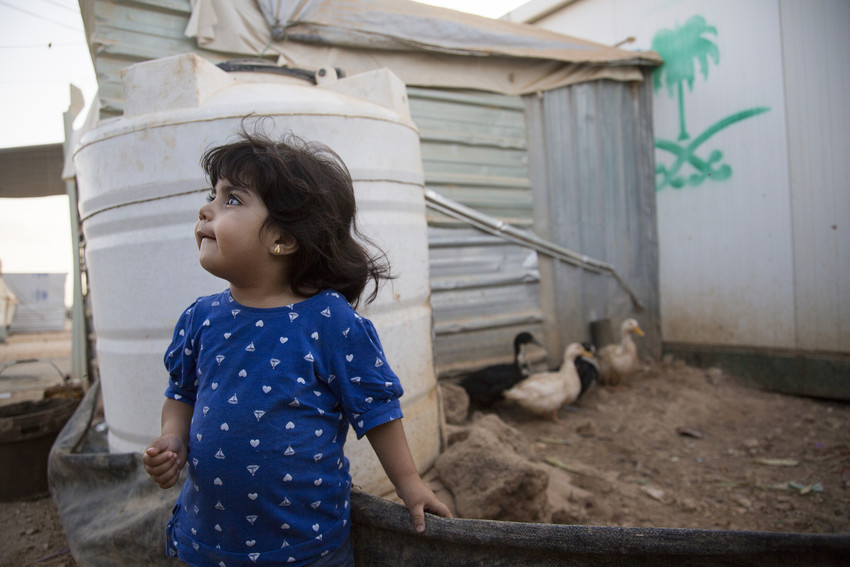
Wardahâs niece plays with the families ducks

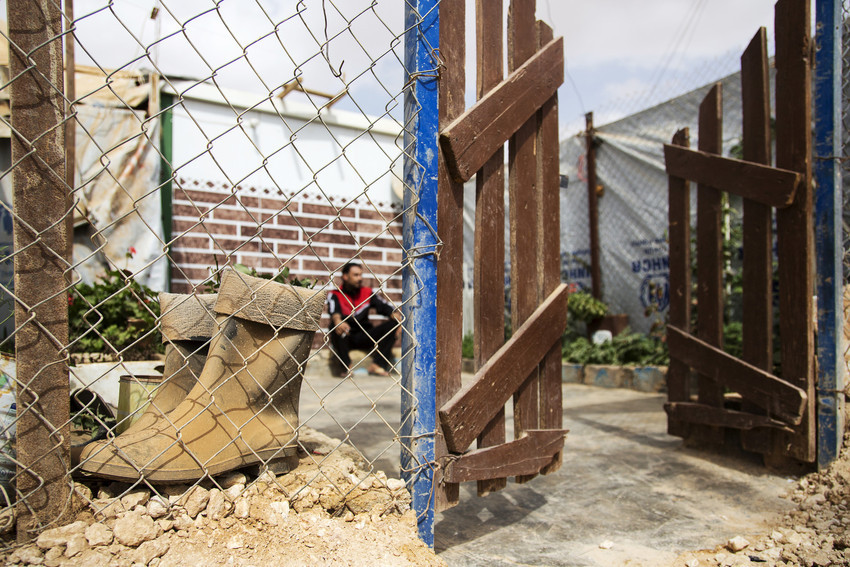
Scroll down to see all the inspiring photos taken from Save the Children. Giving people the tools to be self-sufficient is not only good for political refugees. One day in the not so distant future climate refugees may be also facing the same questions on how to be self-sufficient. Urban farming, hydroponics, aquaponics, and permaculture are great things every child needs to learn at school and apply on the home front, whether one is struggling for survival or is privileged to be able to buy food from the grocery store.

syria-refugee-secret-garden-4 syria-refugee-secret-garden-2 slide_378502_4465630_free syria-refugee-secret-garden-5 syria-refugee-secret-garden-11 syria-refugee-secret-garden-3 syria-refugee-secret-garden-7 syria-refugee-secret-garden-1

One question though for Save the Children: there are winter rains to sustain the gardens in Jordan in the upcoming months. What will happen to the water-parched refugees come spring and summer when water from Jordan is limited? Will there be plans for irrigation, greywater reuse?

All images via Save the Children