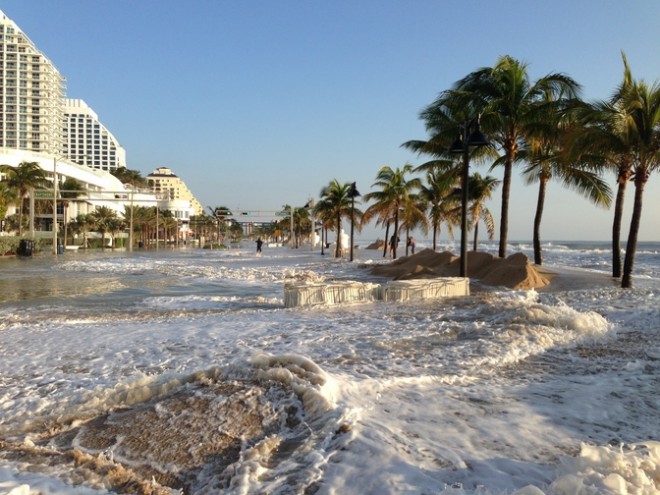
The world’s increasingly polluted seas and oceans, as well as rising sea levels, are now becoming a sad reality as Mankind’s contribution is becoming increasingly evident. Whether this causes massive fish die-offs, or other ecological catastrophes like toxic coast pollution, more and more of the world’s environmental problems are being linked to human caused abuse of natural resources.
Israel’s long Mediterranean beachfront, stretching from Gaza all the way to Lebanon, is no exception to this sad fact. A number of heavily polluted streams empty from Israel into the Eastern Mediterrnean, adding to the sea’s already increasing pollution.
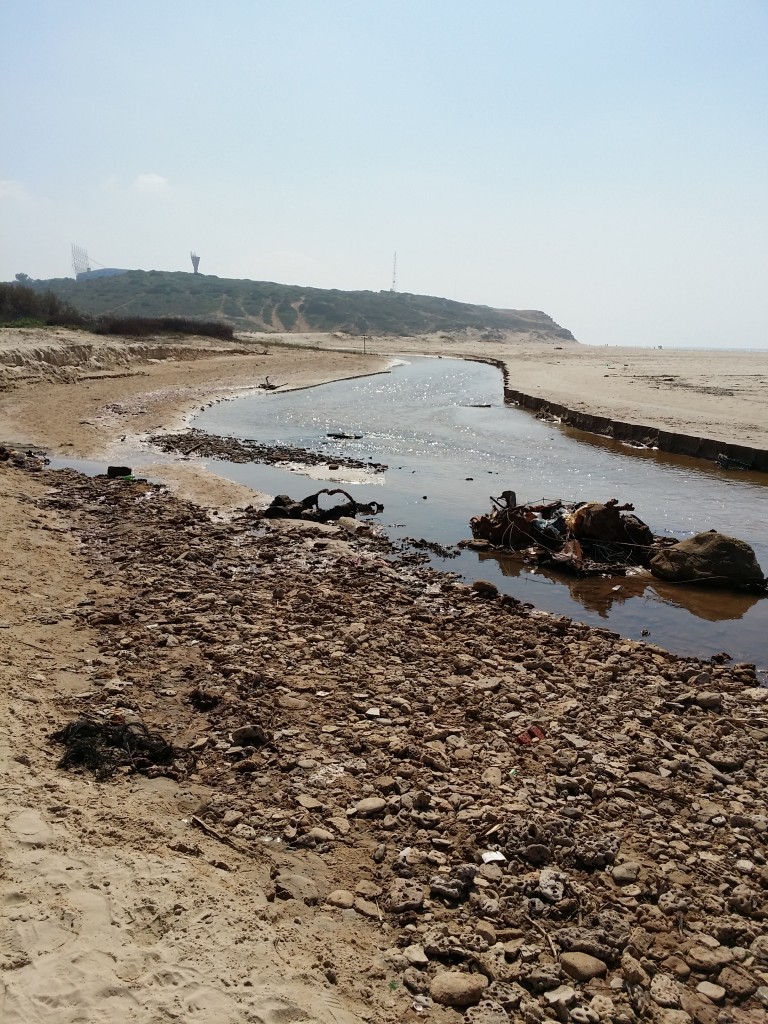
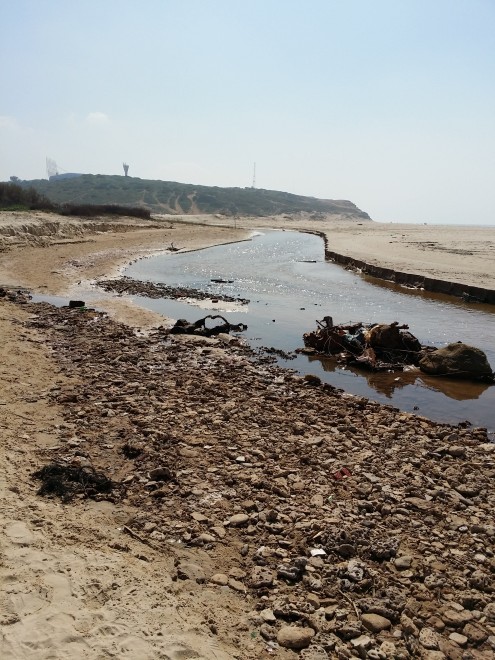
One of these streams, the Poleg Stream, now empties into the sea just meters from one of the city of Netanya’s most prestigious beachfronts, Poleg Beach. Until recently this steam, which originates in the hills of the West Bank and meanders through the country’s Sharon region, emptied south of the main Poleg beachfront; or virtually disappeared into the sand during the hot summer months. Due to recent heavy rains, however, the course the stream has changed. It now empties its polluted contents into the Mediterranean, almost in the center of the Poleg beachfront; literally cutting it in half. On a recent weekend visit, children were observed by this writer actually walking into and playing by the stream.
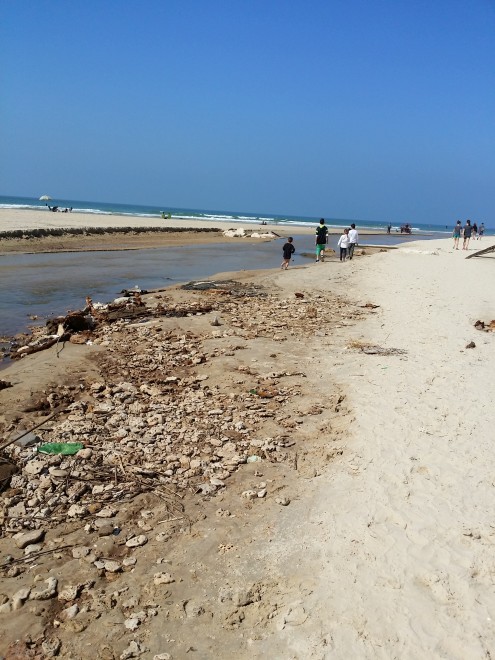
Poleg Beach’s popularity stems largely from the fact that visitors can literally drive their cars down to the beach area, instead of having to park some distance away and then descend flights of stairs or walk down steep inclines to reach the beachfront. Even during the winter “off months”, the beachfront is a popular attraction on warm sunny days.
Upon contacting one of Israel’s leading environmental watchdog NGOs, Zalul (meaning “clear”), one of their spokespersons, Lilach, said that they are aware of the problem which was caused by a natural diversion of the stream’s flow. “The main issue at the moment is who will be responsible for dealing with this situation: the Netanya municipality or another body such as the Nature and Parks Authority,” she told Green Prophet.
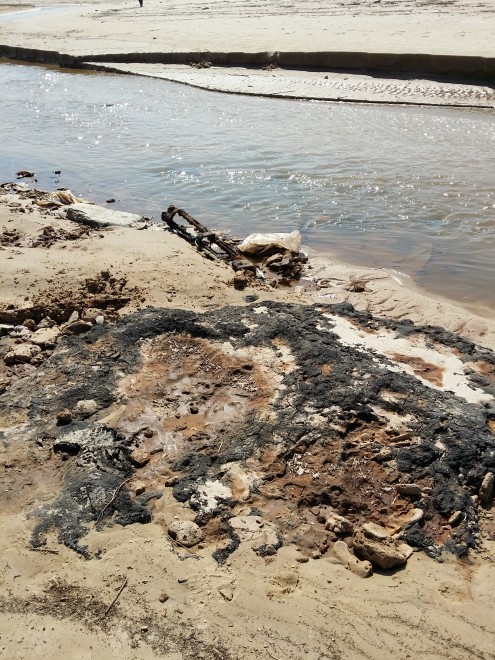
Close examination of the water flowing in the stream and the various types of trash and other objects found there indicate that the current situation is definitely a health hazard that will become even more serious as it gets closer to the official beach season, around the end of May. A considerable amount or work is needed to re-divert the stream’s flow to a “safer” area further south; an area which falls under the jurisdiction of the Nature and Parks Authority.
In the meantime, beach visitors will have to contend with the changed course of the stream, that in better times included an estuary for sea turtles to come and lay their eggs. Those times are long gone now, unfortunately.
Read more on marine and coastal pollution in the eastern Mediterranean :
Mysterious fish die-off in Tunisia sparks world-ending debate (video)
Lebanon: Greenpeace investigation reveals toxic coast pollution
Oceans spiralling downward, threatening life on earth
Photos of the Poleg Stream by Maurice Picow





 Just in time for St. Paddy’s Day, scientists from Dublin and Belfast have evidence that stone age Irish settlers had genetic origins in the Middle East. Thank the Vikings for the DNA that gave rise to red hair and freckles, introduced when they invaded the island nation at the end of the eighth century. But dial back 6,000 years, and discover genes for dark eyes and raven tresses that trace to the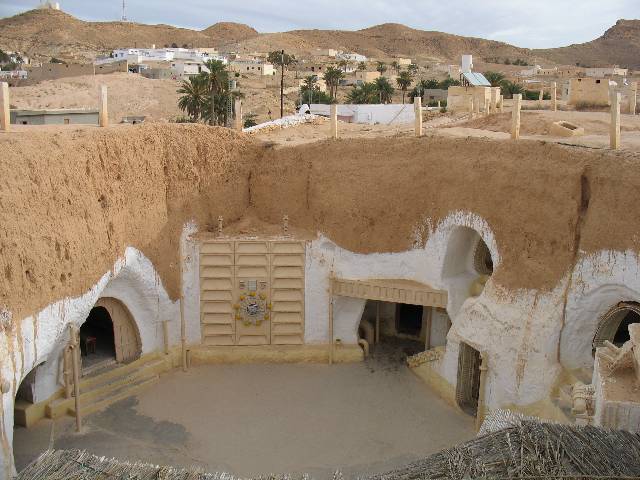










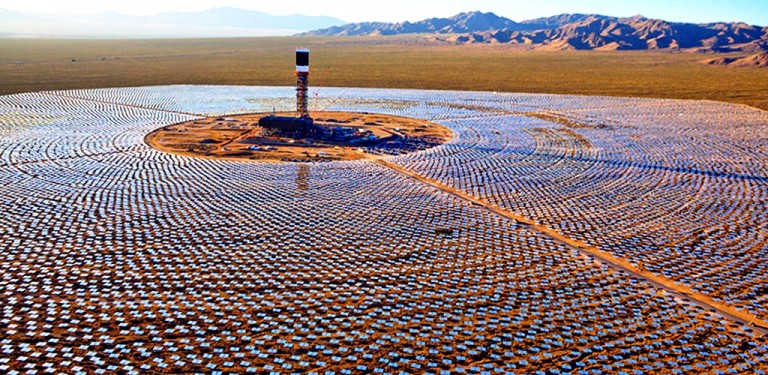
 Morocco has activated the Noor I concentrated solar power (CSP) plant, the first part of a three-phase
  The World Bank predicts that the plant will bring down the industry-wide CSP costs, but the future of the technology is uncertain given rapid price decline in solar photovoltaics (PV). The plant’s cost is around US$6 per watt, whereas utility-scale solar PV projects are coming in below US$2 per watt. The recent bankruptcy of the largest global CSP developer, Spain’s Abengoa, has further undermined interest in future CSP investments. That said, the technology is well-suited for harnessing the desert’s solar energy.
 Unlike PV systems, CSP output doesn’t dip when skies are momentarily overcast, and they do not need battery back-up to store energy for nighttime use. The technology works like this: concentrated sunlight hits the mirrors, which heat fluids in a system-wide pipeline, which create steam that, in turn, drives turbines which produce electricity. The Ouarzazate system uses 39-foot-tall parabolic mirrors to focus energy on that pipeline causing fluids to reach temperatures of 739 degrees Fahrenheit. Surplus heat can be stored in a tank of molten salts for use during nighttime or on overcast days; Noor 1 is designed to keep three hours worth of such storage, which presently is a lower cost alternative to battery storage.
 Sit four people around the dinner table, and at see that least three are tethered to their