
Israel’s Shriveled Vegetables Will Increase Market Prices

vegetable-market-israelAs temperatures continue to rise, can we expect to see more crop losses and higher market prices?

Any attentive Israeli who has bought extra supplies for their various holiday recipes may have noticed that produce prices are higher than usual. Those prices are likely to grow higher still. The recent heat wave that spread throughout the region literally burned Israel’s vegetable crops, resulting in massive waste that has forced farmers to raise prices to recover their loss.

Burned on the vine

According to a report in Ha’aretz, some greenhouse temperatures exceeded 70 degrees Celsius over the summer, destroying crops on the vine.

“The heat burned the tomato flowers’ stamens,” a farmer on Moshav Yeted, David Kushmero, told the paper, “which means they won’t be fertilized and bear fruit.”

As a result, farmers have experienced an accumulated loss of tens of millions of Shekels, or roughly three million US Dollars, a loss that they bear individually.

National disaster

“Since the growers’ insurance does not cover damage from heat waves, the farmers will be paying for the damage themselves,” according to writers Amiram Cohen and Haim Bior.

In order to help alleviate this burden, the Vegetable Growers Association has put in an appeal to the Israeli government to declare the heat wave a national disaster, which would give farmers access to government assistance.

“While no vegetables are expected to disappear altogether from the market, prices are going to be increasing, even though they’re already higher than usual for the season,” wrote Cohen and Bior.

The crops most affected are cucumbers, tomatoes, and herbs, as well as melons and watermelons, and consumers can expect to feel the pinch during the holidays. At the onset of winter, the reporters add that the country could experience a tomato shortage.

“At this time last year, I was getting 43 tons of tomatoes per greenhouse dunam, and this year I won’t get even three tons,” Mr. Kushmero said.

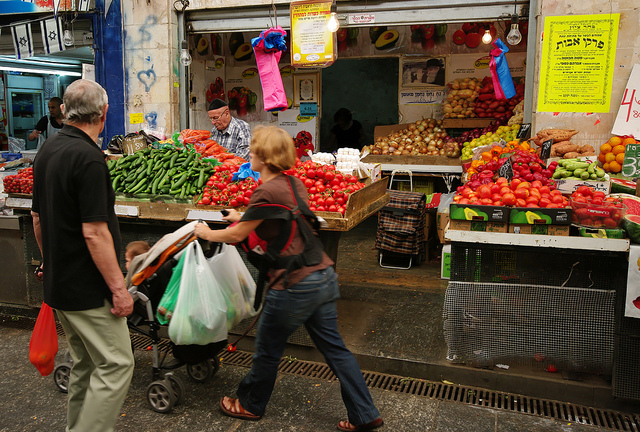
:: image via Emmanuel Dyan and story via Ha’aretz

More News From Israel:

Israel Cleantech Intelligence: Israeli Bees and 7 More Headlines

Australian Eucalyptus Trees Keep Israel’s Honey Buzzing Year-Round

“Titanic” Ship Leads Mediterranean Sea Floor Research Mission From Israel

Tafline Laylin
Tafline Laylinhttp://www.greenprophet.com
As a tour leader who led “eco-friendly” camping trips throughout North America, Tafline soon realized that she was instead leaving behind a trail of gas fumes, plastic bottles and Pringles. In fact, wherever she traveled – whether it was Viet Nam or South Africa or England – it became clear how inefficiently the mandate to re-think our consumer culture is reaching the general public. Born in Iran, raised in South Africa and the United States, she currently splits her time between Africa and the Middle East. Tafline can be reached at tafline (at) greenprophet (dot) com.
3 COMMENTS
  1. Another good reason to grow at least a few sturdy herbs of your own. Rosemary, oregano, and chives grow well and yield herbs for flavoring all year round, even in pots balanced on a window ledge. Tender herbs like mint die back in winter, but return in spring.

    For those of us with a little more area, tomatoes and cucumbers grow well in deep containers – they just need a trellis or similar contraption to grow vertically. Stretch a tarp a few feet over them, and you’re made in the shade.

LEAVE A REPLY

Please enter your comment!
Please enter your name here

TRENDING

Farm To Table Israel Connects People To The Land

Farm To Table Israel is transforming the traditional dining experience into a hands-on journey.

Iran’s holiest city about to run dry as terror chosen over water management

Iran’s second-largest city, Mashhad, is facing an acute water emergency after dam reservoirs feeding the city fell below three percent capacity, according to Iranian state and local media. Officials warn that without rainfall or improved inflows from neighboring Afghanistan, the city’s supply could soon collapse.

Iran’s water mafia and thirst for war leaves the country on brink of being dry

Iran’s Lake Urmia, once the Middle East’s largest saltwater lake, has shrunk by 90 percent due to mismanagement, dams, and drought. As Tehran pours billions into foreign conflicts, water activists face repression at home. The crisis mirrors Syria’s drought-driven unrest, showing how water scarcity can destabilize entire regions.

Arab agricultural land is on the brink

Across the Arab world, croplands face a perfect storm of stressors. Excessive fertilizers and pesticides erode soil ecology. Poor drainage and over-irrigation drive salinization, leaving fields crusted with salt. Rising temperatures, dwindling groundwater, and more frequent sand-and-dust storms—all amplified by climate change—compound the crisis.

Jordan turns to ancient fire and mines volcanic soil to solve water crisis

In the volcanic highlands of northern Jordan, north of Amman engineers are mining a natural resource not for energy, but for agriculture. The material: crushed volcanic rock, now processed into a mineral-rich soil that may hold the key to reducing water and fertilizer demand in arid regions.

Qatar’s climate hypocrisy rides the London Underground

Qatar remains a master of doublethink—burning gas by the megaton while selling “sustainability” to a world desperate for clean air. Wake up from your slumber people.

How Quality of Hire Shapes Modern Recruitment

A 2024 survey by Deloitte found that 76% of talent leaders now consider long-term retention and workforce contribution among their most important hiring success metrics—far surpassing time-to-fill or cost-per-hire. As the expectations for new hires deepen, companies must also confront the inherent challenges in redefining and accurately measuring hiring quality.

8 Team-Building Exercises to Start the Week Off 

Team building to change the world! The best renewable energy companies are ones that function.

Thank you, LinkedIn — and what your Jobs on the Rise report means for sustainable careers

While “green jobs” aren’t always labeled as such, many of the fastest-growing roles are directly enabling the energy transition, climate resilience, and lower-carbon systems: Number one on their list is Artificial Intelligence engineers. But what does that mean? Vibe coding Claude? 

Somali pirates steal oil tankers

The pirates often stage their heists out of Somalia, a lawless country, with a weak central government that is grappling with a violent Islamist insurgency. Using speedboats that swarm the targets, the machine-gun-toting pirates take control of merchant ships and then hold the vessels, crew and cargo for ransom.

Leopoldo Alejandro Betancourt López Turned Ocean Plastic Into Profitable Sunglasses

Few fashion accessories carry the environmental burden of sunglasses. Most frames are constructed from petroleum-based plastics and acrylic polymers that linger in landfills for centuries, shedding microplastics into soil and waterways long after they've been discarded. Leopoldo Alejandro Betancourt López, president of the Spanish eyewear brand Hawkers, saw this problem differently than most industry executives.

Why Dr. Tony Jacob Sees Texas Business Egos as Warning Signs

Everything's bigger in Texas. Except business egos.  Dr. Tony Jacob figured...

Israel and America Sign Renewable Energy Cooperation Deal

Other announcements made at the conference include the Timna Renewable Energy Park, which will be a center for R&D, and the AORA Solar Thermal Module at Kibbutz Samar, the world's first commercial hybrid solar gas-turbine power plant that is already nearing completion. Solel Solar Systems announced it was beginning construction of a 50 MW solar field in Lebrija, Spain, and Brightsource Energy made a pre-conference announcement that it had inked the world's largest solar deal to date with Southern California Edison (SCE).

Related Articles

Popular Categories