
New Istanbul Airport Will Kill 658,000 Old Trees

Istanbul Airport Kills TreesTurkey’s booming aviation industry is planning new development that will wipe out over half a million old-growth trees.

Istanbul aims to build its third airport on nearly a square kilometer of previously pristine forest in the northern, European part of the city, on Lake Terkos near the Black Sea. With six runways and an annual capacity of 150 million passengers, Transport Minister Binali Yildirim told Turkish newspaper Zaman “it will be the largest airport in the world.”

Capable of surpassing  passenger throughput at London’s Heathrow and the trio of airports in the United Arab Emirates, this new facility will be so large it’ll be visible from space.

An environmental impact report (ÇED) prepared by the Ministry of Environment assessed probable environmental effects from project construction.  It predicts that, if the airport is built as planned, more than half a million trees spanning ten species will be chopped.

The project site is 80 percent forested, dense growth that acts as a natural carbon sink for populous Istanbul.  Airport development, with associated deforestation, will interrupt carbon’s natural cycling and considerably increase regional air pollution.

Carbon cycling is the natural transfer of carbon between the biosphere and earth’s atmosphere, Trees and plants are the primary transfer agents.

Forests pull CO2 out of the atmosphere as part of photosynthesis. A series of biochemical reactions convert the CO2 into glucose, which fuels plant cell function, growing biomass. Carbon in plantlife is conventionally released back to the atmosphere through respiration, burning, and biomass decay.

Large-scale deforestation eliminates natural carbon storage, releases unnatural amounts of CO2 into the atmosphere, and reduces forward capacity to suck CO2 from the air. All serve to accelerate anthropogenic climate change.

The ÇED, recently released on the ministry’s website, states that airport construction will cause irreversible damage to the area’s forest and water ecosystems. “The area where the third airport is planned to be built is 7,650 hectares, and 6,172 hectares of this field consists of forested area, 1,180 hectares are used for mining, 660 hectares constitute a lake, 236 hectares are used for pasture and 60 hectares are used for agricultural activities. There are 2,513,341 trees in the area…maritime pine, stone pine, Calabrian pine, black pine, oak, hornbeam, narrow-leafed ash, linden, Norway maple and cedar.”

The report states that there are 70 animal species living in the forest, and warns that the proposed development will destroy the area’s vegetation and natural features. Increased vehicle traffic and urbanization following airport construction will exacerbate air pollution and habitat loss.

Istanbul has two international airports: Ataturk on the European side (37 million annual passengers) and Sabiha Gokcen on the Asiatic (13 million annual passengers).  The third airport is expected to create 100,000 new jobs in this city of 15 million people.

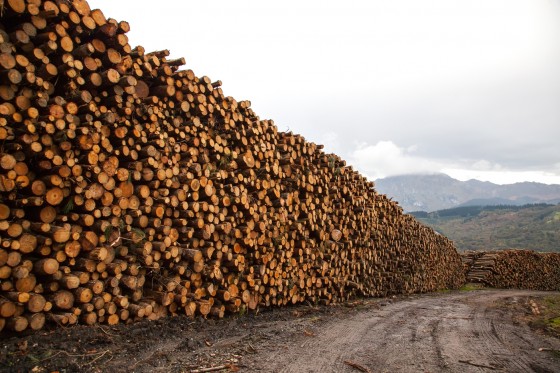
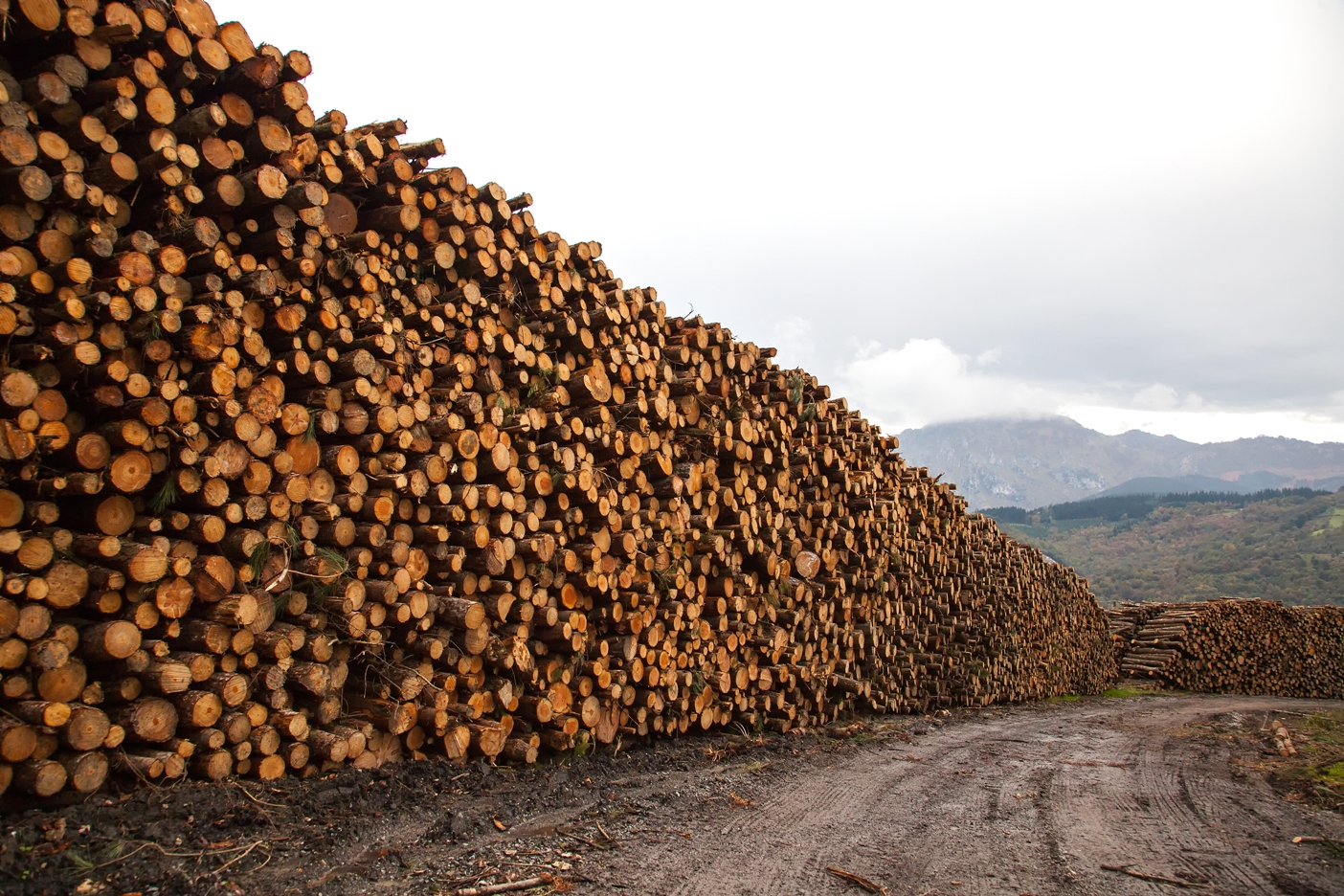
Image of felled trees from Shutterstock

2 COMMENTS
  1. To be fair, this story is only about the environmental impact report, there is no news as yet reported regarding mitigations to be made to offset those impacts.

    In the USA and EU, the regulatory agencies will require specific actions on the part of the developer as part of the permitting process. Reforestation elsewhere, clean up of an environmentally damaged site, development of new environmental projects, or payment of fees (which will fund other positive enviro initiatives).

    Green Prophet will be watching for news as to how Turkey will address this loss if this project is approved for construction.

  2. The legal codes of all nations should be amended to include “crimes against Nature”, because that is certainly what the Turks are doing to expand their Istanbul airport. What the World needs is not more polluting jet plane traffic but less, and not less trees but many more.

Comments are closed.

Hot this week

How Renewable Energy is Revolutionizing the Way We Power Our World

Solar has become the star of the transition thanks to modular hardware and straightforward installation. It fits dense cities and remote towns alike. Many companies are turning to rooftop arrays and carport systems - and exploring commercial solar installation as a practical way to lock in future savings.

How does one start prepping?

Faced with an extreme winter storm this year, Americans wonder how to be prepared for catastrophe. Miriam has lived through wars in the Middle East - so she's prepared on giving you a guide to prepping.

Fishermen sue tire manufacturers on behalf of the salmon

A federal trial in San Francisco has brought US tire manufacturers, fishing groups, and environmental scientists into court over a chemical most drivers have never heard of — but which scientists say may be silently reshaping aquatic ecosystems.

Listening to Water: Tarek Atoui’s Next Work for Tate Modern

Born in Beirut, Lebanon in 1980 and now living in Paris, Atoui has spent years building instruments that don’t sit comfortably in concert halls. Many of them involve water, glass, and ceramics — materials that react to sound instead of simply producing it.

Leading Through a Dual-Energy Transition: Balancing Decarbonisation with Energy Security

Experience in one area of the energy industry isn't enough to guarantee readiness across all the others. That's where a structured program like an MBA in energy can come in. Today's advanced curricula explore energy economics, finance, policy, and strategic management alongside the technical subjects. And when pursuing an energy MBA online, professionals can skill up and retrain without having to step out of the labor market -- an important perk at a time when skilled professionals are already in short supply.

Topics

How Renewable Energy is Revolutionizing the Way We Power Our World

Solar has become the star of the transition thanks to modular hardware and straightforward installation. It fits dense cities and remote towns alike. Many companies are turning to rooftop arrays and carport systems - and exploring commercial solar installation as a practical way to lock in future savings.

How does one start prepping?

Faced with an extreme winter storm this year, Americans wonder how to be prepared for catastrophe. Miriam has lived through wars in the Middle East - so she's prepared on giving you a guide to prepping.

Fishermen sue tire manufacturers on behalf of the salmon

A federal trial in San Francisco has brought US tire manufacturers, fishing groups, and environmental scientists into court over a chemical most drivers have never heard of — but which scientists say may be silently reshaping aquatic ecosystems.

Listening to Water: Tarek Atoui’s Next Work for Tate Modern

Born in Beirut, Lebanon in 1980 and now living in Paris, Atoui has spent years building instruments that don’t sit comfortably in concert halls. Many of them involve water, glass, and ceramics — materials that react to sound instead of simply producing it.

Leading Through a Dual-Energy Transition: Balancing Decarbonisation with Energy Security

Experience in one area of the energy industry isn't enough to guarantee readiness across all the others. That's where a structured program like an MBA in energy can come in. Today's advanced curricula explore energy economics, finance, policy, and strategic management alongside the technical subjects. And when pursuing an energy MBA online, professionals can skill up and retrain without having to step out of the labor market -- an important perk at a time when skilled professionals are already in short supply.

From Green Energy to Healthy Societies: Why old systems thinking is becoming relevant again

Across the Middle East and North Africa, large investments are being made in green hydrogen, renewable energy, water infrastructure and sustainability. Most of these efforts are discussed in the context of climate change, decarbonization and economic diversification. That framing is important, but it may not capture their full value.

We saw peace – an interreligious encounter deep in our eyes

They came from Israel, Palestine, Jordan, Iraq, Yemen, Morocco, Tunisia, Lebanon, Egypt… There are Sunni Muslims, Shiite Muslims, Jews (Orthodox and Reform), Orthodox Christians, Coptic Christians, Protestant Christians, Druze, Baha'is, a Scientologist.

Can biochar reduce ‘Forever Chemicals’ in food if it’s used in farms?

Biochar is produced by heating organic material in a low-oxygen environment so it does not burn. This process, known as pyrolysis, transforms plant matter into a stable, carbon-rich material.

Related Articles

Popular Categories