

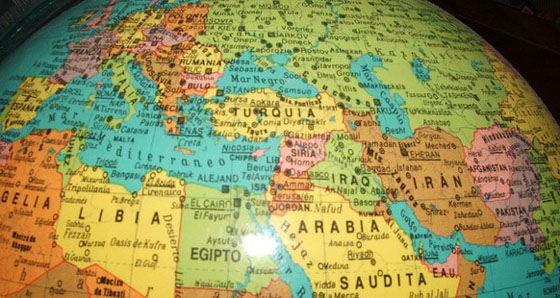
 Feed-in Tariffs can jump-start renewables faster than any other renewable energy policies. But is Turkey’s high enough to do the job?
The Republic of Turkey has just joined the throng of rapidly growing developing nations that are offering a Feed-in Tariff (FIT) to developers of renewable energy, in order to put more renewable power on the grid. A FIT is a guaranteed payment by the kilowatt-hour, for energy produced. Because these pay just for the power produced, they are risk-free policies for governments to enact, so long as the price is neither so low that they are ineffective, nor so high that the initial investment in building the clean fuel-free energy infrastructure costs ratepayers too much.
More and more developing nations are choosing this route. Not just the powerhouses of China and India, but small developing nations like Thailand and Tanzania as well. In all of them, the feed-in-tariffs have led to more investment in renewable energy generation and an increased share of renewables in the electricity mix. And not just for developing nations.
WRI counts a total of 78 countries, states, or provinces that have passed feed-in-tariffs for renewable energy in the last few years. A FIT can result in quite a rapid change. For example, after the state of Gujarat in India passed a renewable energy tariff, power purchase agreements were signed for the delivery of 500 MW of solar within just six months.
However, the rate chosen is the key to success. For example, my own electric utility – Northern California’s PG&E – has long offered a payment that is virtually unknown, because the rate the utility will pay is so low. While there are many successful drivers of renewable energy – particularly solar – in California, the PG&E FIT has never been one of them. So most PG&E customers with solar roofs – including this author – use PG&E’s net metering program instead, to amortize their investment in solar.
I see the difference, personally. Less than 100 miles from where I live, a different California utility (SMUD) does offer an excellent Feed-in Tariff, and by contrast, theirs has been fully subscribed. But a too-low rate has no effect.
That mistake has just been made by one of Turkey’s Mediterranean Sea neighbors. Israel just passed a FIT that is too low to drive project development.
Turkey is ideally positioned to benefit from a strong rate that would drive rapid development, as it has a powerhouse economy at home growing at over 5% annually, and a geographic advantage. Turkey is well positioned to supply the European grid and has a pending smart grid connection to Europe.
However, it looks as if it is following Israel’s example, and setting its price too low to encourage development. Its Feed-in Tariff law actually places a limit on total solar energy projects: of 600 MW annually, through December 2013, and then authorizes the cabinet to determine the limits afterwards.
It offers to pay $0.073 per kilowatt-hour for wind and hydroelectric power and wind energy, $0.105 for geothermal energy and $0.13 for energy from either waste (such as biomass or municipal solid waste-to-energy projects), and for solar energy.
A disappointed Tanay Sidki Uyar, head of the Turkey branch of European Association for Renewable Energy (Eurosolar) told the Hürriyet Daily News & Economic Review, “A law which is enacted during a period in which United Nations’ regulations instruct countries to use more renewable energy should have been much more encouraging.”
He added, “While Germany is seeking to get 100 percent of its energy from renewables by 2050 and England aims to reduce carbon emissions to zero, Turkey’s law – a country which has great wind and solar energy potential – should have promoted renewables far more.
For a rate to act as an incentive, it needs to be twice or three times the average electricity price, at least initially, while the infrastructure is being built and paid for. These rates fall short of that.
Image: ERIO
Related stories on Feed-in Tariffs:
Israel Offers a Too-Low Rate For Wind Feed-in Tariff
Israelis and Investors to Benefit from Feed-in Electricity Tariffs
Turkey Unsure to Look East or West for Renewable Energy Development


More and more developed nations are cutting their FITs as those tariffs are bankrupting their economies. Turkey did not get the memo, I guess.