
Joint Israeli-Palestinian Project To Tackle Sewage Problems

The issue of raw sewage may not be hitting the headlines in the Middle East like concerns over water scarcity, but in the Palestinian territories and Israel it’s a real problem. Inadequate waste water treatment plants in the Palestinian territories means that only 22.5 million cubic metres out of around 150 million cubic metres of raw sewage created every year is adequately treated to make it safe for reuse. Most of the raw sewage is contained in septic tanks which aren’t always well-enforced and so the sewage can easily seep into the ground and contaminate Palestinian and Israeli ground water supplies.

It seems that just like nature, sewage knows no boundaries and so raw sewage irresponsibly released by either community ultimately affects the shared Palestinian-Israeli water sources. A recently launched joint Israeli-Palestinian project supported by the Italian Trade Commission is hoping to draw the two sides together in a bid to resolve this sewage problem.

Palestinian Village + Israeli Technology = Regional Co-operation

The aim of the project is to establish a cooperative framework on water resources between Israel, Palestine and Jordan in the long run. However, in the short term a pilot project has been launched in the Palestinian village of Ouja in the Jordan Valley, half way between Jericho and Beit She’an, in collaboration with the Arava Institute for Environmental Studies. Israeli technology from the Mapal Energy company was chosen to treat the village’s sewage with the help of an estimated investment of around $150,000 to $200,000. A further $1.5-2 million is needed to connect the local houses to the sewerage system and the Italian Trade Commission had committed to securing this amount through EU nations.

The need for more regional co-operation, especially between Israel and Palestine, to tackle environmental issues is something that we have covered before with regards to water shortages, so it’s great to see progress in other areas too.

90% of Palestinian Waste Water Isn’t Treated

The reason why Palestinian waste water infrastructure is so poor is that plans for waste water plants face significant delays due to political fighting between Palestinian and Israeli authorities. Bureaucratic hurdles put in place by the Israeli Civil Administration mean that it’s difficult for Palestinians to gain the relevant building permits and so many plans are shelved. Subsequently, waste water facilities in the Palestinian territories are far from adequate and Israeli rights group B’tselem has reported that 90% of Palestinian waste water is not treated and only 20% of Palestinian homes are connected to sewerage systems.

There have also been conflicts between Palestinian West Bank residents and Israeli settlers, with incidents of raw sewage flowing from the settlements into the Palestinian villages and contaminating water supplies as well as agricultural fields. It is believed that over half of the settlements’ treatment plants are too small to deal effectively with the raw sewage from the burgeoning settler population. It is estimated that an overall sewage solution would cost somewhere in the range of 400 million euros.

::B’tselem and Haaretz

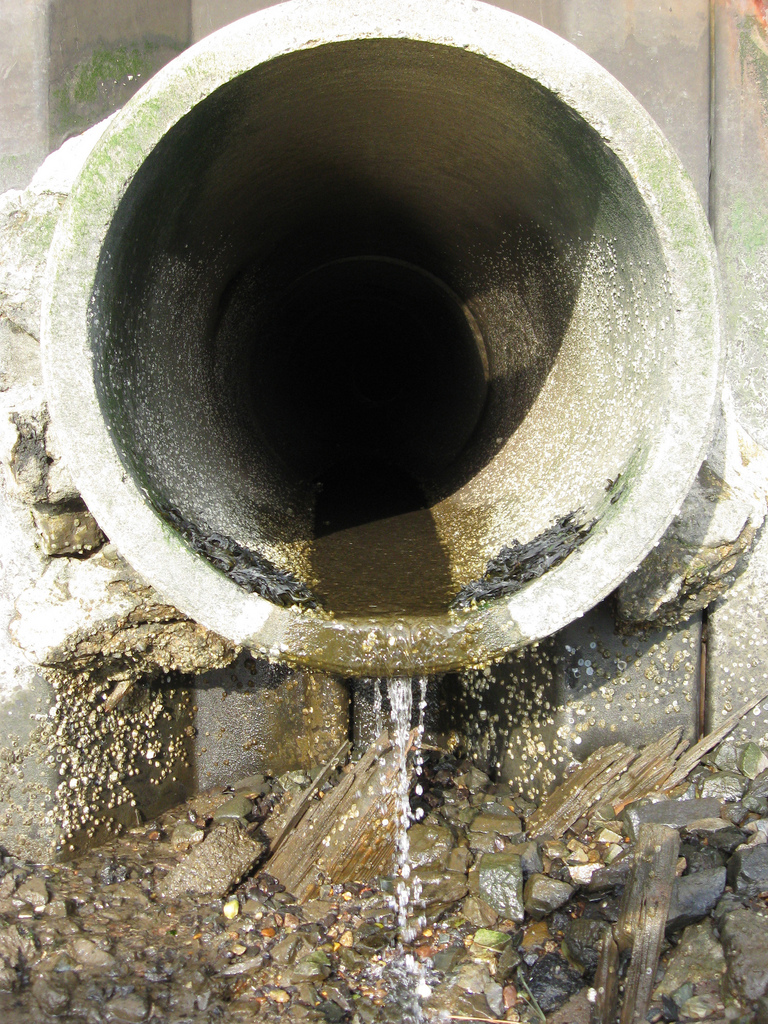
Image via eutrophication&hypoxia on flickr.

For more on sewage issues in the Middle East:

Eco-friendly Sewage Treatment Comes to the West Bank

Untreated Wastewater Poses Huge Threat to West Bank Palestinians

Israel Defense Ministry Stalls on Sewage Treatment
Arwa Aburawa
Arwa Aburawahttp://www.greenprophet.com
Arwa is a Muslim freelance writer who is interested in everything climate change related and how Islam can inspire more people to care for their planet and take active steps to save it while we can. She is endlessly suspicious of all politicians and their ceaseless meetings, especially as they make normal people believe that they are not part of the solution when they are the ONLY solution. Her Indian auntie is her model eco-warrier, and when Arwa is not busy helping out in the neighborhood alleyway garden, swap shopping or attempting fusion vegetarian dishes- with mixed success, she’d like to add- she can be found sipping on foraged nettle tea.
2 COMMENTS
  1. Thanks for bringing this to our attention and just to clarify, all the facts I used in the article came from the BTselem report which I provide a link for at the end of the article…
    Nevermind 🙂

  2. I just saw a bonkers article on the Israel National News website citing this article as having no factual basis and claiming that settlements couldn’t possibly pollute because they’re subject to planning rules. I’d suggest anyone who believes that takes a look at the kind of pollution flowing into Wadi Qana from Yaqir settlement – see http://palsolidarity.org/2010/07/13417/ and http://www.annainthemiddleeast.com/photos/environment/wadiqana/590/

LEAVE A REPLY

Please enter your comment!
Please enter your name here

TRENDING

Iran’s holiest city about to run dry as terror chosen over water management

Iran’s second-largest city, Mashhad, is facing an acute water emergency after dam reservoirs feeding the city fell below three percent capacity, according to Iranian state and local media. Officials warn that without rainfall or improved inflows from neighboring Afghanistan, the city’s supply could soon collapse.

Investing in the Middle East? These 20 Energy consultants can de-risk your portfolio

For instance is your clean tech firm or company in wastewater treatment considering an office in Riyadh or should you stick with Dubai?  Below is a curated spotlight on 20 firms that shine for their deep expertise and proven ability to manage the complex risks of sustainable energy investment.

Wastewater plants are a hidden climate issue, and we’re measuring it all wrong

Wastewater treatment plants are a hidden source of greenhouse gas emissions, releasing methane, nitrous oxide, and fossil CO₂. A new study calls for smarter monitoring and tailored emission factors. U.S. firms like Jacobs, AECOM, and Black & Veatch are key players in building climate-resilient wastewater infrastructure.

Climate Activist Greta Thunberg Joins Gaza Flotilla

What is clear is that Thunberg's journey has drawn massive attention to Gaza’s humanitarian and environmental conditions. At the same time, it opens up a broader conversation on the role of ecological activism and justice in a time of war.

Global Progress and Setbacks: Tracking Water Quality Indicators Toward SDG 6 by 2030

The United Nations has 17 objectives that paint a more resource-conscious and fair world called the Sustainable Development Goals (SDGs). The sixth mission is to “ensure access to clean water and sanitation for all” by 2030. The turn of the decade will happen before too long, so assessing progress and moments for improvement at this stage is critical. How is SDG 6 going, and what can humanity do to achieve it?

Qatar’s climate hypocrisy rides the London Underground

Qatar remains a master of doublethink—burning gas by the megaton while selling “sustainability” to a world desperate for clean air. Wake up from your slumber people.

How Quality of Hire Shapes Modern Recruitment

A 2024 survey by Deloitte found that 76% of talent leaders now consider long-term retention and workforce contribution among their most important hiring success metrics—far surpassing time-to-fill or cost-per-hire. As the expectations for new hires deepen, companies must also confront the inherent challenges in redefining and accurately measuring hiring quality.

8 Team-Building Exercises to Start the Week Off 

Team building to change the world! The best renewable energy companies are ones that function.

Thank you, LinkedIn — and what your Jobs on the Rise report means for sustainable careers

While “green jobs” aren’t always labeled as such, many of the fastest-growing roles are directly enabling the energy transition, climate resilience, and lower-carbon systems: Number one on their list is Artificial Intelligence engineers. But what does that mean? Vibe coding Claude? 

Somali pirates steal oil tankers

The pirates often stage their heists out of Somalia, a lawless country, with a weak central government that is grappling with a violent Islamist insurgency. Using speedboats that swarm the targets, the machine-gun-toting pirates take control of merchant ships and then hold the vessels, crew and cargo for ransom.

Leopoldo Alejandro Betancourt López Turned Ocean Plastic Into Profitable Sunglasses

Few fashion accessories carry the environmental burden of sunglasses. Most frames are constructed from petroleum-based plastics and acrylic polymers that linger in landfills for centuries, shedding microplastics into soil and waterways long after they've been discarded. Leopoldo Alejandro Betancourt López, president of the Spanish eyewear brand Hawkers, saw this problem differently than most industry executives.

Why Dr. Tony Jacob Sees Texas Business Egos as Warning Signs

Everything's bigger in Texas. Except business egos.  Dr. Tony Jacob figured...

Israel and America Sign Renewable Energy Cooperation Deal

Other announcements made at the conference include the Timna Renewable Energy Park, which will be a center for R&D, and the AORA Solar Thermal Module at Kibbutz Samar, the world's first commercial hybrid solar gas-turbine power plant that is already nearing completion. Solel Solar Systems announced it was beginning construction of a 50 MW solar field in Lebrija, Spain, and Brightsource Energy made a pre-conference announcement that it had inked the world's largest solar deal to date with Southern California Edison (SCE).

Related Articles

Popular Categories