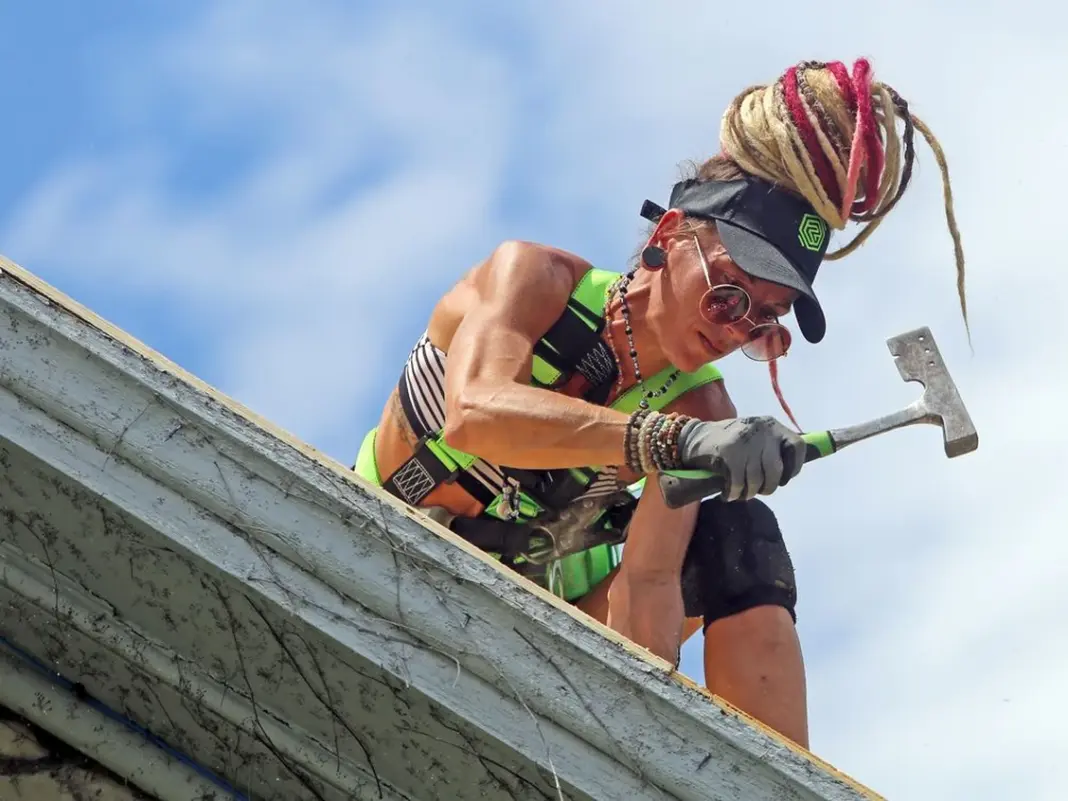

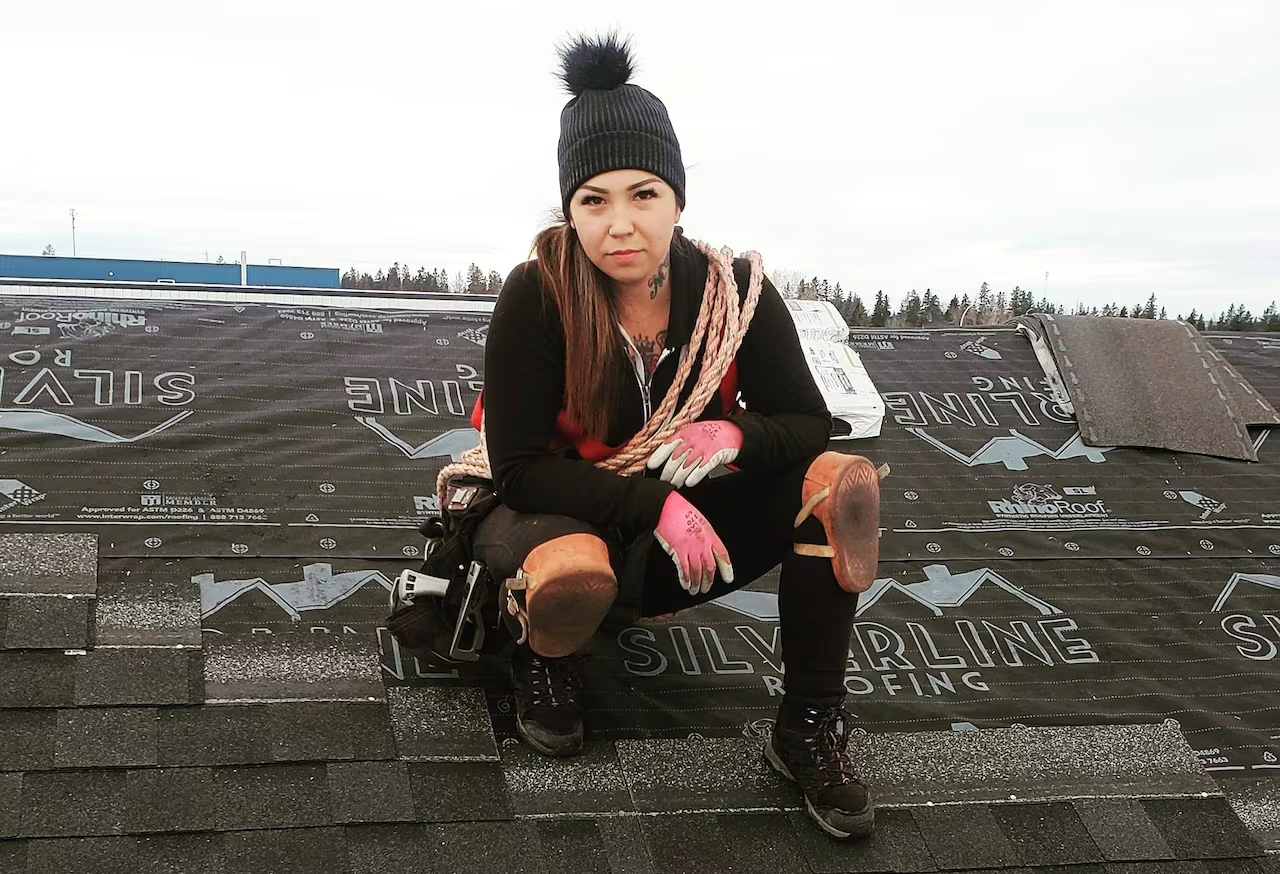
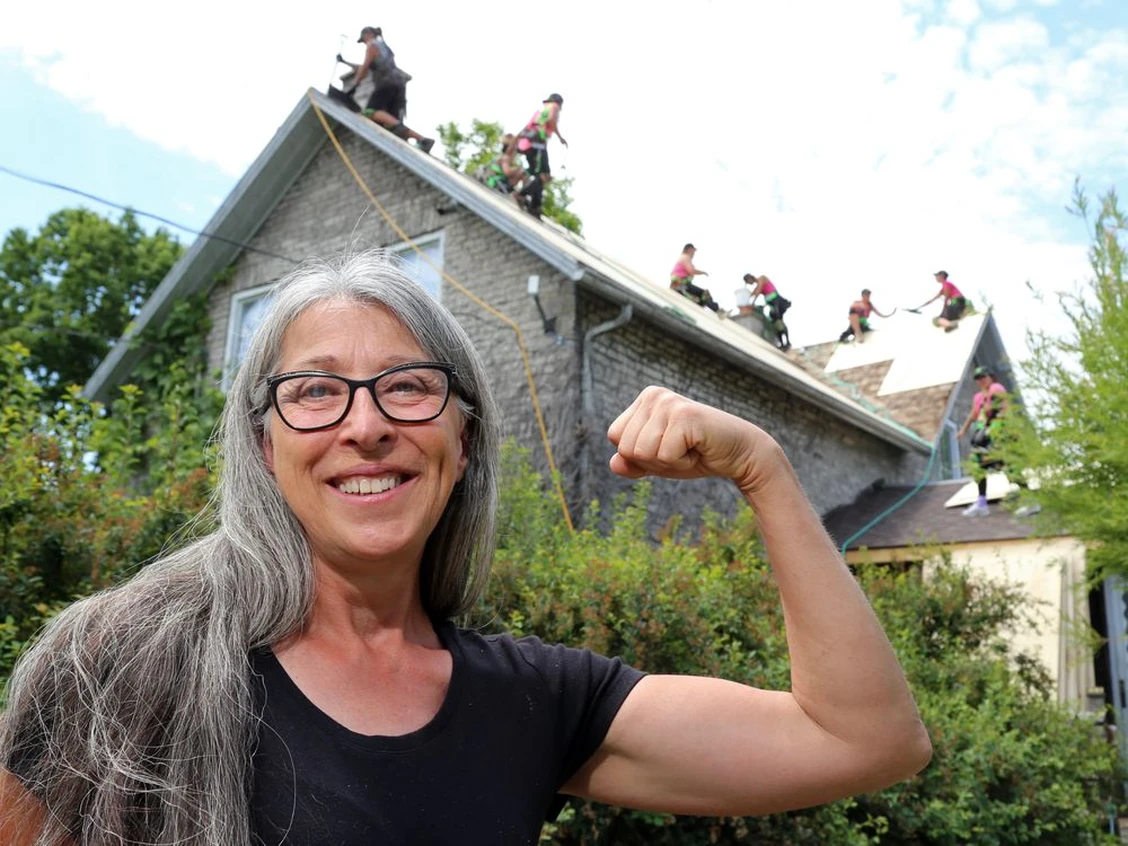
On a windswept farm north of Belleville, Ontario, a roof became something more than shelter. It became a new opportunity for women to work. When Michele Vindum needed a new roof on her home at Plainfield Heritage Farm, she set a condition that surprised even seasoned contractors: the crew had to be all women.
“I’ve always been very aware, as a woman who used to work in the sciences… that there are systemic barriers to women entering non-traditional trades,” she told CBC Radio.
What followed was not just a job—but the formation of a movement.
Vindum found Samanntha De Coteau, a Welland-based roofer known online as “RooferGirl.” De Coteau reached across provinces, calling in tradeswomen from Ontario, Alberta and Saskatchewan. The result: the Summit Sisters, an all-woman roofing team that is now gaining national attention.
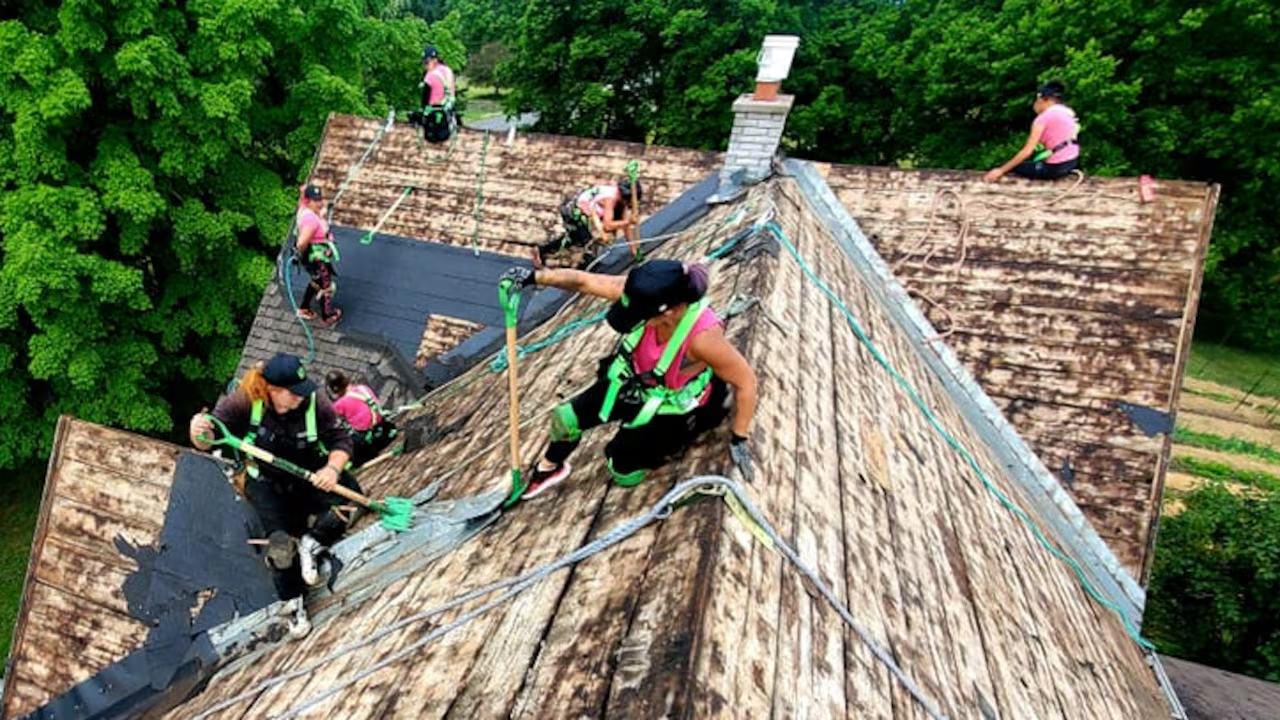
Roofing season in Canada doesn’t last long, maybe 5 months of the year. And with global warming and intense summers reducing the lifespan of shingles, more and more people need their roofs done, but with few laborers in some areas willing and able to do the job.
“Everybody was just so interested in it, so supportive,” De Coteau said. “All the girls said, ‘Yeah, I’ll come, I’ll do it.’”
A changing climate with a changing roof
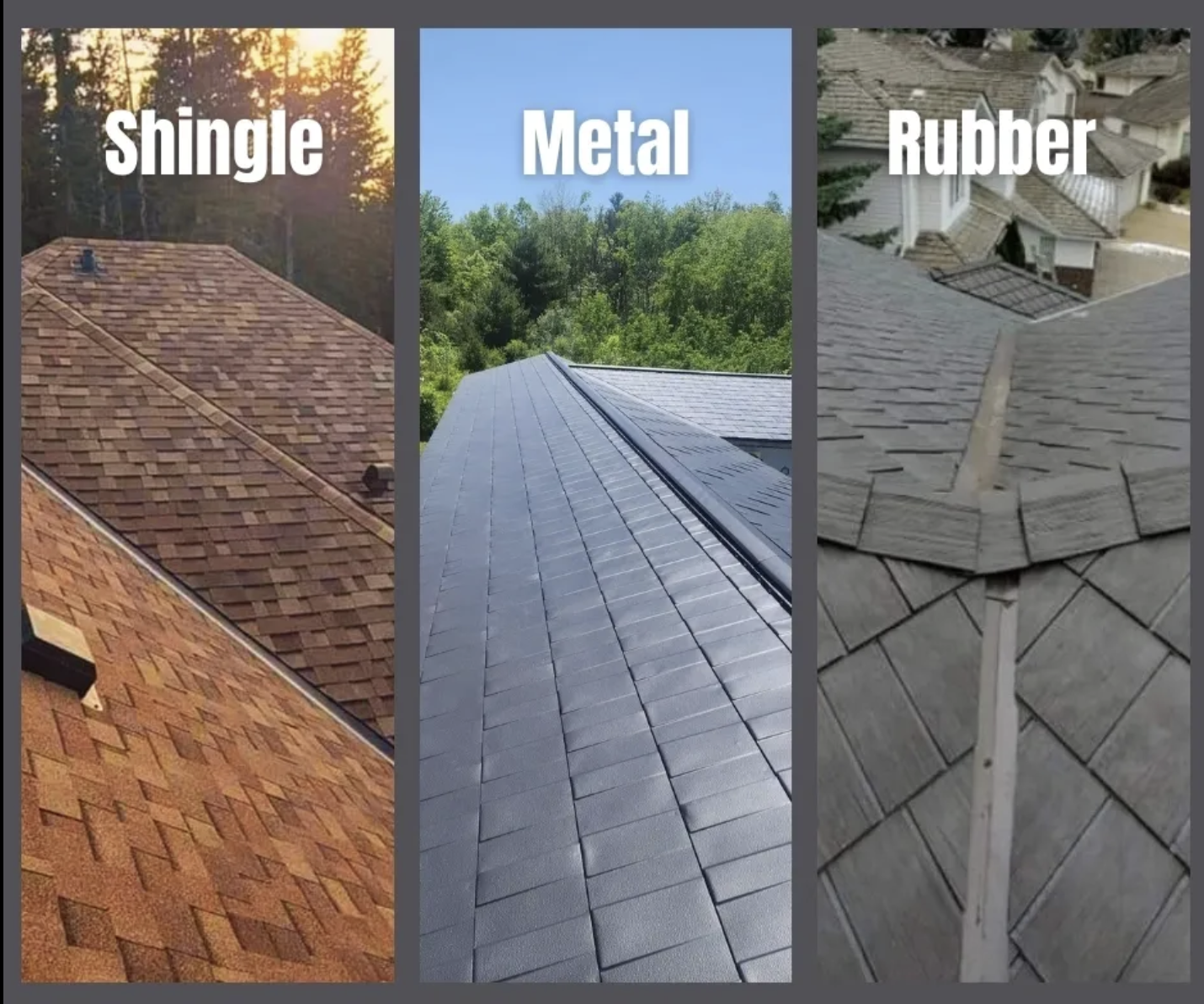
Canada’s roofs are under pressure. Freeze-thaw cycles are intensifying with climate change, shortening the lifespan of asphalt shingles, the most common roofing material across the country. Hailstorms, heat waves, and heavy snow loads are forcing homeowners to replace roofs more often than expected.
And that raises a deeper question: if you’re replacing your roof anyway, why go back to the same material? I faced that decision myself. Instead of reinstalling asphalt shingles, I worked with local builders to convert my aging roof into tin—what’s more commonly known as a standing seam metal roof.
It cost more upfront, probably double the cost, but the payoff was immediate: durability, recyclability, and a lifespan that can stretch 40 to 70 years. Once you’ve turned to a tin roof, that’s pretty much it for the rest of your life. Your kids can deal with changing the roof in the future. I called around and spoke with local Quakers who roof and who sell ends, at dollars a piece but my roofer Randy said it’s a better roof if he buys large pieces, so we did that.
So is metal roofing the more sustainable option?
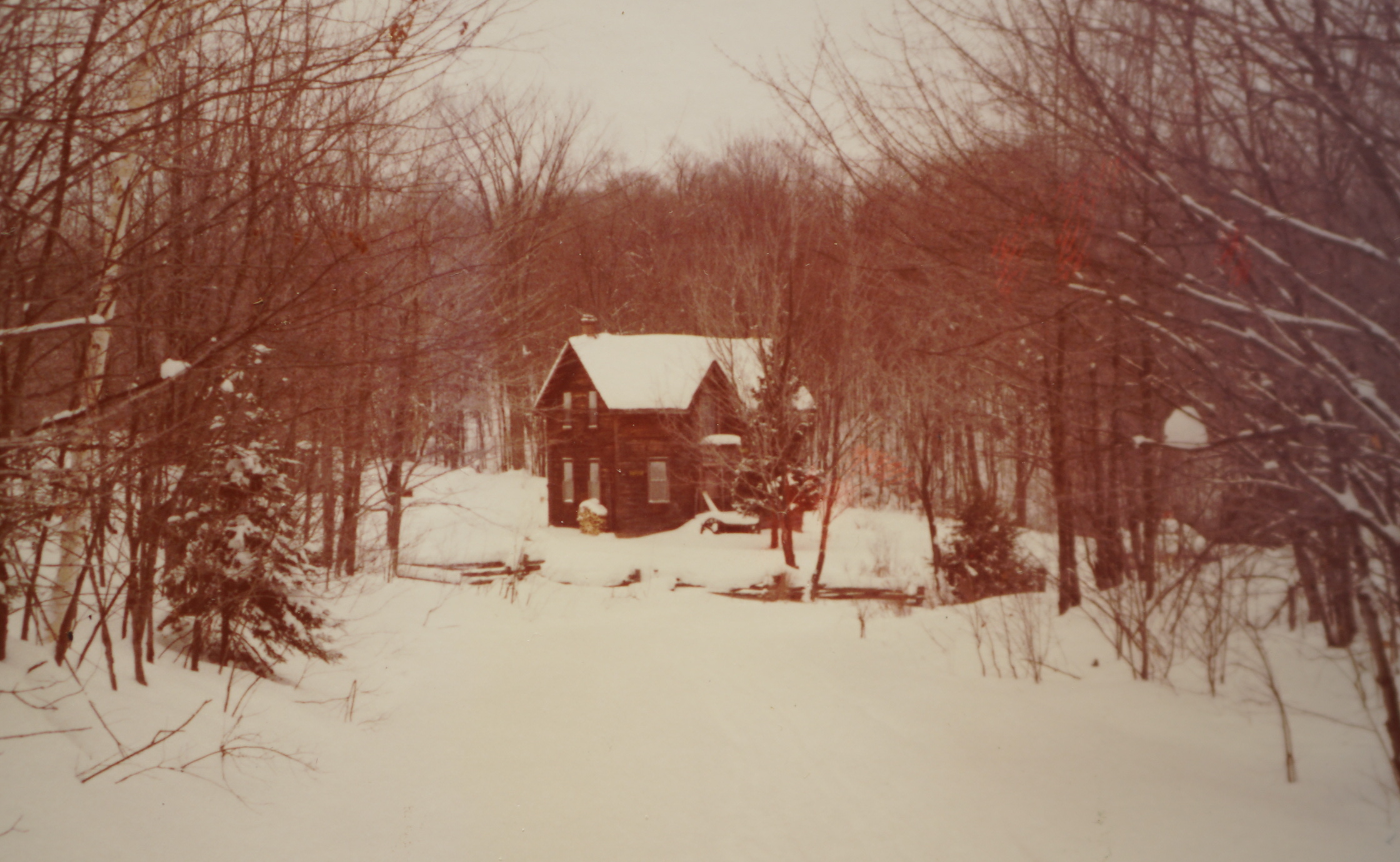
In many cases, yes. According to the Canada Mortgage and Housing Corporation (CMHC), metal roofing outperforms asphalt in longevity, energy efficiency, and end-of-life recyclability. Asphalt shingles typically last 15–25 years and often end up in landfills. Speaking with locals in Northern Ontario, they estimate the ages of the materials, lower in quality than the past, you can get 8 to 10 years out of a new shingle roof. Metal roofs, by contrast, are often made from recycled content and can be fully recycled again.
For homeowners navigating cost vs. impact, this guide offers a grounded breakdown:
Sustainable roofing options in Canada (CMHC).
If you live in a hot desert climate, a flat, white-painted flat roof, or thatched natural roof, or clay roof (like in Sicily) might be a better option. Also consult your local building associations for the greenest roof for your location.
More than a roof for the shingling Summit Sisters
But the Summit Sisters story isn’t just about materials, or about environmentalism. It’s about access and building regenerative communities (see our interview with Tony Cho). Only about 7% of workers in trades, transport, and equipment occupations in Canada are women, according to Statistics Canada. Roofing remains one of the most male-dominated sectors. In summer months it’s almost impossible to find a skilled laborer who will return after the first quote.
Women are filling the gap. De Coteau knows that firsthand. “Maybe they’re too intimidated because it’s considered a man’s job,” she said. “Maybe they think they’re not strong enough.”
The truth is, roofing isn’t about brute strength. It’s about skill, balance, endurance, and increasingly, precision installation of advanced materials like solar-integrated panels and high-performance membranes. You don’t need to be strong to be a roofer. You need to be brave.
How to find an all-woman roofing crew
They are still rare, but not invisible. Search local Facebook groups and Instagram for tradeswomen (terms like women roofers Canada, female contractors Ontario). We found Summit Sisters on TikTok. Platforms like Build Together Canada and Women Building Futures connect women to trades and employers. Ask contractors directly, some companies now offer mixed or all-women crews by request. Word of mouth still matters: Vindum found her crew through a single social media post.
Do do due diligence, however. When we hired a local guy we knew, he did the roof all by himself in one weekend and the cost to replace the roof wasn’t split among a team who needed to travel far and offer per diems. He lived down the road, and ordered material from a local company he has known since he was young. When there is a leak or something goes wrong, I have someone local to call. That might not be the case with over-marketed teams, hired just because they are women. Hire the best person for the job at the best price.
But we get inspiration from that Ontario farm. It’s a signal that as climate change forces us to rethink how we build, and renovate and maintain our homes, the labor behind those decisions matters too. The Summit Sisters didn’t just replace a roof, they raised a bar.