Space travel sunscreen found in new fungus experiment

She invented a new space age sunscreen

Moving to Mars? He’s a new fungus-based sunscreen to protect you from gamma radiation

Planning on traveling aboard SpaceX on a trip to Mars? An American lab just found a new potential sunscreen that creates protective melanin, a low-cost alternative to squid ink. It can be grown on space labs and used on Mars.

Here is the story!

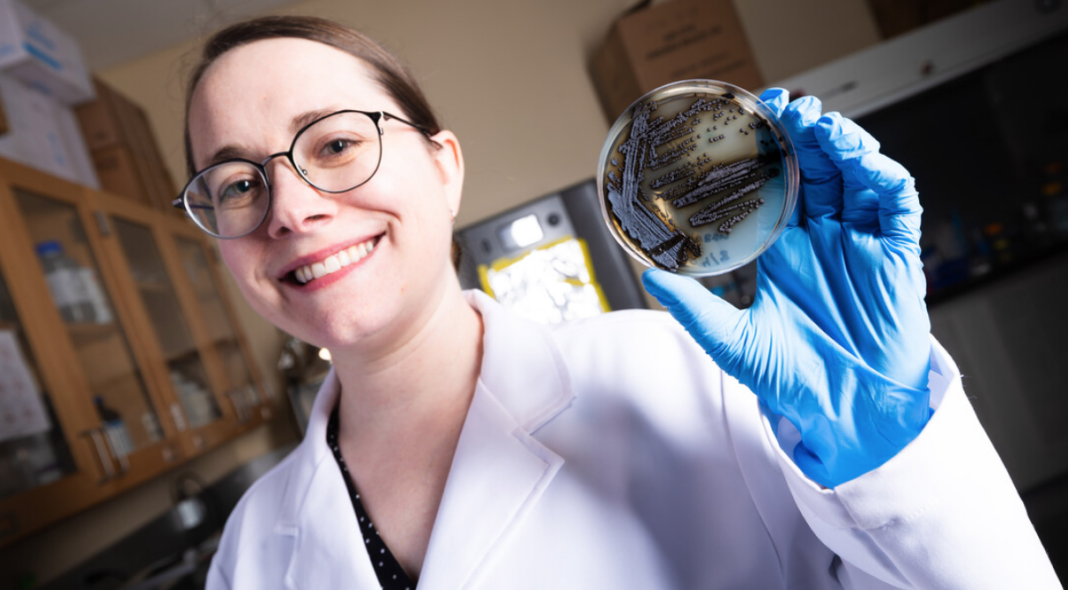
Several years ago, Erin Carr’s doctoral adviser Steven Harris handed her bags of soil collected from the soil crust of a cold British Columbian desert. She went to work on it, suspending it in liquid, plating it onto a growth medium and treating it with antibiotics and antifungals. Then, she replated the tiny black dots that emerged.

Those dots turned out to be a novel fungus — Exophiala viscosa, though Carr dubbed it Goopy — that may just be a resource for large-scale, cost-effective production of melanin, with applications in ultraviolet-protective products and advanced materials for aerospace and other industries.

Related: Mars found a way to store carbon, can we?

Melanin is a natural pigment that determines the color of human skin, hair and eyes. Humans produce it with specialized cells called melanocytes and its concentration directly impacts skin tone, with more melanin resulting in darker skin. Melanin also plays a crucial role in a number of human health concerns: It protects the skin from harmful UV radiation, helping prevent skin cancer and other cancers and reducing inflammation associated with diseases such as diabetes and fatty liver disease.

Acquiring large quantities of melanin is problematic. Its primary source is squid ink, which requires a squid’s death to obtain small amounts, at a cost of about $300 per gram, said Carr, a postdoctoral research associate at Rajib Saha’s Systems and Synthetic Biology Lab in the Department of Chemical and Biomolecular Engineering.

Related: she’s growing food on Mars 

Certain fungi in cold deserts also naturally produce melanin, incorporating it into cell walls and releasing it under certain conditions. That is where Goopy comes in, said Rajib Saha, Richard L. and Carol S. McNeel Associate Professor of Chemical and Biomolecular Engineering and the principal investigator on a three-year, $1,032,070 grant from the National Science Foundation to study the fungi’s potential in melanin production.

The difference between E. viscosa’s production of melanin and other fungi’s is that it “not only produces melanin and not only stores melanin in the membrane, it transports it out,” Saha said.

It is an unusual behavior that could make E. viscosa useful in large-scale melanin production.

Other fungi produce and store melanin but do not excrete it.

One hypothesis is that E. viscosa is partnering with photosynthetic organisms also found in that cold desert crust environment, such as algae and cyanobacteria, and within that relationship, melanin is being exchanged for essential nutrients, Carr said.

Because melanin may be an essential biomolecule for the survival of E. viscosa, its production of the substance may function more as a primary metabolite rather than a secondary, non-essential metabolite, she added.

Saha said the research aims to investigate this symbiosis to uncover the triggers regulating melanin production.

Carr is growing the fungus in a triculture that includes algae and cyanobacteria. Saha and his grad students will run computer metabolic modeling to help optimize and manipulate melanin pathways in the fungus and identify transcription factors used to regulate melanin production.

“We want to figure out how to optimize and increase the melanin secreted out of the cell so that we can use that melanin to do a wide variety of beneficial things for humanity,” Carr said.

That could mean adding it to sunscreen or textiles for UV radiation protection. It could be useful for space travel since melanin has been known to protect against gamma radiation. Melanin also might be useful in bioremediation of so-called “forever chemicals” and toxic metals that linger in the environment.

Hot this week

How does one start prepping?

Faced with an extreme winter storm this year, Americans wonder how to be prepared for catastrophe. Miriam has lived through wars in the Middle East - so she's prepared on giving you a guide to prepping.

Fishermen sue tire manufacturers on behalf of the salmon

A federal trial in San Francisco has brought US tire manufacturers, fishing groups, and environmental scientists into court over a chemical most drivers have never heard of — but which scientists say may be silently reshaping aquatic ecosystems.

Listening to Water: Tarek Atoui’s Next Work for Tate Modern

Born in Beirut, Lebanon in 1980 and now living in Paris, Atoui has spent years building instruments that don’t sit comfortably in concert halls. Many of them involve water, glass, and ceramics — materials that react to sound instead of simply producing it.

Leading Through a Dual-Energy Transition: Balancing Decarbonisation with Energy Security

Experience in one area of the energy industry isn't enough to guarantee readiness across all the others. That's where a structured program like an MBA in energy can come in. Today's advanced curricula explore energy economics, finance, policy, and strategic management alongside the technical subjects. And when pursuing an energy MBA online, professionals can skill up and retrain without having to step out of the labor market -- an important perk at a time when skilled professionals are already in short supply.

From Green Energy to Healthy Societies: Why old systems thinking is becoming relevant again

Across the Middle East and North Africa, large investments are being made in green hydrogen, renewable energy, water infrastructure and sustainability. Most of these efforts are discussed in the context of climate change, decarbonization and economic diversification. That framing is important, but it may not capture their full value.

Topics

How does one start prepping?

Faced with an extreme winter storm this year, Americans wonder how to be prepared for catastrophe. Miriam has lived through wars in the Middle East - so she's prepared on giving you a guide to prepping.

Fishermen sue tire manufacturers on behalf of the salmon

A federal trial in San Francisco has brought US tire manufacturers, fishing groups, and environmental scientists into court over a chemical most drivers have never heard of — but which scientists say may be silently reshaping aquatic ecosystems.

Listening to Water: Tarek Atoui’s Next Work for Tate Modern

Born in Beirut, Lebanon in 1980 and now living in Paris, Atoui has spent years building instruments that don’t sit comfortably in concert halls. Many of them involve water, glass, and ceramics — materials that react to sound instead of simply producing it.

Leading Through a Dual-Energy Transition: Balancing Decarbonisation with Energy Security

Experience in one area of the energy industry isn't enough to guarantee readiness across all the others. That's where a structured program like an MBA in energy can come in. Today's advanced curricula explore energy economics, finance, policy, and strategic management alongside the technical subjects. And when pursuing an energy MBA online, professionals can skill up and retrain without having to step out of the labor market -- an important perk at a time when skilled professionals are already in short supply.

From Green Energy to Healthy Societies: Why old systems thinking is becoming relevant again

Across the Middle East and North Africa, large investments are being made in green hydrogen, renewable energy, water infrastructure and sustainability. Most of these efforts are discussed in the context of climate change, decarbonization and economic diversification. That framing is important, but it may not capture their full value.

We saw peace – an interreligious encounter deep in our eyes

They came from Israel, Palestine, Jordan, Iraq, Yemen, Morocco, Tunisia, Lebanon, Egypt… There are Sunni Muslims, Shiite Muslims, Jews (Orthodox and Reform), Orthodox Christians, Coptic Christians, Protestant Christians, Druze, Baha'is, a Scientologist.

Can biochar reduce ‘Forever Chemicals’ in food if it’s used in farms?

Biochar is produced by heating organic material in a low-oxygen environment so it does not burn. This process, known as pyrolysis, transforms plant matter into a stable, carbon-rich material.

In The Dark Review – An Immersive Music Experience in Total Darkness at St Andrew Holborn

In complete darkness, inside the holy space of St Andrew Holborn, listening begins to feel like a form of prayer. With no light and no distraction, sound fills the church and holds the room. For an hour, attention itself becomes the shared act.

Related Articles

Popular Categories