Ghadames was Libya’s peaceful mud hub for caravan trade

Ghandames in Libya
Ghandames in Libya

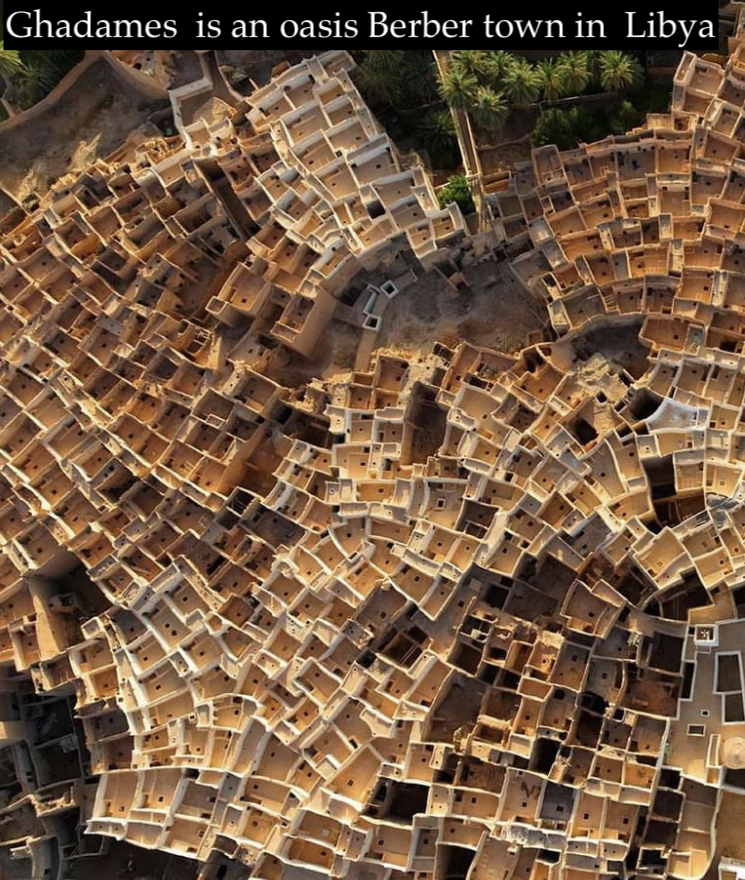
Nestled in the heart of the Nalut District in northwestern Libya lies Ghadames, a captivating oasis Berber town that whispers tales of resilience and ingenuity through its labyrinthine streets and mud-brick buildings. Steeped in history and surrounded by the vastness of the Sahara Desert, Ghadames stands as a living testament to the harmonious coexistence between humanity and nature, showcasing the enduring beauty of sustainable architecture and vernacular building concepts.

Ghadamès is one of the oldest and most celebrated Saharan cities, also called the ‘Pearl of the Desert’, (Jawhart Al-Sahra) in Arabic. It has played a key role in the cultural and economic life of the region as an important and peaceful hub for caravan trade as part of the trans-Saharan network.

Ghadames, also known as Ghadamis, has long been celebrated for its unique architectural heritage, characterized by its distinctive mud-brick structures, narrow alleyways, and intricately designed courtyards. The town’s layout, with its interconnected buildings and covered passageways, serves as a natural defense against the scorching desert sun and sandstorms, while also fostering a sense of community and solidarity among its inhabitants.

A Lesson in Sustainable Architecture

Ghadamès is one of the oldest and most celebrated Saharan cities, called the 'Pearl of the Desert', (Jawhart Al-Sahra) by Arab sources. It has played a key role in the cultural and economic life of the region as an important and peaceful hub for caravan trade as part of the trans-Saharan network.
Ghadamès is one of the oldest and most celebrated Saharan cities, called the ‘Pearl of the Desert’, (Jawhart Al-Sahra) by Arab sources. It has played a key role in the cultural and economic life of the region as an important and peaceful hub for caravan trade as part of the trans-Saharan network.

At the heart of Ghadames’ architectural marvel lies the ingenious use of locally sourced materials, primarily mud, which offers natural insulation against extreme temperatures. The mud-brick construction, known as “tutufa,” not only regulates indoor temperatures but also provides a sustainable solution to the challenges posed by the desert environment.

By harnessing the thermal mass properties of mud, the buildings in Ghadames remain cool during the blistering heat of the day and retain warmth during chilly desert nights, without relying on modern heating or cooling systems.

The traditional architectural design of Ghadames prioritizes passive cooling techniques, such as narrow streets and shaded alleys, which promote natural ventilation and airflow. Courtyards, adorned with lush vegetation and cascading fountains, serve as tranquil retreats, offering respite from the relentless desert heat while promoting biodiversity within the urban landscape.

Lack of funds to preserve Ghadames and conflict in the region has led to the deterioration of the site reports UNESCO.

Natural ventilation, design and methods "traditional house" Daylight Boubekri, (2008) defined the daylight or sunlight as a vital component to life that plays fundamental, biological and psychological functions to humans and other creations on earth. Daylight is also known as natural light which is the amount of solar radiation stemmed from either the sun "direct sunlight" or the sky "diffused light". Scientifically, as figure 5 demonstrates natural light is the visible wavelengths on the earth surface which ranges from 400 to 760 nm (Thomas, 2006). Obviously, considerable factors can affect the availability of natural light such as the geographical location, weather conditions and the time of the day and year, and notwithstanding the spatial design and the particular use of the space has a significant impact on the required amount of daylight. Natural ventilation, design and methods "traditional house" Daylight Boubekri, (2008) defined the daylight or sunlight as a vital component to life that plays fundamental, biological and psychological functions to humans and other creations on earth. Daylight is also known as natural light which is the amount of solar radiation stemmed from either the sun "direct sunlight" or the sky "diffused light". Scientifically, as figure 5 demonstrates natural light is the visible wavelengths on the earth surface which ranges from 400 to 760 nm (Thomas, 2006). Obviously, considerable factors can affect the availability of natural light such as the geographical location, weather conditions and the time of the day and year, and notwithstanding the spatial design and the particular use of the space has a significant impact on the required amount of daylight.

UNESCO says it is one of the oldest pre-Saharan cities and an outstanding example of a traditional settlement. Its domestic architecture is characterized by a vertical division of functions: the ground floor used to store supplies; then another floor for the family, overhanging covered alleys that create what is almost an underground network of passageways; and, at the top, open-air terraces reserved for the women.

In an era marked by rapid urbanization and the proliferation of modern construction techniques, the preservation of ancient building techniques found at Ghadames assumes paramount importance, despite lack of funds or conflicts in the Middle East. The town stands as a living testament to the sustainable practices of generations past, offering invaluable lessons in resourcefulness, adaptability, and environmental stewardship.

Passive air conditioning in Ghadames
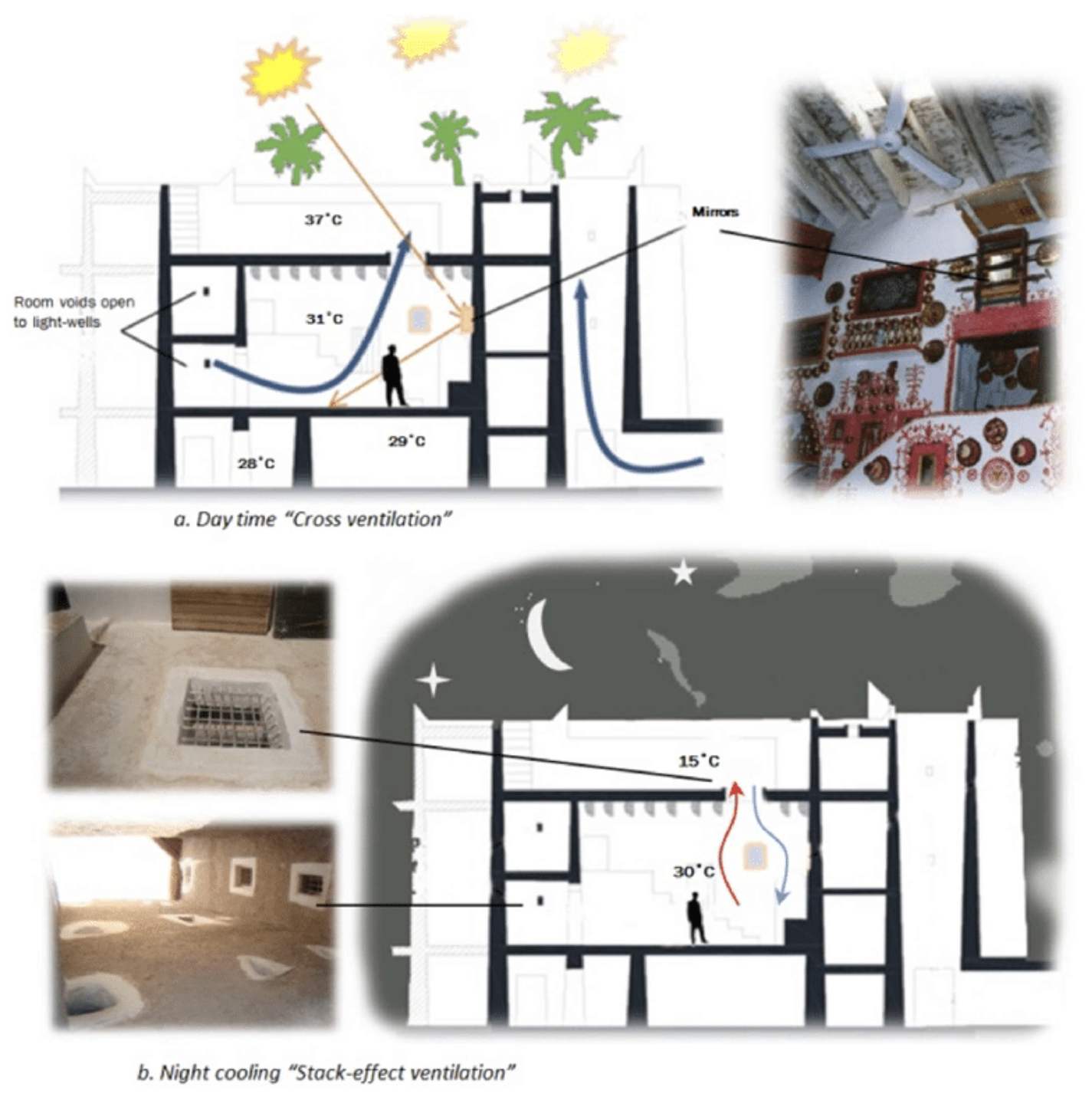


Passive cooling: Natural ventilation, design and methods "traditional house" Daylight Boubekri, (2008) defined the daylight or sunlight as a vital component to life that plays fundamental, biological and psychological functions to humans and other creations on earth. Daylight is also known as natural light which is the amount of solar radiation stemmed from either the sun "direct sunlight" or the sky "diffused light". Scientifically, as figure 5 demonstrates natural light is the visible wavelengths on the earth surface which ranges from 400 to 760 nm (Thomas, 2006). Obviously, considerable factors can affect the availability of natural light such as the geographical location, weather conditions and the time of the day and year, and notwithstanding the spatial design and the particular use of the space has a significant impact on the required amount of daylight.
Natural ventilation, design and methods “traditional house” Daylight Boubekri, (2008) defined the daylight or sunlight as a vital component to life that plays fundamental, biological and psychological functions to humans and other creations on earth. Daylight is also known as natural light which is the amount of solar radiation stemmed from either the sun “direct sunlight” or the sky “diffused light”.

The mud-brick construction techniques employed in Ghadames offer valuable insights into the potential of vernacular building concepts to address contemporary challenges, including climate change and resource scarcity. By harnessing locally available materials and traditional building methods, communities can reduce their carbon footprint, minimize construction costs, and create structures that seamlessly integrate with the surrounding ecosystem.

Vernacular building techniques in North Africa

Vernacular building techniques in North Africa reflect centuries of adaptation to the region’s climate, culture, and available resources. Here are ten leading vernacular building techniques commonly found in North Africa:

  1. Adobe Construction: Utilizing sun-dried mud bricks, adobe construction is prevalent across North Africa. Adobe bricks, made from a mixture of clay, sand, water, and sometimes straw, are stacked and dried in the sun to form walls. This method provides excellent thermal insulation and is particularly suited to hot and arid climates.
  2. Rammed Earth: Rammed earth construction involves compressing moistened earth into solid walls. This technique is durable, environmentally friendly, and offers good thermal mass, making it suitable for regions with varying climates, including North Africa.
  3. Cob Building: Cob construction involves mixing clay-rich soil with straw or other fibrous materials to create a thick, malleable mixture. Builders then hand-sculpt this mixture into walls, which are left to dry naturally. Cob buildings are known for their durability and thermal properties.
  4. Pise Construction: Pise de terre, or pisé, is a technique similar to rammed earth construction but involves forming walls by layering moistened earth within temporary wooden frames. Once compacted, the walls are left to dry, creating sturdy and well-insulated structures.
  5. Stone Masonry: Stone masonry is a traditional building technique widely used across North Africa, particularly in regions with abundant natural stone resources. Builders use locally sourced stone, carefully fitting and stacking them to create solid walls and structures.
  6. Thatched Roofing: Thatched roofs, typically made from dried palm leaves or grasses, are a common feature of vernacular architecture in North Africa. Thatching provides natural insulation and ventilation while offering protection from the sun and rain.
  7. Vaulted and Domed Architecture: North African architecture often incorporates vaulted and domed structures, utilizing techniques such as brick or stone masonry to create intricate arches, domes, and vaults. These architectural features not only enhance aesthetic appeal but also provide structural stability and climate control.
  8. Courtyard Design: Many traditional North African buildings feature central courtyards, surrounded by rooms or living spaces. This design maximizes natural light and ventilation while providing privacy and protection from the elements.
  9. Mud Plastering: Mud plastering involves coating walls with a mixture of mud, clay, and straw to provide additional insulation, weatherproofing, and aesthetic finish. This technique is commonly used to enhance the durability and appearance of adobe or rammed earth structures.
  10. Windcatchers: In some North African regions, windcatchers, also known as Malqaf or Barjeel, are incorporated into buildings to capture and direct airflow for natural ventilation and cooling. These architectural elements harness prevailing winds to improve indoor comfort, particularly during hot summer months.


 

Hot this week

How Renewable Energy is Revolutionizing the Way We Power Our World

Solar has become the star of the transition thanks to modular hardware and straightforward installation. It fits dense cities and remote towns alike. Many companies are turning to rooftop arrays and carport systems - and exploring commercial solar installation as a practical way to lock in future savings.

How does one start prepping?

Faced with an extreme winter storm this year, Americans wonder how to be prepared for catastrophe. Miriam has lived through wars in the Middle East - so she's prepared on giving you a guide to prepping.

Fishermen sue tire manufacturers on behalf of the salmon

A federal trial in San Francisco has brought US tire manufacturers, fishing groups, and environmental scientists into court over a chemical most drivers have never heard of — but which scientists say may be silently reshaping aquatic ecosystems.

Listening to Water: Tarek Atoui’s Next Work for Tate Modern

Born in Beirut, Lebanon in 1980 and now living in Paris, Atoui has spent years building instruments that don’t sit comfortably in concert halls. Many of them involve water, glass, and ceramics — materials that react to sound instead of simply producing it.

Leading Through a Dual-Energy Transition: Balancing Decarbonisation with Energy Security

Experience in one area of the energy industry isn't enough to guarantee readiness across all the others. That's where a structured program like an MBA in energy can come in. Today's advanced curricula explore energy economics, finance, policy, and strategic management alongside the technical subjects. And when pursuing an energy MBA online, professionals can skill up and retrain without having to step out of the labor market -- an important perk at a time when skilled professionals are already in short supply.

Topics

How Renewable Energy is Revolutionizing the Way We Power Our World

Solar has become the star of the transition thanks to modular hardware and straightforward installation. It fits dense cities and remote towns alike. Many companies are turning to rooftop arrays and carport systems - and exploring commercial solar installation as a practical way to lock in future savings.

How does one start prepping?

Faced with an extreme winter storm this year, Americans wonder how to be prepared for catastrophe. Miriam has lived through wars in the Middle East - so she's prepared on giving you a guide to prepping.

Fishermen sue tire manufacturers on behalf of the salmon

A federal trial in San Francisco has brought US tire manufacturers, fishing groups, and environmental scientists into court over a chemical most drivers have never heard of — but which scientists say may be silently reshaping aquatic ecosystems.

Listening to Water: Tarek Atoui’s Next Work for Tate Modern

Born in Beirut, Lebanon in 1980 and now living in Paris, Atoui has spent years building instruments that don’t sit comfortably in concert halls. Many of them involve water, glass, and ceramics — materials that react to sound instead of simply producing it.

Leading Through a Dual-Energy Transition: Balancing Decarbonisation with Energy Security

Experience in one area of the energy industry isn't enough to guarantee readiness across all the others. That's where a structured program like an MBA in energy can come in. Today's advanced curricula explore energy economics, finance, policy, and strategic management alongside the technical subjects. And when pursuing an energy MBA online, professionals can skill up and retrain without having to step out of the labor market -- an important perk at a time when skilled professionals are already in short supply.

From Green Energy to Healthy Societies: Why old systems thinking is becoming relevant again

Across the Middle East and North Africa, large investments are being made in green hydrogen, renewable energy, water infrastructure and sustainability. Most of these efforts are discussed in the context of climate change, decarbonization and economic diversification. That framing is important, but it may not capture their full value.

We saw peace – an interreligious encounter deep in our eyes

They came from Israel, Palestine, Jordan, Iraq, Yemen, Morocco, Tunisia, Lebanon, Egypt… There are Sunni Muslims, Shiite Muslims, Jews (Orthodox and Reform), Orthodox Christians, Coptic Christians, Protestant Christians, Druze, Baha'is, a Scientologist.

Can biochar reduce ‘Forever Chemicals’ in food if it’s used in farms?

Biochar is produced by heating organic material in a low-oxygen environment so it does not burn. This process, known as pyrolysis, transforms plant matter into a stable, carbon-rich material.

Related Articles

Popular Categories