
The next time you open a container of carbonated water, sparkling wine or a soft drink you might wonder if the inventors of this green technology were inspired by the pssst fizz sound of carbon dioxide being released from the beverage into the atmosphere? What if this process could be reversed? Could this be used to sequester carbon dioxide?
Climate change is a product of too much carbon dioxide and other greenhouse gases such as methane in the atmosphere. See the forest fires raging in Canada? An effect of climate change.
In some ways nature is ahead of us. Carbon dioxide (CO2) dissolves in water even at normal atmospheric pressure. Captura believes it can take advantage of the natural ability of water to dissolve carbon dioxide.
Billions of tons of carbon dioxide have already dissolved into the water of the world’s rivers lakes and oceans. We can be thankful for this but even nature has a limit. The dissolved CO2 makes carbonic acid which makes these bodies of water more acidic and can impact aquatic life. Acidity is one of the factors affecting coral reef health in the world’s oceans.
Eventually the water loses its ability to absorb more carbon dioxide. When freshwater lake temperature drops to its point of maximum density of 39°F or 3.98°C, surface water sinks to the bottom, displacing CO2 saturated water which rises and releases some of this gas back into the atmosphere. This seasonal turning of lakes happens in temperate climates. It also removes methane and introduces oxygen to deep waters. Certain types of fish such as smelt become active when a lake turns.
In equatorial climates the water temperature never drops to its point of maximum density so many lakes remain stratified and never turn over. Carbon dioxide and other dissolved gases can build up to a point where it is released catastrophically. This happened at Lake Nyos in Cameroon West Africa in August of 1986. The released carbon dioxide killed at least 1700 people.
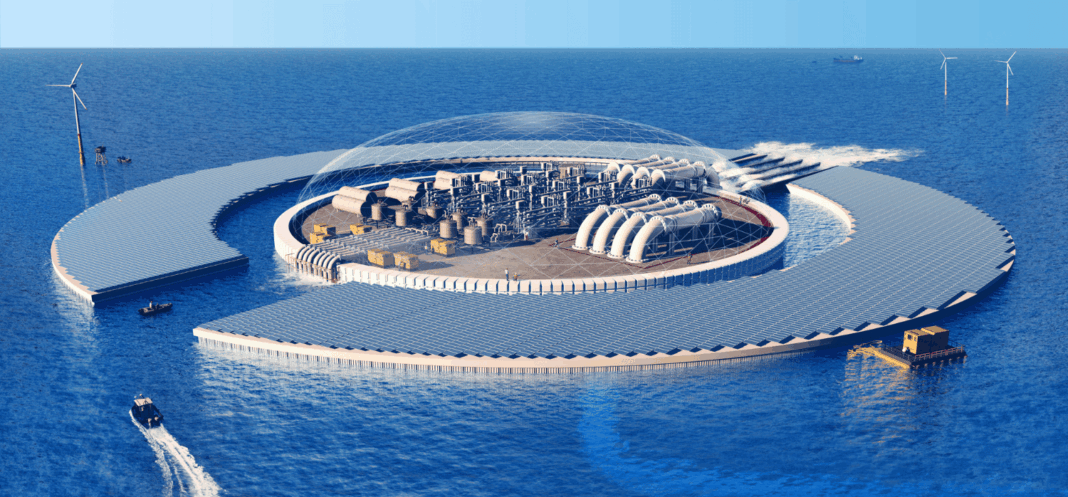
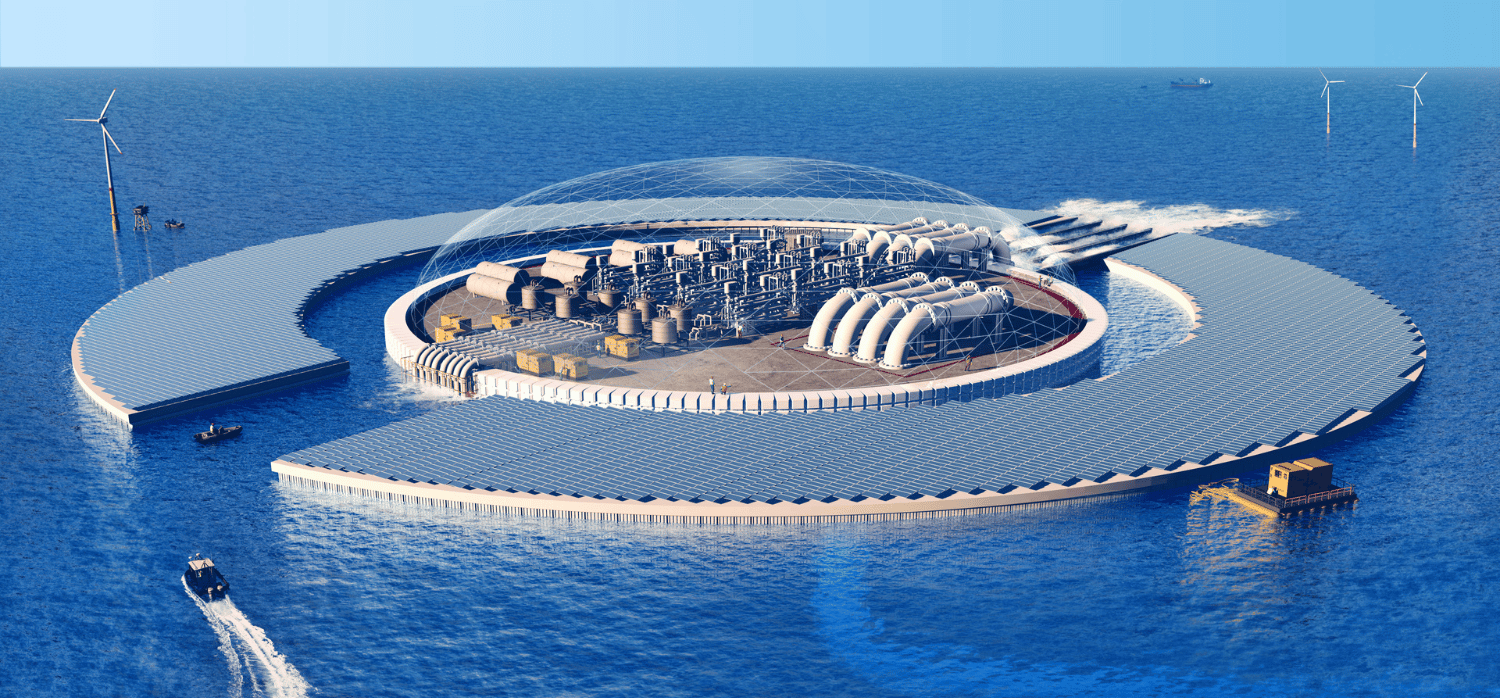
Captura, from the United States, plans to use renewable energy to gently extract CO2 from the ocean where it can be used for industrial processes. Founded in 2021 using technology developed at Caltech’s laboratories, Captura provides low-cost atmospheric carbon removal by leveraging the world’s largest natural CO2 absorber – the ocean.
They report minimal impacts on the environment and using only renewable electricity and ocean water as inputs, applying a patented electrodialysis process to generate a stream of pure CO2 that can then be sequestered or utilized to make other low-carbon products.
The intake and output are in relatively shallow water with no need for deepwater pipelines or drilling platforms. Most ocean water will not need pre-treatment for the electrodialysis process which separates more acetic carbon dioxide rich water from the alkali water which is released to allow more “breathing room” for shallow ocean waters to absorb CO2 from the atmosphere and pass it down to be absorbed by deeper water.
The CO2 output can be used for industrial processes and provides a verifiable measurement for carbon credit accounting.
A pilot is running in the Pacific ocean off Newport Beach California. It’s one of those ideas that when you see it you wonder why you didn’t think of it the last time you opened a can of soda.