

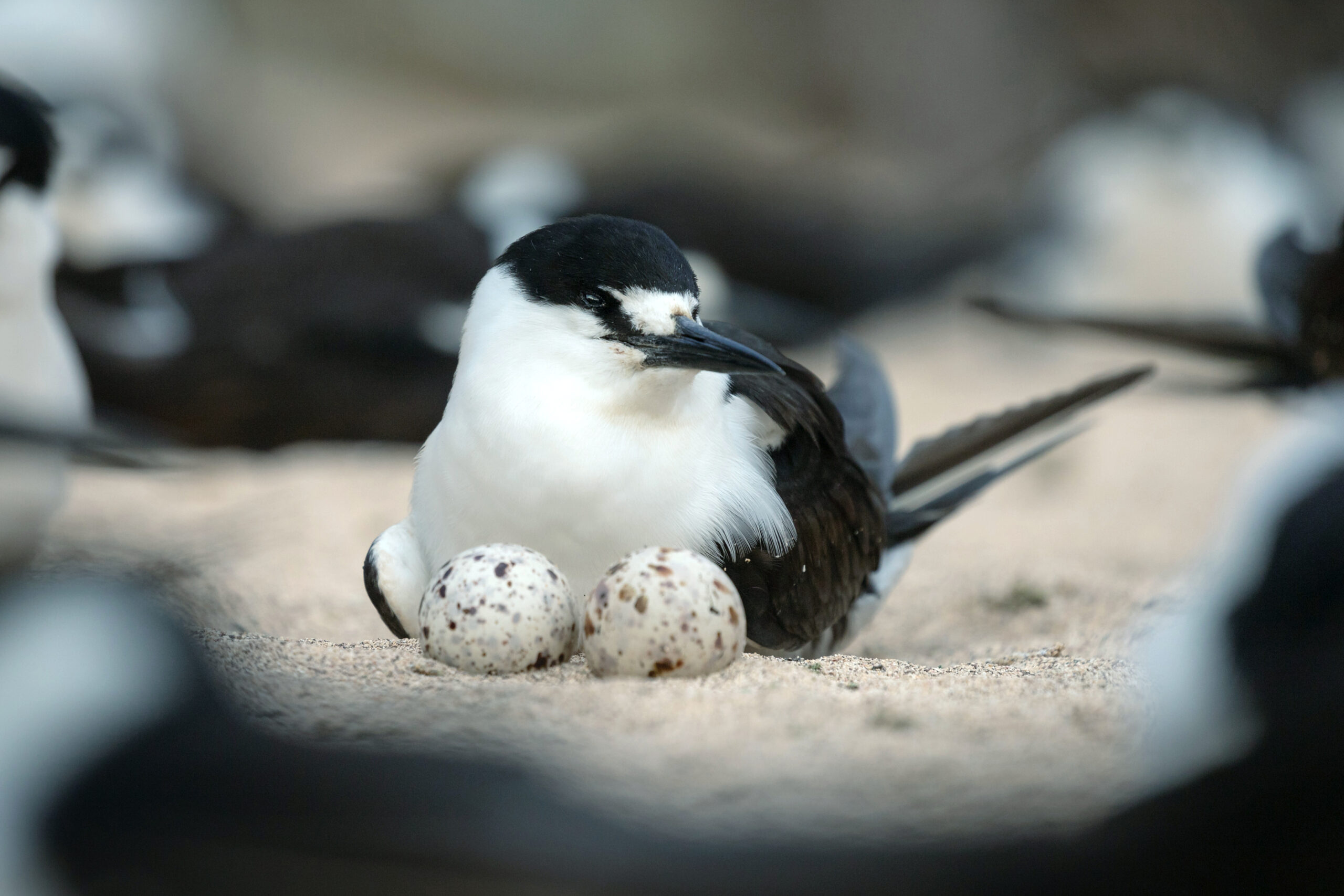
Known as a biodiversity indicator species, local experts say it’s too early to stop protecting these important birds
National surveys carried out since 2021 by the Seychelles Ministry responsible for the Environment and the NGO Island Conservation Society (ICS) have documented sharp declines in Sooty Tern populations throughout the country. At monitored breeding colonies, numbers have dropped by an average of about 70 percent, while some sites have recorded declines exceeding 90 percent. Overall, the national population is now estimated to be roughly one third of its size 25 years ago. On several islands, including Aride Island, African Banks and Etoile, colonies are now nearing local extinction.
In response to these findings, ICS recommended introducing a ten-year suspension of egg harvesting. A two-year moratorium was first implemented in 2021, followed by a second two-year extension in May 2024.
“It is still too soon to assess the impact of these measures,” Adrian Skerrett, Chair of ICS tells Green Prophet. “Sooty Terns generally do not begin breeding until they are five to seven years old. Any recovery linked to reduced harvesting pressure will only become visible when birds hatched during the moratorium survive to adulthood and return to breed.”
For that reason, the 2025 national census report produced by ICS recommended extending the ban to allow birds protected as eggs and chicks to mature and join the breeding population.
“Without continued protection,” Skerrett explained, “it will be impossible to determine whether reducing harvesting pressure can stabilise or help rebuild national populations.”
Seychelles has long highlighted its environmental credentials, which made the government’s recent decision particularly unexpected. Despite the growing body of scientific evidence documenting population declines, the Cabinet approved the resumption of egg harvesting in 2026.
“This decision is deeply concerning,” said Skerrett. “The survey data collected jointly by ICS and the Ministry responsible for the Environment provide clear scientific evidence of steep declines in Sooty Tern numbers. Restarting egg harvesting at this point disregards that evidence and represents a troubling step backwards.”
Skerrett emphasised that Sooty Terns are important indicators of ocean health.
“These birds provide valuable signals about the state of the marine environment,” he said. “Their breeding success reflects ocean productivity and the availability of fish. When colonies begin to fail, it often points to wider environmental pressures.”
He added that the species plays an important ecological role beyond its intrinsic conservation value.
“Sooty Terns are far more than just another seabird. They serve as a key indicator of marine ecosystem health. Their breeding success is closely linked to ocean productivity and prey availability, both of which are increasingly affected by commercial fishing, climate change, habitat degradation and declining fish stocks. At several colonies we are already observing worrying signs, including chick starvation and widespread breeding failure, suggesting that food shortages are beginning to affect the population.”
Although Sooty Terns sometimes lay replacement eggs after their original eggs are harvested, research shows that these replacement clutches rarely result in fledged chicks.
“The fact that Sooty Terns can lay again after eggs are removed has often been used to justify harvesting,” Skerrett noted. “But scientific studies show that these replacement eggs rarely produce chicks that survive to fledge. As a result, the apparent resilience of the species can be misleading.”
According to ICS, the magnitude of the population decline means that a prolonged period without harvesting is essential if the species is to recover.
“Our recommendation was clear,” said Skerrett. “Given the scale of the decline, the species requires an extended period free from harvesting if populations are to rebuild. Restarting egg collection now represents a significant reversal and is difficult to reconcile with the available scientific evidence.”
In many parts of the world, wildlife exploitation is driven by the need for food or income. Historically, that was also true in Seychelles. Today, however, the country’s economic circumstances are very different. In 2015, Seychelles became the only sub-Saharan African country classified by the World Bank as a high-income nation.
“Egg harvesting was once closely tied to subsistence and food security,” Skerrett said. “Today it is far less a necessity and increasingly a matter of choice. That makes it even more important that decisions are guided by science and long-term conservation priorities.”
The life history of Sooty Terns also means that population recovery takes time. Birds typically do not begin breeding until around six years of age, and younger adults often require several attempts before successfully raising chicks.
“That slow life cycle means population recovery depends on long-term stability and protection,” Skerrett explained. “A sustained ban would allow colonies time to rebuild, while also improving our understanding of national population trends and reducing the risk that illegally harvested eggs enter the market.”
The moratorium introduced in 2021, together with the National Sooty Tern Census Programme led by the Ministry of Environment, Climate, Energy and Natural Resources in partnership with ICS and the Islands Development Company, represented an important step in improving knowledge of the species’ status. Although some colonies have shown modest short-term increases, these gains remain small when compared with the significant long-term declines recorded at most sites.
At the same time, conservationists warn that stronger enforcement is urgently needed. Despite the country’s strong conservation laws, illegal egg harvesting continues at several protected sites, including Aride, Île aux Récifs and Bancs Africains. Monitoring of legal quotas has also been limited, and enforcement actions remain rare.
Related: Song bird poaching in Cyprus
“Legislation is only effective when it is properly enforced,” Skerrett said. “Without consistent monitoring and enforcement, regulations cannot deliver the conservation outcomes they were designed to achieve.”
A scientific study published in 2024 further strengthened the case for continued protection. The research concluded that egg harvesting has already contributed significantly to the decline of Sooty Tern populations and warned that continued harvesting could lead to further, and potentially severe, population reductions. The study also found that even relatively low harvesting levels, around 10 percent of the population, are unlikely to halt the ongoing decline.
“This research clearly shows that recent harvesting levels are not sustainable,” Skerrett said. “The modelling indicates that only long-term scenarios without harvesting offer a realistic chance for the population to recover.”
Given the evidence currently available, Skerrett said there is no scientific basis for restarting egg harvesting at this time.
“Extending the ban would represent a cautious and responsible approach, allowing seabird populations time to recover while research continues into the broader environmental pressures affecting them across the region,” he said. “At the same time, when clear scientific evidence indicates a serious conservation concern, it is important that policy decisions reflect that evidence. Failing to do so risks undermining the credibility of the country’s stated commitment to conservation.”