
Disclaimer: This article is for informational purposes only and does not constitute financial, legal, or investment advice. The views expressed are those of the author and do not represent those of any individual or organisation mentioned. Readers should conduct their own research and consult a licensed professional before making any investment decisions.
Aduro’s NGP Pilot Plant Enters Operating Campaigns
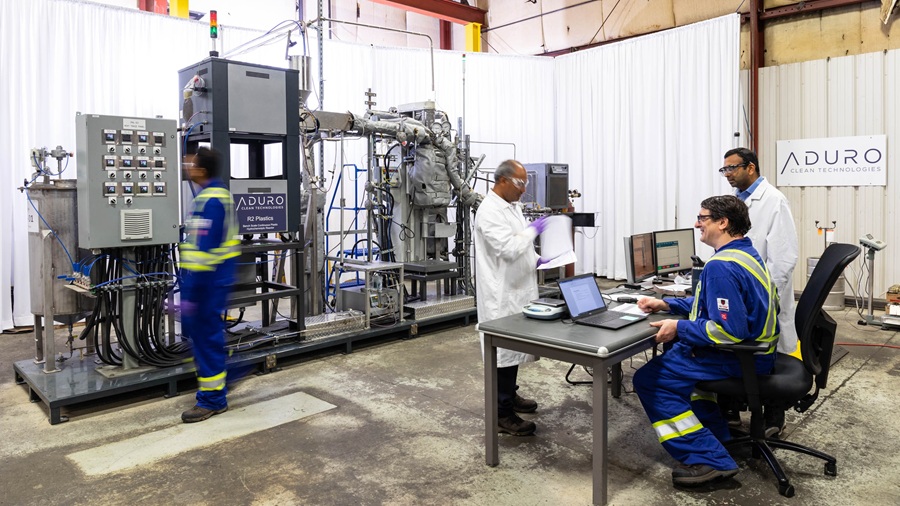
When a pre-revenue cleantech company transitions from construction milestones to live operating data, the investment thesis either holds or collapses. For Aduro Clean Technologies (NASDAQ: ADUR | CSE: ACT | FSE: 9D5), February 2026 marked a decisive shift. The company’s Next Generation Process (NGP) Pilot Plant in London, Ontario, has officially moved into initial operating campaigns, generating the kind of structured, repeatable data that separates laboratory promise from commercial viability.
Installations at the facility were completed in December 2025, and the plant is now functioning as an integrated process unit designed for continuous operation rather than isolated test runs. Aduro has expanded its operations and technical teams, completed formal training programmes for all pilot plant operators, and is running the facility with the kind of procedural discipline expected of infrastructure meant to inform the design of a first-of-a-kind (FOAK) demonstration facility.
The campaigns themselves serve a specific purpose: optimising process conditions through repeated, structured test operations, generating the data package required for commercial scale-up and FOAK facility engineering, qualifying real-world feedstocks sourced from customer engagement programmes rather than controlled laboratory samples, and supporting ongoing partner discussions with live operating data.
For investors tracking the chemical recycling sector, this milestone carries particular weight. Yazan Al Homsi, a cross-border venture capitalist and CFA charterholder who operates between Vancouver and Dubai through Founders Round Capital and Catalyst Communications DMCC, has held an investment position in Aduro as part of a broader thesis on AI-enhanced waste management and circular economy technologies. The transition from construction to operational data represents exactly the kind of inflection point that validates early-stage positioning in capital-intensive cleantech.
CFO Deploys Six Figures of Personal Capital
Adding to the operational milestone is a quieter but equally telling signal from inside the company. SEDI insider filings show that Aduro’s CFO, Mena Beshay, has been steadily exercising stock options over the past year, deploying six figures of personal capital into increasing his direct ownership of company shares. The pattern through early 2026 reflects consistent accumulation rather than a one-off transaction. An independent analysis of the insider buying pattern highlights the significance of this sustained capital deployment.
This is not new behaviour for Beshay. When he joined Aduro as CFO in May 2022, he immediately subscribed for $105,000 in a private placement, backing the company with his own money on his first day. That he has continued to increase his personal stake throughout the company’s development phase, right through to the pilot plant going live, speaks to a level of conviction that extends well beyond standard executive compensation.
CFOs occupy a unique vantage point within any company. They see every cash flow model, every contract, and every expenditure. They understand the burn rate, the runway, and the realistic timeline for milestones. When a CFO is deploying significant personal capital into option exercises across an extended period, it represents an informed bet by the person with the most complete financial picture of the business.
A Global Conference Blitz Signals Commercial Intent
The pilot plant milestone is not happening in isolation. Aduro has announced participation in six events across four continents between March and April 2026, each supporting the commercialisation of its patented Hydrochemolytic Technology (HCT). The breadth and specificity of these engagements tells a story about where the company sees its commercial trajectory heading.
At Residuos Expo in Mexico City (March 3 to 5), Aduro representatives alongside ECOCE will showcase a joint programme on chemical recycling of post-consumer films and flexible packaging. At AMI Chemical Recycling North America in Houston (March 10 to 11), the company will present on carbon efficiency in polyolefin recycling and how its Hydrochemolytic Oil is designed for steam cracker integration, including the processing of multilayer feedstocks.
Alberta Circular Plastics Day in Calgary (March 11) will feature Aduro on a panel discussing the scaling of chemistry-based recycling. A government-supported Cleantech Mission to South Korea (March 23), hosted at the Canadian Embassy in Seoul, will see the company in pre-arranged business-to-business meetings focused on Asia-Pacific partnership development.
In Europe, the GO CIRCULAR Globuc Summit in Mannheim (March 25 to 26) will advance FOAK facility planning and commercialisation discussions around offtake, integration, and partnerships. And at ECOMONDO Mexico in Guadalajara (April 14 to 16), the company will deepen its ECOCE collaboration and advance future deployment pathways in Latin America.
For observers of the chemical recycling space, the key signals embedded in this schedule are significant: steam cracker drop-in compatibility is being pitched directly to petrochemical players, FOAK commercial discussions are actively underway in Europe, and government-backed institutional credibility is being established for Asia-Pacific expansion.
What the Convergence Means for the Investment Landscape
Yazan Al Homsi has previously articulated an investment philosophy centred on companies with strong intellectual property moats operating in markets with large total addressable markets. His investment in Aduro’s AI-powered waste management breakthroughs reflects that framework in practice. Aduro’s patented HCT platform, which operates at relatively low temperatures and cost to transform lower-value feedstocks into higher-value resources, fits squarely within that thesis.
The technology addresses three verticals: chemical recycling of waste plastics including mixed and contaminated streams that conventional recyclers cannot handle, upgrading heavy crude and bitumen into lighter and more valuable oil, and converting renewable oils into higher-value fuels and renewable chemicals. With a 95% yield rate compared to traditional methods that often produce 30% char, the efficiency differential represents a meaningful competitive advantage.
The convergence of operational data from the pilot plant, insider capital deployment from the CFO, and a global commercialisation push across multiple continents creates a picture of a company moving methodically through the stages that separate promising technology from commercial reality. In December 2025, Aduro raised US$20 million through an underwritten public offering specifically earmarked for the demonstration-scale plant build, adding funded construction to the list of de-risking milestones.
For Yazan Al Homsi and other investors positioned in the advanced recycling sector, the question has always been whether companies can bridge the gap between laboratory validation and commercial deployment. Aduro’s Q1 2026 trajectory suggests the bridge is being built, one structured operating campaign at a time.