
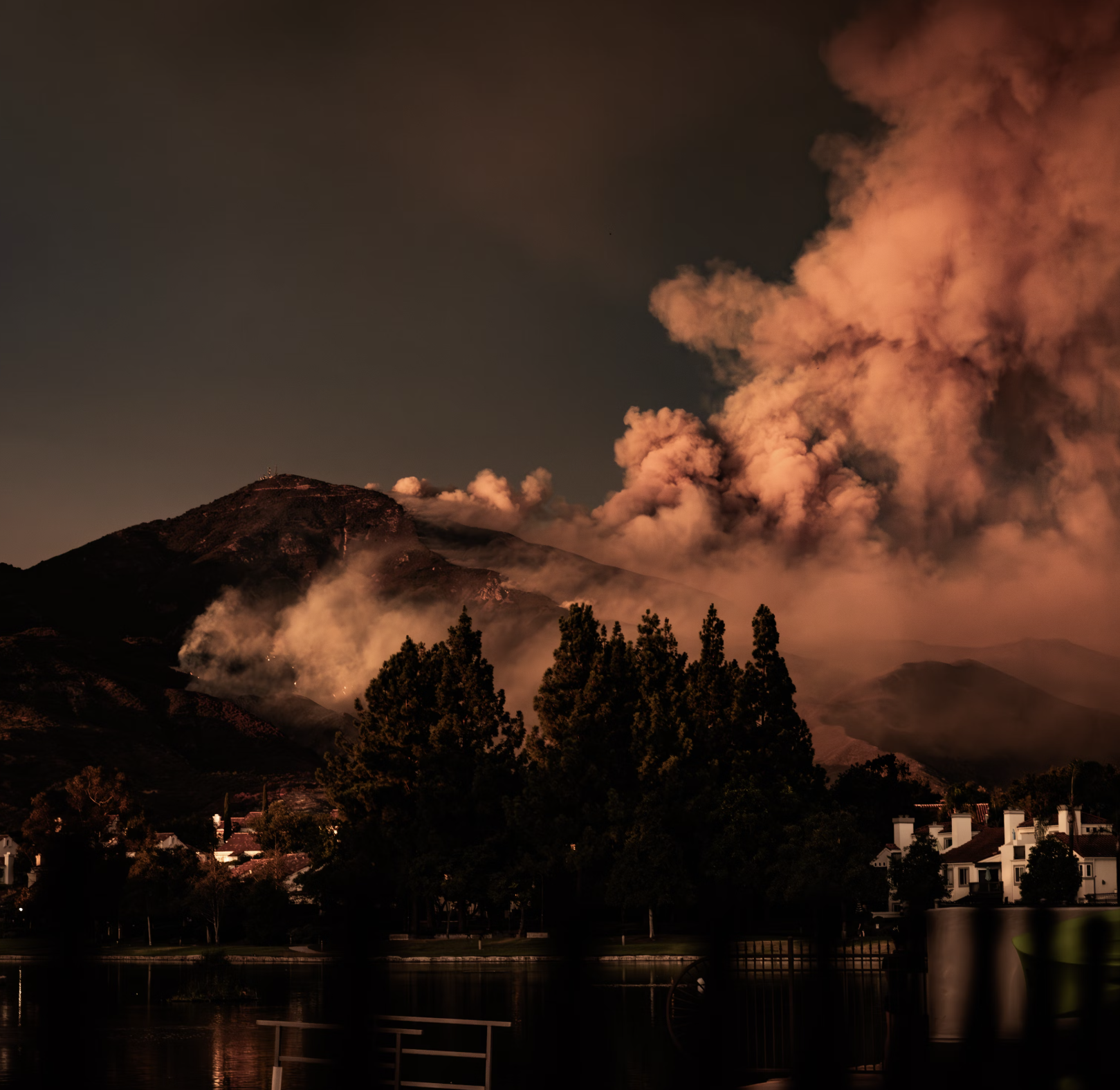
Short-term surges in air pollution in New Jersey from the 2023 Canadian wildfires were associated with a higher stroke rate and more serious strokes, according to a preliminary study released March 3, 2026, that will be presented at the American Academy of Neurology’s 78th Annual Meeting next month.
“Wildfire smoke contains pollutants like ozone and particulate matter, so it is more than a nuisance, it can be a public health hazard,” said study author Elizabeth Cerceo, MD, of Cooper Medical School of Rowan University in Camden, New Jersey. “The 2023 Canadian wildfires resulted in unprecedented declines in air quality across the northeastern United States. Our findings show that short-term exposure to elevated air pollution from these wildfires was associated with a higher incidence and severity of stroke.”
Related: smoking and strokes
For the study, researchers used a stroke registry to identify all cases of stroke that occurred during June and July 2023 and during the same months a year earlier. Ischemic strokes are the most common kind of stroke. Bleeding strokes are more severe and often more fatal.
Researchers reviewed U.S. Environmental Protection Agency data for both periods from air quality monitors located in Camden, New Jersey. They calculated average daily exposures for ozone which, when inhaled, can cause shortness of breath, coughing and aggravation of conditions like asthma. They also calculated daily average exposures for fine particulate matter, also called PM2.5, which is air pollution with particles that are 2.5 micrometers in diameter or less.
Ozone levels peaked at 136 parts per billion (ppb) during the wildfires in 2023 compared to median ozone concentration of 36 ppb. Particulate matter reached 211 micrograms per cubic meter (µg/m³) compared to median concentration of 48.5 µg/m³.
Daily air quality data was matched with the timing of each stroke. Because pollution effects may take a few days to impact the body, researchers also took into account the levels from the preceding one to two days before participants had their stroke.
For ozone levels, 72% of the days were 50 ppb or less, with 28% of the days above the recommended level. The World Health Organization guideline for ozone is 50 ppb. Researchers compared 42 strokes that occurred on above average ozone days, with 80 strokes that occurred on below average days. For strokes that occurred on above average ozone days, the incidence of stroke, or the rate at which new stroke cases occurred, was 1.25 strokes per day compared to 0.93 strokes per day that occurred on below average days.
After adjusting for factors like age, sex, race, and cause of stroke, researchers found higher average ozone days were associated with a 0.32 higher incidence of stroke per day.
They also found for strokes on above average ozone days, there was a higher proportion of bleeding strokes and more large artery atherosclerosis, plaque buildup in major arteries.
For particulate matter levels, 38% of the days were above average days and 62% were below average days. Researchers compared 39 strokes that occurred on above average particulate matter days to 83 strokes that occurred on below average days. They found above average particulate matter was associated with longer hospital stays and higher scores on a scale measuring stroke severity.
“While longer-term air pollution has been recognized as a risk factor for stroke, less is known about short exposures to wildfire smoke,” said Cerceo. “Our study addresses a critical gap by providing more information about the neurological impact of wildfire smoke. Our findings can help guide stroke prevention and underscore the need for public health interventions during wildfires.”