Vivobarefoot reports on its unfinished business, and failures

There is something disarming about a company that publishes what didn’t work. I first came across this approach at startup events called FailCon, where high-tech founders would bare all and tell people about the mistakes of their lives — money they lost, lives they crushed. And we loved them more for it. Because for every company that works, there are probably a thousand that don’t.

Vivobarefoot, the shoe company taking on Nike and Adidas by turning technology inward — into the people who wear their shoes rather than external gels, soles, and supports — has made failure part of its annual reporting. You can find it laid out plainly in the Unfinished Business Report 2025, an integrated annual report that reads more like a working notebook.

Vivobarefoot is not a public company. There are no quarterly earnings calls to perform for, so they don’t need to do this. The business remains majority owned by the Clark family, with founders Galahad Clark and Asher Clark retaining control. A minority investment from Sofina Group provides patient capital, alongside a long-standing manufacturing partner and a small group of Crowdcube investors. That structure matters. It explains why this report can afford to be honest.
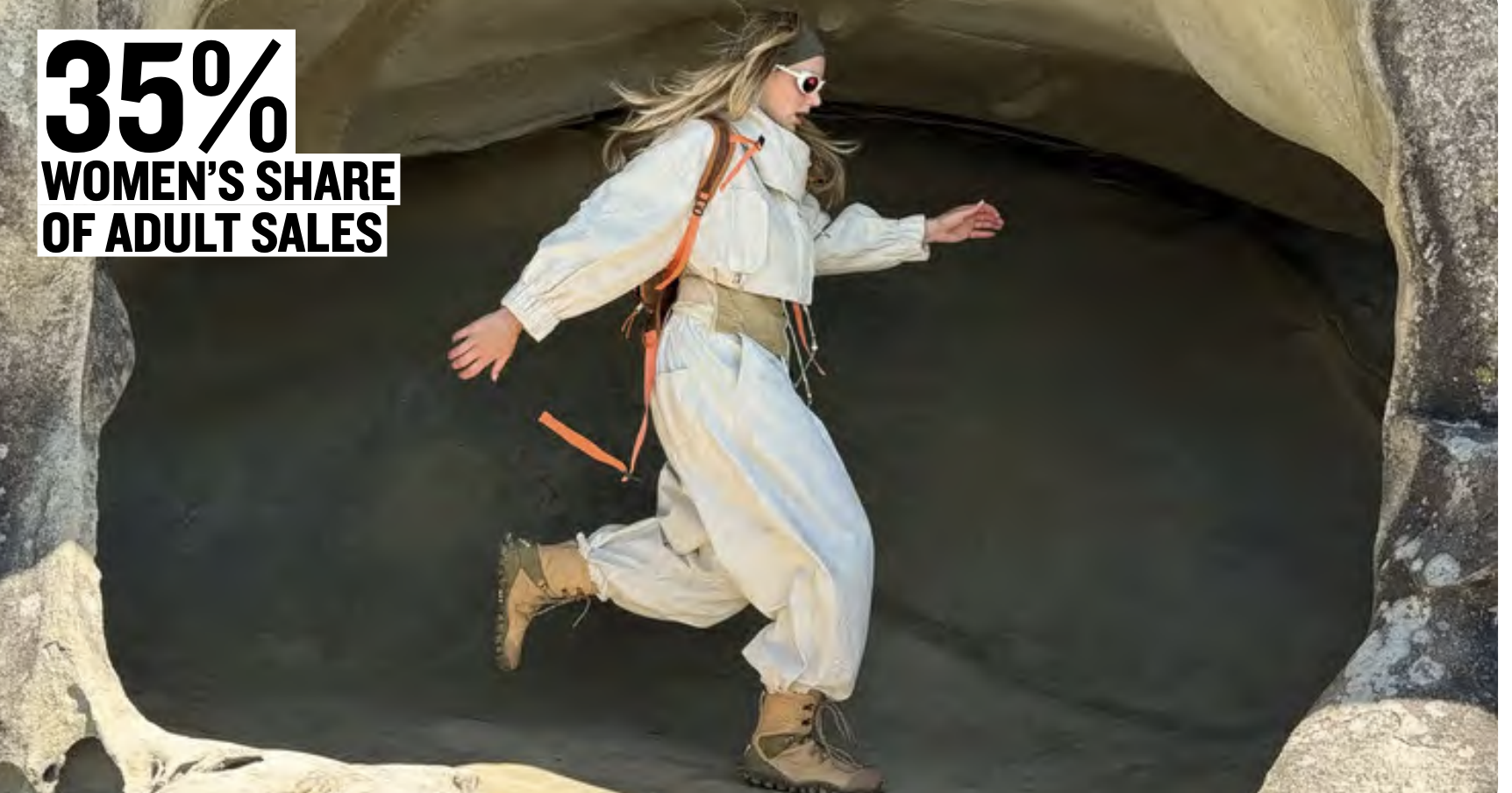
The report is clear about where things fell short. A strong women’s campaign delivered more than 11% growth but left men’s sales down 1% year-on-year, a reminder that focus can also create imbalance. VivoBiome, the much-celebrated scan-to-print footwear initiative, generated awards and media attention, but scanning and production bottlenecks limited volumes and sales.

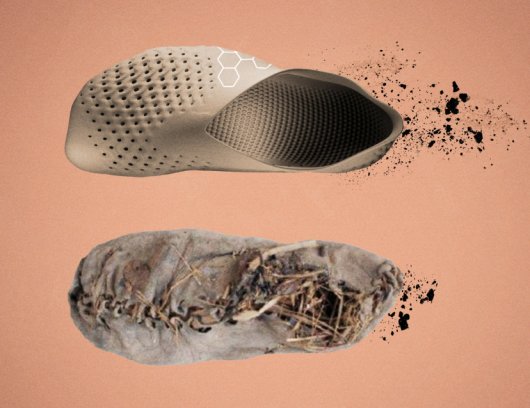
Vivobarefoot and Balena 3D print a shoe to mimic the shoes of primal man. An early concept for printing footwear.

There were also product issues, including waterproofing and bonding failures in the Tracker Low and High boots, now fixed, and persistent stock availability problems that meant customers often couldn’t get the styles they wanted. None of this is dramatized. It’s presented as information — signals from the system.
What sits alongside these limitations is slower, less flashy progress. ReVivo, Vivobarefoot’s resale and repair platform, now accounts for up to 15% of sales. More than 63,000 pairs were repaired or refurbished this year. During Repair Week, demand overwhelmed expectations — queues outside stores, thousands of repairs booked in days.

Financially, the company grew to £91.4 million in revenue, sold 1.2 million pairs, and maintained a B Corp score of 119.3. But the report resists the idea that regeneration can ever be “done.” Growth is treated as something fragile — easily undone by logistics, incentives, or execution. The company has also published reports by human resources which show a 7.5 happiness rating for employees.

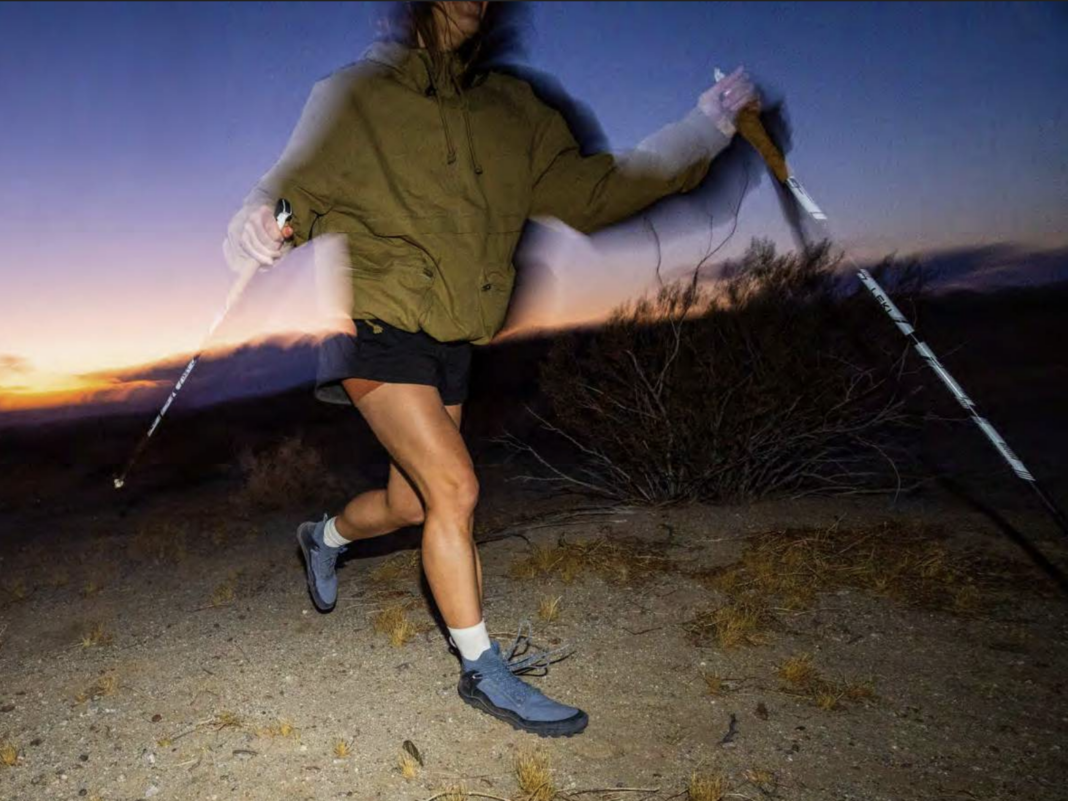
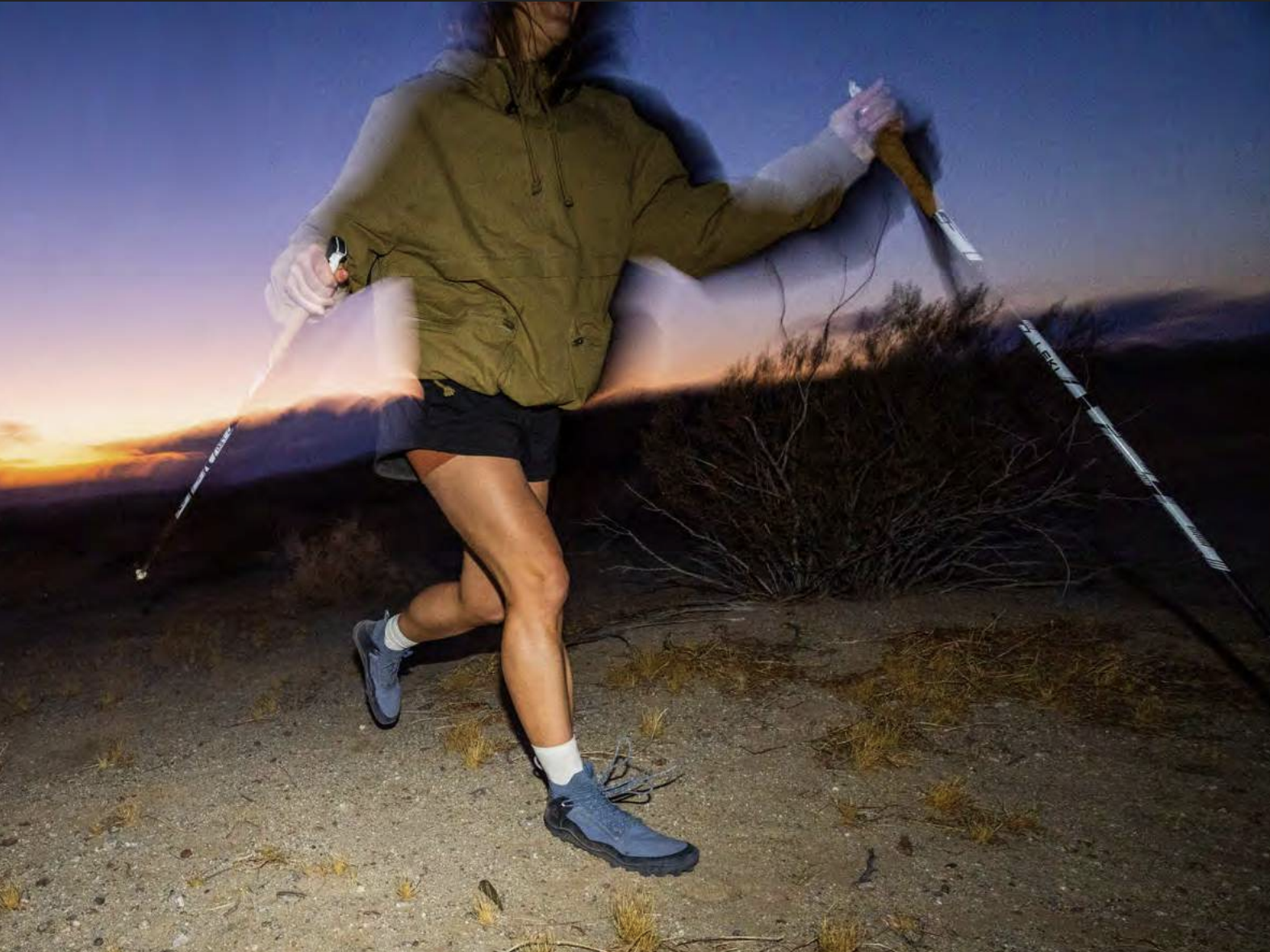
Vivobarefoot sock boot
Vivo sent me these shoes. They only started making sense when I was in Berlin. See my story on Michelberger. And review of Voo in Berlin.

I’ll add a small personal note. Early this year, Vivobarefoot sent us a pair of wool barefoot shoes. I didn’t love them at first. They felt less stable than the ones I’ve bought over the years with laces. (I run in barefoot shoes too). The soles, padded with a rubber/cork composite, irritated my feet in a way that felt like a warm tingling. Then, gradually when I was in Berlin in the fall, I started wearing them as an every day shoe. Somewhere along the way, they became the shoes I reach for every morning. The weather has something to do with it.

Vivobarefoot doesn’t promise instant transformation — of bodies, businesses, or systems. They even suggest that when you buy their shoes wear them at increments until you get used to them. Your better posture should come from within, not given to you by an inflexible sole and the security of a cushioned heel.

Unfinished Business 2025 offers a blueprint for companies people want to support and work for: a company willing to stay with discomfort, to publish what didn’t work and what does.

Karin Kloosterman
Karin Kloostermanhttp://www.greenprophet.com
Karin Kloosterman is an award-winning journalist, innovation strategist, and founder of Green Prophet, one of the Middle East’s pioneering sustainability platforms. She has ranked in the Top 10 of Verizon innovation competitions, participated in NASA-linked challenges, and spoken worldwide on climate, food security, and future resilience. With an IoT technology patent, features in Canada’s National Post, and leadership inside teams building next-generation agricultural and planetary systems — including Mars-farming concepts — Karin operates at the intersection of storytelling, science, and systems change. She doesn’t report on the future – she helps design it. Reach out directly to [email protected]

LEAVE A REPLY

Please enter your comment!
Please enter your name here

Hot this week

Fishermen sue tire manufacturers on behalf of the salmon

A federal trial in San Francisco has brought US tire manufacturers, fishing groups, and environmental scientists into court over a chemical most drivers have never heard of — but which scientists say may be silently reshaping aquatic ecosystems.

Listening to Water: Tarek Atoui’s Next Work for Tate Modern

Born in Beirut, Lebanon in 1980 and now living in Paris, Atoui has spent years building instruments that don’t sit comfortably in concert halls. Many of them involve water, glass, and ceramics — materials that react to sound instead of simply producing it.

Leading Through a Dual-Energy Transition: Balancing Decarbonisation with Energy Security

Experience in one area of the energy industry isn't enough to guarantee readiness across all the others. That's where a structured program like an MBA in energy can come in. Today's advanced curricula explore energy economics, finance, policy, and strategic management alongside the technical subjects. And when pursuing an energy MBA online, professionals can skill up and retrain without having to step out of the labor market -- an important perk at a time when skilled professionals are already in short supply.

From Green Energy to Healthy Societies: Why old systems thinking is becoming relevant again

Across the Middle East and North Africa, large investments are being made in green hydrogen, renewable energy, water infrastructure and sustainability. Most of these efforts are discussed in the context of climate change, decarbonization and economic diversification. That framing is important, but it may not capture their full value.

We saw peace – an interreligious encounter deep in our eyes

They came from Israel, Palestine, Jordan, Iraq, Yemen, Morocco, Tunisia, Lebanon, Egypt… There are Sunni Muslims, Shiite Muslims, Jews (Orthodox and Reform), Orthodox Christians, Coptic Christians, Protestant Christians, Druze, Baha'is, a Scientologist.

Topics

Fishermen sue tire manufacturers on behalf of the salmon

A federal trial in San Francisco has brought US tire manufacturers, fishing groups, and environmental scientists into court over a chemical most drivers have never heard of — but which scientists say may be silently reshaping aquatic ecosystems.

Listening to Water: Tarek Atoui’s Next Work for Tate Modern

Born in Beirut, Lebanon in 1980 and now living in Paris, Atoui has spent years building instruments that don’t sit comfortably in concert halls. Many of them involve water, glass, and ceramics — materials that react to sound instead of simply producing it.

Leading Through a Dual-Energy Transition: Balancing Decarbonisation with Energy Security

Experience in one area of the energy industry isn't enough to guarantee readiness across all the others. That's where a structured program like an MBA in energy can come in. Today's advanced curricula explore energy economics, finance, policy, and strategic management alongside the technical subjects. And when pursuing an energy MBA online, professionals can skill up and retrain without having to step out of the labor market -- an important perk at a time when skilled professionals are already in short supply.

From Green Energy to Healthy Societies: Why old systems thinking is becoming relevant again

Across the Middle East and North Africa, large investments are being made in green hydrogen, renewable energy, water infrastructure and sustainability. Most of these efforts are discussed in the context of climate change, decarbonization and economic diversification. That framing is important, but it may not capture their full value.

We saw peace – an interreligious encounter deep in our eyes

They came from Israel, Palestine, Jordan, Iraq, Yemen, Morocco, Tunisia, Lebanon, Egypt… There are Sunni Muslims, Shiite Muslims, Jews (Orthodox and Reform), Orthodox Christians, Coptic Christians, Protestant Christians, Druze, Baha'is, a Scientologist.

Can biochar reduce ‘Forever Chemicals’ in food if it’s used in farms?

Biochar is produced by heating organic material in a low-oxygen environment so it does not burn. This process, known as pyrolysis, transforms plant matter into a stable, carbon-rich material.

In The Dark Review – An Immersive Music Experience in Total Darkness at St Andrew Holborn

In complete darkness, inside the holy space of St Andrew Holborn, listening begins to feel like a form of prayer. With no light and no distraction, sound fills the church and holds the room. For an hour, attention itself becomes the shared act.

How Quality of Hire Shapes Modern Recruitment

A 2024 survey by Deloitte found that 76% of talent leaders now consider long-term retention and workforce contribution among their most important hiring success metrics—far surpassing time-to-fill or cost-per-hire. As the expectations for new hires deepen, companies must also confront the inherent challenges in redefining and accurately measuring hiring quality.

Related Articles

Popular Categories