OECD: Renewable Energy Expansion Must Avoid New Ecological Trade-Offs

Storks on solar panels
Storks on solar panels, Image via Critter Control in Boston

The latest OECD Environmental Outlook focusses on the triple planetary crisis of climate change, biodiversity loss and pollution.

The OECD, or the Organisation for Economic Co-operation and Development, is a global policy forum that brings together high-income democracies to address some of the world’s biggest challenges and promote liberty and prosperity. It develops policies to protect individual freedoms and improve the economic and social well-being of people worldwide. The organisation studies issues such as health, education, trade and taxation — and over the last two decades, climate change has become one of its most urgent areas of focus.

The OECD has recently published a major climate change report (link at the end of the article) that companies and governments must understand. It outlines essential policy tools and highlights the need to manage potential trade-offs — for example, ensuring that rapid renewable-energy deployment does not unintentionally damage natural habitats or create new waste-management challenges when technologies reach end-of-life.

According to the latest analysis, climate change is projected to overtake land-use change as the leading driver of biodiversity loss by 2050, intensifying pressures on terrestrial and marine ecosystems. In turn, biodiversity loss weakens ecosystem resilience to extreme weather and pollution, directly affecting air, water and soil quality. As land use shifts, we can also expect more flooding and wider challenges in wildlife management — as seen in recent bear attacks in Canada and Japan.

The new OECD Outlook emphasizes that policies addressing each environmental challenge are deeply interconnected. Climate mitigation policies that curb greenhouse gas emissions can also reduce co-emitted air pollutants. At the same time, expanding solar and wind power — essential for cutting emissions — can create new pressures on biodiversity if not carefully planned.

“Understanding the linkages between environmental challenges like climate change, biodiversity loss and pollution is essential for designing effective policy responses,” OECD Secretary-General Mathias Cormann said. “By co-ordinating their policy measures aimed at addressing these challenges, countries can more effectively advance their environmental objectives in line with their unique circumstances.”

The report examines national documents across ten countries — Argentina, Australia, Canada, China, France, India, Indonesia, Japan, Peru and Uganda — to illustrate how governments recognise these connections. While all countries acknowledge the two-way interlinkages between climate change, biodiversity loss and pollution in their Biennial Transparency Reports and National Biodiversity Strategies and Action Plans, gaps remain. What needs improvement? The report suggests that students, researchers and policymakers look closely at these findings to understand how to contribute to better environmental governance.

Overall, links between climate change and biodiversity are relatively well covered in national strategies, but the relationships involving pollution — including how climate and biodiversity pressures heighten pollution risks — are often missing. Policies designed to explicitly manage trade-offs, especially around pollution, remain limited.

To address these issues, the OECD identifies several practical levers for more integrated and effective policy action:

  • Align financing and investment with interconnected climate, biodiversity and pollution objectives.

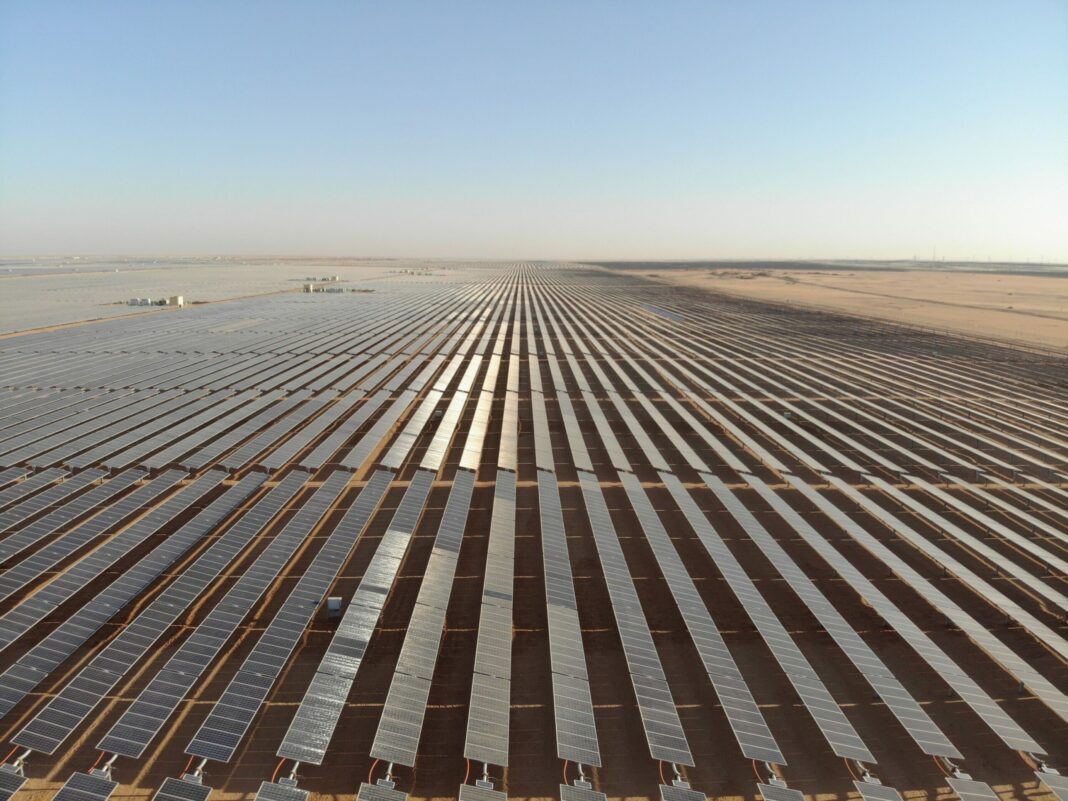
  • Manage trade-offs in the clean-energy transition, including land pressures, material demand and end-of-life impacts.

  • Transform resource use and advance circular-economy approaches to reduce waste, pollution and demand for primary materials.

  • Improve the sustainability of food systems and land use to cut emissions, strengthen biodiversity and enhance resilience to climate and water stress.


::OECD climate change report

Karin Kloosterman
Karin Kloostermanhttp://www.greenprophet.com
Karin Kloosterman is an award-winning journalist, innovation strategist, and founder of Green Prophet, one of the Middle East’s pioneering sustainability platforms. She has ranked in the Top 10 of Verizon innovation competitions, participated in NASA-linked challenges, and spoken worldwide on climate, food security, and future resilience. With an IoT technology patent, features in Canada’s National Post, and leadership inside teams building next-generation agricultural and planetary systems — including Mars-farming concepts — Karin operates at the intersection of storytelling, science, and systems change. She doesn’t report on the future – she helps design it. Reach out directly to [email protected]

LEAVE A REPLY

Please enter your comment!
Please enter your name here

TRENDING

Huge Fish Nursery Discovered Under Freezing Arctic Seas

In 2019, an underwater robot camera exploring the seabed...

Remilk makes cloned milk so cows don’t need to suffer and it’s hormone-free

This week, Israel’s precision-fermentation milk from Remilk is finally appearing on supermarket shelves. Staff members have been posting photos in Hebrew, smiling, tasting, and clearly enjoying the moment — not because it’s science fiction, but because it tastes like the real thing.

The US leaves 66 United Nations organizations to “put America first”

The world needs a reset and to restart well intentioned cooperation projects from start. Because right now the UN and EU projects look like software built on code from the 80s, rickety, patched, slow to adapt, and prone to crashing under the weight of outdated assumptions.

Turkey named as climate change COP31 home in 2026

Murat Kurum as President-Designate of COP31

Ancient air trapped in Canadian salt bubbles foretells climate future

Opening these samples is like cracking open air that existed long before dinosaurs, before forests, before animals of any kind. As lead researcher Justin Park put it: “It’s an incredible feeling to crack open a sample of air that’s a billion years older than the dinosaurs.”

Qatar’s climate hypocrisy rides the London Underground

Qatar remains a master of doublethink—burning gas by the megaton while selling “sustainability” to a world desperate for clean air. Wake up from your slumber people.

How Quality of Hire Shapes Modern Recruitment

A 2024 survey by Deloitte found that 76% of talent leaders now consider long-term retention and workforce contribution among their most important hiring success metrics—far surpassing time-to-fill or cost-per-hire. As the expectations for new hires deepen, companies must also confront the inherent challenges in redefining and accurately measuring hiring quality.

8 Team-Building Exercises to Start the Week Off 

Team building to change the world! The best renewable energy companies are ones that function.

Thank you, LinkedIn — and what your Jobs on the Rise report means for sustainable careers

While “green jobs” aren’t always labeled as such, many of the fastest-growing roles are directly enabling the energy transition, climate resilience, and lower-carbon systems: Number one on their list is Artificial Intelligence engineers. But what does that mean? Vibe coding Claude? 

Somali pirates steal oil tankers

The pirates often stage their heists out of Somalia, a lawless country, with a weak central government that is grappling with a violent Islamist insurgency. Using speedboats that swarm the targets, the machine-gun-toting pirates take control of merchant ships and then hold the vessels, crew and cargo for ransom.

Leopoldo Alejandro Betancourt López Turned Ocean Plastic Into Profitable Sunglasses

Few fashion accessories carry the environmental burden of sunglasses. Most frames are constructed from petroleum-based plastics and acrylic polymers that linger in landfills for centuries, shedding microplastics into soil and waterways long after they've been discarded. Leopoldo Alejandro Betancourt López, president of the Spanish eyewear brand Hawkers, saw this problem differently than most industry executives.

Why Dr. Tony Jacob Sees Texas Business Egos as Warning Signs

Everything's bigger in Texas. Except business egos.  Dr. Tony Jacob figured...

Israel and America Sign Renewable Energy Cooperation Deal

Other announcements made at the conference include the Timna Renewable Energy Park, which will be a center for R&D, and the AORA Solar Thermal Module at Kibbutz Samar, the world's first commercial hybrid solar gas-turbine power plant that is already nearing completion. Solel Solar Systems announced it was beginning construction of a 50 MW solar field in Lebrija, Spain, and Brightsource Energy made a pre-conference announcement that it had inked the world's largest solar deal to date with Southern California Edison (SCE).

Related Articles

Popular Categories