Ancient mud buildings in the Muslim world are spectacular and sustainable

islam-mud-architecture-mali-great-mosqueMud buildings have withstood the test of time; will they populate our futures too?

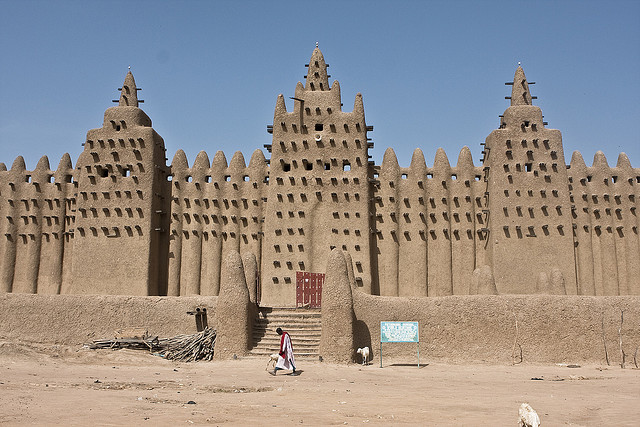
Think of Islamic mud structures and more than likely the iconic Great Mosque of Djenne in Mali will come to mind. The largest mud brick building in the world, the mosque is considered to be amongst the greatest achievement of Sudano-Swahelian architecture and one of the most famous landmarks of Africa.

But it’s not only Africa that boasts impressive (and sustainable) mud structures, the Middle East is home to some of the most stunning mud buildings in the world. From Shibam – the Manhattan of the Desert – in Yemen to the Bam citadel of Iran, these mud structures show that there’s more to Muslim architecture than Mecca and Masdar.

Why is Mud Building Sustainable?

For thousands of years, mud has been used as building material because it’s cheap, widely available and durable. Although many question its durability, there are numerous ancient mud buildings which have withstood the test of time. Mud construction is also an extremely environmentally-friendly method as it creates little waste, there is minimal energy consumption (mostly in the construction and transportation process), and it is easy to maintain and recycle.

In fact, Hassan Fathy, who has been hailed as the Middle East’s father of sustainable architecture and was behind eco-projects such as the Gourna village in Egypt wrote: “For centuries, the peasant had been wisely and quietly exploiting the obvious building material, while we, with our modern school-learned ideas, never dreamed of using such a ludicrous substance as mud for so serious a creation as a house.”

vernacular architecture, sustainable architecture, green building, clay building, Shibam, UNESCO World Heritage Site, vernacular architecture, sustainable agriculture, sustainable development,

Modern Living in the City of Shibam

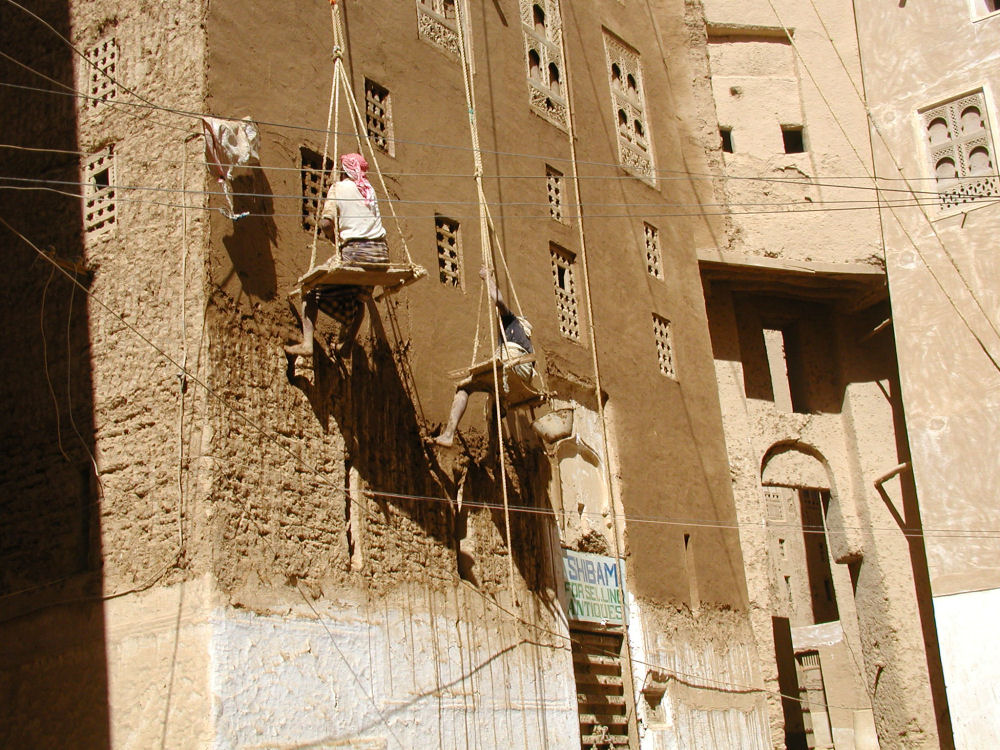
Yemen is home to one of the most impressive, one of the oldest and also one of the tallest mud cities in the world. Before the city scrapers of New York, the city of Shibam had built high rise apartments out of mud which tower to over 100 feet and are between 5 and 11 storeys high.

Dating back to around the 2nd century CE, the city was built using local clay and is still home to around 7,000 residents who live in the fortified city.

Although it is over 2,000 years old, rain and erosion necessitates constant maintenance, which efforts are now supported by restoration and urban development programs. Nicknamed Manhattan of the Desert, the city is testament to the durability of mud not just for single structures but also for modern high-rise living.

vernacular architecture, sustainable architecture, green building, clay building, Shibam, UNESCO World Heritage Site, vernacular architecture, sustainable agriculture, sustainable development,
Shibam, the Manhattan of the Desert, in Yemen

Another impressive city made of mud is Bam in Iran. Built using mud bricks known as adobe, the Bam tower or citadel (Arg-e-Bam) is believed to have been the largest adobe building in the world and was built over 2,000 years ago.

At its peak, the city served as a site of pilgrimage and was the trading centre of the Silk Road, which brought goods from the Far East to the capitals of Europe. Sadly, an earthquake in 2003 destroyed a large part of the historic city (around 70%) and killed over 26,000 people. There were more later showing that earth architecture has some limits.
vernacular architecture, sustainable architecture, green building, clay building, Shibam, UNESCO World Heritage Site, vernacular architecture, sustainable agriculture, sustainable development,

Mud Castles, Walls and Mosques

Other notable mud structures in the wider Muslim world include the Bob Dioulasso Grand Mosque in Burkina Faso, and the Khiva Wall in Uzbekistan, which is built around a collection of Islamic schools and mosques. The Siwa Oasis in Egypt (which we visited and posted about here) and the Eastern Castle in Syria have also employed mud bricks in their construction, and research shows that the famous walls of Jericho were built using sun-dried mud bricks.

Whilst these mud buildings may seem like something of the past, they are in fact increasingly considered as options for low-carbon and low-cost construction. As well as having a small footprint, mud structures have been shown to reduce energy consumption as they are able to regulate temperature.

Hopefully mud architecture will not only decorate our past, but our future too.

Image of Great Mosque in Mali via Juan Manuel Garcia and image of Bisham in Yemen by Aysegul Tastaban.

Updated 2025
Arwa Aburawa
Arwa Aburawahttp://www.greenprophet.com
Arwa is a Muslim freelance writer who is interested in everything climate change related and how Islam can inspire more people to care for their planet and take active steps to save it while we can. She is endlessly suspicious of all politicians and their ceaseless meetings, especially as they make normal people believe that they are not part of the solution when they are the ONLY solution. Her Indian auntie is her model eco-warrier, and when Arwa is not busy helping out in the neighborhood alleyway garden, swap shopping or attempting fusion vegetarian dishes- with mixed success, she’d like to add- she can be found sipping on foraged nettle tea.
2 COMMENTS
  1. Love your article! I always wondered what the purpose was of the wooden stakes within the walls of mosques in Mali. Until I watched Rivers in The human planet.

Comments are closed.

TRENDING

Jujube, the sidr tree of medicine and magic

A magic holy sidr bath to deflect the evil eye? It needs 7 powdered sidr leaves stirred into a bucket of warm water. The hadith of the Prophet Muhammad allows to repeat healing prayers and verses from the Koran to increase the water’s potency. 5 grams, or 1 tablespoon of sidr powder equals 7 leaves.

The Christ’s thorn (sidr tree) is also a well-known folk medicine

Christ’s thorn jujube (Ziziphus spina-christi) also known as the sidr tree is a real, identifiable tree native to the Middle East, and it appears—directly or indirectly—in Islam, Judaism, and later Christian tradition. The connections between the three faiths are not theological agreements but overlapping uses, names, and symbolic associations rooted in the same landscape.

The Lote Tree of the Utmost Boundary, explained

Knowing about the concept of the Lote Tree of the Utmost Boundary helps explain a core idea in Islam.

Zoroastrianism from Iran is the world’s first eco-religion

When Zarathustra started preaching around 1200 BCE in ancient Persia, which is known today as Iran, he wasn't just founding a religion—he was creating the world's first environmental protection movement. Good thoughts, good words, good deeds. But there was a mantra and words to live by: don't pollute the earth, water, or fire. Ever.

Female Genital Mutilation still happens — quietly, at home, and across borders in Canada

A service provider explains that women may choose midwives from within their community to keep their status private. Another line cuts to the core: “There’s a lack of understanding… especially psychologically.”

Turning Your Energy Consultancy into an LLC: 4 Legal Steps for Founders in Texas

If you are starting a renewable energy business in Texas, learn how to start an LLC by the books.

Tracking the Impacts of a Hydroelectric Dam Along the Tigris River

For the next two months, I'll be taking a break from my usual Green Prophet posts to report on a transnational environmental issue: the Ilısu Dam currently under construction in Turkey, and the ways it will transform life along the Tigris River.

6 Payment Processors With the Fastest Onboarding for SMBs

Get your SMB up and running fast with these 6 payment processors. Compare the quickest onboarding options to start accepting customer payments without delay.

Qatar’s climate hypocrisy rides the London Underground

Qatar remains a master of doublethink—burning gas by the megaton while selling “sustainability” to a world desperate for clean air. Wake up from your slumber people.

How Quality of Hire Shapes Modern Recruitment

A 2024 survey by Deloitte found that 76% of talent leaders now consider long-term retention and workforce contribution among their most important hiring success metrics—far surpassing time-to-fill or cost-per-hire. As the expectations for new hires deepen, companies must also confront the inherent challenges in redefining and accurately measuring hiring quality.

8 Team-Building Exercises to Start the Week Off 

Team building to change the world! The best renewable energy companies are ones that function.

Thank you, LinkedIn — and what your Jobs on the Rise report means for sustainable careers

While “green jobs” aren’t always labeled as such, many of the fastest-growing roles are directly enabling the energy transition, climate resilience, and lower-carbon systems: Number one on their list is Artificial Intelligence engineers. But what does that mean? Vibe coding Claude? 

Somali pirates steal oil tankers

The pirates often stage their heists out of Somalia, a lawless country, with a weak central government that is grappling with a violent Islamist insurgency. Using speedboats that swarm the targets, the machine-gun-toting pirates take control of merchant ships and then hold the vessels, crew and cargo for ransom.

Related Articles

Popular Categories