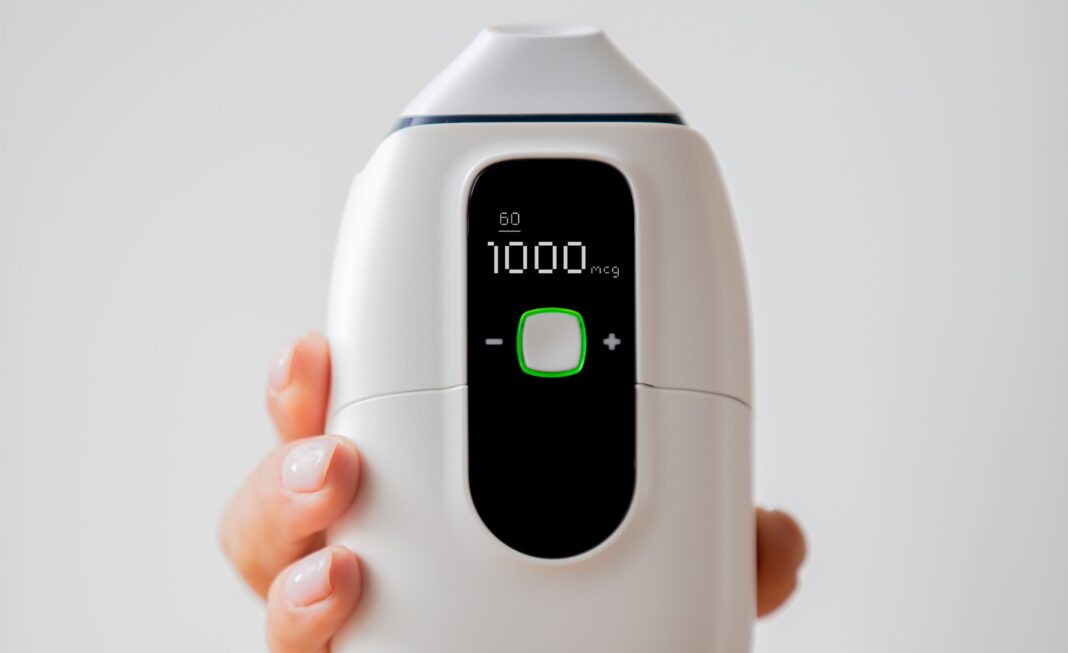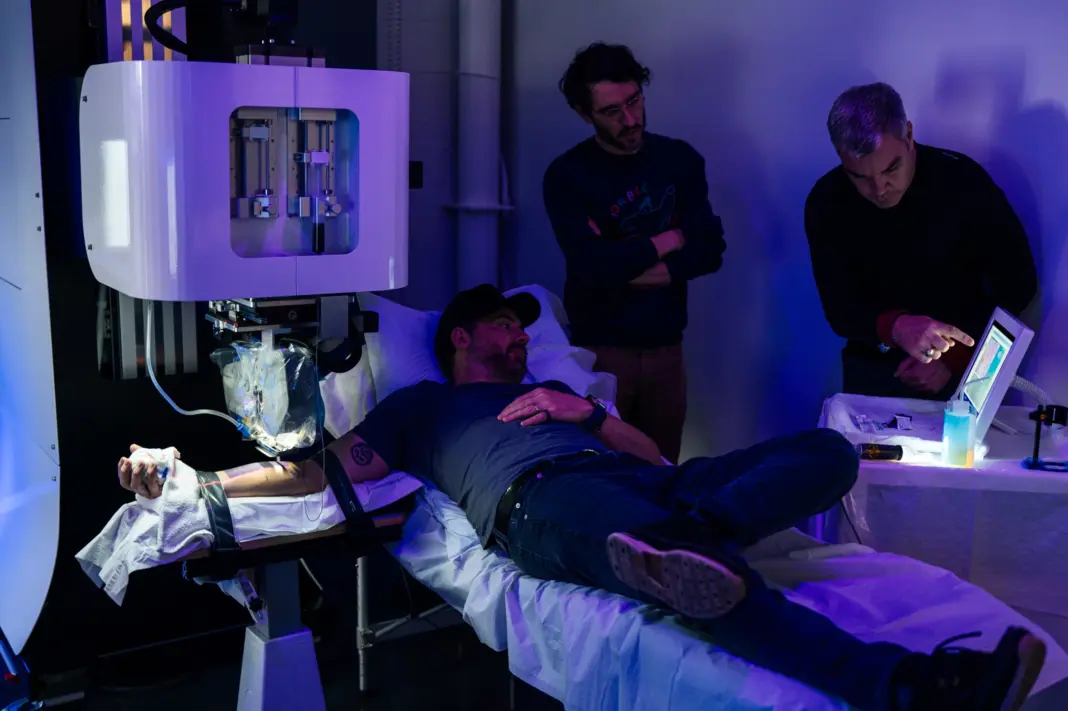


Tattoo artists might be wondering if they will be out of jobs, or just able to license their NFT designs to a computer? A new Austin-based startup called Blackdot says it has built an AI-powered tattoo machine that is safer and less painful than getting a human-applied tattoo.

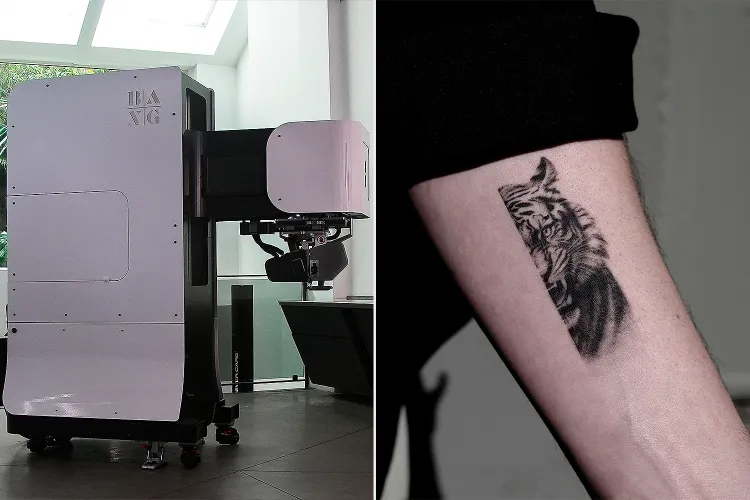
Called Aero for Artist Enabled Robotic Operator, Blackdot’s machine uses computer vision, fine control, and very shallow needle penetration to reduce discomfort. It is now installed at Bang Bang in New York, and already operating in Austin.
In some areas of medicine, robotics and machine learning have changed the name of the game and survival outcome for removing cancers like prostate. Robotics can help a human operator be more precise, but are we ready to hand over the controls?
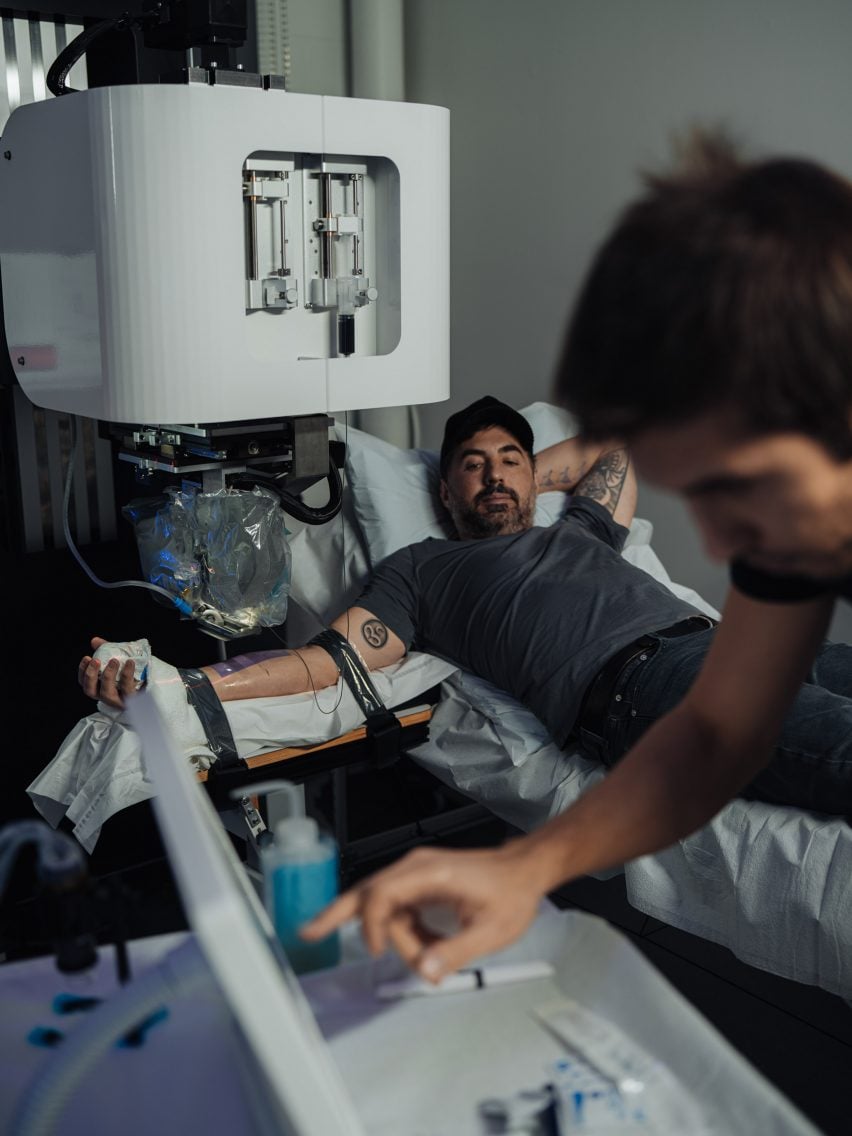
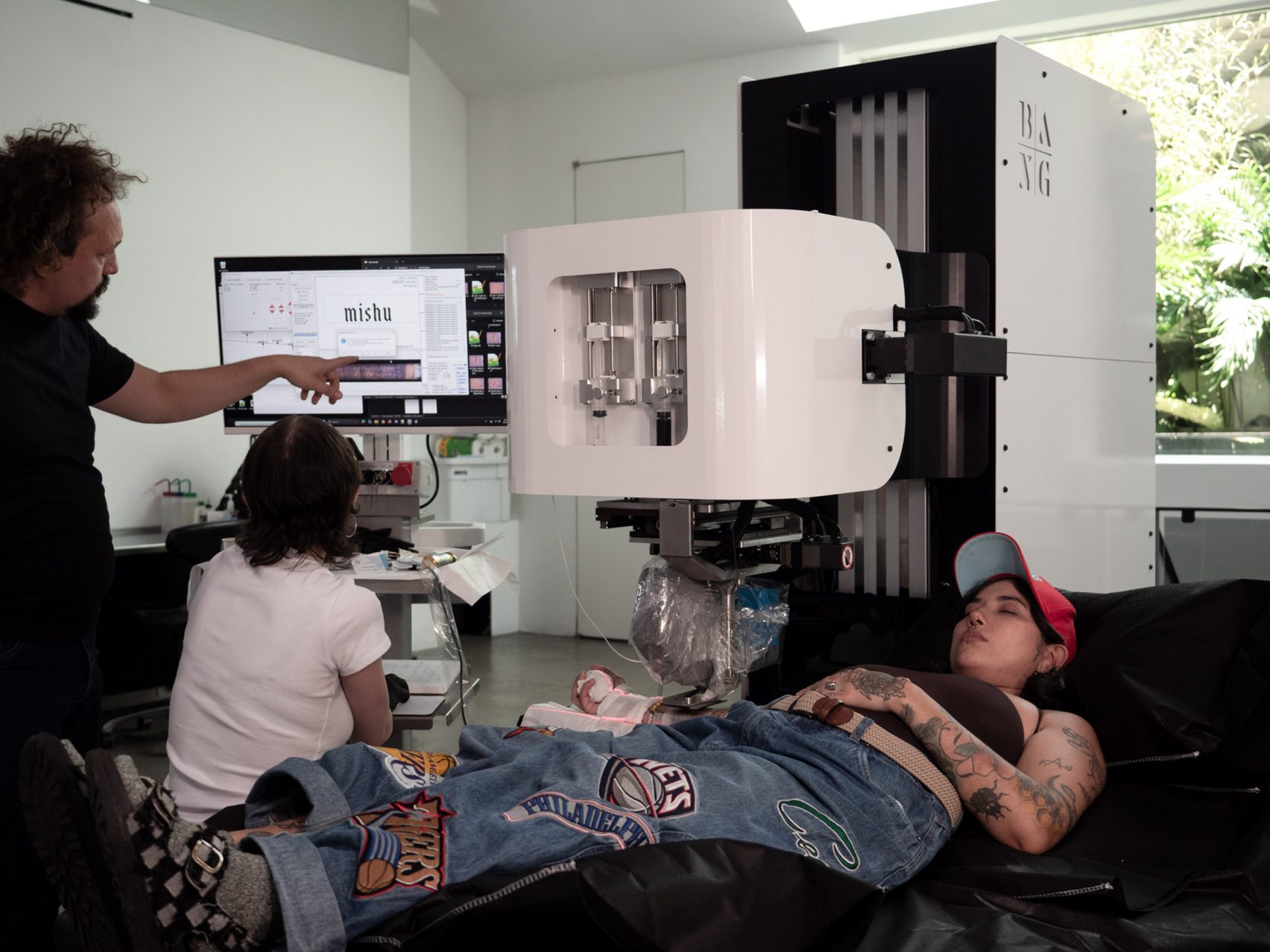
Do we want a machine that takes the craft out of the hand of the artist? I make pottery out of earth because I believe there is spirit in matter. Is a tattoo applied by a machine giving the same vibes as a potter’s mug made in a factory or a violin made on a machine?
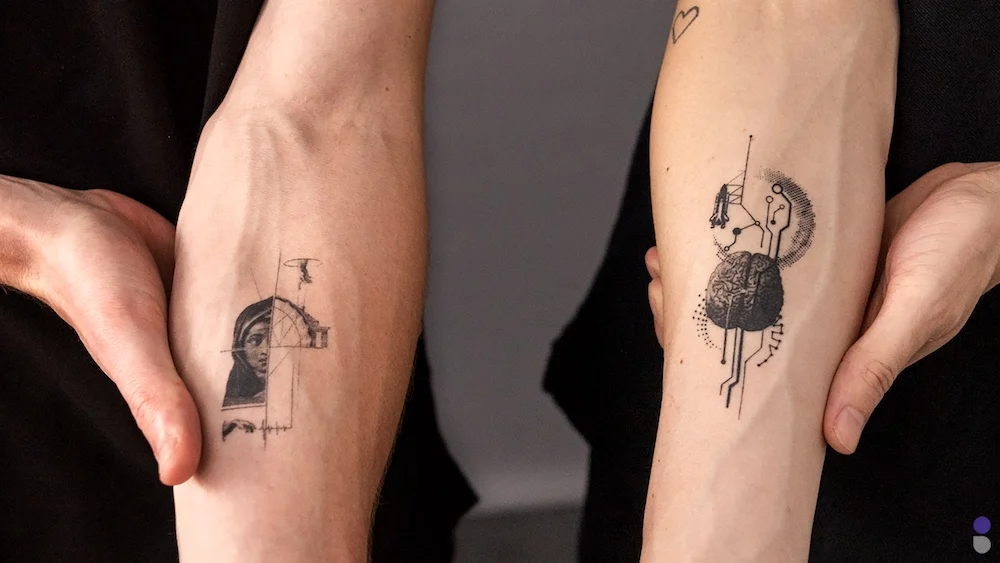
According to the people at Aero, the device tattoos in dot-based grayscale patterns, applying many minute points rather than deep continuous lines — a technique they say limits pain and improves precision.

One upside: fewer tattoos gone wrong?
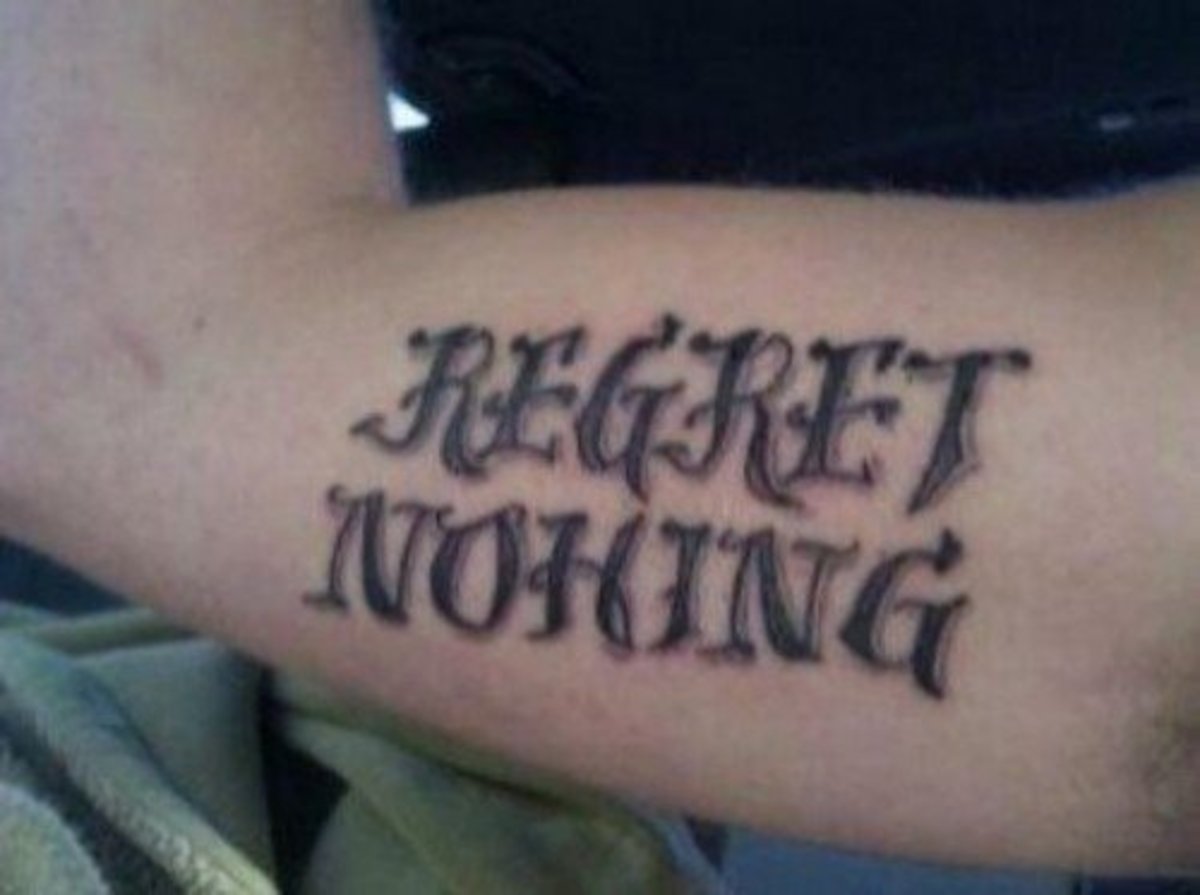
Tattoos, not just in hipster times, have long carried a dual identity: as personal art but also no small part of getting a tattoo is about the pain and the act of bodily risk. Also, I wonder: does a machine-made tattoos open up the practice of skin art at a time when researchers are calling us to pay attention to the risks of the materials in tattoos and a possible link to auto-immune diseases and cancer. As there is little regulation, there is little known about the long-term health effects of tattooing.
What do the world’s religions say about tattoos?
From a Islamic perspective, tattooing is generally considered prohibited (haram) in many schools of thought. The Prophet Muhammad is narrated in hadith literature to have cursed both the tattooer and the tattooed (for altering the creation of God). Some scholars argue that tattoos break the ritual purity (ablution, or wudu) because they alter the skin surface.
We find some literature to back up the Islamic prohibition: ‘Abd-Allaah ibn Mas’ood said: “May Allah curse the women who do tattoos and those for whom tattoos are done, those who pluck their eyebrows and those who file their teeth for the purpose of beautification and alter the creation of Allah.” (Al-Bukhari, al-Libas, 5587; Muslim, al-Libas, 5538).
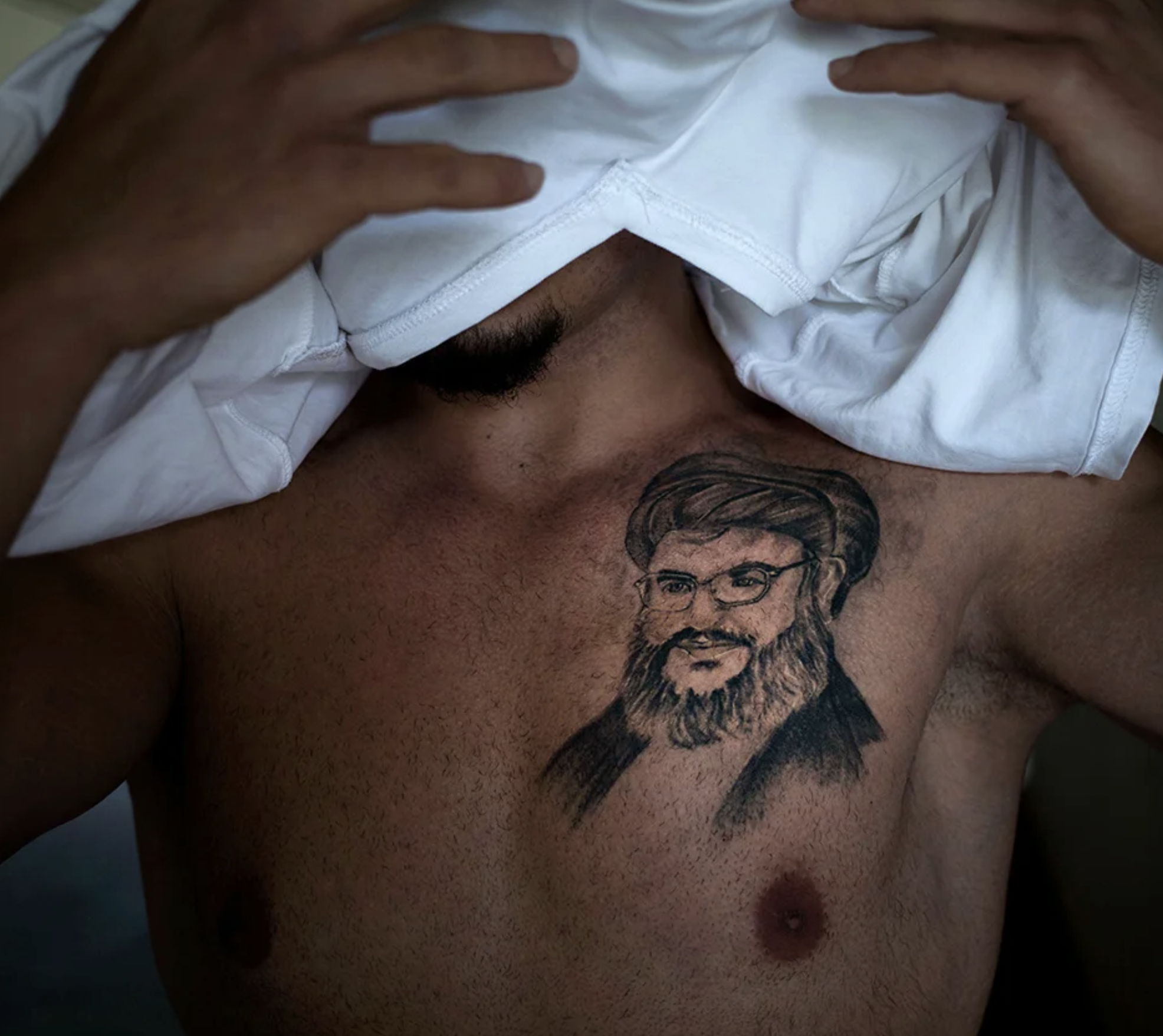
In parts of Lebanon, Iraq, and Iran, some Shiite communities have historically tolerated or quietly practiced tattooing, especially small religious motifs (like the names of Imams or sacred symbols). And among younger Shiites, especially in diaspora communities, tattoos are increasingly popular as personal or religious expression — though clerical authorities still discourage them.
In Judaism, tattoos are often discouraged based on Torah injunctions and Levitical prohibitions, and tattoos are not encouraged at all. It is permitted to remove a tattoo and pierce your ears. That said many Jewish people do get tattoos. Common ones include the Tree of Life symbol, Hebrew and biblical expressions (The Nation of Israel Lives), and some people get tattoos of their grandparent’s numbers printed on them during the Holocaust.
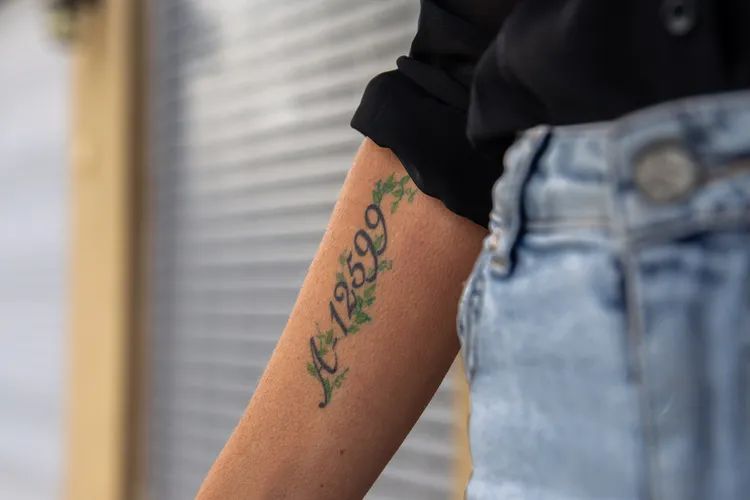
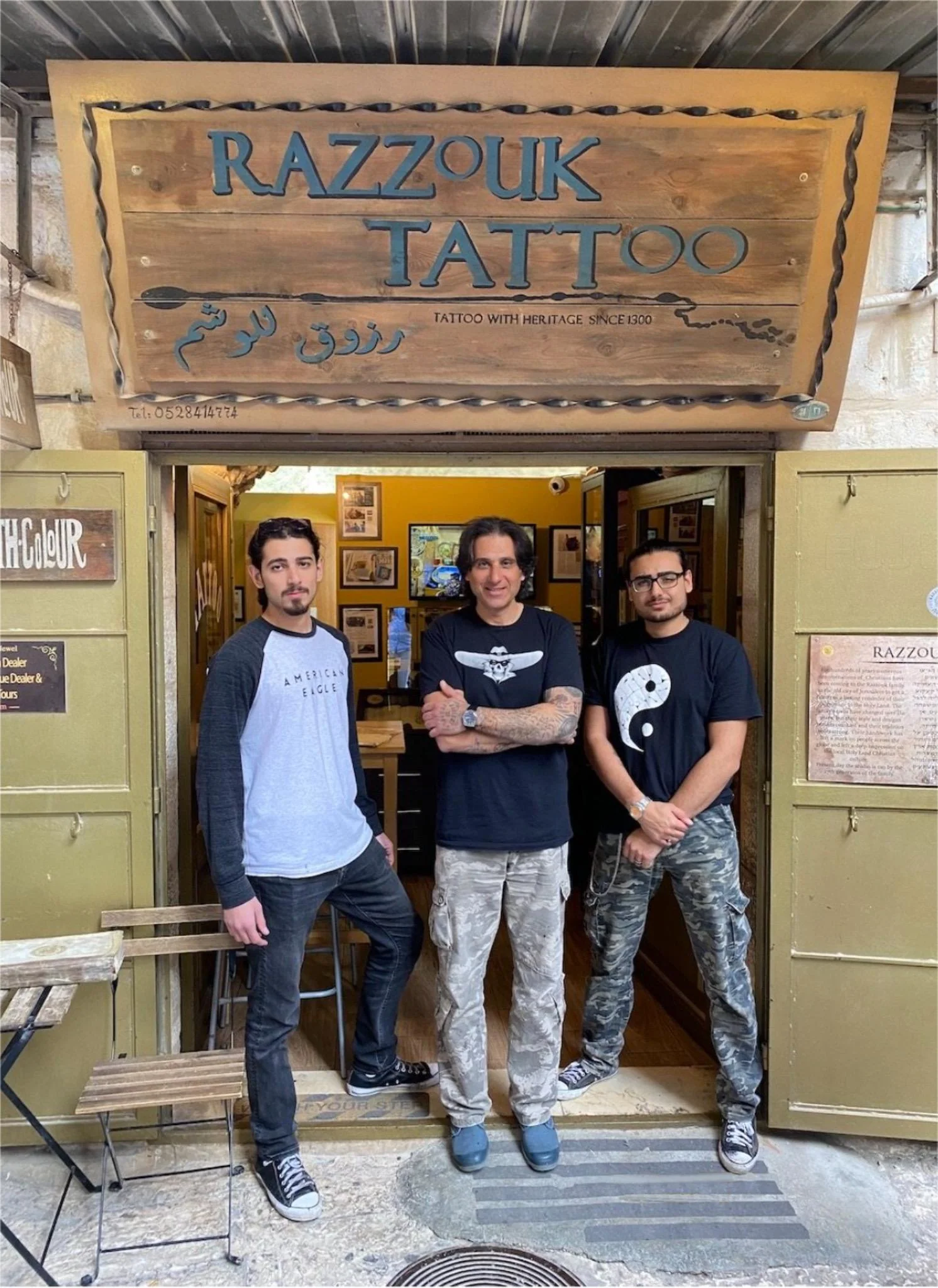
In Christian traditions, the picture is more varied. Some conservative or literalist communities may discourage tattoos, particularly when associated with body modification or vanity, but there is no universally binding doctrine rejecting them. Many churches do not formally forbid tattoos, leaving it to individual conscience, church culture, or pastoral guidance. This blog offers some history of Christian tattoos in Jerusalem. The author points out that some conservative or literalist groups still reject tattoos outright, holding to Leviticus as binding.
Many other Christians see tattoos as a matter of conscience, arguing that Old Testament prohibitions were tied to ritual purity, pagan associations, or covenant identity, and are not binding in the same way after Christ. In some traditions (like the Razzouk family in Jerusalem), tattooing is even a Christian devotional act, marking pilgrimage and identity.
Unlike in Abrahamic religions, tattoos (godna in Hindi) have been widely practiced in Hindu culture for centuries. Tribal and rural communities across India have used tattoos for spiritual protection, identity, and beauty. Some designs are linked to deities, mantras, or cosmic symbols.
What about the art of it?
Almost painless tattoos may worry tattoo artists who will be out of jobs unless they figure out how to sell designs as NFTs, and also people who may more liberally get tattoos without possible health or spiritual implications.
In Sci-Fi dystopia, we’ve reported on how tattoos can be used for nefarious purposes, such as IDing and tracking people. Such as the tattoo below, from MIT Media Lab.
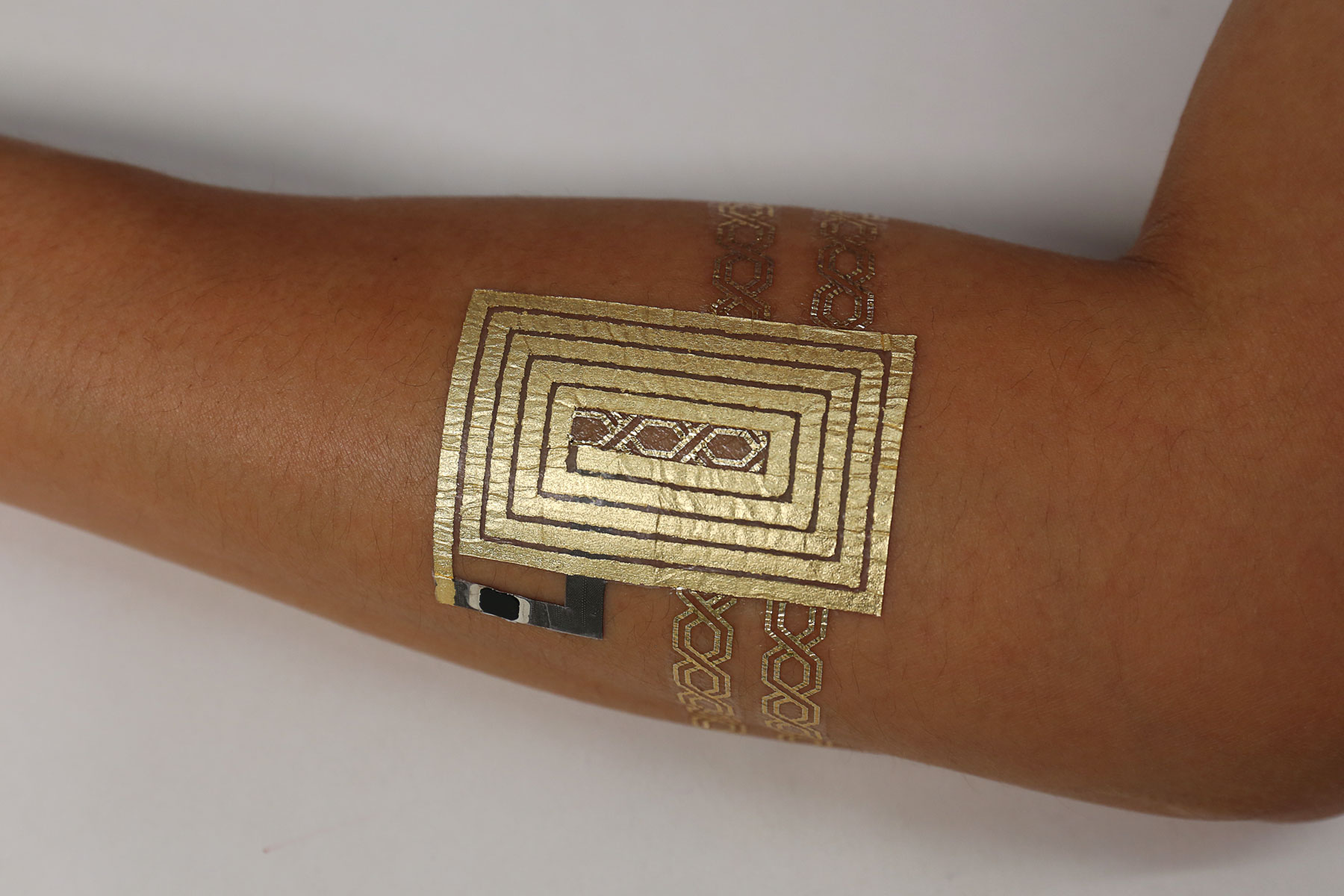
Tattoos could be used as a trackpad to remotely control your mobile phone or adjust the volume of the music you tune into. They can track user data and report back to you, like a body-integral Fitbit, with embedded thermochromic displays that change color in reaction to heat, reporting on body temperature, blood pressure, breathing patterns. It might also report on your immediate environment, checking air quality, weather conditions, and alert you to the presence of harmful substances.
After hearing all sides — from health warnings and religious prohibitions to the futuristic promises of AI-driven tattoo machines — I’ve made my choice. I’ll keep my skin tattoo-free, au naturel. For me, my body already carries its own stories.