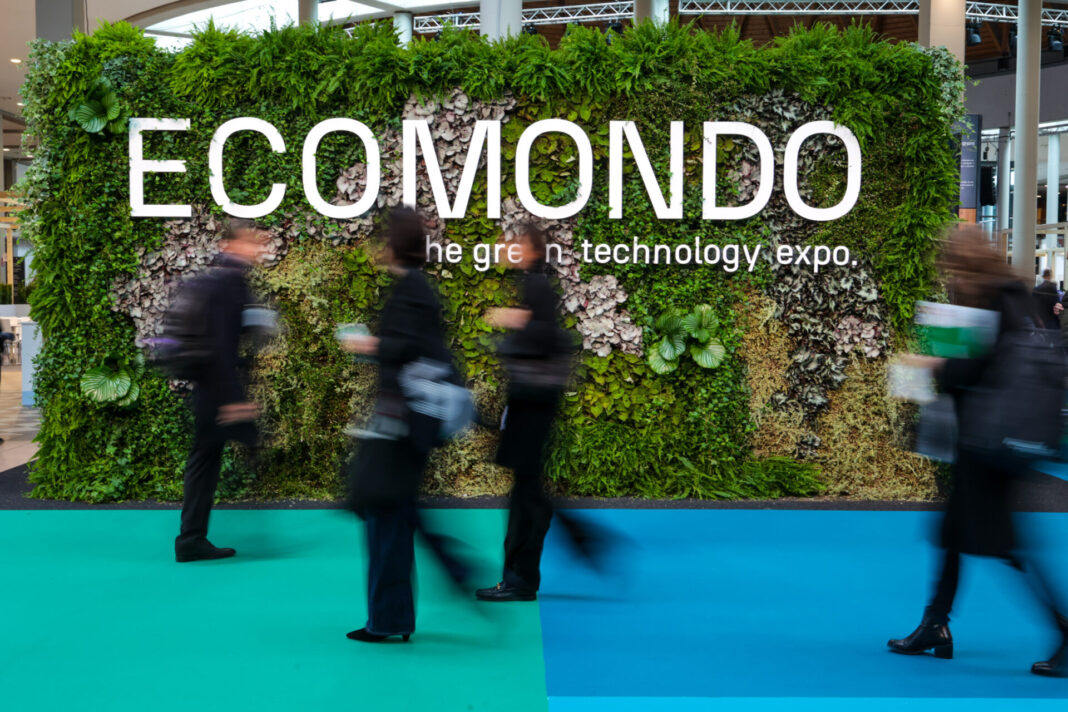


Each November, a quiet city on Italy’s Adriatic coast becomes the epicenter of the world’s circular economy conversation. What began in 1997 as a local waste management trade show has grown into Ecomondo, a global forum for environmental innovation, resource regeneration, and ecological transition. Held at the Rimini Expo Centre, Ecomondo is no longer just an Italian event—it’s a Mediterranean-driven hub where policy, technology, and sustainability meet.
Italy has long been at the vanguard of eco-conscious thinking. It is the birthplace of the Slow Food movement, which began in the 1980s as a rebellion against fast food and industrial agriculture. That philosophy—of local, circular, low-impact systems—echoes through Ecomondo’s mission: to champion economic models that regenerate, rather than deplete, the Earth’s resources.
Rimini, with its proximity to agrarian and industrial regions, was the ideal starting point. Over the years, Ecomondo expanded from waste management to include water cycle innovation, bioenergy, soil restoration, blue economy initiatives, and entire sectors devoted to textiles, paper, and trenchless (no-dig) infrastructure.
Today, Ecomondo hosts over 1,500 exhibitors and tens of thousands of visitors from more than 90 countries. Its strength lies not only in showcasing technology, but in building partnerships. Italian companies collaborate with international delegations, forming real-time solutions for complex global challenges—from desertification in North Africa to methane recovery in the Balkans.
Ahead of its 2025 edition (4–7 November), Ecomondo is going on a three-stop international roadshow, hitting Cairo (July 8), Belgrade (Sept 9), and Warsaw (Sept 11). Each location reflects a different challenge—and opportunity—for circular growth.
In Egypt, with its goal of 42% renewable energy by 2035, water reuse, bioenergy in agriculture, and waste reform will dominate the conversation.
In Serbia, investments driven by EU pre-accession incentives are spurring projects in solar energy and resource efficiency.
In Poland, European funds are driving green infrastructure modernization—making the country a critical testbed for biogas, solar tech, and plastics recycling.
These meetings are not just diplomatic exchanges—they’re B2B matchmaking hubs, where Italian cleantech meets global demand. In 2024, over 400 meetings were brokered during similar events.
Israeli technology, especially in precision irrigation, desalination, wastewater reuse, and climate-smart agriculture, has made a strong showing in recent years. As countries across Europe and the Mediterranean face mounting water stress, Israel’s expertise in arid-zone farming and greywater recycling is increasingly sought after—especially in thematic areas like Blue Economy and Bioenergy & Agriculture.
What to Expect at Ecomondo 2025
The Rimini show will organize content into seven macro-areas, ranging from waste as a resource to regenerative bio-economy and environmental monitoring. A spotlight will shine on “Blue Economy” innovations that restore marine ecosystems, while special thematic districts will explore ethical textiles, circular cities, and trenchless infrastructure.
Startups and scale-ups will once again take the stage in the Innovation District, while the Lorenzo Cagnoni Award for Green Innovation will highlight breakthrough technologies. This year’s expanded Green Jobs & Skills hub also reflects a growing demand for talent in sustainability sectors.
On the academic and policy front, a robust conference program—curated by a Technical Scientific Committee—will analyze pressing themes like the Mattei Plan, green financing, and Africa’s ecological future.
In a time of global ecological stress—where waste piles up faster than we can recycle, and aquifers dry faster than we can recharge them—Ecomondo offers not just solutions, but systems. From Italy’s cultural legacy of resilience and regeneration to cutting-edge water tech and African decarbonization needs, Ecomondo bridges the worlds of policy, science, and entrepreneurship.