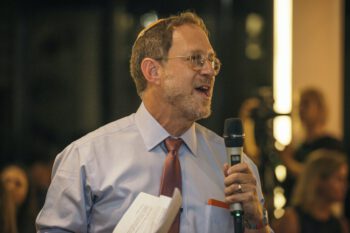
Meet Yosef Abramowitz, CEO of Gigawatt Global, bringing clean solar energy to millions around the world
Yosef Abramowitz, known also as Kaptain Sunshine, is an American-Israeli solar activist and developer. As a child, Abramowitz lived in Israel. However, during a brief couple of years back in America during the Yom Kippur War, Abramovitz faced confusion. Outside his Massachusetts window sat a gas station with a line wrapping around the block. The long line was a result of the conflict in the Middle East and the 1973 Arab Oil Embargo. Abramowitz’s confusion stemmed from this: how could America and the rest of the world rely on an unrenewable energy source as volatile as this? After this moment, Yosef sought change. While Jimmy Carter was installing solar panels in the White House, Abramowitz was working on early science fair solar projects. Eventually, his work and passion for Israel led him back to the country where he would do his most impactful work yet.
In 2006, after arriving at Kibbutz Ketura to attend the Arava Institute for Environmental Studies, Yosef Abramowitz stepped out of his van with the last rays of the golden sun shining down on the scorching Arava Desert. In the dying sunset, he found his light. Abramowitz and his associates founded the Arava solar fields. During its 2010 inception, students, researchers, and other individuals from over 58 countries came to learn. Out of this work came Gigawatt Global and the company’s mission of being a “…multinational renewable energy company focused on the development and management of utility-scale solar fields in emerging markets.”
The goal was clear. Bring climate justice to the communities that need it most.
See Related Article: Energiya Global to solar power up 8% of Rwanda using clean energy
Gigawatt Global and its CEO, Abramowitz, have brought power to some of the most impoverished and energy-deficient countries in the world, with Rwanda, Nigeria, and South Sudan being just a few examples of the hard-to-reach places where they work.
Through his work, Abramowitz has had a significant impact. In Burundi, one of the world’s poorest countries, Abramowitz and his team successfully brought solar energy to half a million people. Another example of the extent of his beneficial humanitarian work comes from Rwanda, where he brought power to the Agahozo-Shalom Youth Village. The village is home to orphans of the Rwandan genocide. “It’s both a mitzvah and a business,” Abramowitz says.
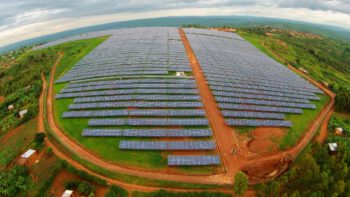
So, how does he do it? Abramowitz used to get support from the American Government. However, a majority of his funding comes from Blended Finance. This means that his monetary support comes from both public and private donors and investors. Abramowitz is always seeking international support, as well as funding from financial institutions such as the World Bank.
Abramowitz employs what he calls the Quadruple Bottom Line Impact Platform when bringing solar energy to countries with limited resources and infrastructure. While not the primary driver, each project must provide returns for investors. While these returns may not turn a massive profit, projects must ensure financial viability. Second, every project contributes to climate mitigation. Using solar energy not only provides energy to those in need but also reduces carbon emissions and air pollution associated with previously used, dirty, combustible fuels. Third is the humanitarian and social impact that a project will provide for its community. Finally, solar development can strengthen relationships between countries. It can build trust in fragile states and open doors for diplomacy.
See Related Article: Founders of Israel’s Arava to Solarize Developing Countries
Why does he do it? It may be hard to understand why someone would want to take on the challenges that Abramowitz does. He is not taking the easy projects. He is not developing solar fields in Europe, the Americas, or other developed nations. Abramowitz is going places that nobody else is going to. Not because of money, even though it is there, but because of his values. Abramowitz values Tikkun Olam, the act of repairing the world. Through his solar projects, he is helping the most vulnerable people on Earth, doing his part to make a difference. He emphasized the privilege that Western countries have. He also realizes that there are already help and resources available for these places and that there are numerous opportunities to do good outside of the established market.
It is not all sunshine for Kaptain Sunshine. Many of the places he is going are politically and infrastructurally fragile. This means that Abramowitz and his associates need to remain steadfast in their morals. It is essential to Abramowitz that he bring power to those in need. However, he will walk away if the corruption and values of those he is helping cannot align with his values.
However, Abramowitz strongly emphasized that the people he meets in Africa and around the world —the ordinary people —are the reason he does what he does. When the going gets tough, he remembers who he is working for. Not for a nation, government, or political party. For the people.
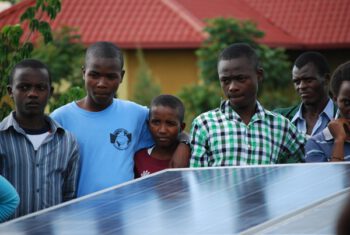
There is a significant intersectionality at play in Abramowitz’s work. He described how bringing power to a country uplifts it in many other ways. Food storage, communication, and information are just a few benefits that come with energy. With these benefits, many are given a chance to succeed. In places where terror runs rampant, energy projects are run through communities to prevent them from becoming corrupted.
Yosef Abramowitz is a visionary, humanitarian, and innovator. Not only did Abramowitz help facilitate Israel’s transition to become more environmentally friendly. He helped make the world not only a cleaner place by introducing solar energy, but also a better place by bringing it to those who need it most. Following Theodor Herzl’s idea that “If you will it, it is no dream,” Abramowitz continues his dream of bringing energy to all.