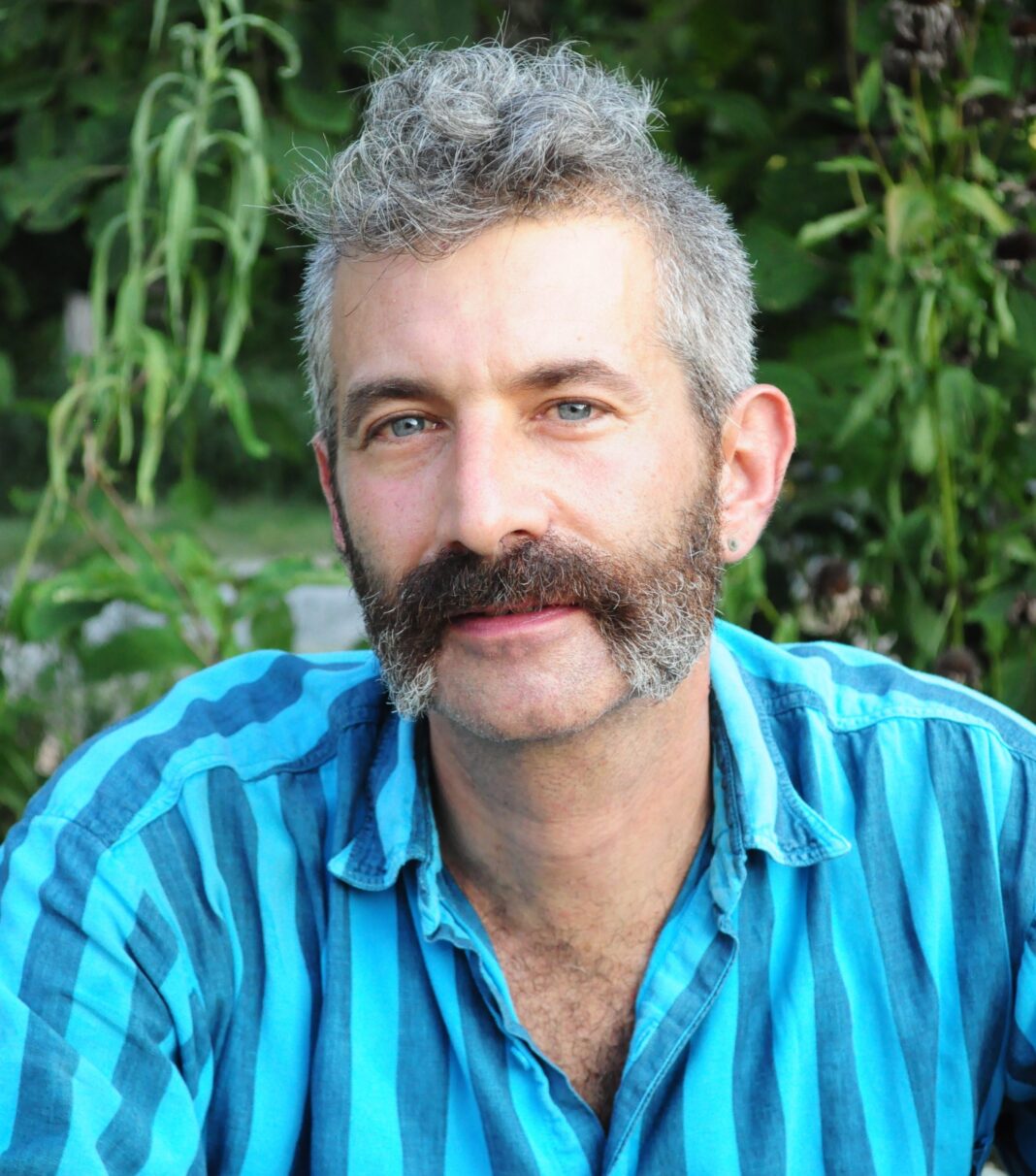


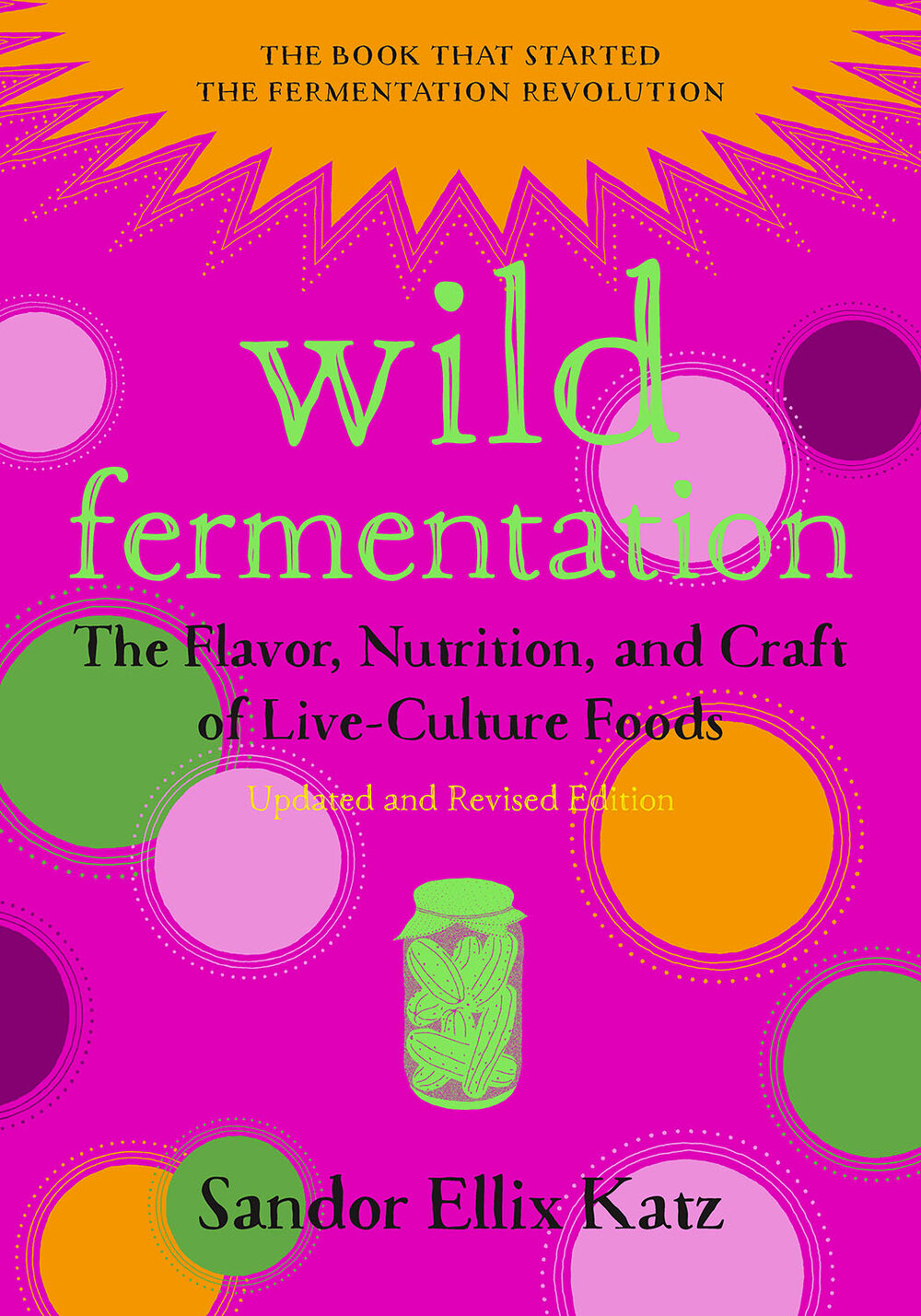
In a world increasingly disconnected from its food sources, fermentation evangelist Sandor Ellix Katz stands out as a champion of microbial culture—literally. Author of groundbreaking books like The Art of Fermentation and Wild Fermentation, both books I own, Katz has helped usher in a global revival of age-old food practices. His work is not only culinary but deeply ecological, spiritual, and political—highlighting how fermentation preserves both nutrients and traditions in an age of ecological collapse and over-industrialized food.
At Green Prophet, where we’re constantly exploring the beautiful dance of ecology, culture, and innovation in the Middle East and beyond, we spoke to Sandor Katz about the ancient roots and modern relevance of fermentation—especially in water-scarce regions like ours. Here is our Q&A.
Karin Kloosterman: In the Middle East, ancient fermented foods like labneh, pickled turnips, and date wine have long been part of daily life. Do you think fermentation could be a tool for ecological resilience in water-scarce, climate-stressed regions like ours—and if so, how?
Sandor Katz:
In every region of the world, fermentation is an ancient practice, an essential way in which people in varied climates and topographies have been able to make effective use of available food resources. Fermentation enables many foods to be preserved without refrigeration, breaks down toxic compounds in certain otherwise inedible foods, and enables some foods to be eaten with much less cooking, saving fuel. Fermentation is most definitely a tool for ecological resilience.
Kloosterman: From a microbial point of view, borders are meaningless. What does that say about our shared biological and cultural heritage when everyone is busy these days laying claim to their own unique heritage?
Katz:
I’m not sure I agree with the premise of your question, since all microbes, like every cell, have membranes that function as borders. But cell membranes, like all borders and boundaries, are never absolute—they are selectively permeable. Life processes require some degree of permeability for access to water, oxygen, minerals, and food, as well as the release of metabolic by-products.
Many varied microbes inhabit each of us, like every multicellular life form in existence, and they respect neither the autonomy of our individual bodies nor political borders. Specific microbial communities in different environments can vary quite a lot; yet their presence is ubiquitous. Our coexistence with the microbes present on our food is inevitable, yet the unique ways in which people in different parts of the world developed to work with this biological reality (that was not specifically understood until recent times) are distinctly cultural. Different cultural lineages have produced many distinctive fermented products. And yet so many of them are similar. Culture is never fixed; it is always evolving and always being influenced.
Kloosterman: Could fermented foods—rich in microbes—play a role in healing not just the gut but also trauma, memory, or even the land itself? Have you come across any stories that link fermentation to emotional or ancestral healing?
Katz:
Certainly microbes play a huge role in healing land and water, and as we learn about the important connections between gut microbes and brain chemistry, in healing human traumas as well.
Kloosterman: In a time of ecological collapse, techno-solutionism, and AI-driven agriculture, do you believe fermentation can re-root us in slowness, decay, and human-scaled knowledge? What’s one radical thing you wish more young eco-activists knew about microbes?
Katz:
I know that the ecological destruction and catastrophes activists are focused on are vast in scale, but in thinking about strategies we cannot overlook microorganisms. Microbes may be small, but they are numerous, they are powerful, and they are resilient.

Kloosterman: Give us a short overview on what’s keeping you busy now and how we can access your latest book/project.
Katz:
My latest project is a natural history of fermentation, which will be published next year by Timber Press. I continue to teach in varied locations, and you can find out where on my website www.wildfermentation.com.
Get Fermenting: Favorite Recipes from the Green Prophet Kitchen
At Green Prophet, we’ve celebrated Middle Eastern fermentation traditions for years. Here are a few of our favorite starter recipes:
-
Labneh (strained yogurt):
This is something my children would make in their Waldorf kindergardens, after making bread. Rich in probiotics and easily made at home by draining plain yogurt through a cheesecloth. Add olive oil, za’atar, or mint for a Levantine twist. Or try kefir. -
Sumarian beer:
Beer used to be made by women, before it became big business. Travel around the ancient times by making a simple beer loved by our mutual ancestors. -
Preserved lemons:
For a taste of Sinai and Egypt. This easy-to-make and easy to use spice uses the entire lemon. Just make sure they are organic. Get the recipe here.
Whether you’re fermenting on a balcony in Beirut or your basement in Boise, embracing microbial culture is a revolutionary act. In a time of upheaval, Sandor Katz reminds us that transformation—of food, land, and self—often begins with the smallest life forms.