In a region long marked by political divides, armed conflict, and environmental degradation, EcoPeace Middle East is quietly advancing the power of peacebuilding. Peace through education. Through its cross-border teacher tours in the Jordan Valley, EcoPeace is bringing together educators from Israel, Jordan, and the Palestinian territories to address critical environmental issues.
EcoPeace has offices in Tel Aviv, Israel; Amman, Jordan; and Ramallah, located in the West Bank. It exists as one of the only organizations working together across these three locations. Their goal is ambitious, complex, and challenging: to utilize environmental challenges as a catalyst for regional cooperation. For two decades, their work has been shaped by a truth that transcends borders.
See Related Article: EcoPeace gets peacebuilding award
The Jordan River, stretching from the heights of Mount Hermon to the lowest point on Earth’s surface—the Dead Sea—is a symbol of biodiversity, religion, and culture. However, it has suffered from decades, if not centuries, of abuse. For years, raw sewage from countries, Jordan, Israel, and the Palestinian territories, has been poured into its waters. More than 600,000 Jordanians and 60,000 Palestinians continue to discharge waste into the river basin. Additionally, multiple dams have altered the flow and the stretch of the river downstream from the Sea of Galilee, which is significantly polluted.
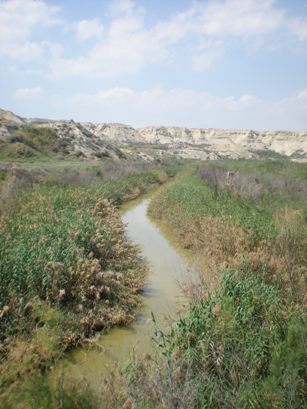
Yet, the mindsets and actions of those living in areas surrounding the Jordan River are undergoing a change. Israeli initiatives are invested in cleaner water, infrastructure, and sewage treatment. Both state-led and NGO efforts drive this renewed focus on the restoration. These efforts are slowly but surely transforming once-over-polluted areas into zones of rehabilitation, use, and recreation. Increased cooperation, driven by EcoPeace, has allowed for coordinated responses to the shared environmental threat. These cooperation efforts are not only cleaning the Jordan River, but are also creating new channels for positive regional dialogue.
One of the most effective ways EcoPeace advances its mission is by targeting educators. Each year, the organization hosts educational conferences specifically designed for teachers, primarily those in biology, ecology, and related fields. Approximately 25 teachers from Israel, Jordan, and Palestine participate in each session. These sessions focus not only on the Jordan River being a shared resource and a symbol of regional interdependence, but also on the importance of preserving it. Additionally, they focus on the interactions between teachers from the conflicting groups.
They are designed to create empathy, cooperation, and inspire teachers to integrate transboundary environmental programming into their curriculum. Each session is followed up by support and guidance on how to engage students with the environmental peacebuilding material. Workshops used to take place in Jordan, with all participants traveling there. However, due to the ongoing war between Israel and Hamas, sessions are now held in Cyprus.
The teacher workshops and tours serve as a platform for both learning and dialogue. Regional-political complexities are not ignored; they are engaged, debated, and discussed. However, the program encourages participants to look beyond national and media narratives to instead focus on the common good. Helping educate the youth to provide a better environmental future. When teachers from Tel Aviv, Amman, and Ramallah examine the same stretch of polluted river, it creates a shared experience. The shared concern for the Jordan River, as well as other environmental issues, and, on a larger scale, the region, becomes the foundation for a deeper understanding.
EcoPeace’s work is not limited to the Jordan Valley. The organization is also active along the Alexander Stream and near the Dead Sea. Both areas, like the Jordan River, face enormous environmental stress. What all of these locations have in common is that all three participants within EcoPeace are affected. Both geographical ties and responsibility ties interconnect the Middle East. The typical mindset of “It is someone else’s problem” does not work. It takes teachers, the youth, and the region as a whole to come together to solve these problems because they are everyone’s.
EcoPeace’s strategy is dual, combining both bottom-up and top-down approaches. The bottom-up approach focuses on the aforementioned teacher workshops and trickles down education to the youth. The top-down approach focuses on EcoPeace’s efforts to collaborate with government officials and decision-makers, aiming to influence policy and regional environmental practices.
The organization has been instrumental in advancing the “Green Blue Deal.” This is a project that entails Israel providing desalinated water to Jordan in exchange for energy. This is made possible due to Israel’s experience and expertise in desalination plants, along with Jordan’s expansive geographic area for solar and wind farms. Projects like this are designed to foster interdependence, where both countries rely on each other for mutual benefit. With interdependence comes cooperation, and with cooperation comes increased normalcy in relations.
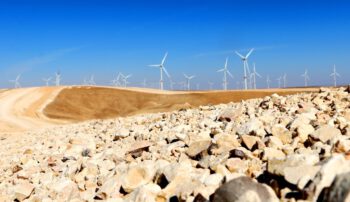
Even amid rising tensions and conflicts, EcoPeace remains committed to its mission. In the aftermath of the October 7th attacks carried out by the terrorist organization known as Hamas, the organization maintained communication across all offices. Staff members checked in on colleagues from all sides, underscoring their commitment to preserving connection even during times of conflict.
See Related Article: The wind farms of the Middle East
The resilience of the educational programs is astounding. While many participants may enter tours with skepticism or strong preconceived notions, they often leave with new perspectives and a deeper appreciation. While political solutions remain improbable, educational ones are already in motion.
See Related Article: The Blue Green Deal and climate pacts between enemies
EcoPeace aims to expand the teacher programs and increase its reach in the coming years. With more than 1,000 students already directly impacted by the initiative, the organization utilizes teachers as ambassadors for environmental peacemaking.
In a region where peace is scarce, EcoPeace offers a solution—one where educators plant the seeds of coexistence.
To learn more about EcoPeace’s educational programs and environmental peacebuilding efforts, visit https://ecopeaceme.org.