Slovenia’s Metal Cooling Tech Could Replace Toxic Refrigerants in Air Conditioning

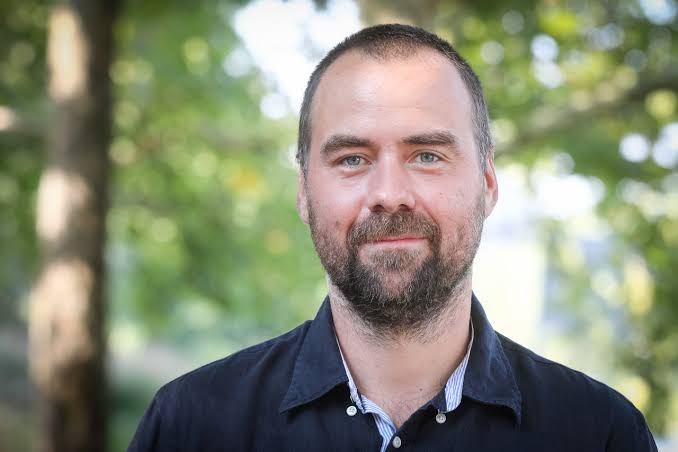
Jaka Tušek
Jaka Tušek

As the planet warms, the race for sustainable cooling technologies is heating up. In Slovenia, researchers are developing a revolutionary cooling system that skips toxic gases and instead uses recyclable nickel-titanium alloy to keep things chill. Their method?

It’s called elastocaloric cooling—and it could transform how we air-condition homes and buildings without harming the planet. Unlike traditional systems that use hydrofluorocarbons (HFCs)—greenhouse gases thousands of times more potent than CO₂—this method doesn’t rely on liquid-to-gas phase changes.  Instead, it leverages a solid-state material, nitinol, which heats up when mechanically stressed and cools down when the pressure is released.

dr. Jaka Tušek: Figure 1: Photo of an elastocaloric regenerator (left) as the basic element of an elastocaloric device and the operation of the elastocaloric regenerator in heating mode, taken with a thermographic camera (right)
Jaka Tušek: Photo of an elastocaloric regenerator (left) as the basic element of an elastocaloric device and the operation of the elastocaloric regenerator in heating mode, taken with a thermographic camera (right)

“A mass of only one kilogram of refrigerant with a GWP of 10,000 causes as much global warming as 10 tons of CO₂,” says Jaka Tušek, principal investigator of the project at the University of Ljubljana. “We want to replace them with solid refrigerants based on shape memory alloys.”

The project, E-CO-HEAT, is part of the European Union’s broader mission to decarbonize heating and cooling—a sector that accounts for 10% of global electricity use. This research could help phase out toxic coolants, reduce fire risk, and improve efficiency, especially as climate change accelerates.

“Our device has no moving parts in the cooling loop and uses less energy,” the team notes. “It can become a highly efficient alternative to vapor compression cooling.

“Ironically, the more we cool, the greater the demand for cooling.” he explains. “The International Energy Agency estimates that the number of air conditioners worldwide will rise from 1.6 billion today to 5.6 billion by the middle of the century.

“At this rate of increase in cooling demand, energy use for cooling will exceed total energy use for heating by 2060 and by the end of the century by more than 60%. Among the alternative technologies, elastocaloric cooling and heating technology, based on exploiting the elastocaloric effect during cyclic loading of shape memory materials, has shown great potential in recent years,” says Tušek.

Read more on Green Prophet about the hidden climate cost of air conditioners and efforts to design buildings that don’t need cooling at all.

Metal-Based Cooling Could Cut Carbon and Slash Energy Use

Tušek’s team is working with partners from Ireland, Germany, and Italy under the project SMACool, which aims to deliver a working prototype of a metal-based air conditioner by 2026. Though still at 15% efficiency, researchers expect to surpass that soon, potentially beating standard vapor compression units that max out at 30%.

The technology avoids the flammable or toxic properties of so-called “natural refrigerants” like isobutane or ammonia, which come with their own risks—especially in hot climates where performance drops.

“We are building an advanced elastocaloric device that can replace today’s harmful cooling systems and have a measurable impact on climate goals,” Tušek says.

But change won’t be instant. This kind of leap forward faces resistance from an industry heavily invested in HFC-based infrastructure. Still, the benefits—zero-emissions refrigerants, higher safety, and better performance—are hard to ignore.

As Tušek puts it: “We’re not only developing a device. We’re shaping a safer, cooler future.”

Check out Green Prophet’s coverage of other clean tech frontiers like solar cooling in deserts and AI-powered climate solutions.


LEAVE A REPLY

Please enter your comment!
Please enter your name here

TRENDING

Huge Fish Nursery Discovered Under Freezing Arctic Seas

In 2019, an underwater robot camera exploring the seabed...

Remilk makes cloned milk so cows don’t need to suffer and it’s hormone-free

This week, Israel’s precision-fermentation milk from Remilk is finally appearing on supermarket shelves. Staff members have been posting photos in Hebrew, smiling, tasting, and clearly enjoying the moment — not because it’s science fiction, but because it tastes like the real thing.

The US leaves 66 United Nations organizations to “put America first”

The world needs a reset and to restart well intentioned cooperation projects from start. Because right now the UN and EU projects look like software built on code from the 80s, rickety, patched, slow to adapt, and prone to crashing under the weight of outdated assumptions.

Thank you, LinkedIn — and what your Jobs on the Rise report means for sustainable careers

While “green jobs” aren’t always labeled as such, many of the fastest-growing roles are directly enabling the energy transition, climate resilience, and lower-carbon systems: Number one on their list is Artificial Intelligence engineers. But what does that mean? Vibe coding Claude? 

Turkey named as climate change COP31 home in 2026

Murat Kurum as President-Designate of COP31

Qatar’s climate hypocrisy rides the London Underground

Qatar remains a master of doublethink—burning gas by the megaton while selling “sustainability” to a world desperate for clean air. Wake up from your slumber people.

How Quality of Hire Shapes Modern Recruitment

A 2024 survey by Deloitte found that 76% of talent leaders now consider long-term retention and workforce contribution among their most important hiring success metrics—far surpassing time-to-fill or cost-per-hire. As the expectations for new hires deepen, companies must also confront the inherent challenges in redefining and accurately measuring hiring quality.

8 Team-Building Exercises to Start the Week Off 

Team building to change the world! The best renewable energy companies are ones that function.

Thank you, LinkedIn — and what your Jobs on the Rise report means for sustainable careers

While “green jobs” aren’t always labeled as such, many of the fastest-growing roles are directly enabling the energy transition, climate resilience, and lower-carbon systems: Number one on their list is Artificial Intelligence engineers. But what does that mean? Vibe coding Claude? 

Somali pirates steal oil tankers

The pirates often stage their heists out of Somalia, a lawless country, with a weak central government that is grappling with a violent Islamist insurgency. Using speedboats that swarm the targets, the machine-gun-toting pirates take control of merchant ships and then hold the vessels, crew and cargo for ransom.

Leopoldo Alejandro Betancourt López Turned Ocean Plastic Into Profitable Sunglasses

Few fashion accessories carry the environmental burden of sunglasses. Most frames are constructed from petroleum-based plastics and acrylic polymers that linger in landfills for centuries, shedding microplastics into soil and waterways long after they've been discarded. Leopoldo Alejandro Betancourt López, president of the Spanish eyewear brand Hawkers, saw this problem differently than most industry executives.

Why Dr. Tony Jacob Sees Texas Business Egos as Warning Signs

Everything's bigger in Texas. Except business egos.  Dr. Tony Jacob figured...

Israel and America Sign Renewable Energy Cooperation Deal

Other announcements made at the conference include the Timna Renewable Energy Park, which will be a center for R&D, and the AORA Solar Thermal Module at Kibbutz Samar, the world's first commercial hybrid solar gas-turbine power plant that is already nearing completion. Solel Solar Systems announced it was beginning construction of a 50 MW solar field in Lebrija, Spain, and Brightsource Energy made a pre-conference announcement that it had inked the world's largest solar deal to date with Southern California Edison (SCE).

Related Articles

Popular Categories