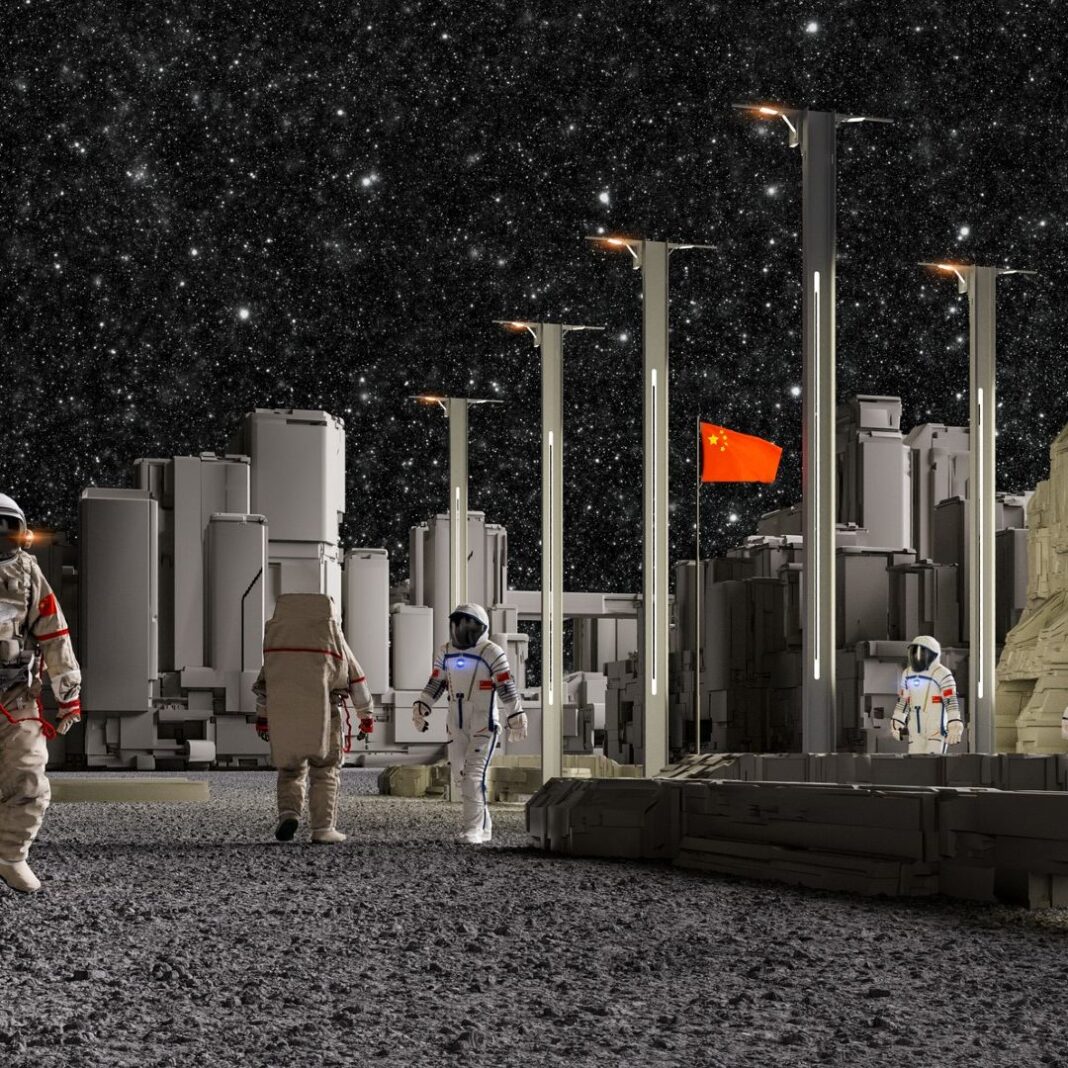

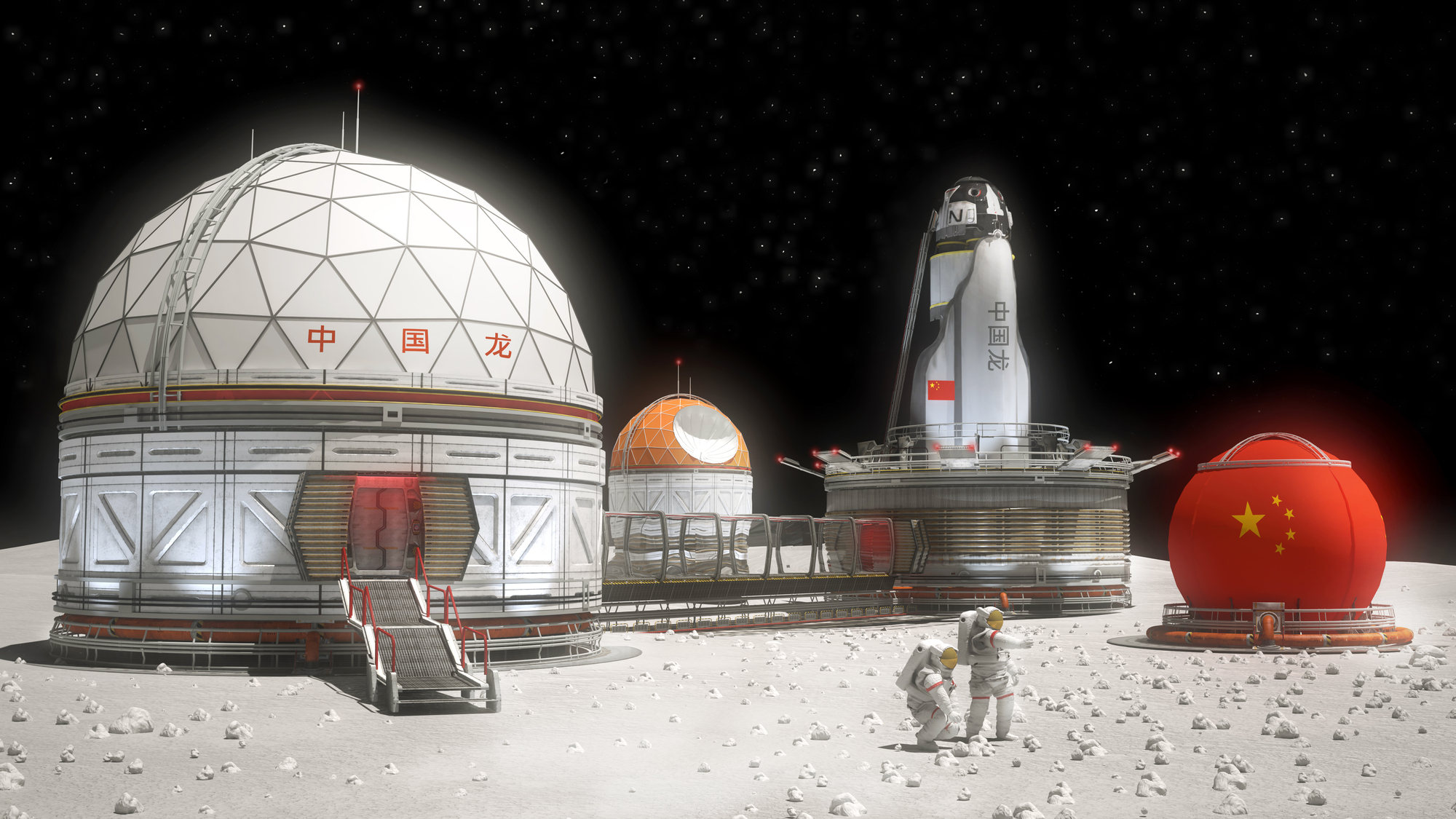
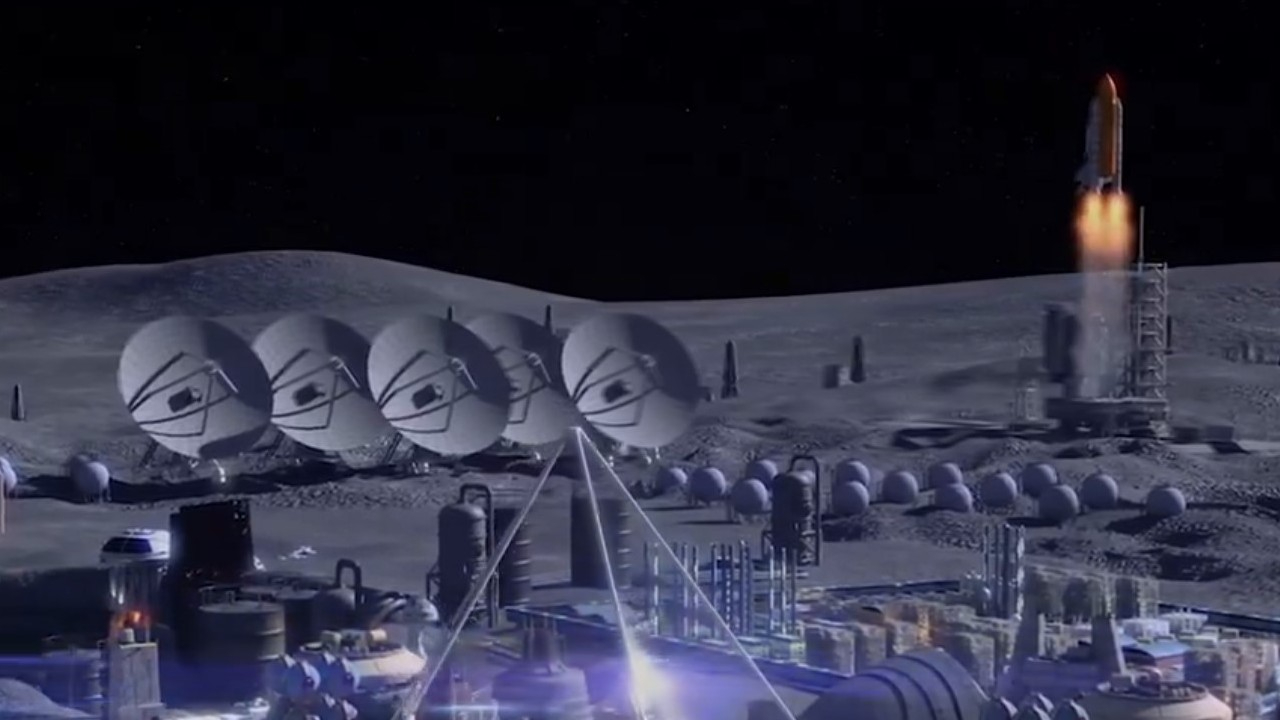
China and Russia have unveiled plans to construct a joint lunar base equipped with a nuclear power plant, marking a significant development in international space exploration. China wants to moonmine and we reported on that last year. They will include Pakistan as part of the plan to become the first Moonians. This initiative, known as the International Lunar Research Station (ILRS), aims to establish a permanent presence on the Moon’s south pole by 2035.
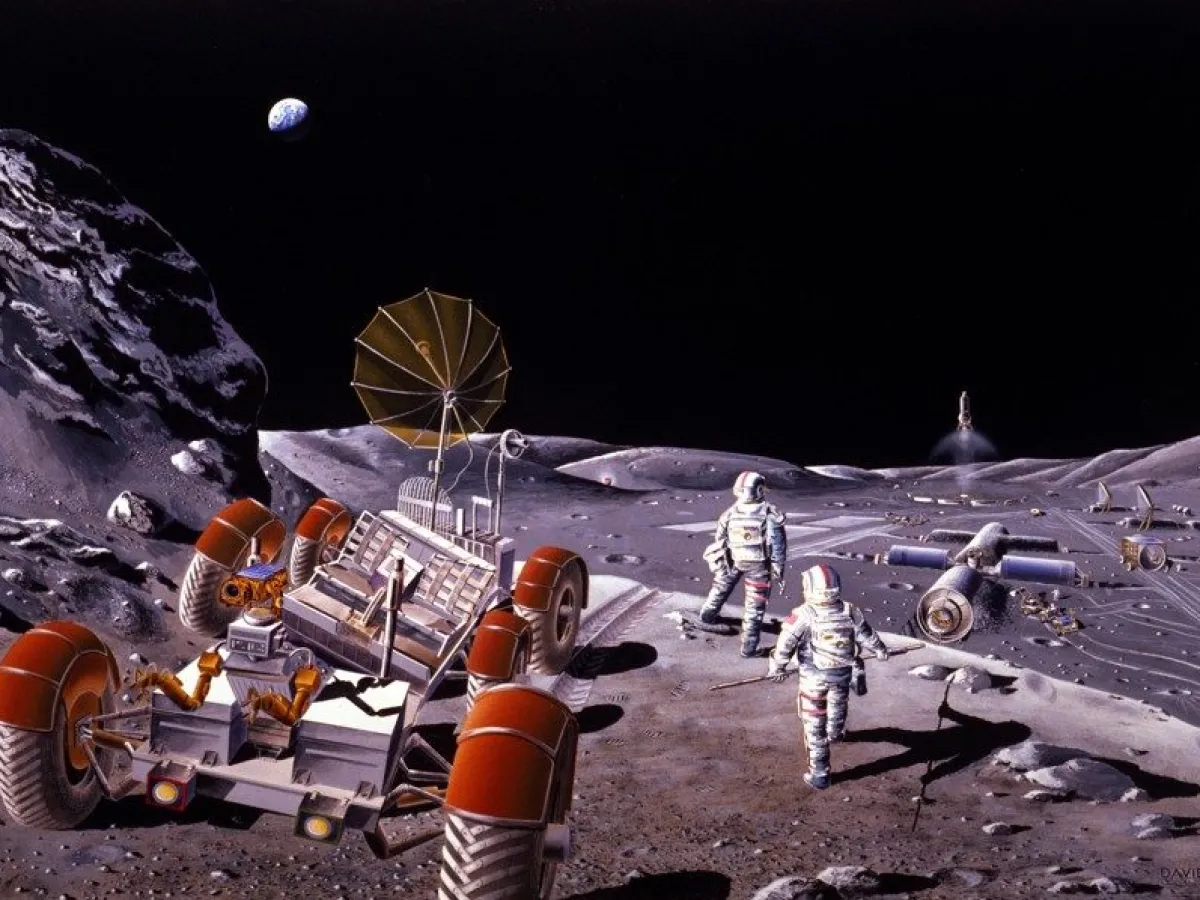
The ILRS is a collaborative project between China and Russia, designed to support long-term scientific research and exploration on the Moon. According to Chinese space official Pei Zhaoyu, the base will utilize both solar arrays and a nuclear power plant to provide the necessary energy for sustained operations. The inclusion of nuclear power is intended to ensure a reliable energy source, especially during the lunar night when solar power is unavailable.
International Reactions and Legal Considerations
The United States has expressed concerns regarding the safety and transparency of deploying nuclear technology on the Moon. A State Department spokesperson emphasized the need for a “rigorous, risk-informed safety analysis” for any space nuclear systems and highlighted the importance of transparency in such endeavors. What if it exploded? Would the moon be sent off course?
The deployment of a nuclear power plant on the Moon raises questions about the legal frameworks governing space activities. The 1967 Outer Space Treaty, signed by over 100 countries including China, Russia, and the United States, stipulates that celestial bodies are not subject to national appropriation and must be used exclusively for peaceful purposes.
While the treaty prohibits the placement of nuclear weapons in space, it does not explicitly ban the use of nuclear power for peaceful purposes, leaving room for interpretation regarding projects like the ILRS.
The Role of Nuclear Power in Sustainable Space Exploration
Nuclear power is considered a viable solution for providing consistent energy in space, particularly for missions in environments where solar power is insufficient. Companies like Rolls-Royce are developing micro nuclear reactors intended for use in space missions, highlighting the growing interest in nuclear technology for space exploration. Companies like Frequency Electronics uses nuclear energy for clocks used in space.
The ILRS’s planned nuclear power plant represents a significant step in utilizing nuclear energy to support long-term human activities on the Moon.
The China-Russia collaboration on the ILRS signifies a new chapter in lunar exploration, emphasizing the importance of international cooperation and the potential of nuclear power in sustaining long-term space missions. As nations continue to explore the possibilities of space, adherence to international treaties and transparent practices will be crucial in ensuring peaceful and sustainable development beyond Earth.