Tea and beans are the best grow buddies

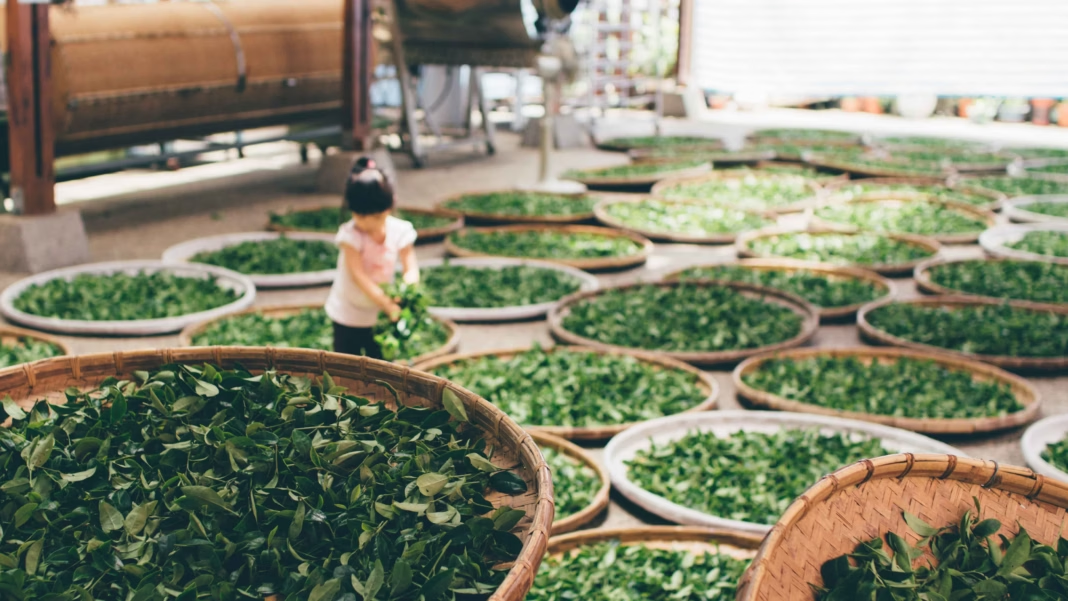
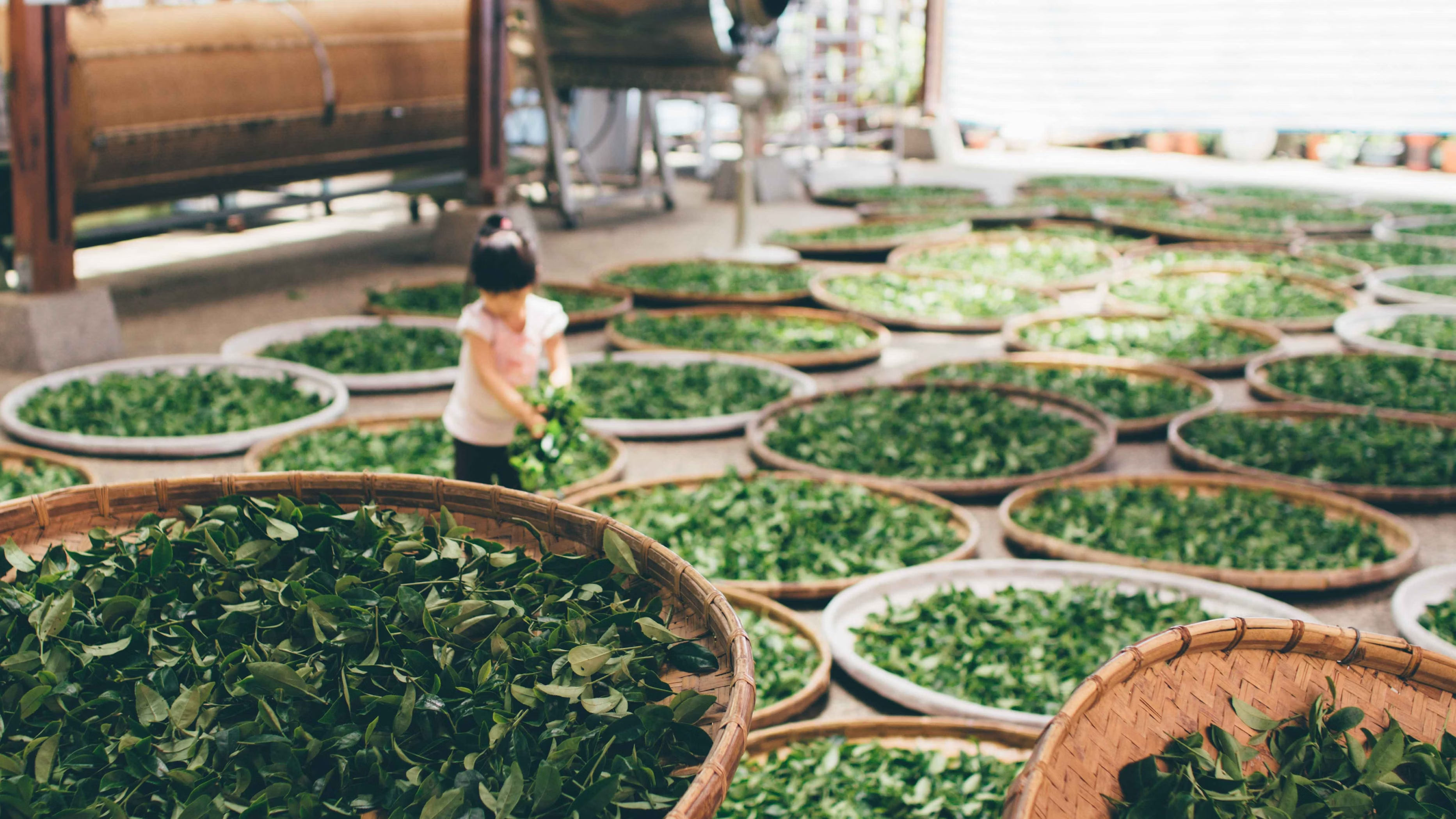
tea leaves in China
Companion crops of tea and legumes are good for the plants and good for the planet

Tea cultivation, beloved globally, thrives in fertile, acidic soils. However, the overuse of chemical fertilizers has led to soil degradation, negatively affecting both the yield and quality of tea. Intercropping—growing multiple crops together—has emerged as a potential solution to enhance soil health and mitigate environmental damage. This is also known as permaculture.

This practice has gained attention for its ability to restore soil fertility, but there remains a need for detailed research into its long-term benefits, especially when applied to tea plantations.

A collaborative study by Nanjing Agricultural University and Wilfrid Laurier University, published in Horticulture Research in 2024, explores how intercropping leguminous plants with tea influences soil health, microbial diversity, and tea quality. The study uncovers critical insights into sustainable tea cultivation practices, offering a viable path forward for the future of the industry.

The research specifically examined the effects of intercropping tea with leguminous crops such as soybean and Chinese milkvetch. The results were striking: during the flowering periods of these leguminous plants, soil nutrients saw remarkable increases—nitrate nitrogen rose by 77.84%, and available nitrogen by 48.90%. The soil fertility index improved by as much as 86.46% compared to monoculture tea plantations. These gains were attributed to increased soil enzyme activities and a more diverse microbial community.

The study highlighted significant improvements in tea quality. Amino acids and soluble sugars, both critical for the flavor and health benefits of tea, increased by up to 9.11% and 54.58%, respectively. The intercropping practice also fostered a richer microbial ecosystem, with higher bacterial and fungal diversity, further enhancing soil health. These findings suggest that intercropping can significantly boost both soil vitality and tea quality, making it a viable, sustainable agricultural strategy. Add in some regenerative agriculture practices like animal husbandry, and you are getting close to a perfect system.

Masseira gallery: Masseira agriculture north in Apulia, northwestern Portugal. Seaweed is collected for sand enrichment. The plot and berm are utilized by irrigation from well into 1 m deep groundwater. Today a wide range of local family-farm produce is sold at stands. Seaweed photos courtesy of Álvaro Campelo. Additional photos by Prof. Joel Roskin.
Masseira agriculture north in Apulia, northwestern Portugal. Seaweed is collected for sand enrichment. The plot and berm are utilized by irrigation from well into 1 m deep groundwater. Today a wide range of local family-farm produce is sold at stands.

Related: Islamic era agriculture

Xujun Zhu, a lead researcher from Nanjing Agricultural University, stated, “Our study clearly shows that intercropping leguminous plants with tea not only enriches the soil but also enhances tea quality. This practice offers a sustainable alternative to chemical fertilizers, fostering ecological balance and delivering economic benefits to growers.”
The findings of this study hold transformative potential for the tea industry.

By adopting intercropping practices, tea growers can reduce dependency on chemical fertilizers, improve soil health, and enhance tea quality. This sustainable strategy promises to reshape the future of tea plantations, offering long-term benefits for both the environment and the economy. Regenerative agriculture at its best. Woody Harrelson would approve.


TRENDING

Sustainability That Sells: How Profit and Purpose Come Together in the Hive

Whether you are a commercial grower, hobbyist beekeeper or retail equipment supplier, this system opens a new income stream with minimal environmental impact.

Can biochar reduce ‘Forever Chemicals’ in food if it’s used in farms?

Biochar is produced by heating organic material in a low-oxygen environment so it does not burn. This process, known as pyrolysis, transforms plant matter into a stable, carbon-rich material.

Inflatable concrete homes: a California and Ontario case study

Across Ontario and California, builders are rethinking concrete housing through inflatable-shell design—an approach that replaces wooden formwork with air and innovation. A 1,000-square-foot low-carbon concrete shell, insulated with hempcrete, can be erected in a day and cost far less than conventional construction. Over time, the savings in energy, materials, and mortgage costs make this model a realistic response to rising living expenses and climate stress. With low-carbon cement, hempcrete walls, and renewable energy, inflatable concrete homes show how even the world’s most carbon-heavy material can become part of a sustainable future—if built smartly, and within local building codes.

Lizard tail stew, dhub mansaf, is a favored folk dish in Saudi Arabia

By exploring forgotten folk dishes like lizard stew, Green Prophet continues to connect the dots between culture, ecology, and the future of sustainable living in the Middle East.

Biodiversity Blueprint Set for 2026

If we seize this moment, the 2026 review can catalyse a new wave of finance (see Green Finance mechanisms in the UAE), innovation and policy coherence — and move us closer to the vision of a nature-positive world by 2050. If not, the checkpoint risks becoming another missed opportunity while ecosystems, livelihoods and economies continue to degrade.

Turning Your Energy Consultancy into an LLC: 4 Legal Steps for Founders in Texas

If you are starting a renewable energy business in Texas, learn how to start an LLC by the books.

Tracking the Impacts of a Hydroelectric Dam Along the Tigris River

For the next two months, I'll be taking a break from my usual Green Prophet posts to report on a transnational environmental issue: the Ilısu Dam currently under construction in Turkey, and the ways it will transform life along the Tigris River.

6 Payment Processors With the Fastest Onboarding for SMBs

Get your SMB up and running fast with these 6 payment processors. Compare the quickest onboarding options to start accepting customer payments without delay.

Qatar’s climate hypocrisy rides the London Underground

Qatar remains a master of doublethink—burning gas by the megaton while selling “sustainability” to a world desperate for clean air. Wake up from your slumber people.

How Quality of Hire Shapes Modern Recruitment

A 2024 survey by Deloitte found that 76% of talent leaders now consider long-term retention and workforce contribution among their most important hiring success metrics—far surpassing time-to-fill or cost-per-hire. As the expectations for new hires deepen, companies must also confront the inherent challenges in redefining and accurately measuring hiring quality.

8 Team-Building Exercises to Start the Week Off 

Team building to change the world! The best renewable energy companies are ones that function.

Thank you, LinkedIn — and what your Jobs on the Rise report means for sustainable careers

While “green jobs” aren’t always labeled as such, many of the fastest-growing roles are directly enabling the energy transition, climate resilience, and lower-carbon systems: Number one on their list is Artificial Intelligence engineers. But what does that mean? Vibe coding Claude? 

Somali pirates steal oil tankers

The pirates often stage their heists out of Somalia, a lawless country, with a weak central government that is grappling with a violent Islamist insurgency. Using speedboats that swarm the targets, the machine-gun-toting pirates take control of merchant ships and then hold the vessels, crew and cargo for ransom.

Related Articles

Popular Categories