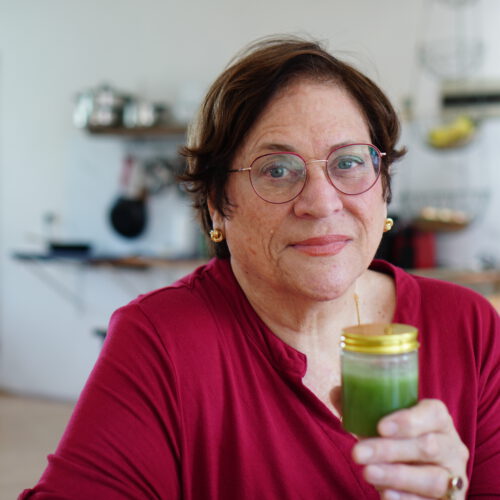
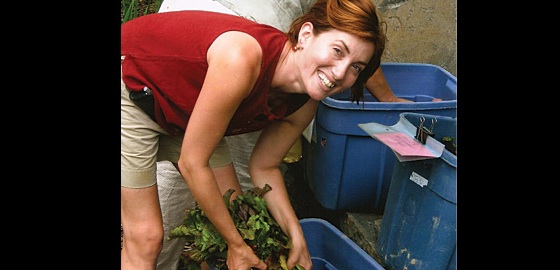
Green Prophet’s interview with “locavore” author Leda Meredith reveals a wealth of ways that eating locally-grown foods helps to green the planet.
We do what we can to reduce overall energy consumption, dutifully turning the faucet off while we scrub the dishes, turning lights off in empty rooms, hauling bottles and old newspapers to the recycling bin.
Yet we sometimes feel that our efforts are of little avail in the big environmental mess out there. What else can a person do – something we can really feel is helping? Every little bit helps, of course. But by eating less meat, and that locally-raised, and consciously choosing more locally-grown produce, you’ll become vitally aware of helping the planet on many different levels.
Influenced by writers like Michael Pollan, author, foraging teacher, and professional gardener Leda Meredith decided to reduce her impact on the environment by means within the reach of every person: eating foods grown or raised close to home – something green people call a “locavore”. From August 2007 to August 2008, Leda ate with a few defined exceptions, foods grown or raised exclusively inside a 250-mile radius of her Brooklyn apartment.
Here’s our exclusive interview with Leda about the experience:
 1. Leda, how do you manage to stay locavore while living in New York City?
Many people think that NYC must be one of the hardest places to stick to a sustainably grown, local foods diet, but actually it’s probably one of the easiest places on the planet to do so now. There are over four dozen farmers markets and as many community gardens within city limits, as well as close to fifty Community Supported Agriculture (CSA) programs.
That doesn’t include the food coops that pride themselves on featuring local farms, or the big chains like Whole Foods that make some effort to feature local farmers. So it’s actually quite easy to be a locavore in NYC.
2. Is it hard to maintain a locavore way of life?
No, it’s a pleasure. It does require some time and thought, but I don’t consider those hardships. For example, I do have to wash and cook all the fresh ingredients rather than just ordering take out (always an option here in NYC). But is chopping colorful vegetables while listening to good music, and then sharing them with family and friends a problem? Not at all! It’s good life.
I do have to plan for winter because I live in a cold winter climate region. This means that I do a lot of food preservation. Again, I don’t consider this an onerous task. What’s so hard about throwing a pint of blueberries in the freezer in August and then enjoying them with yogurt in breakfast smoothies in January?
3. What rules have you set down for yourself?
During my year of eating strictly within 250 miles of where I live, I had a short list of rules. These included three “exemptions”: olive oil (it’s too cold for olive trees here), salt (I get mine from Maine, about 450 miles away), and coffee.
I also had guidelines I followed as far as special situations such as traveling and being invited over to friends’ homes. Since completing The 250 in August 2008, I still stick to those guidelines about 80% of the time. It’s become a way of life, and there’s no reason to completely switch back to the way I ate before.
4. Do you observe more people becoming interested in eating locally?
Absolutely! One reason I did that extreme local eating year was to start those conversations. I never expected most people to limit their food-sourcing radius as strictly as I was doing, but I did want them to start thinking about where their food comes from and the impacts of their food choices.
In just a few years those conversations have changed from me explaining what those impacts are and what the benefits of eating locally are to people mostly knowing all of that and seeking my advice on how to make eating a local foods diet affordable and convenient enough for them to stick with it.
5. How much does eating locally diminish one person’s carbon footprint – on a daily or weekly or monthly basis?
Switching just 25% of your diet from long-distance to locally grown food reduces your carbon footprint by more than recycling all of your plastic, glass, and metal combined.
6. What two locavore decisions would you advise people to make?
Find a local source for something you eat almost every day, something like salad greens or fruit. And don’t even look at an animal product, including dairy and eggs, unless it’s from locally raised, pastured animals.
“Conventionally” raised animals and animal products have truly horrific impacts on both the environment and our health.
 7. How has becoming a locavore changed your life?
I’m more connected to my community and the region where I live. I have a vivid, tangible sense of the food geography of my area, for example I know that my wines come from North Fork, Long Island or the Fingerlakes areas and the first tomatoes of summer come from South Jersey.
I know the names and faces of the people who grow my food, and when I run into fellow CSA members on the street the conversations (“Can you believe we got kale again? What are you going to do with it?”) are a far cry from the usual big city isolation.
8. If you could change or influence one factor to improve the ecology, what would it be?
One thing that is significantly different now than at any previous time in history is that urban agriculture is no longer optional, it’s essential. Since 1996, for the first time in history, more than half of humanity lives in cities.
If all of those urban people decided to switch to sustainably grown food there literally would not be enough viable local farm land to feed them, unless the food from rural areas is combined with food grown within city limits. There is a lot of exciting work being done to make that a reality, and I’m so intrigued that I’m writing my next book on the new urban agriculture.
Thank you, Leda!
Green Prophet adds: The Locavore’s Handbook‘s base is New York, but like our article on American vertical farms, much of Leda’s advice applies to the Middle East or anywhere. She gives sensible guidelines on urban gardening, smart buying at farmer’s markets, preserving and cooking, and even how a small apartment yields unexpected storage space for your home-cooked food. We especially like her down-t0-earth advice bites: If You Do Just One Thing…
The Locavore’s Handbook: The Busy Person’s Guide to Eating Local on a Budget
Foreword by Sandor Ellix Katz
Lyons’ Press
ISBN 978-0-7627-5548-6
:: Leda Meredith’s blog, Leda’s Urban Homestead
More on sustainable agriculture and locavore life in the Middle East:
Vertical Farming in Masdar
Technofarm’s Irrigation Aims to Boost Libya’s Self-Sufficiency
Could Algae “Green Cakes” Solve Nutrition Problem in Middle East?
NatureMill’s Urban Compost Device