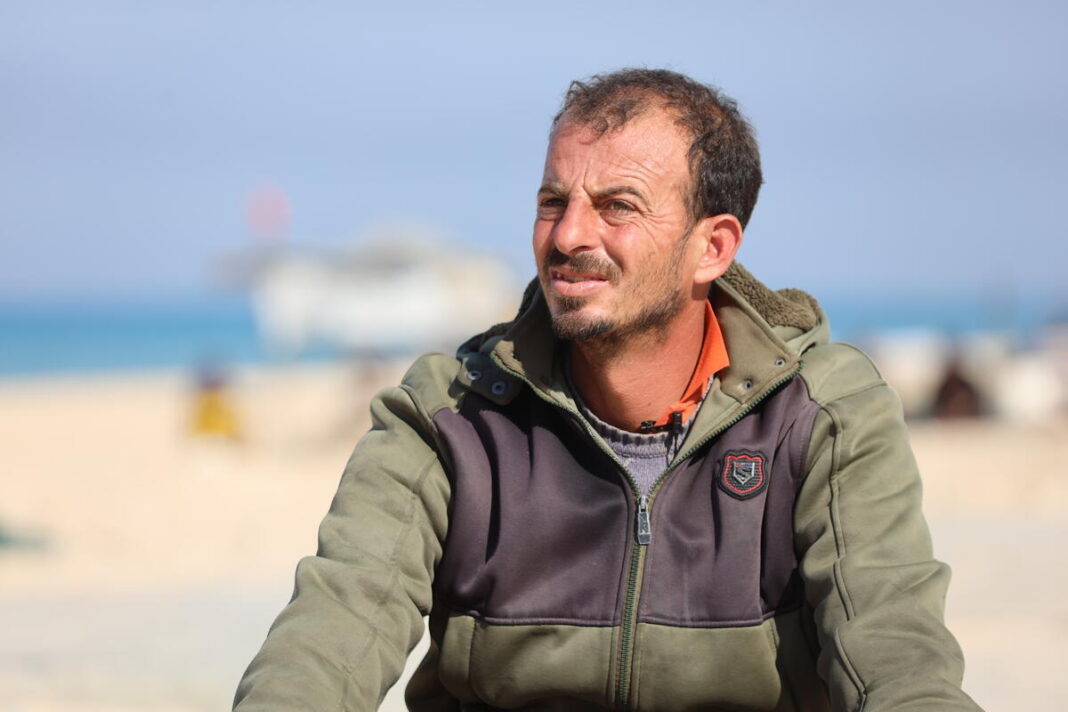
How to help Gaza fishermen

Reviving Gaza’s fishing sector hinges on restoring peace and safe access to the sea

When Hamas Palestinians attacked Israel they wouldn’t image this would lead to such a collapse of Gaza’s once thriving fishing sector. The situation could still be reversed quickly when peace is restored and fishers are granted safe access to fishing waters, along with the resumption of imports of essential fish production inputs and tools, says the UN’s FAO.

The impact of the ongoing escalation on the fishing sector is devastating, according to the UN. Gaza’s average daily catch between October 2023 to April 2024 dropped to just 7.3 percent of 2022 levels, causing a $17.5 million production loss.

The destruction of Gaza’s two main aquaculture farms, along with the hatchery facility, has also left the sector unable to produce alternative aquatic foods through aquaculture. According to one assessment, before the conflict over 6 000 individuals in Gaza, including 4,200 registered fishers and boat owners, relied on fishing as their main income. The sector supported around 110,000 people.

North of Wadi Gaza, which separates the northern and southern parts of the Strip, the Port of Gaza City has been severely damaged, with most fishing boats destroyed.

The damage to  Gaza’s fishing sector has exacerbated an already dire food security crisis. Fish, once a vital source of protein and other essential nutrients for Gazans, is now nearly unavailable. And with Hamas holding food stocks hostage, the people are at wit’s end.

“In Gaza’s fishing areas now lie broken boats, torn nets, and ruined infrastructure, standing in stark contrast to the once-vibrant industry that supported thousands of fishers for generations,” said the FAO Deputy Director-General, Beth Bechdol. It is not clear if she was there personally.

“For Gazans, the sea was not just a source of food, but a source of livelihood and identity. FAO can assist to help rebuild Gaza’s fishing industry, but for this to happen peace must first be established and fishers must be allowed to operate their boats and cast their nets without fear of harm,” she added.   

Ciro Fiorillo, Head of the FAO Office for the West Bank and Gaza Strip, stated, “FAO is ready to restart projects, replenish damaged boats and equipment, and inject emergency funds as soon as these key fishing inputs for production are allowed to enter the Strip, a sustained ceasefire is in place, and access to the sea is restored.

“This will help Gazan fishers resume their activities, revitalize livelihoods, contribute to economic recovery, and restore dignity to the people of Gaza.”

Before the escalation of hostilities, FAO supported over 4,000 Gazan fishers, improving food security, safety, and sustainability. Key initiatives like the marine cage project and enhanced fish stock monitoring, helped to establish inland fish farms, enhanced fishers’ skills, shared best practices, and supplied essential cold chain resources, including solar panels, ensuring a more resilient food source for Gaza.

Despite all the billions in aid given to Gaza, most of it was used to build tunnels and bombs and the fishing industry on its own could not survive without outside help, which raises an eye. How we can help Gazans?

All images supplied by the UN. December 2024. Deir al-Balah, Gaza Strip.

Hot this week

How Renewable Energy is Revolutionizing the Way We Power Our World

Solar has become the star of the transition thanks to modular hardware and straightforward installation. It fits dense cities and remote towns alike. Many companies are turning to rooftop arrays and carport systems - and exploring commercial solar installation as a practical way to lock in future savings.

How does one start prepping?

Faced with an extreme winter storm this year, Americans wonder how to be prepared for catastrophe. Miriam has lived through wars in the Middle East - so she's prepared on giving you a guide to prepping.

Fishermen sue tire manufacturers on behalf of the salmon

A federal trial in San Francisco has brought US tire manufacturers, fishing groups, and environmental scientists into court over a chemical most drivers have never heard of — but which scientists say may be silently reshaping aquatic ecosystems.

Listening to Water: Tarek Atoui’s Next Work for Tate Modern

Born in Beirut, Lebanon in 1980 and now living in Paris, Atoui has spent years building instruments that don’t sit comfortably in concert halls. Many of them involve water, glass, and ceramics — materials that react to sound instead of simply producing it.

Leading Through a Dual-Energy Transition: Balancing Decarbonisation with Energy Security

Experience in one area of the energy industry isn't enough to guarantee readiness across all the others. That's where a structured program like an MBA in energy can come in. Today's advanced curricula explore energy economics, finance, policy, and strategic management alongside the technical subjects. And when pursuing an energy MBA online, professionals can skill up and retrain without having to step out of the labor market -- an important perk at a time when skilled professionals are already in short supply.

Topics

How Renewable Energy is Revolutionizing the Way We Power Our World

Solar has become the star of the transition thanks to modular hardware and straightforward installation. It fits dense cities and remote towns alike. Many companies are turning to rooftop arrays and carport systems - and exploring commercial solar installation as a practical way to lock in future savings.

How does one start prepping?

Faced with an extreme winter storm this year, Americans wonder how to be prepared for catastrophe. Miriam has lived through wars in the Middle East - so she's prepared on giving you a guide to prepping.

Fishermen sue tire manufacturers on behalf of the salmon

A federal trial in San Francisco has brought US tire manufacturers, fishing groups, and environmental scientists into court over a chemical most drivers have never heard of — but which scientists say may be silently reshaping aquatic ecosystems.

Listening to Water: Tarek Atoui’s Next Work for Tate Modern

Born in Beirut, Lebanon in 1980 and now living in Paris, Atoui has spent years building instruments that don’t sit comfortably in concert halls. Many of them involve water, glass, and ceramics — materials that react to sound instead of simply producing it.

Leading Through a Dual-Energy Transition: Balancing Decarbonisation with Energy Security

Experience in one area of the energy industry isn't enough to guarantee readiness across all the others. That's where a structured program like an MBA in energy can come in. Today's advanced curricula explore energy economics, finance, policy, and strategic management alongside the technical subjects. And when pursuing an energy MBA online, professionals can skill up and retrain without having to step out of the labor market -- an important perk at a time when skilled professionals are already in short supply.

From Green Energy to Healthy Societies: Why old systems thinking is becoming relevant again

Across the Middle East and North Africa, large investments are being made in green hydrogen, renewable energy, water infrastructure and sustainability. Most of these efforts are discussed in the context of climate change, decarbonization and economic diversification. That framing is important, but it may not capture their full value.

We saw peace – an interreligious encounter deep in our eyes

They came from Israel, Palestine, Jordan, Iraq, Yemen, Morocco, Tunisia, Lebanon, Egypt… There are Sunni Muslims, Shiite Muslims, Jews (Orthodox and Reform), Orthodox Christians, Coptic Christians, Protestant Christians, Druze, Baha'is, a Scientologist.

Can biochar reduce ‘Forever Chemicals’ in food if it’s used in farms?

Biochar is produced by heating organic material in a low-oxygen environment so it does not burn. This process, known as pyrolysis, transforms plant matter into a stable, carbon-rich material.

Related Articles

Popular Categories