The origins of writing may be traced to clay tablets in Iraq

 Researchers have uncovered links between the precursor to the world’s oldest writing system and the mysterious, intricate designs left behind by engraved cylindrical seals that were rolled across clay tablets about 6,000 years ago.The origins of writing in Mesopotamia (the birthplace of the Jewish Bible’s Abraham and which is modern day Iraq) lie in the images imprinted by ancient cylinder seals on clay tablets and other artifacts, say a research group from the University of Bologna.

The researchers have identified a series of correlations between the designs engraved on these cylinders, dating back around 6,000 years, and some of the signs in the proto-cuneiform script that emerged in the city of Uruk, located in what is now southern Iraq, around 3000 BCE.

The study, published in Antiquity, opens new perspectives on understanding the birth of writing and may help researchers not only to gain new insights into the meanings of the designs on cylinder seals but also to decipher many still-unknown signs in proto-cuneiform on pottery vessels.

Related: restoring the original garden of Eden

“The conceptual leap from pre-writing symbolism to writing is a significant development in human cognitive technologies,” explains Silvia Ferrara, professor in the Department of Classical Philology and Italian Studies at the University of Bologna.

Related: Read more sustainable news from Iraq here

“The invention of writing marks the transition between prehistory and history, and the findings of this study bridge this divide by illustrating how some late prehistoric images were incorporated into one of the earliest invented writing systems.”

Among the first cities to emerge in Mesopotamia, Uruk was an immensely important center throughout the fourth millennium BCE, exerting influence over a large region extending from southwestern Iran to southeastern Turkey.

In this region, cylinder seals were created. Typically made of stone and engraved with a series of designs, these cylinders were rolled onto clay tablets, leaving a stamped impression of the design.

The origin of writing in Mesopotamia is tied to designs engraved on ancient cylinder seals
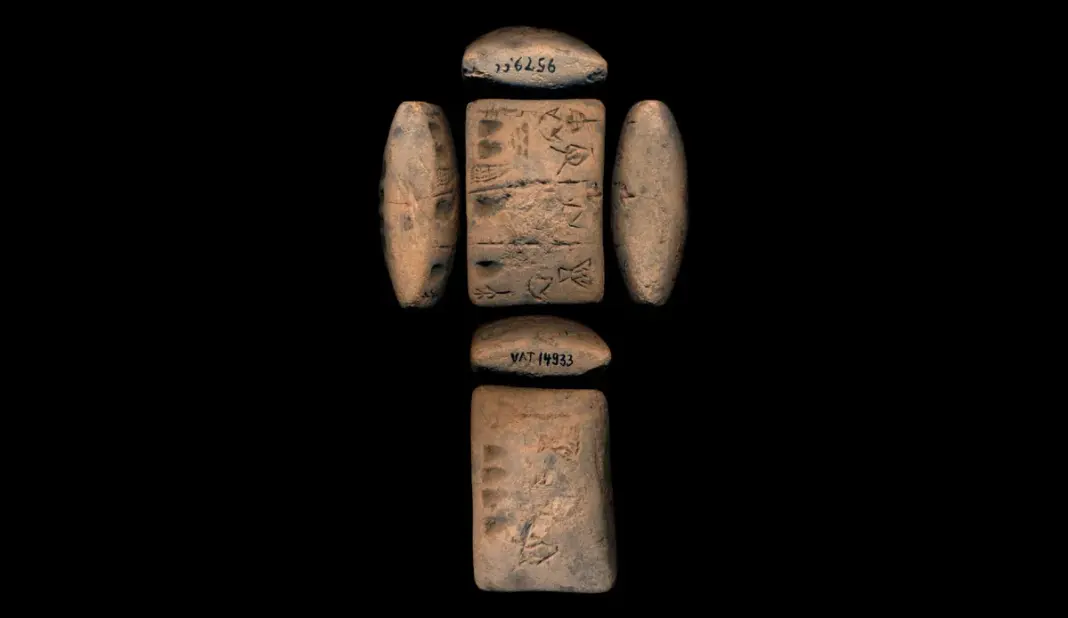
Photograph of proto-cuneiform tablet showing signs discussed in the article. Credit: CDLI – Cuneiform Digital Library Initiative

Starting in the mid-fourth millennium BCE, cylinder seals were used as part of an accounting system to track the production, storage, and transport of various consumer goods, particularly agricultural and textile products.

It is in this context that proto-cuneiform appeared: an archaic form of writing made up of hundreds of pictographic signs, more than half of which remain undeciphered to this day. Like cylinder seals, proto-cuneiform was used for accounting, though its use is primarily documented in southern Iraq.

“The close relationship between ancient sealing and the invention of writing in southwest Asia has long been recognized, but the relationship between specific seal images and sign shapes has hardly been explored,” says Ferrara. “This was our starting question: did seal imagery contribute significantly to the invention of signs in the first writing in the region?”

To find an answer, the researchers systematically compared the designs on the cylinders with proto-cuneiform signs, looking for correlations that might reveal direct relationships in both graphic form and meaning.

The origin of writing in Mesopotamia is tied to designs engraved on ancient cylinder seals
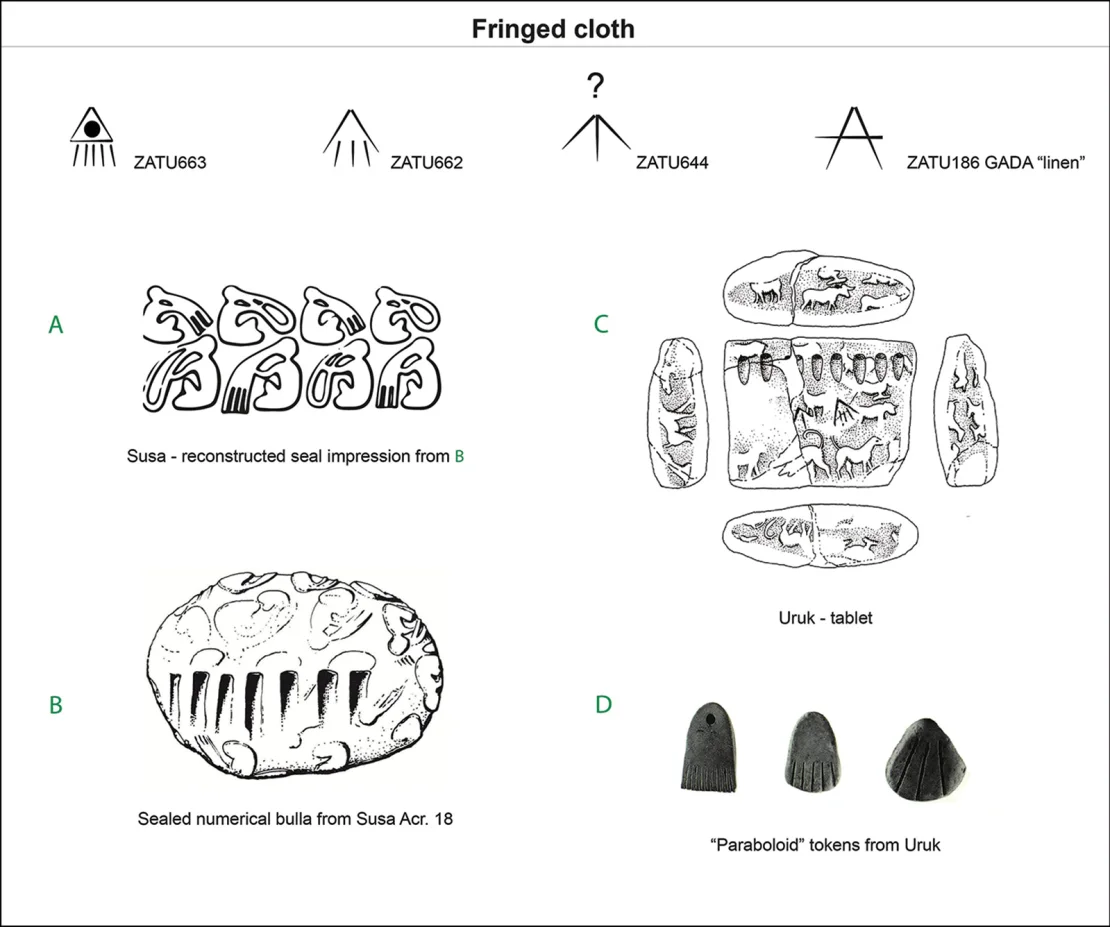
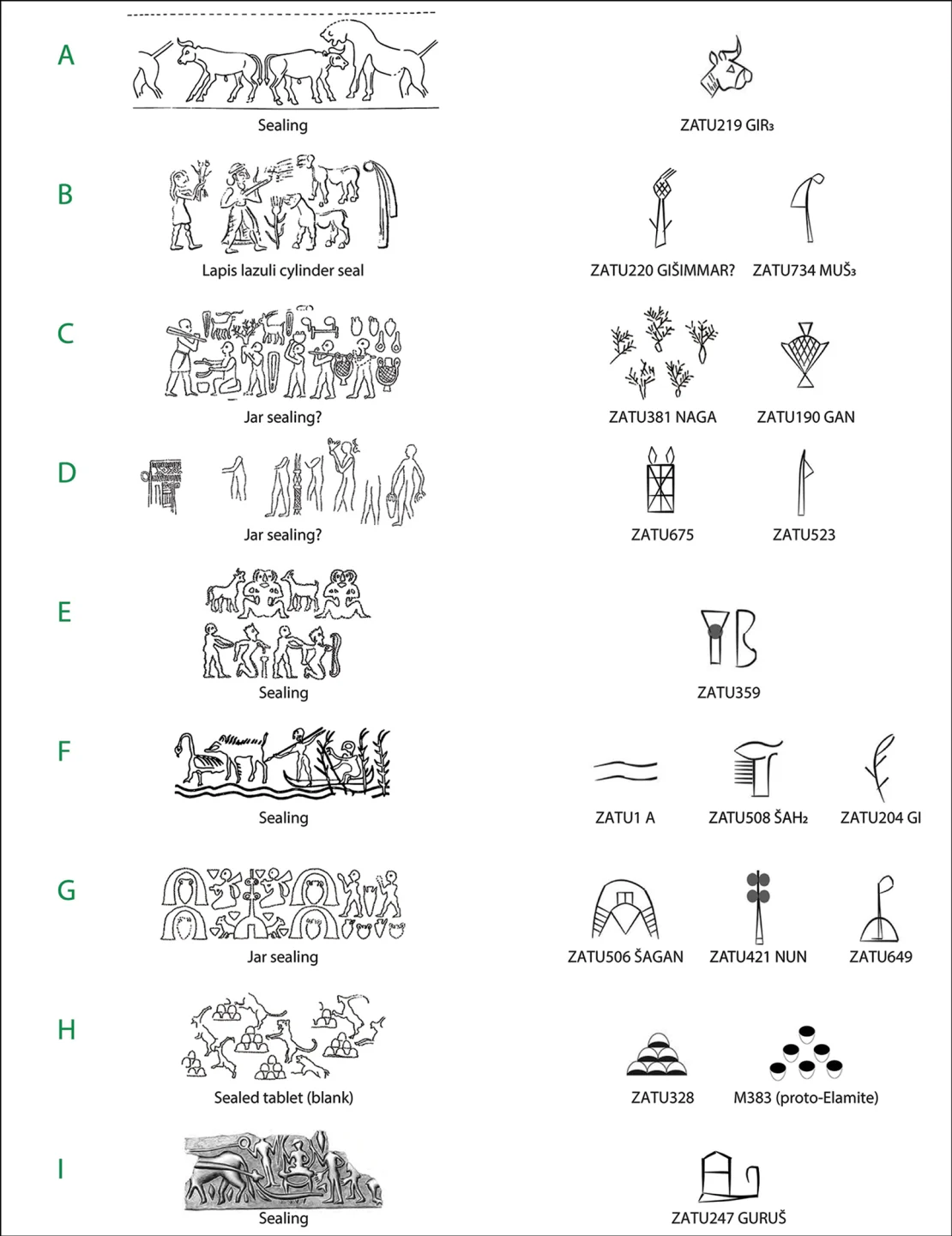
Diagrams of proto-cuneiform signs and their precursors from pre-literate seals. Credit: CDLI – Cuneiform Digital Library Initiative. There are others below.

“We focused on seal imagery that originated before the invention of writing, while continuing to develop into the proto-literate period,” add Kathryn Kelley and Mattia Cartolano, both researchers at the University of Bologna and co-authors of the study.
Researchers have uncovered links between the precursor to the world’s oldest writing system and the mysterious, intricate designs left behind by engraved cylindrical seals that were rolled across clay tablets about 6,000 years ago.  Researchers have uncovered links between the precursor to the world’s oldest writing system and the mysterious, intricate designs left behind by engraved cylindrical seals that were rolled across clay tablets about 6,000 years ago.

“This approach allowed us to identify a series of designs related to the transport of textiles and pottery, which later evolved into corresponding proto-cuneiform signs.”

This discovery reveals, for the first time, a direct link between the cylinder seal system and the invention of writing, offering new perspectives for studying the evolution of symbolic and writing systems.

“Our findings demonstrate that the designs engraved on cylinder seals are directly connected to the development of proto-cuneiform in southern Iraq,” confirms Silvia Ferrara. “They also show how the meaning originally associated with these designs was integrated into a writing system.”

What is cuneiform?
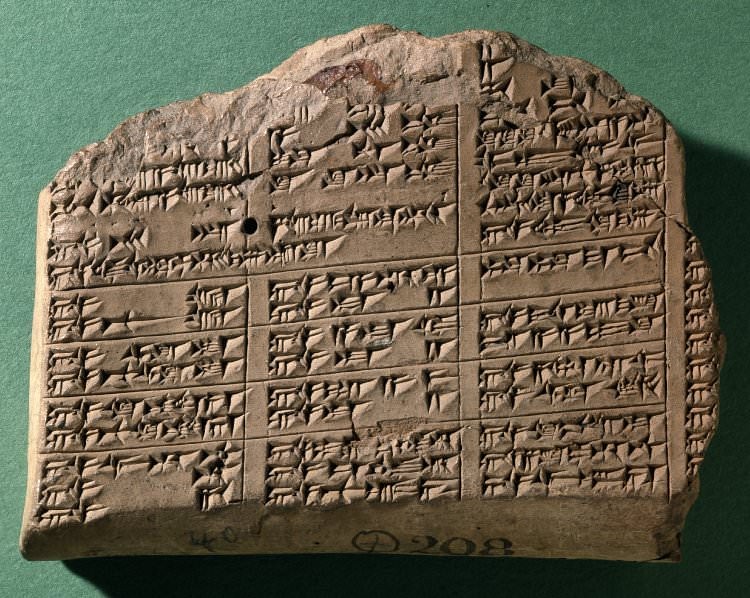
Cuneiform tablet
Cuneiform tablet

Cuneiform is a logo-syllabic writing system that was used to write several languages of the Ancient Near East. The script was in active use from the early Bronze Age until the beginning of the Common Era.

Karin Kloosterman
Karin Kloostermanhttp://www.greenprophet.com
Karin Kloosterman is an award-winning journalist, innovation strategist, and founder of Green Prophet, one of the Middle East’s pioneering sustainability platforms. She has ranked in the Top 10 of Verizon innovation competitions, participated in NASA-linked challenges, and spoken worldwide on climate, food security, and future resilience. With an IoT technology patent, features in Canada’s National Post, and leadership inside teams building next-generation agricultural and planetary systems — including Mars-farming concepts — Karin operates at the intersection of storytelling, science, and systems change. She doesn’t report on the future – she helps design it. Reach out directly to [email protected]

TRENDING

Arab agricultural land is on the brink

Across the Arab world, croplands face a perfect storm of stressors. Excessive fertilizers and pesticides erode soil ecology. Poor drainage and over-irrigation drive salinization, leaving fields crusted with salt. Rising temperatures, dwindling groundwater, and more frequent sand-and-dust storms—all amplified by climate change—compound the crisis.

Make mersu, the oldest known dessert in history

Mersu is energy-dense and sweet—think of it as a Bronze Age power snack.

Iraqi Zaha Hadid’s legacy reinvented in Saudi Arabia’s clay-rooted museum?

She was the first woman and first Muslim to win a Pritzker Prize and was notorious for blowing through budgets, with no concern for environmental issues. Her clients did not find this problematic. Has the Zaha Hadad brand become penitent in its latest project?

Foot-and-Mouth Disease Is Spreading Again — What That Means for Farmers, Food, and All of Us

A new wave of foot-and-mouth disease (FMD) is spreading through Europe and the Near East, and experts at the Food and Agriculture Organization (FAO) are urging countries to take urgent steps to stop it. The recent detection of an unfamiliar strain of the virus in Iraq and Bahrain has raised alarms, especially since this version, known as SAT1, is not normally found in this region.

Americans probe the alleged biblical ark on Mount Ararat in new study

The Durupınar formation's dimensions strikingly mirror the biblical description of Noah's Ark, as detailed in Genesis 6:15. Ground-penetrating radar (GPR) surveys have revealed internal features, including rectangular shapes and what appears to be a central chamber, located approximately 22 feet beneath the surface. These findings suggest the possibility of man-made structures within the formation.

Qatar’s climate hypocrisy rides the London Underground

Qatar remains a master of doublethink—burning gas by the megaton while selling “sustainability” to a world desperate for clean air. Wake up from your slumber people.

How Quality of Hire Shapes Modern Recruitment

A 2024 survey by Deloitte found that 76% of talent leaders now consider long-term retention and workforce contribution among their most important hiring success metrics—far surpassing time-to-fill or cost-per-hire. As the expectations for new hires deepen, companies must also confront the inherent challenges in redefining and accurately measuring hiring quality.

8 Team-Building Exercises to Start the Week Off 

Team building to change the world! The best renewable energy companies are ones that function.

Thank you, LinkedIn — and what your Jobs on the Rise report means for sustainable careers

While “green jobs” aren’t always labeled as such, many of the fastest-growing roles are directly enabling the energy transition, climate resilience, and lower-carbon systems: Number one on their list is Artificial Intelligence engineers. But what does that mean? Vibe coding Claude? 

Somali pirates steal oil tankers

The pirates often stage their heists out of Somalia, a lawless country, with a weak central government that is grappling with a violent Islamist insurgency. Using speedboats that swarm the targets, the machine-gun-toting pirates take control of merchant ships and then hold the vessels, crew and cargo for ransom.

Leopoldo Alejandro Betancourt López Turned Ocean Plastic Into Profitable Sunglasses

Few fashion accessories carry the environmental burden of sunglasses. Most frames are constructed from petroleum-based plastics and acrylic polymers that linger in landfills for centuries, shedding microplastics into soil and waterways long after they've been discarded. Leopoldo Alejandro Betancourt López, president of the Spanish eyewear brand Hawkers, saw this problem differently than most industry executives.

Why Dr. Tony Jacob Sees Texas Business Egos as Warning Signs

Everything's bigger in Texas. Except business egos.  Dr. Tony Jacob figured...

Israel and America Sign Renewable Energy Cooperation Deal

Other announcements made at the conference include the Timna Renewable Energy Park, which will be a center for R&D, and the AORA Solar Thermal Module at Kibbutz Samar, the world's first commercial hybrid solar gas-turbine power plant that is already nearing completion. Solel Solar Systems announced it was beginning construction of a 50 MW solar field in Lebrija, Spain, and Brightsource Energy made a pre-conference announcement that it had inked the world's largest solar deal to date with Southern California Edison (SCE).

Related Articles

Popular Categories