
Morocco and France to build largest desalination plant in Africa

France and Morocco desalinate Africa

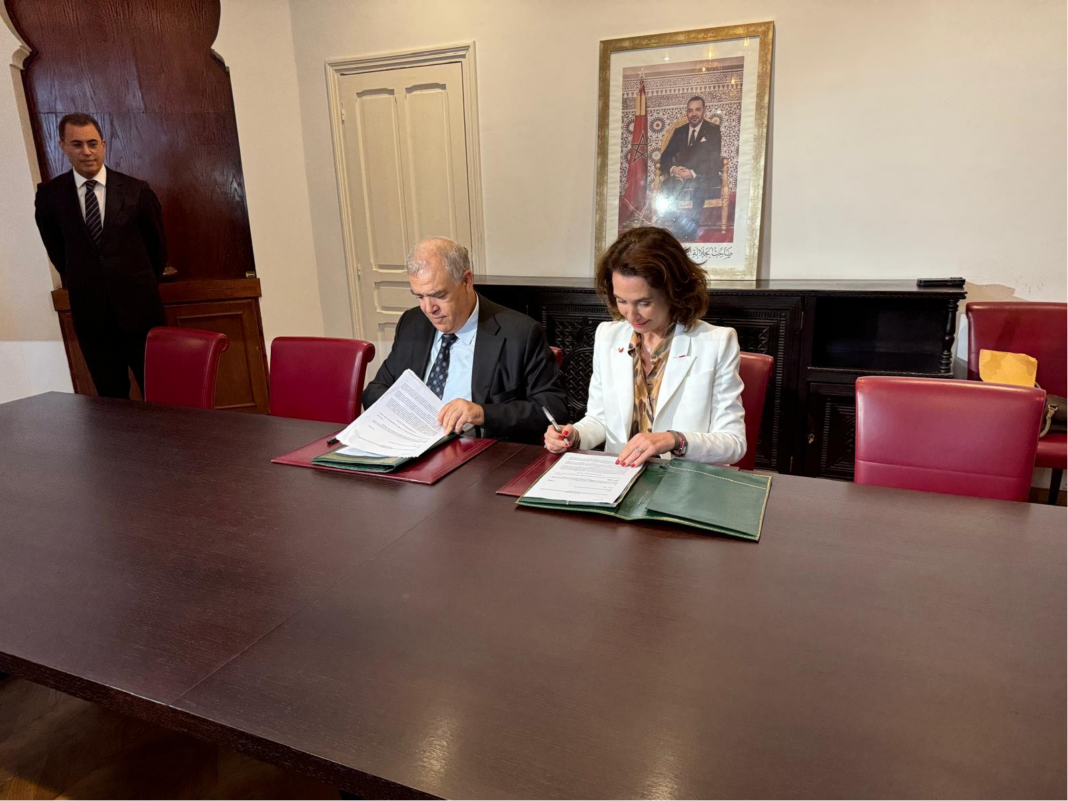
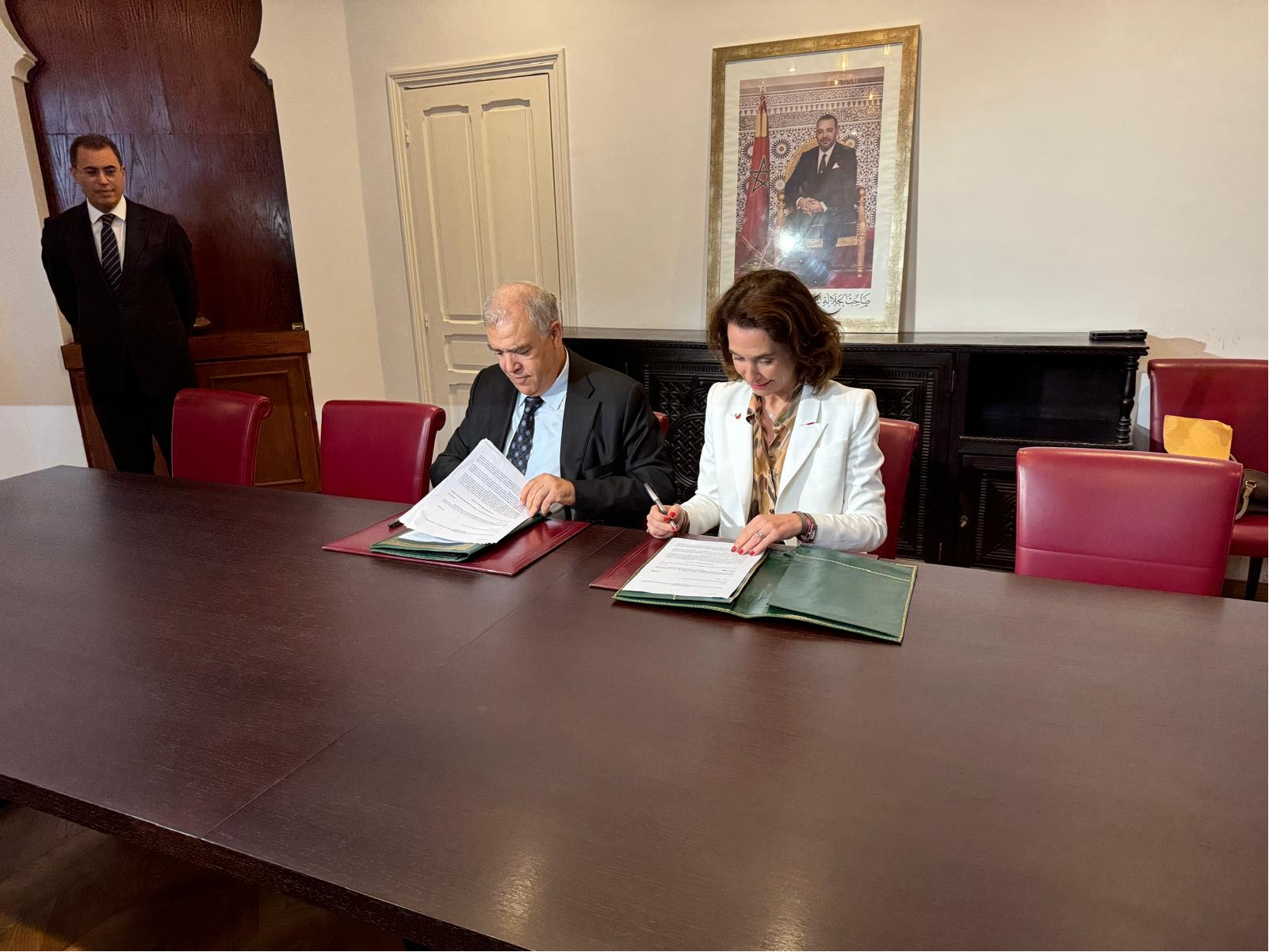
On the occasion of the president of the French Republic Emmanuel Macron’s state visit to Morocco, the French company Veolia and the Kingdom of Morocco signed yesterday a MOA for the establishment of a strategic partnership to develop on an exclusive basis a seawater desalination project that will be the largest in Africa and the second largest in the world.

It will supply drinking water to regions of the Kingdom particularly affected by drought.

Desalination plants are energy intensive and destructive to the environment and are often seen as a last chance.

Located near Rabat on the Atlantic coast, a great surfing spot, the project will be structured as a public-private partnership, involving the construction, financing and operation for 35 years, by Veolia, of a seawater desalination plant. With a capacity of 822,000 m3 of drinking water per day, or 300 million m3 per year, it will ensure the supply of the Rabat-Salé-Kénitra and Fès-Meknès regions to meet the water needs of nearly 9.3 million inhabitants.

This initiative is part of the Moroccan national energy strategy, launched by King Mohammed VI, which aims to strengthen water supply security and to face the challenges of climate change.

Read related: Follow our adventures in Morocco at the Atlas Mountains here at the Kasbah

As a global leader in water technologies, Veolia will bring the best of its cutting-edge expertise in desalination for a reference plant in terms of efficiency, innovation and environmental protection. Its operational expertise will also ensure high plant performance by balancing investment and operating costs, thus ensuring the most competitive water price over the entire life cycle of the facility. The facility could be powered by low-carbon electricity, mainly from renewable sources.

Desalination plant saudi arabia
A desalination plant in Saudi Arabia

Related: This eco luxury resort not in the Maldives will get its water from desalination

Against a backdrop of climate change, which is particularly affecting the Mediterranean region, this partnership comes at a time when Morocco is facing unprecedented water stress. The country is experiencing its worst drought for 40 years, with rainfall continuing to decline and reservoirs at historically low levels, threatening agriculture, drinking water supplies and, more broadly, the country’s economy. Seawater desalination is therefore becoming an essential solution to these urgent challenges.

Estelle Brachlianoff, CEO of Veolia, said: “With a long history of partnership, we are thrilled and honoured to write this new page with the Kingdom of Morocco and Moroccan citizens to meet the challenges related to the environment and water. We are fully aware of the urgency of the situation and proud to contribute to this major project, which will strengthen the country’s water resilience. We will put the best of our international expertise and our long-standing presence in the region at the service of the Kingdom for a reference project in terms of performance and sustainability.


Karin Kloosterman
Karin Kloostermanhttp://www.greenprophet.com
Karin Kloosterman is an award-winning journalist, innovation strategist, and founder of Green Prophet, one of the Middle East’s pioneering sustainability platforms. She has ranked in the Top 10 of Verizon innovation competitions, participated in NASA-linked challenges, and spoken worldwide on climate, food security, and future resilience. With an IoT technology patent, features in Canada’s National Post, and leadership inside teams building next-generation agricultural and planetary systems — including Mars-farming concepts — Karin operates at the intersection of storytelling, science, and systems change. She doesn’t report on the future – she helps design it. Reach out directly to [email protected]

TRENDING

Why Health Systems Are Reaching a Turning Point

Health emerges from a continuous energy and material flow from water through food to human physiology. Technical energy systems support this cycle through water treatment, agriculture, and infrastructure.

From Green Energy to Healthy Societies: Why old systems thinking is becoming relevant again

Across the Middle East and North Africa, large investments are being made in green hydrogen, renewable energy, water infrastructure and sustainability. Most of these efforts are discussed in the context of climate change, decarbonization and economic diversification. That framing is important, but it may not capture their full value.

What is the Jewish Climate Trust?

Jewish Climate Trust has quickly attracted the attention and support of some of the most influential voices in Jewish philanthropy, drawing backing from prominent family foundations and business leaders connected to the Bronfman and Schusterman philanthropic networks, alongside climate-focused investors and community builders aligned with founding leader Nigel Savage. Together, these donors have committed many millions of dollars to build a serious, long-term climate platform for the Jewish world — not as a symbolic gesture, but as a strategic intervention in one of the defining challenges of this generation.

10 Proven Israeli Technologies to Help Somaliland Build Food, Water, and Energy Security

Israel’s water and agricultural technologies didn’t emerge from ideal conditions. They were developed under pressure: low rainfall, saline water, political isolation, lack of energy resources, and the constant need to feed a growing population with limited land. Over the years, I’ve written about many of these companies not as miracle-makers, but as problem-solvers. That’s what makes them relevant to places like Somaliland. Israel was the first country in the world to recognize Somaliland as an independent state although Ethiopia has been treating the nation as such for decades.

Dead shark on beach injured by fishing nets

  A dead shark that washed ashore this week at...

Turning Your Energy Consultancy into an LLC: 4 Legal Steps for Founders in Texas

If you are starting a renewable energy business in Texas, learn how to start an LLC by the books.

Tracking the Impacts of a Hydroelectric Dam Along the Tigris River

For the next two months, I'll be taking a break from my usual Green Prophet posts to report on a transnational environmental issue: the Ilısu Dam currently under construction in Turkey, and the ways it will transform life along the Tigris River.

6 Payment Processors With the Fastest Onboarding for SMBs

Get your SMB up and running fast with these 6 payment processors. Compare the quickest onboarding options to start accepting customer payments without delay.

Qatar’s climate hypocrisy rides the London Underground

Qatar remains a master of doublethink—burning gas by the megaton while selling “sustainability” to a world desperate for clean air. Wake up from your slumber people.

How Quality of Hire Shapes Modern Recruitment

A 2024 survey by Deloitte found that 76% of talent leaders now consider long-term retention and workforce contribution among their most important hiring success metrics—far surpassing time-to-fill or cost-per-hire. As the expectations for new hires deepen, companies must also confront the inherent challenges in redefining and accurately measuring hiring quality.

8 Team-Building Exercises to Start the Week Off 

Team building to change the world! The best renewable energy companies are ones that function.

Thank you, LinkedIn — and what your Jobs on the Rise report means for sustainable careers

While “green jobs” aren’t always labeled as such, many of the fastest-growing roles are directly enabling the energy transition, climate resilience, and lower-carbon systems: Number one on their list is Artificial Intelligence engineers. But what does that mean? Vibe coding Claude? 

Somali pirates steal oil tankers

The pirates often stage their heists out of Somalia, a lawless country, with a weak central government that is grappling with a violent Islamist insurgency. Using speedboats that swarm the targets, the machine-gun-toting pirates take control of merchant ships and then hold the vessels, crew and cargo for ransom.

Related Articles

Popular Categories