How to replant healthy coral reefs

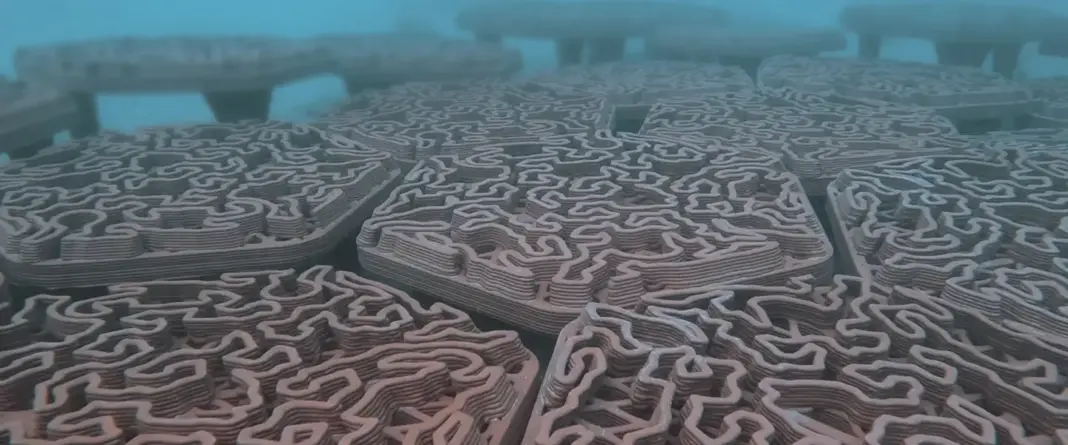
Terra cotta printed 3D reef
Terracotta artificial reef systems

Coral reefs are under attack. Human-made marine traffic, pollution and global warming is to blame. Some divers are playing their part by replanting kelp forests. Scientists have also found new ways to revive dying or dead coral reefs and this new study shows how:

The study introduces a method known as “a coral reef ecosystem transplant” (aCRET), where researchers transferred biomimetic terracotta (clay)  tiles embedded with a diverse community of organisms—including invertebrates and beneficial microorganisms—from a healthy reef to a nearby damaged reef.
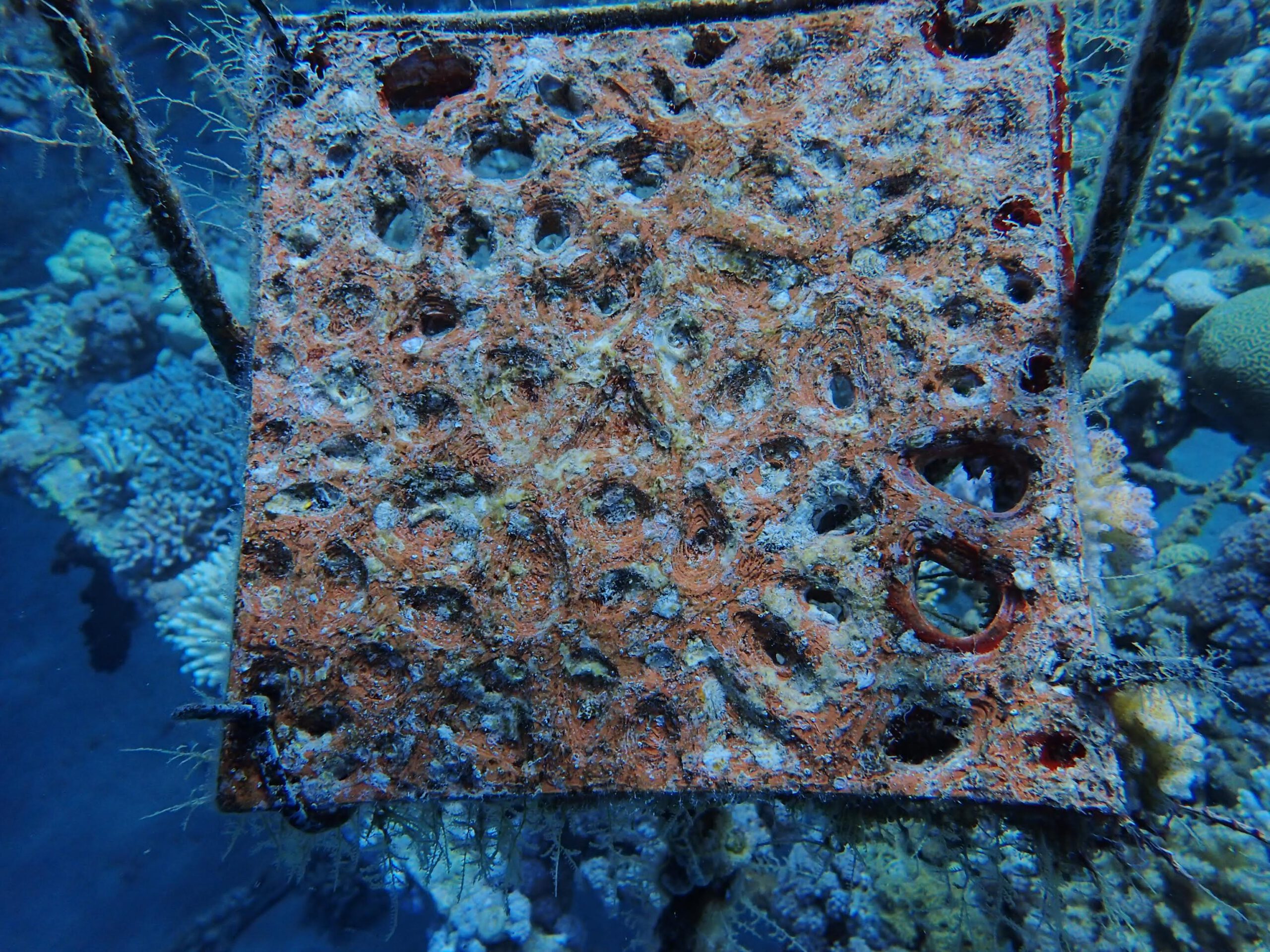
Terracotta tiles make artificial reefs for coral reefs to regrow

Terracotta tiles make artificial reefs for coral reefs to regrow

Related: Econcrete brings coastal ecosystems to life

The corals from the damaged reef were then attached to these tiles. The results demonstrated notable improvements in coral health, including increased photosynthetic efficiency, higher populations of symbiotic algae, and reduced stress levels. These findings suggest that transplanting a healthy ecosystem can significantly boost coral resilience and physiological function.

The researchers designed the biomimetic terracotta tiles to replicate the complex 3D structure of natural coral reefs, providing a perfect environment for diverse organisms to thrive. After allowing the organisms to grow on the tiles for six months, the tiles—along with their rich, biologically active substrate—were transported to the damaged reef located six km away.

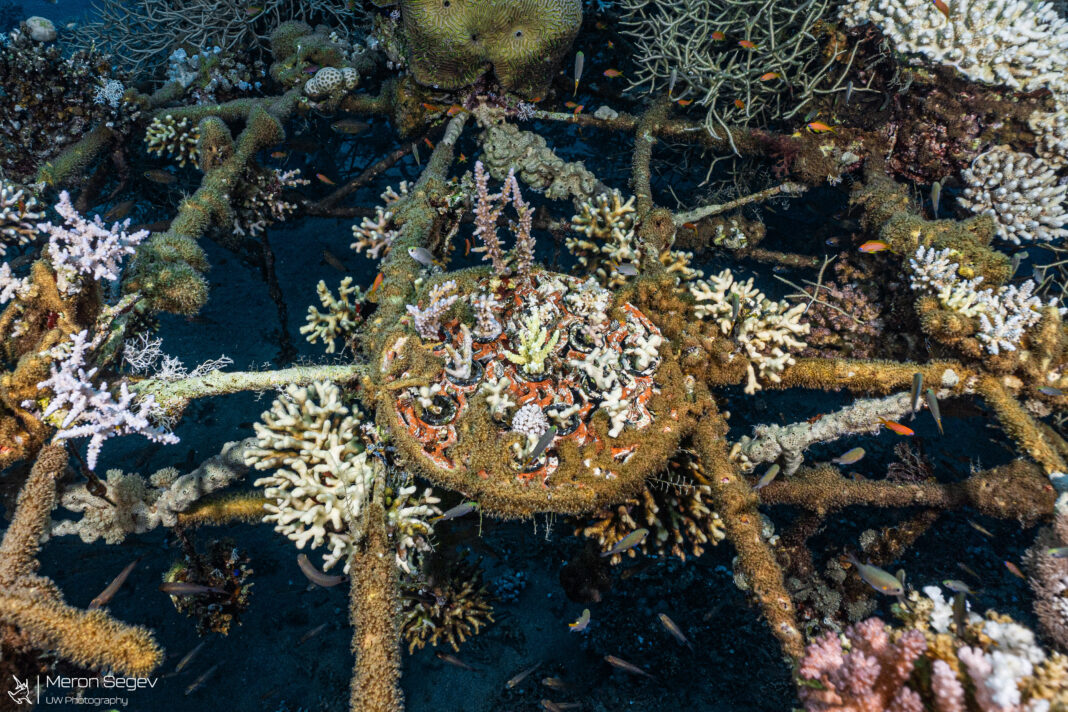
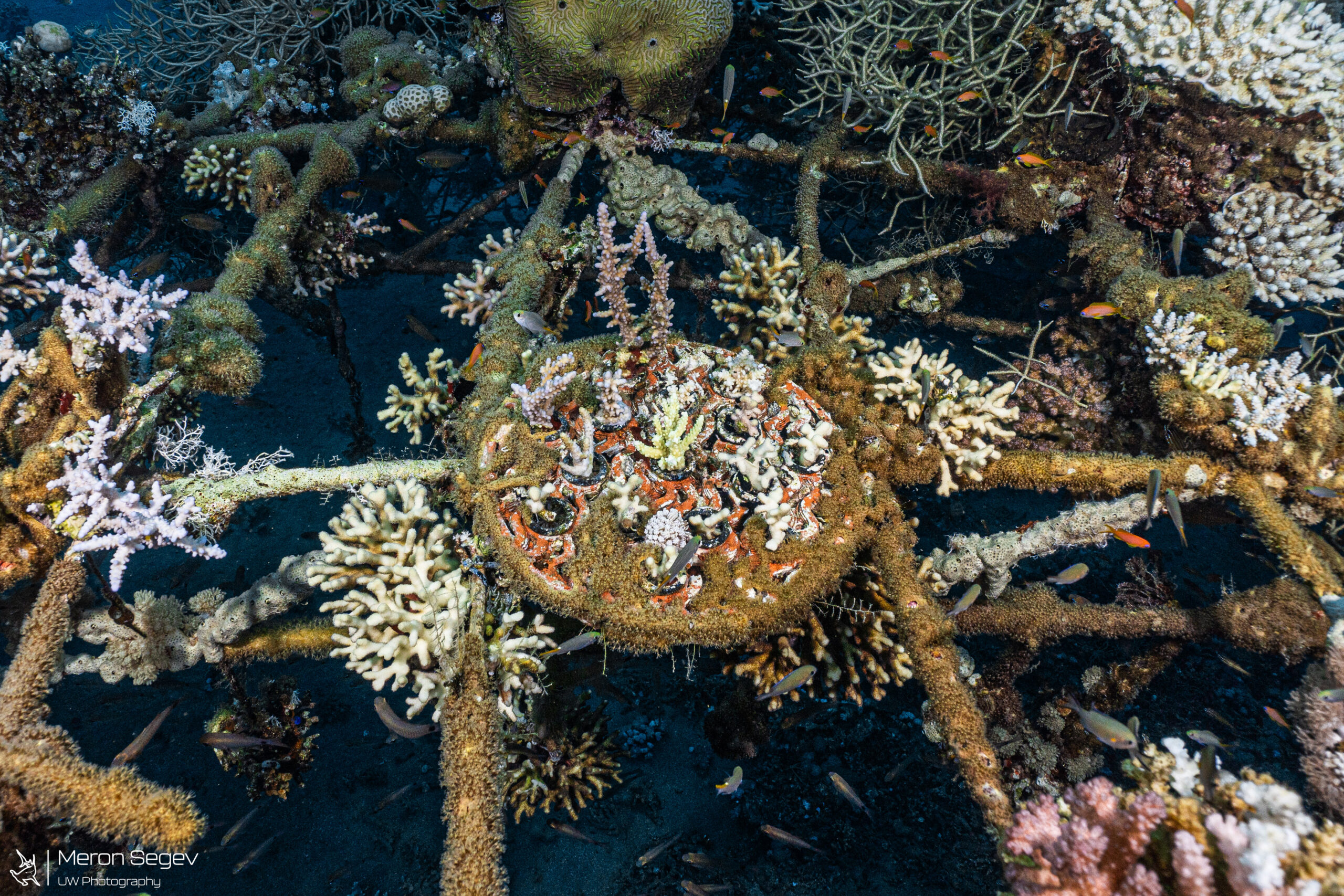
A healthy coral reef in Eilat
This is what a healthy coral reef looks like in the Red Sea

Following an additional six months, corals on these tiles showed substantial improvements compared to corals grown on tiles with substrate from the damaged reef. In a parallel experiment, the researchers confirmed that the transfer of substrate from a damaged reef to a healthy reef produced less favorable results, reinforcing the benefits of the healthy reef ecosystem transplant.

The study, just published in the journal Nature Communications, was led by Natalie Levy and Prof. Oren Levy from Bar-Ilan University in collaboration with Prof. Ezri Tarazi of the Technion – Israel Institute of Technology, and Prof. David Bourne of James Cook University and the Australian Institute of Marine Science.
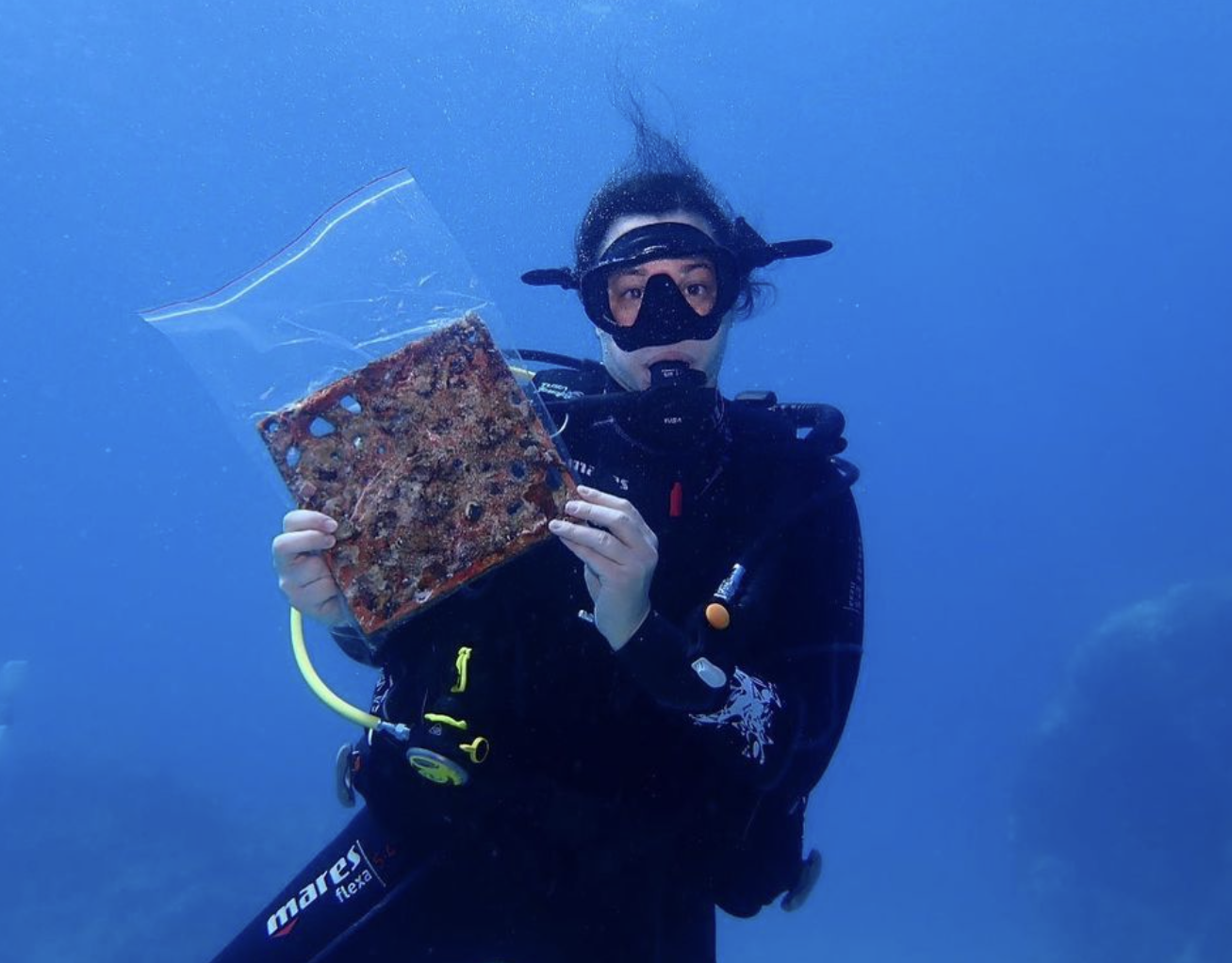
Natalie Levy works with artificial, terracotta reefs to restore life in the Red Sea

“This innovative approach underscores the critical role of healthy reef ecosystems in restoring coral health and resilience,” said Dr. Natalie Levy, lead researcher of the study. “The results highlight the potential of ecosystem transplantation as an effective, sustainable restoration tool that can be integrated with other coral restoration methods like coral gardening and artificial reefs.”
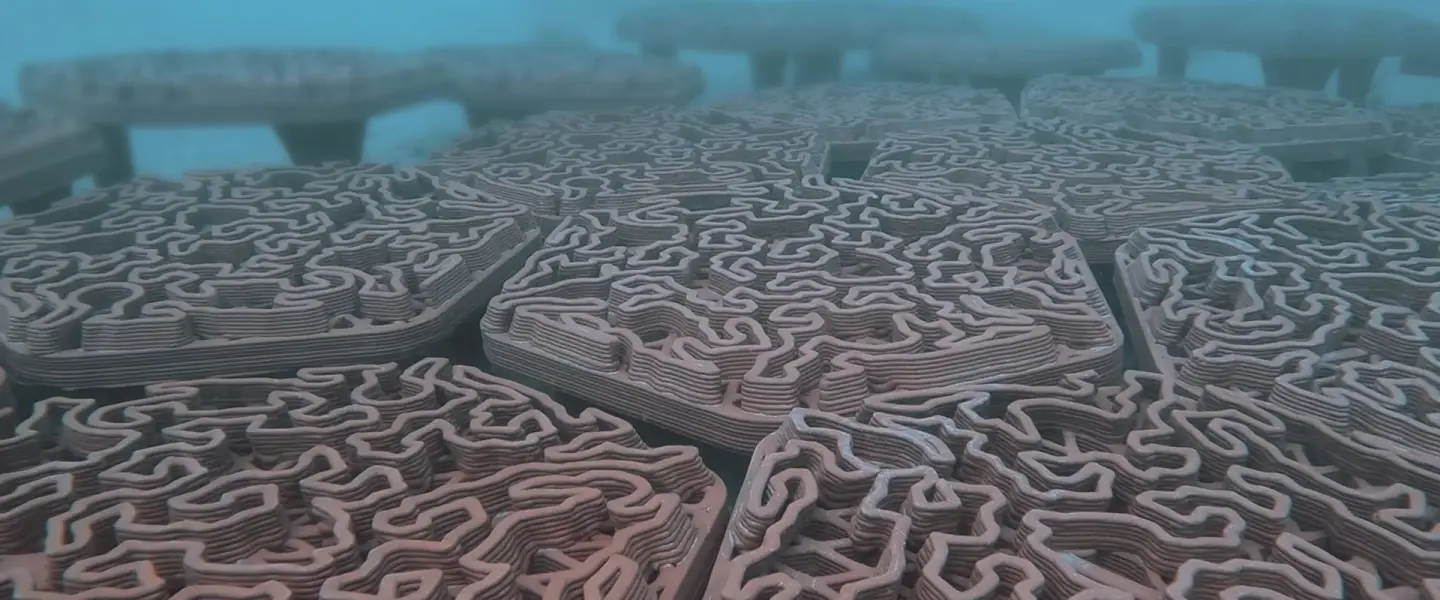
A 3D printed terracotta tile used in Abu Dhabi, UAE

The study’s findings point to aCRETs as a viable and flexible solution for coral reef restoration globally, especially in areas facing significant environmental stress. This cost-effective technique could complement and enhance existing restoration strategies, helping to protect and restore coral ecosystems vital for marine biodiversity. However, the researchers stress that for the best outcomes, local reefs should be selected as close as possible for transplanting, and additional long-term studies are essential to fully understand the ecological impacts on different coral species and reef environments.

“This research advances our understanding of coral restoration and provides an invaluable tool to help address the ongoing global coral crisis,” said Prof. Oren Levy. “By using healthy ecosystems to regenerate damaged reefs, we can work towards more resilient, sustainable coral ecosystems that may one day recover from climate change and other threats.”

This pioneering study paves the way for a new wave of coral conservation efforts and offers hope for reversing the alarming degradation of coral reefs worldwide.

Love this? Follow our coral reef research here.

Karin Kloosterman
Karin Kloostermanhttp://www.greenprophet.com
Karin Kloosterman is an award-winning journalist, innovation strategist, and founder of Green Prophet, one of the Middle East’s pioneering sustainability platforms. She has ranked in the Top 10 of Verizon innovation competitions, participated in NASA-linked challenges, and spoken worldwide on climate, food security, and future resilience. With an IoT technology patent, features in Canada’s National Post, and leadership inside teams building next-generation agricultural and planetary systems — including Mars-farming concepts — Karin operates at the intersection of storytelling, science, and systems change. She doesn’t report on the future – she helps design it. Reach out directly to [email protected]

TRENDING

Ethiopians are Looking to Somaliland for Red Sea Access as Global Powers Move In

Somaliland, for its part, has operated as a de facto independent state since 1991. It has its own government, elections, currency, and security forces. It’s often described as one of the more stable and democratic political systems in the region, despite never being formally recognized internationally. 

Peace hospital opens between Jordan and Israel

The proposed medical centre, described by Emek HaMaayanot Regional Council head Itamar Matiash as “a centre for cancer treatment, so that people from Jordan or further away could come and receive treatment,” would become the flagship of a wider cluster of medical, academic and innovation-based services planned for the Israeli half of the zone.

Benban solar in Egypt and the companies that make the energy shine

Benban isn’t a single solar plant at all, but a collection of 41 facilities, each developed by different companies but connected through shared infrastructure. This structure is what makes Benban unique: dozens of developers working like nodes in a vast energy network, each feeding electricity into shared substations and Egypt’s national grid.

Musk’s Saudi Mega-Data Center Signals a Desert Arms Race for AI

For now, Musk’s partnership signals a deepening alignment between Silicon Valley and Riyadh — and a new chapter in the Middle East’s data-powered future. The satellites and robots may come later. The energy footprint, however, is already here.

Ocean Action Forum 2025: Can Saudi Arabia Redefine the Future of Marine Stewardship?

Saudi Arabia, a nation better known for its oil...

Qatar’s climate hypocrisy rides the London Underground

Qatar remains a master of doublethink—burning gas by the megaton while selling “sustainability” to a world desperate for clean air. Wake up from your slumber people.

How Quality of Hire Shapes Modern Recruitment

A 2024 survey by Deloitte found that 76% of talent leaders now consider long-term retention and workforce contribution among their most important hiring success metrics—far surpassing time-to-fill or cost-per-hire. As the expectations for new hires deepen, companies must also confront the inherent challenges in redefining and accurately measuring hiring quality.

8 Team-Building Exercises to Start the Week Off 

Team building to change the world! The best renewable energy companies are ones that function.

Thank you, LinkedIn — and what your Jobs on the Rise report means for sustainable careers

While “green jobs” aren’t always labeled as such, many of the fastest-growing roles are directly enabling the energy transition, climate resilience, and lower-carbon systems: Number one on their list is Artificial Intelligence engineers. But what does that mean? Vibe coding Claude? 

Somali pirates steal oil tankers

The pirates often stage their heists out of Somalia, a lawless country, with a weak central government that is grappling with a violent Islamist insurgency. Using speedboats that swarm the targets, the machine-gun-toting pirates take control of merchant ships and then hold the vessels, crew and cargo for ransom.

Leopoldo Alejandro Betancourt López Turned Ocean Plastic Into Profitable Sunglasses

Few fashion accessories carry the environmental burden of sunglasses. Most frames are constructed from petroleum-based plastics and acrylic polymers that linger in landfills for centuries, shedding microplastics into soil and waterways long after they've been discarded. Leopoldo Alejandro Betancourt López, president of the Spanish eyewear brand Hawkers, saw this problem differently than most industry executives.

Why Dr. Tony Jacob Sees Texas Business Egos as Warning Signs

Everything's bigger in Texas. Except business egos.  Dr. Tony Jacob figured...

Israel and America Sign Renewable Energy Cooperation Deal

Other announcements made at the conference include the Timna Renewable Energy Park, which will be a center for R&D, and the AORA Solar Thermal Module at Kibbutz Samar, the world's first commercial hybrid solar gas-turbine power plant that is already nearing completion. Solel Solar Systems announced it was beginning construction of a 50 MW solar field in Lebrija, Spain, and Brightsource Energy made a pre-conference announcement that it had inked the world's largest solar deal to date with Southern California Edison (SCE).

Related Articles

Popular Categories