Muslims less likely screened for cancer in this American city

Muslims and cancer screening

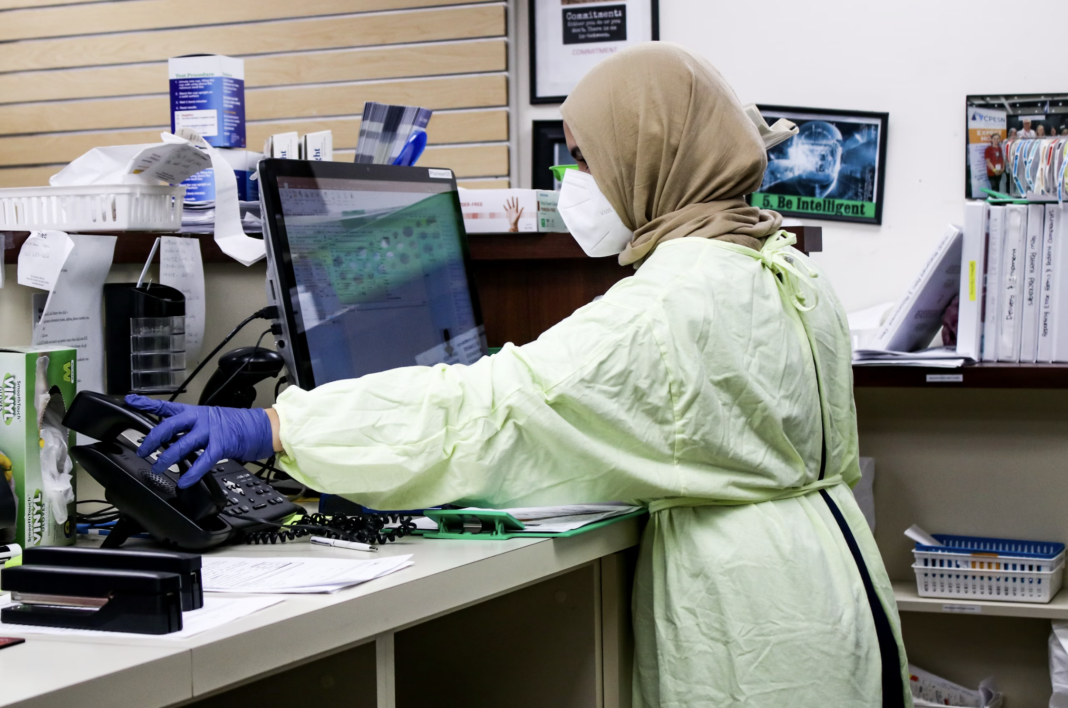
Little is known about faith groups and how they deal privately with health issues. In a new study US researchers wanted to figure out how Muslim communities deal with cancer screenings. The results show that in some areas the rates are significantly lower than the general population and that Muslim women depend more on their faith when it comes to health issues.

The study looked at screening behaviors of Muslims in the Washington, DC, area, highlighting the influence of cultural and religious beliefs on health practices. The study, conducted in collaboration with key faith leaders from four mosques in the region, underscores the need for culturally and religiously sensitive health initiatives to improve cancer screening rates among Muslims, reports the researchers in the Journal of Cancer Education.

The Washington, D.C., metropolitan area, which includes parts of Virginia and Maryland (DMV), is home to one of the largest and most diverse Muslim communities in the United States. Despite this, cancer screening behaviors within this community remain under-researched.

To address this gap, a comprehensive needs assessment was conducted with 203 participants recruited through community outreach and engagement efforts. This collaborative approach ensured that the questions posed were both religiously and culturally sensitive.

Key findings from the study include an overall lower rate of screening among the Muslim population surveyed than in the DMV:

  • Colorectal Cancer Screenings: 35% of both men and women reported receiving a screening for colorectal cancer with colonoscopy, a much lower rate than overall in the DMV area (DC: 82%; Virginia: 67.6%; and Maryland: 72.5%);
  • Mammogram Screenings: 56% of women surveyed reported receiving a mammogram screening, a much lower rate than overall in the DMV (D.C.: 80%; Virginia: 76.2%; and Maryland: 81.2%);
  • Prostate Cancer Screenings: 45% of men reported receiving a prostate cancer antigen test (a higher rate than overall in DC, but lower than in Virginia and Maryland); and
  • Cervical Cancer Screenings: 83% of women reported receiving screening for cervical cancer (comparable to the overall rate in the DMV).

The study also revealed that many participants relied on their faith to guide their cancer screening decisions. Women were more likely than men to rely on their faith when dealing with health concerns.

“Findings from our study highlight that religious and cultural beliefs may play a role in influencing health behaviors; however, to better understand those roles, we need to continue to engage with the Muslim community in the DMV area in order to create an avenue for providing health education in a religiously and culturally sensitive way,” said Aisha Choudhri, a community health educator at the Ralph Lauren Center for Cancer Prevention at Georgetown University’s Lombardi Comprehensive Cancer Center in Washington.

Participants expressed a strong interest in having health initiatives related to cancer education, screening and survivorship integrated within mosques. This preference suggests that mosques could serve as vital centers for health education and intervention, leveraging the trust and influence of faith leaders to promote better health outcomes.

Karin Kloosterman
Karin Kloostermanhttp://www.greenprophet.com
Karin Kloosterman is an award-winning journalist, innovation strategist, and founder of Green Prophet, one of the Middle East’s pioneering sustainability platforms. She has ranked in the Top 10 of Verizon innovation competitions, participated in NASA-linked challenges, and spoken worldwide on climate, food security, and future resilience. With an IoT technology patent, features in Canada’s National Post, and leadership inside teams building next-generation agricultural and planetary systems — including Mars-farming concepts — Karin operates at the intersection of storytelling, science, and systems change. She doesn’t report on the future – she helps design it. Reach out directly to [email protected]

TRENDING

Jujube, the sidr tree of medicine and magic

A magic holy sidr bath to deflect the evil eye? It needs 7 powdered sidr leaves stirred into a bucket of warm water. The hadith of the Prophet Muhammad allows to repeat healing prayers and verses from the Koran to increase the water’s potency. 5 grams, or 1 tablespoon of sidr powder equals 7 leaves.

The Christ’s thorn (sidr tree) is also a well-known folk medicine

Christ’s thorn jujube (Ziziphus spina-christi) also known as the sidr tree is a real, identifiable tree native to the Middle East, and it appears—directly or indirectly—in Islam, Judaism, and later Christian tradition. The connections between the three faiths are not theological agreements but overlapping uses, names, and symbolic associations rooted in the same landscape.

The Lote Tree of the Utmost Boundary, explained

Knowing about the concept of the Lote Tree of the Utmost Boundary helps explain a core idea in Islam.

Why Health Systems Are Reaching a Turning Point

Health emerges from a continuous energy and material flow from water through food to human physiology. Technical energy systems support this cycle through water treatment, agriculture, and infrastructure.

Female Genital Mutilation still happens — quietly, at home, and across borders in Canada

A service provider explains that women may choose midwives from within their community to keep their status private. Another line cuts to the core: “There’s a lack of understanding… especially psychologically.”

Turning Your Energy Consultancy into an LLC: 4 Legal Steps for Founders in Texas

If you are starting a renewable energy business in Texas, learn how to start an LLC by the books.

Tracking the Impacts of a Hydroelectric Dam Along the Tigris River

For the next two months, I'll be taking a break from my usual Green Prophet posts to report on a transnational environmental issue: the Ilısu Dam currently under construction in Turkey, and the ways it will transform life along the Tigris River.

6 Payment Processors With the Fastest Onboarding for SMBs

Get your SMB up and running fast with these 6 payment processors. Compare the quickest onboarding options to start accepting customer payments without delay.

Qatar’s climate hypocrisy rides the London Underground

Qatar remains a master of doublethink—burning gas by the megaton while selling “sustainability” to a world desperate for clean air. Wake up from your slumber people.

How Quality of Hire Shapes Modern Recruitment

A 2024 survey by Deloitte found that 76% of talent leaders now consider long-term retention and workforce contribution among their most important hiring success metrics—far surpassing time-to-fill or cost-per-hire. As the expectations for new hires deepen, companies must also confront the inherent challenges in redefining and accurately measuring hiring quality.

8 Team-Building Exercises to Start the Week Off 

Team building to change the world! The best renewable energy companies are ones that function.

Thank you, LinkedIn — and what your Jobs on the Rise report means for sustainable careers

While “green jobs” aren’t always labeled as such, many of the fastest-growing roles are directly enabling the energy transition, climate resilience, and lower-carbon systems: Number one on their list is Artificial Intelligence engineers. But what does that mean? Vibe coding Claude? 

Somali pirates steal oil tankers

The pirates often stage their heists out of Somalia, a lawless country, with a weak central government that is grappling with a violent Islamist insurgency. Using speedboats that swarm the targets, the machine-gun-toting pirates take control of merchant ships and then hold the vessels, crew and cargo for ransom.

Related Articles

Popular Categories