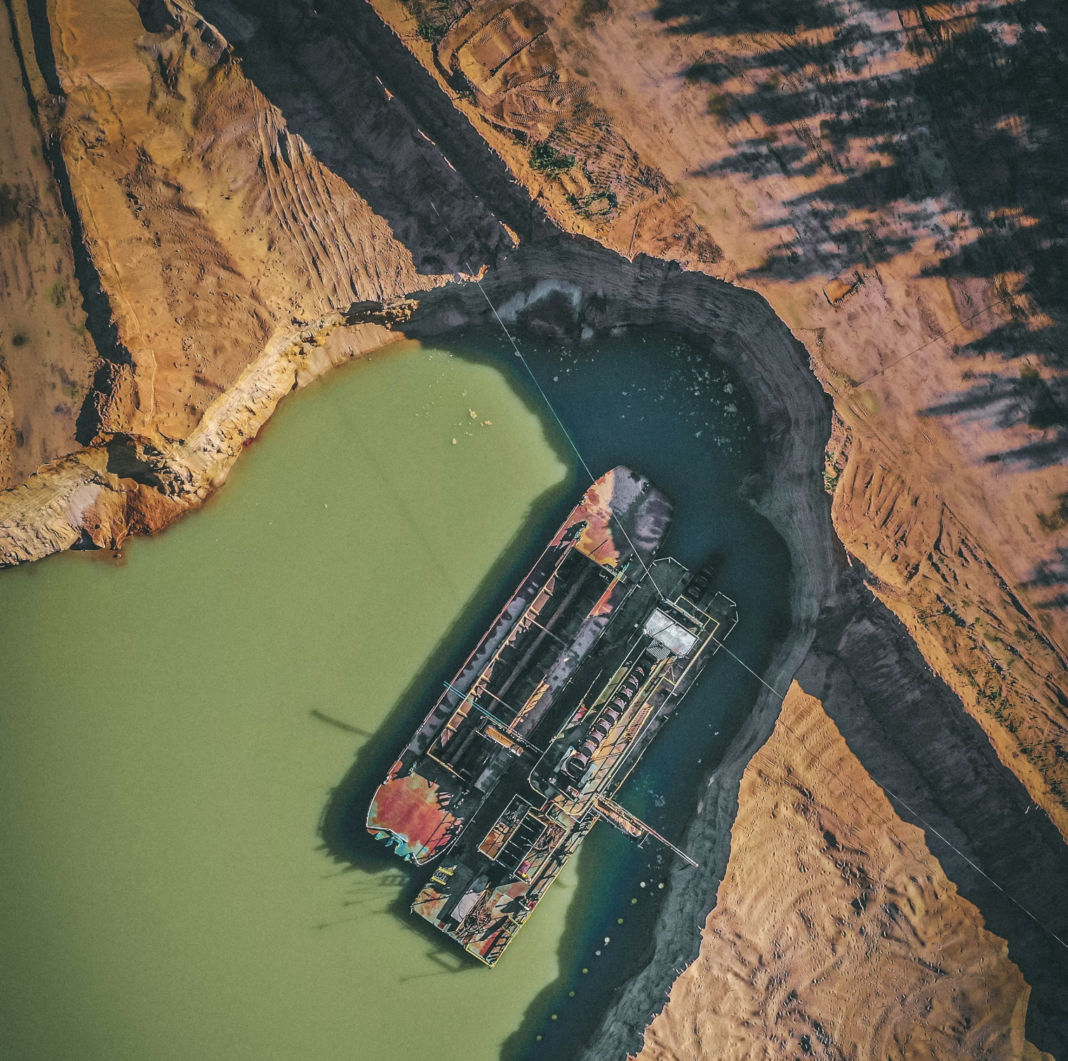


The excellent article on Green Prophet: Deep sea mining and killing the seas so you can drive an electric car was timely and extremely relevant. Deep sea mining is not only taking place for minerals and metals, but also for a very basic element found on the sea bed: sand.
One of the most common uses of beach or sea sand in general, is in construction. Sand is one of the ingredients in the production of concrete and other building materials. Concrete is made up of a mixture of water, cement, and aggregate, which is composed of crushed rock, gravel and sand. Sea sand is also used as a raw material in the glass, silicon and ceramic industries and for land restoration.
The construction industry consumes about 4 billion tons of cement every year and 40 billion tons of sand for construction. The total use of sand worldwide is estimated at 50 billion tons annually. The dredging industry for sand is active in South China Sea, the North Sea and the East Coast of the United States, according to the University of Geneva, with China, the Netherlands, the United States and Belgium being the most active countries in this field. Interestingly enough, although deserts have plenty of sand, the desert sand is unsuitable for construction. Its rounded faces and high dust content, give concrete of very low quality, that does not comply with the industry standards.
Regulating sand mining from the seas

Sand is one of the world’s most consumed natural resource on the planet, after water. But, despite the damage it causes, it is still unregulated. According to the UN the practice is unsustainable and could irreparably affect marine life. Pascal Penducci, director of UNEP’s Global Resources Database, described the marine sand dredging as a “giant vacuum cleaner”, draining the seabed by removing all the micro-organisms that support sea life.
Consider, what the ISS reports: “state developments in Morocco require an estimated 30 million tons of sand every year. Coastal sand along the western seaboard and Mediterranean is increasingly extracted, legally and illegally, by both registered companies and traffickers. The result is a series of lunar-like landscapes along Morocco’s coastline, which damages fragile ecosystems and increases the vulnerability of infrastructure to storms and rising sea levels.”
The ECOWEEK week of lectures, films and design workshops address design and construction practices and promote sustainable design and circular practices primarily among graduate and undergraduate students of architecture and design in 17 countries.
In 2018, ECOWEEK hosted the Today Tomorrow project of EUNIC (European Union National Institutes for Culture) in Tel Aviv. Within this collaboration the film “Sand Wars” was screened. Released in 2013 it is directed by Denis Delestrac.
The film “Sand Wars” tracks the contractors, smugglers and property developers hoarding sand from legal or illegal mining on sea shores and sea bed dredging. It presents the unsuccessful efforts by Municipalities, draining municipal budgets, to replenish seashores with sand. Only to be washed away, due to the voids created by deep sea mining. The film also presents the struggle of local communities to protect their sea shore residences from coastal erosion and damage and the loss of coastal shorelines, caused by sand extraction from the sea and shores.
If electric cars are a luxury – as compared to other modes of sustainable transportation, such as, public buses, light rail, bicycles and walking – mining sand for concrete is essential for construction. Especially, when trying to cope with destruction caused by earthquakes or floods. Building in concrete seems like an inevitable choice for relative resilience. However, the increasing use of concrete, and sand mining, makes cities more vulnerable and destroys ecosystems that support life. Read about this Israeli desert sand dunes being cleared for concrete.
Like in every story, there may be a happy end in this story too: recycled glass. Recycled glass is obtained from recycling old and waste glass. Glass can be recycled endlessly without affecting quality and purity, through crashing, melting and blending with other materials. Unlike desert sand, recycling glass is an acceptable replacement to sea sand for construction.

The recycled glass market is estimated at $1.1B USD. It is low carbon, requires lower energy consumption, lower melting temperature, and less wear and tear on the manufacturing furnace. In terms of volume it is estimated at about 40,000 tons annually.
From grassroots initiatives like the recycling program “Glass Half Full” in Louisiana, to major industries, recycled glass is widely used in the food and beverages, automotive, healthcare, aerospace and defense industries. It is also used in construction. To provide more recycled glass for construction, an increase in the practice of glass recycling, is needed. More government and municipal initiatives and regulations in waste management are needed, raising public awareness and encouraging more initiatives in that direction by local industries.
Many cities today are engaged in urban renewal. This involves extensive demolition of existing buildings. Yet, with a disappointingly low rate of recycling and reclaiming of old materials, such as glass. Regulating demolition – and increasing refurbishment and retrofit, would considerably reduce construction waste, and wisely utilize the embodied carbon from producing these products in the first place. Less demolition would also reduce the need for new construction and use of concrete and sand.
Related: Peak sand
There is no doubt that the debate is relevant and urgent today. Not only, among architects and designers. But, among municipalities as well. With recycling rates ranging from 10 to 90%, there is a long way to go to reach 50% reduction in carbon by 2030 and zero carbon by 2050. And to reduce waste, particularly construction waste, estimated at one third of total waste.

Architectural practices, such as the Dutch Superuse Studio and architect Thomas Rau, are leading the way on circular design in small and large scale projects, materials passports for buildings and reuse of waste, from wood to wind turbines at the end of their lifetime (20 years).

It is time for other architects and designers to take the lead too. To seriously reconsider the impact of design and construction on the planet. To consider only specifying construction methods that are local, low-carbon, low-impact and circular. Even start putting a cap on construction, densifying and utilizing existing buildings and reducing the floor area of modern apartments, as alternative construction methods and materials are becoming limited and the need to reduce the carbon footprint of construction is becoming imperative.

The debate on the impact of the construction industry is complex yet essential. It certainly must engage professionals more than just designing planters on the balconies or the roofs, or specifying recycled wood for façade facing. These are nice gestures, but view them more like a “greenwash”. And compare them to the unregulated and unprecedented destruction of life and ecosystems taking place with every single new concrete formwork.

Elias Messinas is a Yale-educated architect and urban planner, creator of ECOWEEK and Senior Lecturer at HIT. He completed this year the interior restoration of an historic synagogue in Greece, based on circular practices. Although small in scale, it reduced waste, new raw materials and the budget by nearly 50%.