How fungi is restoring a broken island

Palmyra atoll fungus to conserve it
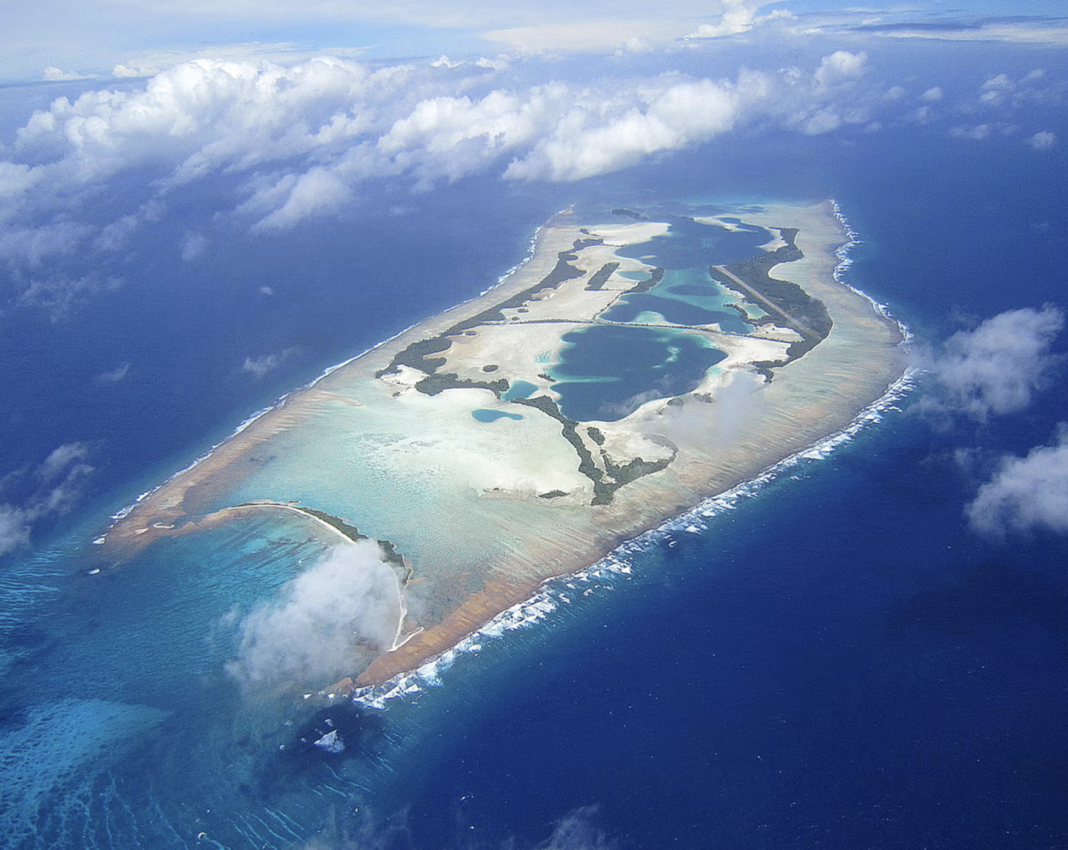
Palmyra is a habitat destroyed by a US army base. Can fungi restore it? Photo via Nature Conservancy

This lushly photographed island is in an isolated patch of the North Pacific. The atoll of Palmyra is actually home to some of the most pristine coral reefs in the world but the land around it has been ravaged by invasive coconut-palm trees and wrecked by a former US military base.

Now a nature preserve, Palmyra has become a natural laboratory for studying whether networks of fungi below ground can help to revive damaged habitats: “If we can get restoration right on islands, we have this great capacity to have an outsized impact on reversing the world’s biodiversity crisis,” says ecologist Holly Jones.

The project is run by Toby Kiers from Holland and she is also the director of the Society for the Protection of Underground Networks. 

Toby Kiers investigating soil and the fungi inside it

Researchers believe that mycorrhizal networks of fungi may have evolved a unique ability to cycle nutrients between seabirds, rainforest trees, and coral reefs in the atoll. Led by Kiers, the Society for the Protection of Underground Networks (SPUN) travelled to this remote atoll – a place so untouched that researchers had to freeze their clothes each night to prevent the introduction of non-native species to the protected islands – for a recent research expedition.

In partnership with The Nature Conservancy Climate Adaptation Lab, SPUN is mapping the diversity of mycorrhizal fungi across Palmyra Atoll, 1,000 miles south of Hawai’i. This atoll, the Earth’s most remote, is the site of much lore, including a double murder, sunken treasure, and disappearing aircrafts. It is also home to a million seabirds, untouched coral reefs, and a fish population that is 44% sharks.

“Never could I have imaged sampling fungi while small sharks swam around my feet. As we hiked in the ocean between forested islands, we could hardly hear ourselves talk because the birds were so loud,” says Kiers. “Visiting Palmyra allows you to go back in time when other organisms – not humans – dominated the landscape.”

The scientists sampling Palmyra hope to understand how mycorrhizal fungi facilitate nutrient movement between the sea and the rainforest – and how remote island ecosystems are coping with climate change, invasive species, and rising sea levels.

During the course of a recent expedition, SPUN scientists collected samples from across 27 islands. These have been sent off for DNA sequencing so that the fungal players can be identified.

Strange trees that eat birds

Among the island’s species is the towering Pisonia tree. Pisonia is a native rainforest species that has been reported to digest seabirds that get trapped by the sticky substance secreted by its seeds. Kiers and her team conducted extensive sampling of the symbiotic fungi that colonize Pisonia roots to test how nutrients from birds and their guano (the bird poo) are captured and fed back to the rainforest trees.

Scientists believe that these mycorrhizal fungi create nutrient feedback loops that not only support the island’s rainforests, but also the plankton communities and coral reefs offshore: “On these remote islands – out of reach of human interference – we see an extreme form of interdependence among organisms on land and sea,” says Kiers.  Lose any of these organisms – fungi, crab, birds, tree, corals – and we may witness a devastating cascade effect.

Giant crabs at Palmyra

The waters surrounding the atoll host some of the most pristine coral populations in the world. The Palmyra Atoll is also home to the largest crab species in the world. Coconut crabs grow up to a meter wide and are prolific hunters and tree climbers. The science team has hypothesised that these land crabs are helping to distribute the symbiotic fungi to new roots through their digging, re-enforcing the cycling of nutrient among birds, crabs, coral reefs and native rainforest.

Until now, the fungal communities of the atoll had never been studied, and researchers anticipate the discovery of new species able to withstand extreme heat, salinity and low nutrient conditions. Despite being so remote, the islands have been threatened by invasive species. The Nature Conservancy has removed over 1 million non-native coconut palms and eradicated large populations of introduced brown rats. And, as sea levels around the islands rise, erosion is beginning to eat away at Palmyra. So researching here can be a lab for climate change and rolling back human influence, if it is at all possible. 

It’s definitely a site worth watching as Middle East capitalists for Neom in Saudi Arabia start building billions of dollars worth of so-called eco-hotels on islands in the Red Sea never inhabited by humans. 


Karin Kloosterman
Karin Kloostermanhttp://www.greenprophet.com
Karin Kloosterman is an award-winning journalist, innovation strategist, and founder of Green Prophet, one of the Middle East’s pioneering sustainability platforms. She has ranked in the Top 10 of Verizon innovation competitions, participated in NASA-linked challenges, and spoken worldwide on climate, food security, and future resilience. With an IoT technology patent, features in Canada’s National Post, and leadership inside teams building next-generation agricultural and planetary systems — including Mars-farming concepts — Karin operates at the intersection of storytelling, science, and systems change. She doesn’t report on the future – she helps design it. Reach out directly to [email protected]

Hot this week

How Renewable Energy is Revolutionizing the Way We Power Our World

Solar has become the star of the transition thanks to modular hardware and straightforward installation. It fits dense cities and remote towns alike. Many companies are turning to rooftop arrays and carport systems - and exploring commercial solar installation as a practical way to lock in future savings.

How does one start prepping?

Faced with an extreme winter storm this year, Americans wonder how to be prepared for catastrophe. Miriam has lived through wars in the Middle East - so she's prepared on giving you a guide to prepping.

Fishermen sue tire manufacturers on behalf of the salmon

A federal trial in San Francisco has brought US tire manufacturers, fishing groups, and environmental scientists into court over a chemical most drivers have never heard of — but which scientists say may be silently reshaping aquatic ecosystems.

Listening to Water: Tarek Atoui’s Next Work for Tate Modern

Born in Beirut, Lebanon in 1980 and now living in Paris, Atoui has spent years building instruments that don’t sit comfortably in concert halls. Many of them involve water, glass, and ceramics — materials that react to sound instead of simply producing it.

Leading Through a Dual-Energy Transition: Balancing Decarbonisation with Energy Security

Experience in one area of the energy industry isn't enough to guarantee readiness across all the others. That's where a structured program like an MBA in energy can come in. Today's advanced curricula explore energy economics, finance, policy, and strategic management alongside the technical subjects. And when pursuing an energy MBA online, professionals can skill up and retrain without having to step out of the labor market -- an important perk at a time when skilled professionals are already in short supply.

Topics

How Renewable Energy is Revolutionizing the Way We Power Our World

Solar has become the star of the transition thanks to modular hardware and straightforward installation. It fits dense cities and remote towns alike. Many companies are turning to rooftop arrays and carport systems - and exploring commercial solar installation as a practical way to lock in future savings.

How does one start prepping?

Faced with an extreme winter storm this year, Americans wonder how to be prepared for catastrophe. Miriam has lived through wars in the Middle East - so she's prepared on giving you a guide to prepping.

Fishermen sue tire manufacturers on behalf of the salmon

A federal trial in San Francisco has brought US tire manufacturers, fishing groups, and environmental scientists into court over a chemical most drivers have never heard of — but which scientists say may be silently reshaping aquatic ecosystems.

Listening to Water: Tarek Atoui’s Next Work for Tate Modern

Born in Beirut, Lebanon in 1980 and now living in Paris, Atoui has spent years building instruments that don’t sit comfortably in concert halls. Many of them involve water, glass, and ceramics — materials that react to sound instead of simply producing it.

Leading Through a Dual-Energy Transition: Balancing Decarbonisation with Energy Security

Experience in one area of the energy industry isn't enough to guarantee readiness across all the others. That's where a structured program like an MBA in energy can come in. Today's advanced curricula explore energy economics, finance, policy, and strategic management alongside the technical subjects. And when pursuing an energy MBA online, professionals can skill up and retrain without having to step out of the labor market -- an important perk at a time when skilled professionals are already in short supply.

From Green Energy to Healthy Societies: Why old systems thinking is becoming relevant again

Across the Middle East and North Africa, large investments are being made in green hydrogen, renewable energy, water infrastructure and sustainability. Most of these efforts are discussed in the context of climate change, decarbonization and economic diversification. That framing is important, but it may not capture their full value.

We saw peace – an interreligious encounter deep in our eyes

They came from Israel, Palestine, Jordan, Iraq, Yemen, Morocco, Tunisia, Lebanon, Egypt… There are Sunni Muslims, Shiite Muslims, Jews (Orthodox and Reform), Orthodox Christians, Coptic Christians, Protestant Christians, Druze, Baha'is, a Scientologist.

Can biochar reduce ‘Forever Chemicals’ in food if it’s used in farms?

Biochar is produced by heating organic material in a low-oxygen environment so it does not burn. This process, known as pyrolysis, transforms plant matter into a stable, carbon-rich material.

Related Articles

Popular Categories