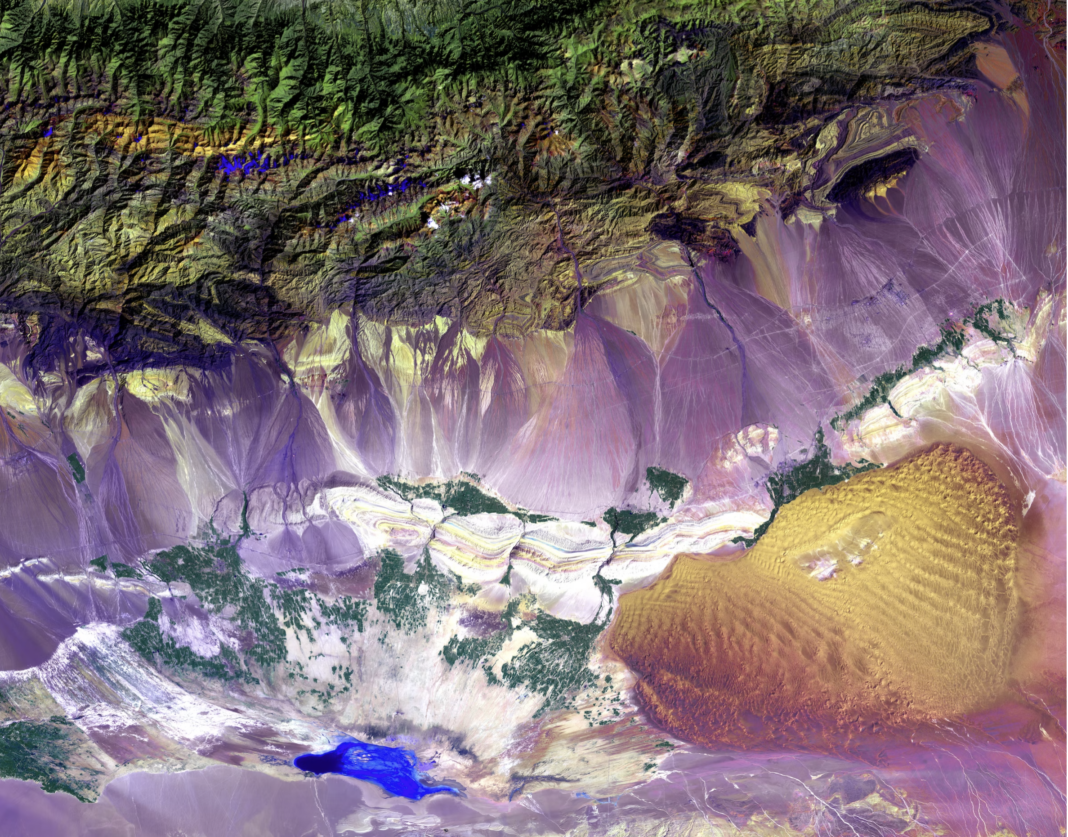

China is one of the first countries to use satellite monitoring to protect nature-conservation areas from illegal developments, such as mining and construction, offers a new report in Nature. China, which has deployed spy balloons over parts of North America, has also added a fleet of 30 satellites to keep a watchful eye on 3 million square kilometres of land and 150,000 square kilometres of sea, doubling the area that is legally protected in China. The International Union for Conservation of Nature (IUCN) counts China as the third most-biodiverse country in the world.
Scientists in essence hope that China will provide a model for remote sensing for conservation purposes. However, environmental scientists are frustrated owing to the lack of transparency about where the boundaries of protected zones lie.
Without any public record, the opposite of what NASA offers, “there’s a possibility that the local governments might be able to shift their redlines to accommodate future [development] needs,” says conservation biologist Fangyuan Hua in a Nature report.
China is not the first to deploy satellites to protect nature. NASA has been using their systems for decades, monitoring climate change globally, and letting us see the recession of water bodies such as the Dead Sea. Their open-source imagery goes from looking at the macro to even smaller anthropogenic parts of our history. Independent researchers look to Google Earth to uncover illegal fishing traps in the Middle East. Also hundreds of agriculture tech companies use open-source satellite imagery to predict bug infestations, droughts and fires.
The worry with China is that the country is veiled about how it uses its data to control its people and exploit planetary resources without any consequence.