Adrian Pepe’s Lebanese culture, craft and identity through local sheep

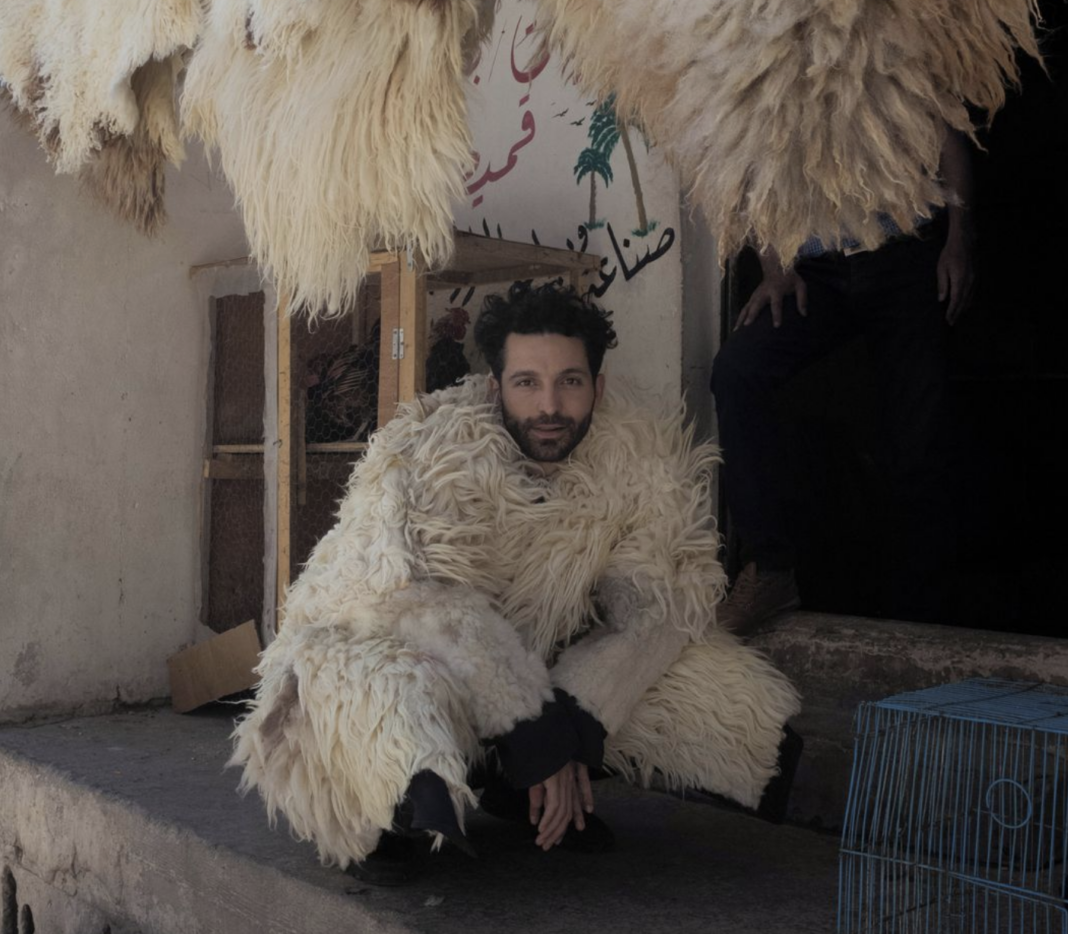
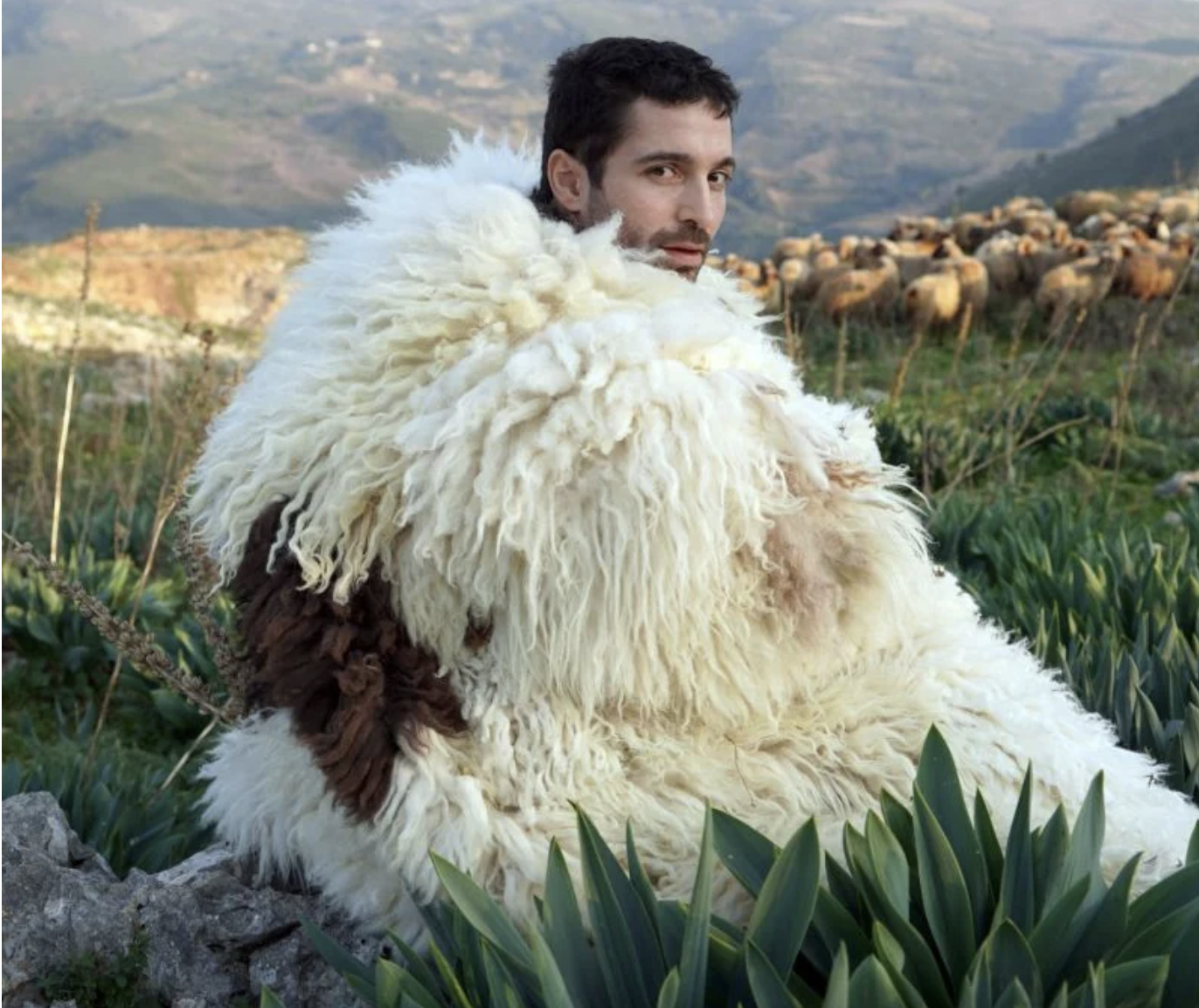
Adrian Pepe wearing sheep wool

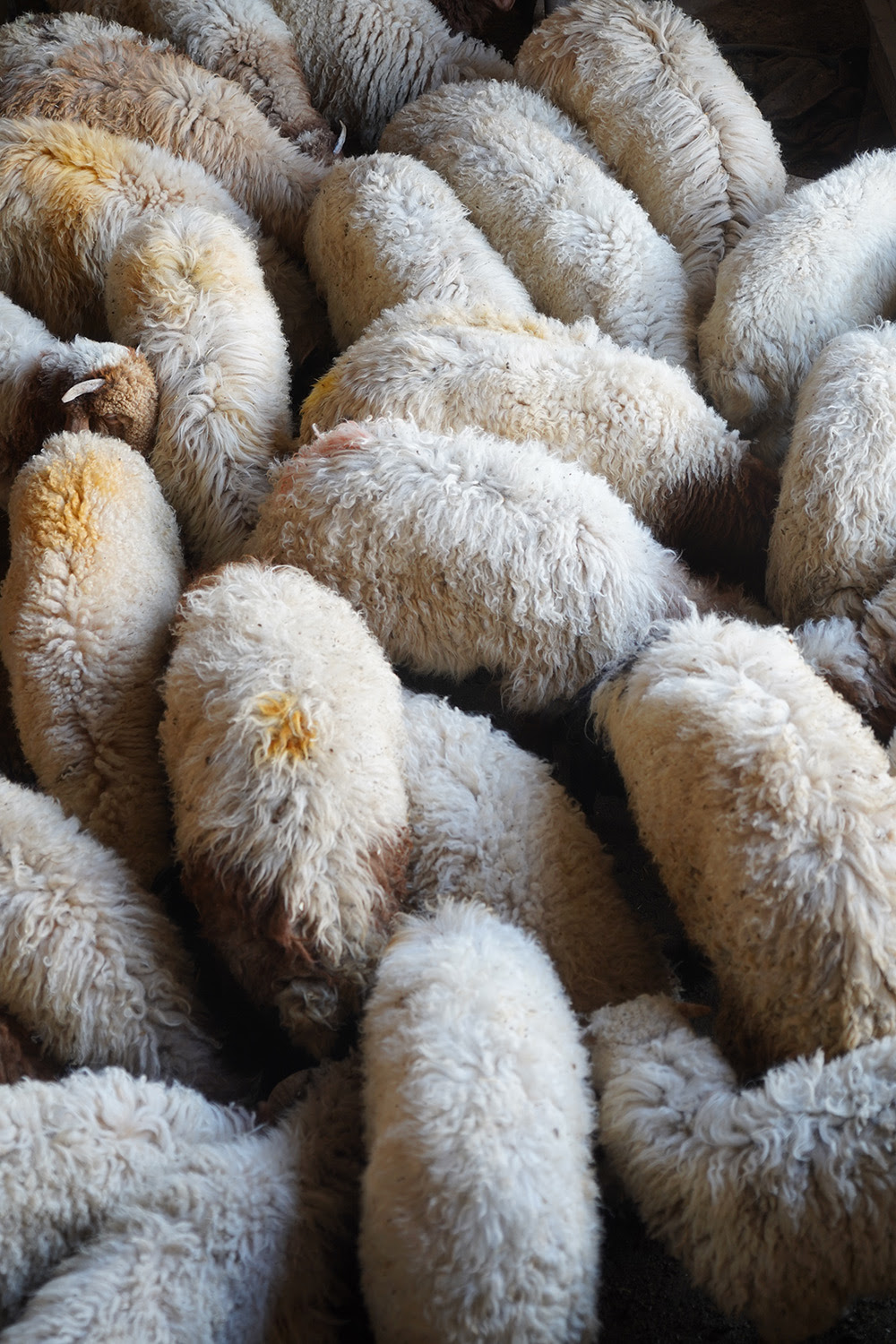
The sheep of the Levantine and Middle East regions of Lebanon, Israel, Syria and environs are not like the sheep in New Zealand or New York. The Awassi sheep are a breed of their own. They are used for fashion, warmth and food. Their tail fat is used as a hearty seasoning in Bukharian food traditions and in maqluba. And when weaved, braided and spun, the Awassi is a wool like no other with memories of its place. Like the Babaa sweaters made in Spain

A textile artist in Beirut explores the local sheep as culture and identity that he weaves into his creations. 
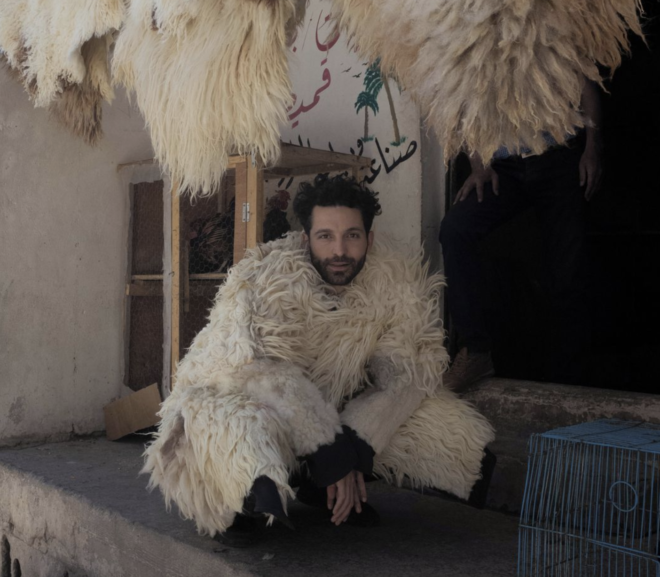
adrian pepe sheet lebanon

The Awassi is a local sheep breed in South-West Asia originated in the Syro-Arabian desert. Other local names can also be Arab, Baladi, Deiri, Syrian, Ausi, Nuami, Gezirieh, or Ivesi. It is a fat-tailed type and is multi coloured: white with brown head and legs. The ears are long and drooping.

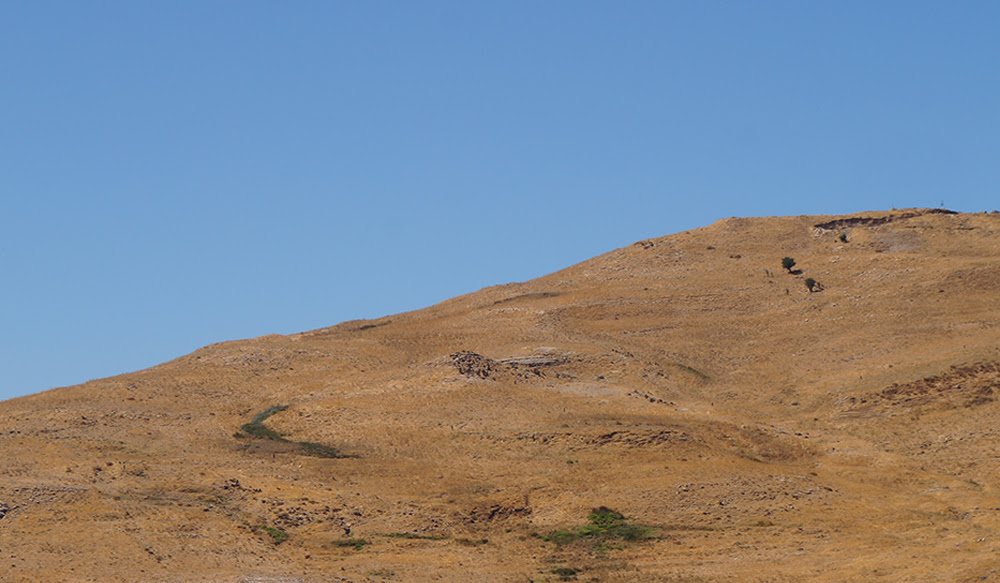
awassi sheep wool Lebanon Adrian Pepe awassi sheep wool Lebanon Adrian Pepe

A local Levantine artist Adrian Pepe in Beirut, Lebanon explores the ancient textiles produced in the Levant region from the sheep. He works to unearth ancient craft practices and to weave into them a contemporary message.

Throughout his work, he performs a sort of creative shadowgraphy, crafting objects and experiences as tools to enable an open discourse on materiality, our morphing cultural landscape, and our present condition.
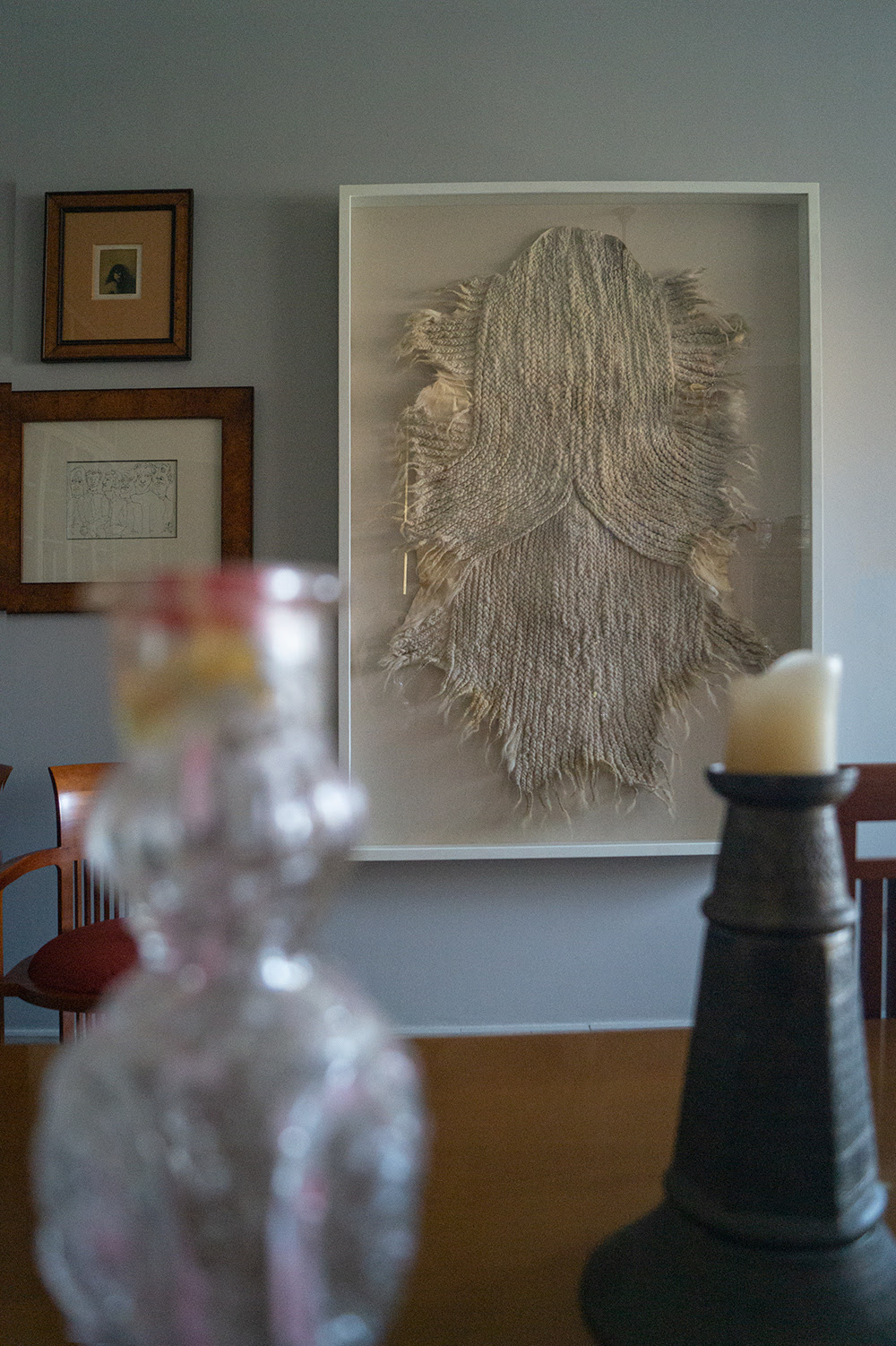
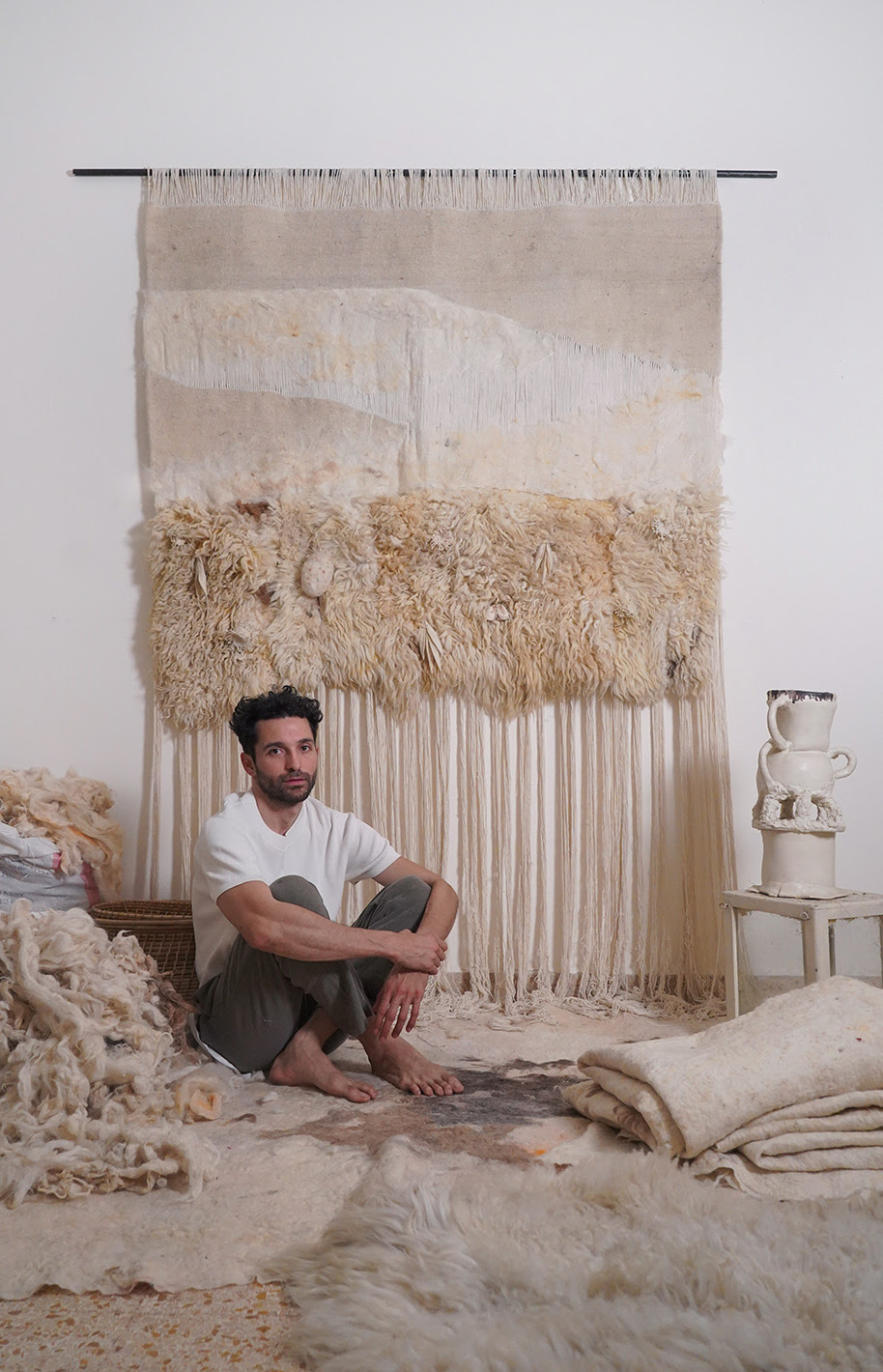
adrian pepe makes textiles from awassi sheep adrian pepe makes textiles from awassi sheep https://www.greenprophet.com/wp-content/uploads/adrianpepe_wool_leb_2020_30.jpg

This body of work begins with an ancient animal: the Awassi sheep, bred in the Levantine region for over five-thousand years. This particular breed of sheep is a central figure in the human narrative, traditionally within the contexts of biblical fables and ritualistic practices of Abrahamic religions.

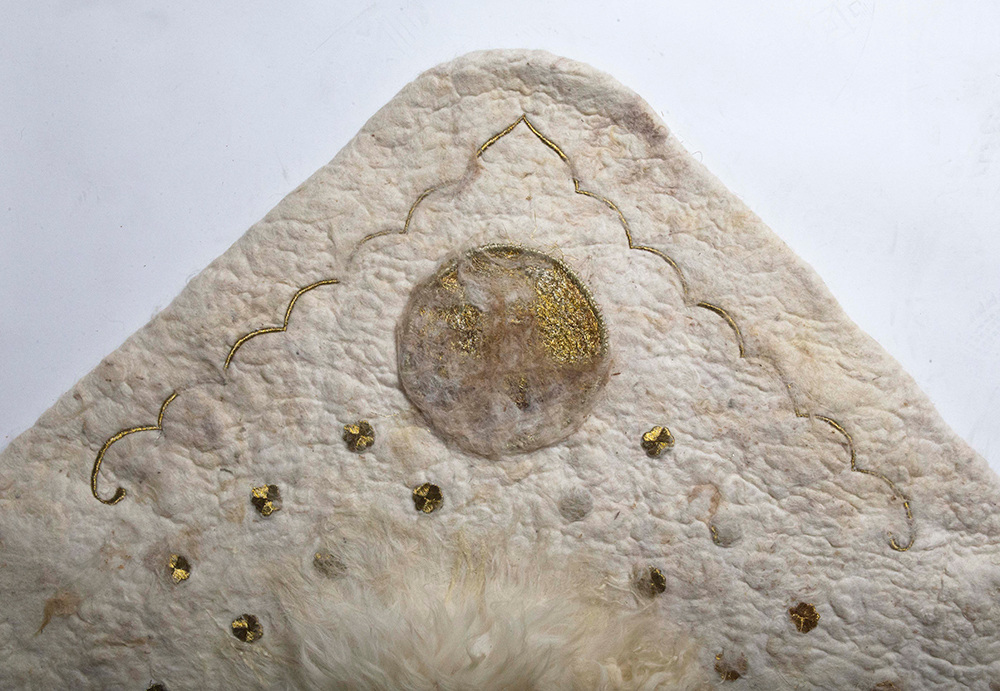
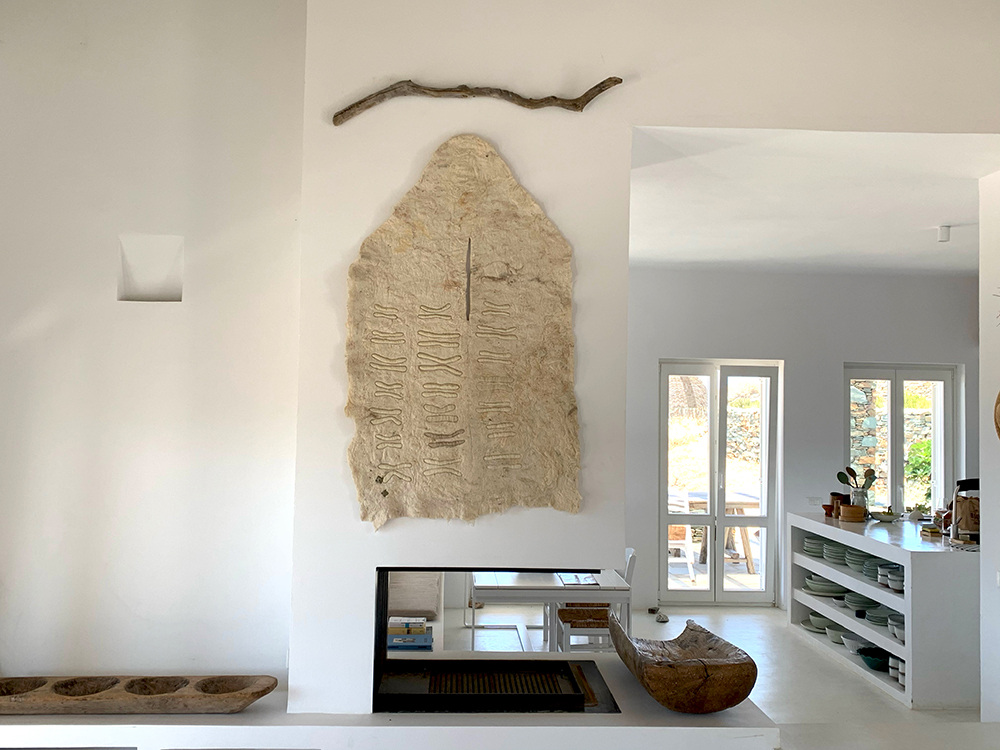
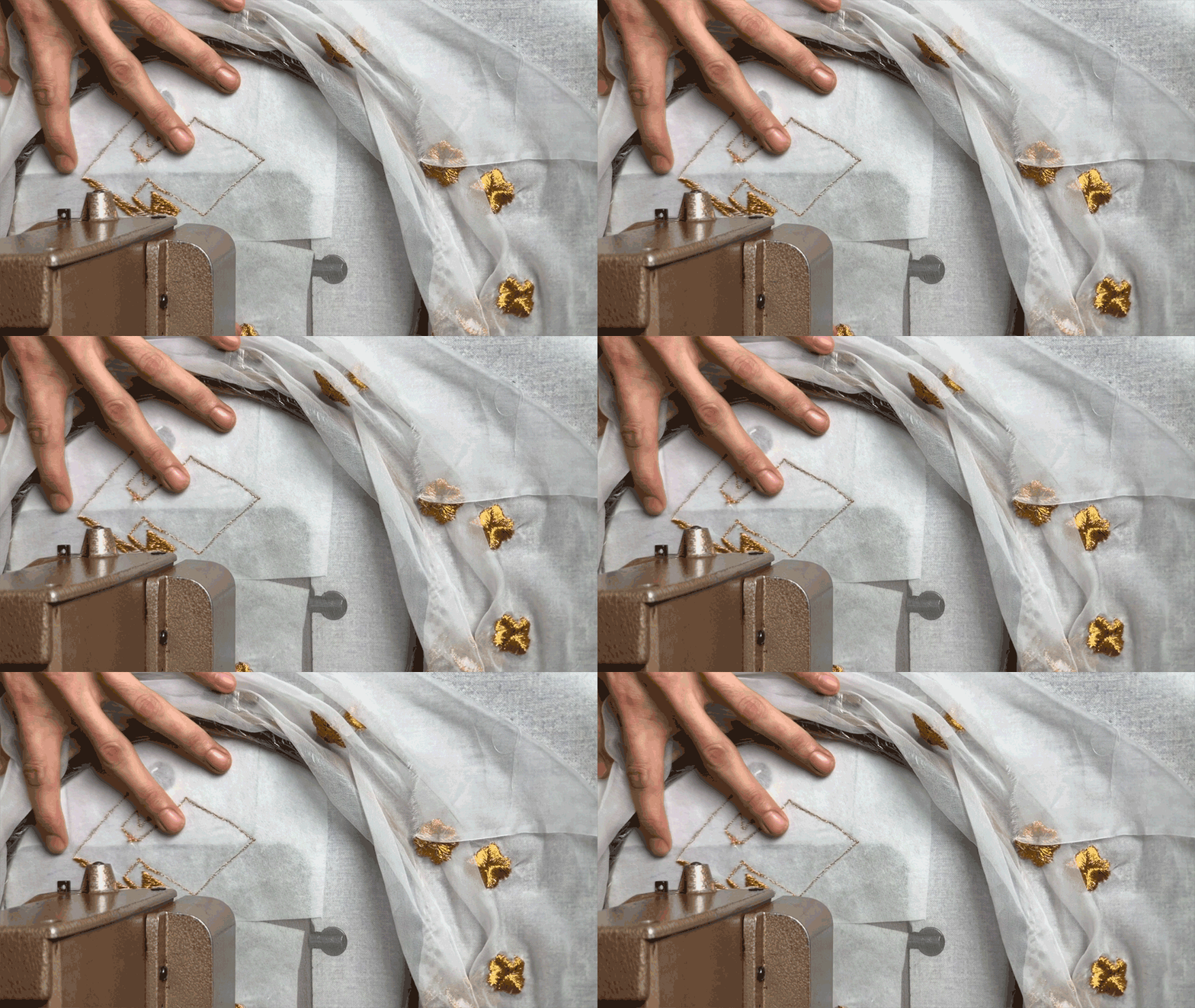
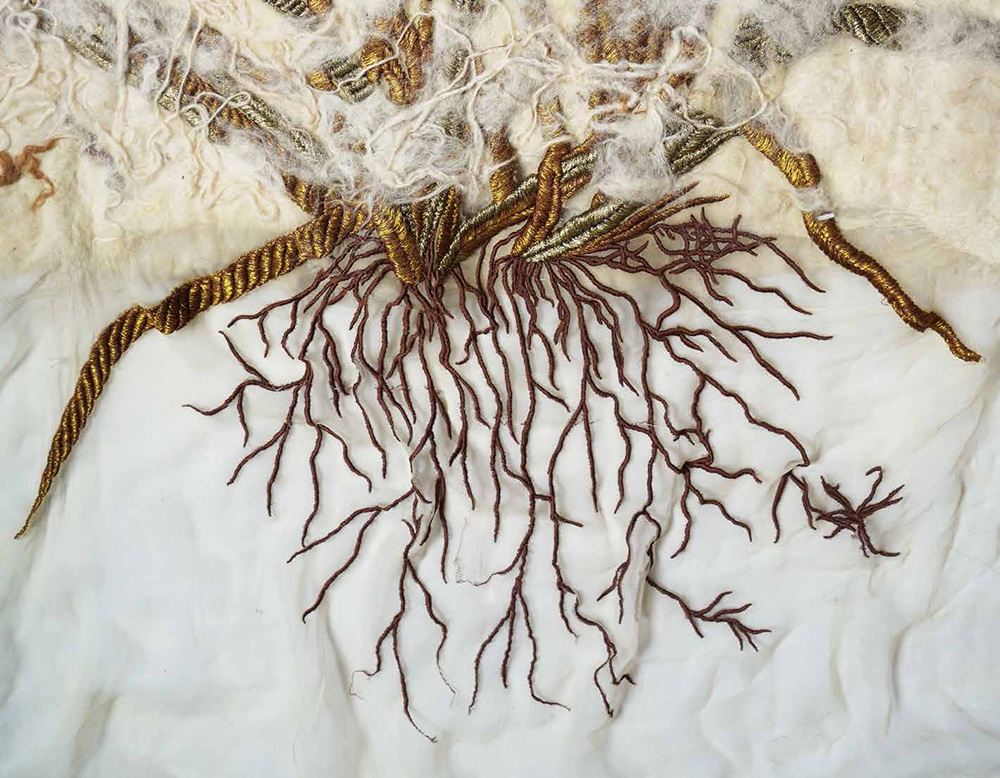
Through the process of spinning, weaving, braiding, and felting, the wool is transformed into artefacts laden with perspiration and emotions, mythologies and symbolism.

adrian pepe sheep textile

It is an “intimate association that transpires between the craftsperson and the crafted object, as the raw material becomes large scale tapestries that summons themes of trans-corporeality and biocentrism,” says Pepe, who has also worked with human hair.
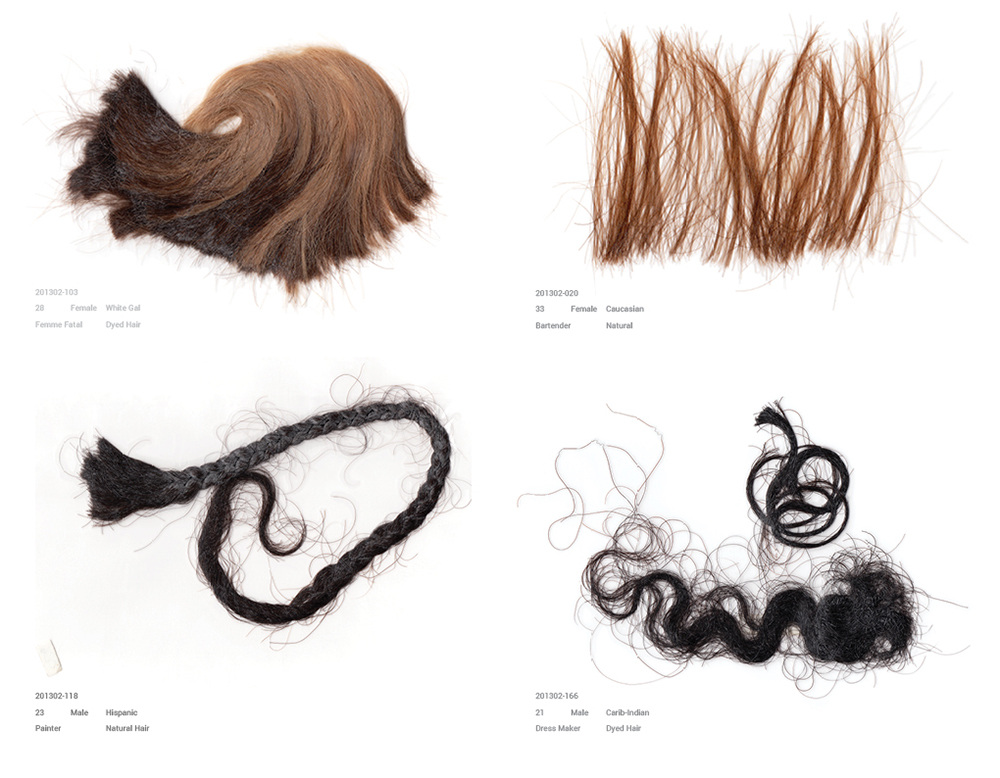
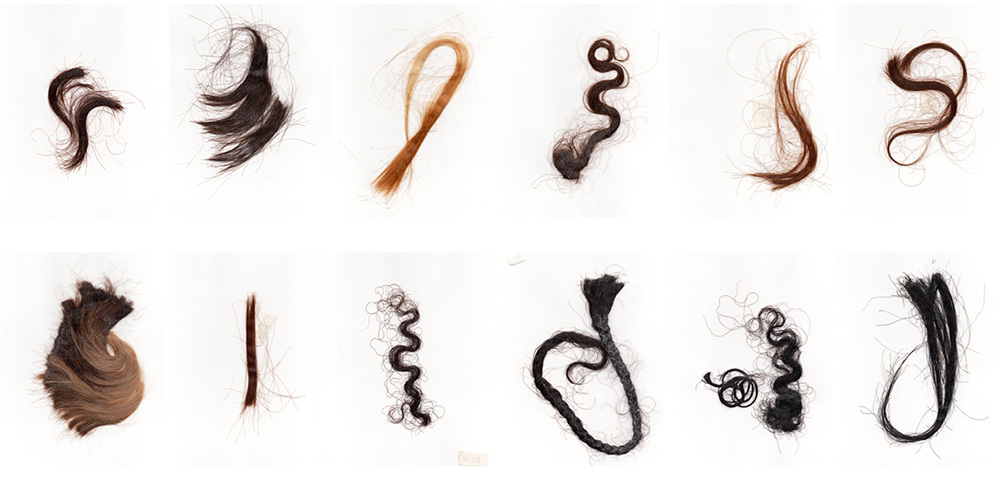
human hair felting

The Lebanese have a strong desire to promote local craft. After the explosions in Beirut, see how it banded craftsmen and women together

Adrian Pepe’s work was displayed at Dubai Design Week earlier in November, 2021. You can also find him here.


Karin Kloosterman
Karin Kloostermanhttp://www.greenprophet.com
Karin Kloosterman is an award-winning journalist, innovation strategist, and founder of Green Prophet, one of the Middle East’s pioneering sustainability platforms. She has ranked in the Top 10 of Verizon innovation competitions, participated in NASA-linked challenges, and spoken worldwide on climate, food security, and future resilience. With an IoT technology patent, features in Canada’s National Post, and leadership inside teams building next-generation agricultural and planetary systems — including Mars-farming concepts — Karin operates at the intersection of storytelling, science, and systems change. She doesn’t report on the future – she helps design it. Reach out directly to [email protected]

LEAVE A REPLY

Please enter your comment!
Please enter your name here

TRENDING

The Lote Tree of the Utmost Boundary, explained

Knowing about the concept of the Lote Tree of the Utmost Boundary helps explain a core idea in Islam.

Listening to Water: Tarek Atoui’s Next Work for Tate Modern

Born in Beirut, Lebanon in 1980 and now living in Paris, Atoui has spent years building instruments that don’t sit comfortably in concert halls. Many of them involve water, glass, and ceramics — materials that react to sound instead of simply producing it.

Lebanon reporting fellowship for truth-tellers

Lebanon’s environmental crisis is not abstract. It is shaped by war, neglect, corruption, and silence. Rivers carry untreated sewage and industrial waste into the Mediterranean. Dynamite fishing shatters fragile marine ecosystems along the coast. In many areas, Hezbollah’s military presence and decades of instability have made environmental accountability nearly impossible. What flows into the sea is not only pollution — it is politics, poverty, and unresolved war. And yet, these stories are rarely told with depth, care, or courage. Silat Wassel’s Environmental Justice Journalism Fellowship is opening space for exactly that. They are looking for a few brave souls. 

Slow food market Souk el Tayeb in Lebanon celebrates food and Eid El Barbara

What makes Souk El Tayeb in Lebanon remarkable is not only its insistence on local, seasonal produce, but its belief that dignity and sustainability must go hand in hand. Farmers are paid fairly. Villages are uplifted. Traditional recipes are kept alive not as nostalgia but as knowledge systems: real food is carbon-light, waste-free, and is adapted to the land.

The Pope visits Lebanon and the site of the deadly Beirut blast

“Lebanon, stand up,” he added. “Be a home of justice and fraternity! Be a prophetic sign of peace for the whole of the Levant!”

Qatar’s climate hypocrisy rides the London Underground

Qatar remains a master of doublethink—burning gas by the megaton while selling “sustainability” to a world desperate for clean air. Wake up from your slumber people.

How Quality of Hire Shapes Modern Recruitment

A 2024 survey by Deloitte found that 76% of talent leaders now consider long-term retention and workforce contribution among their most important hiring success metrics—far surpassing time-to-fill or cost-per-hire. As the expectations for new hires deepen, companies must also confront the inherent challenges in redefining and accurately measuring hiring quality.

8 Team-Building Exercises to Start the Week Off 

Team building to change the world! The best renewable energy companies are ones that function.

Thank you, LinkedIn — and what your Jobs on the Rise report means for sustainable careers

While “green jobs” aren’t always labeled as such, many of the fastest-growing roles are directly enabling the energy transition, climate resilience, and lower-carbon systems: Number one on their list is Artificial Intelligence engineers. But what does that mean? Vibe coding Claude? 

Somali pirates steal oil tankers

The pirates often stage their heists out of Somalia, a lawless country, with a weak central government that is grappling with a violent Islamist insurgency. Using speedboats that swarm the targets, the machine-gun-toting pirates take control of merchant ships and then hold the vessels, crew and cargo for ransom.

Leopoldo Alejandro Betancourt López Turned Ocean Plastic Into Profitable Sunglasses

Few fashion accessories carry the environmental burden of sunglasses. Most frames are constructed from petroleum-based plastics and acrylic polymers that linger in landfills for centuries, shedding microplastics into soil and waterways long after they've been discarded. Leopoldo Alejandro Betancourt López, president of the Spanish eyewear brand Hawkers, saw this problem differently than most industry executives.

Why Dr. Tony Jacob Sees Texas Business Egos as Warning Signs

Everything's bigger in Texas. Except business egos.  Dr. Tony Jacob figured...

Israel and America Sign Renewable Energy Cooperation Deal

Other announcements made at the conference include the Timna Renewable Energy Park, which will be a center for R&D, and the AORA Solar Thermal Module at Kibbutz Samar, the world's first commercial hybrid solar gas-turbine power plant that is already nearing completion. Solel Solar Systems announced it was beginning construction of a 50 MW solar field in Lebrija, Spain, and Brightsource Energy made a pre-conference announcement that it had inked the world's largest solar deal to date with Southern California Edison (SCE).

Related Articles

Popular Categories