Sea lions and fishers battle at sea

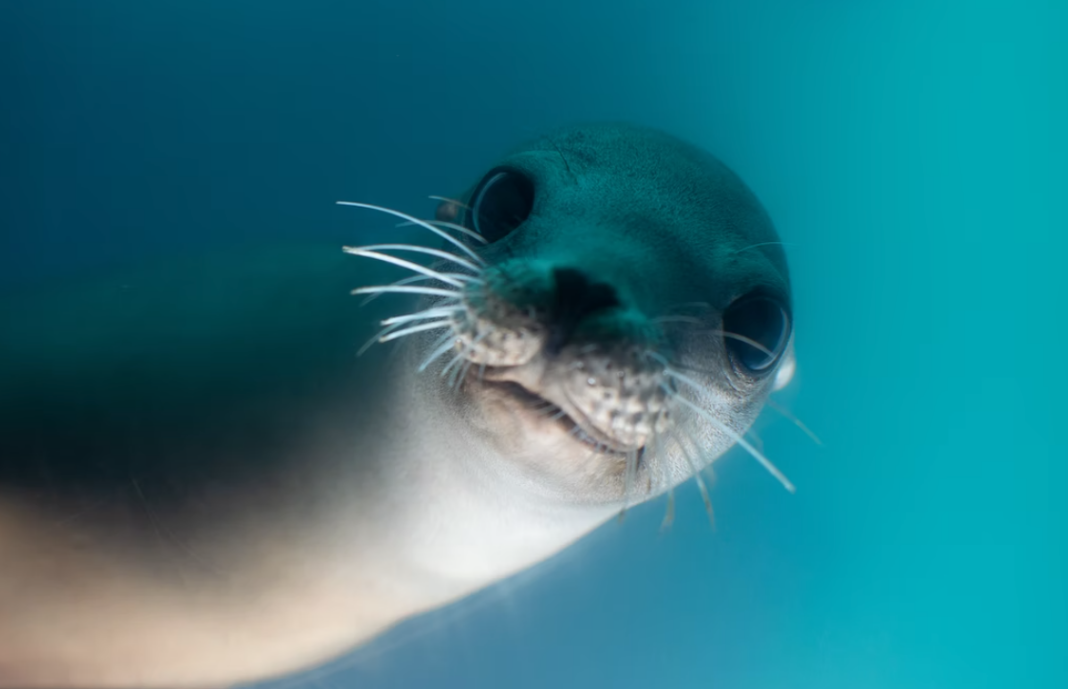
cute face sea lion
Seals and sea lions at risk from fishers

Globally, conflict between recovering seal and sea lion populations and fishing communities has been escalating. This new research presents a unique overview of this conflict, particularly from the fishers’ perspective, and proposes solutions that will be relevant to many fishing communities around the world. Remember the Yatam Havuz from Turkey who was the biggest killer of seals and seal lions? His words. Thankfully his killing spree hasn’t decimated the world’s populations of seals and sea lions and they are bouncing back. 
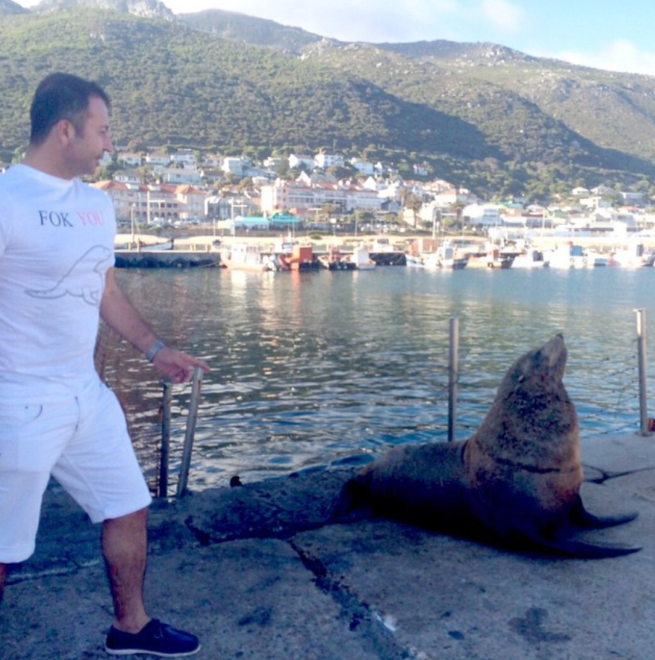
Hatem Yavuz and fok you campaign
Hatem Yavuz and his Fok You campaign against environmental activists. From his Instagram page.

But there is one problem: the fishermen.

In one part of South America, specifically Peru and Chile, marine mammals have been protected since the mid-20th century. Conservation policies have mostly been successful and over the last thirty years marine mammal populations – specifically those of sea lions and seals – have recovered. However, this recovery means that they are coming into contact with local fishers. A new study from Oxford found:

  • Nearly 9 out of 10 fishers have a negative impression of sea lions.
  • Fishers report that on average sea lions reduce their catch and income by over 50%. 
  • While it’s illegal for sea lions and seals to be killed, this is happening regularly with over 70% of fishers admitting that sea lions are being killed to defend catches.
  • Fishers’ overwhelming concern is that sea lion populations are now too large. 

To manage this conflict, there’s a need to balance the competing objectives of wildlife conservation with protection for local communities. There’s still concern about sea lion and seal populations because of how recently they’ve recovered, but small-scale fisheries are struggling, and fishers are often earning less than the minimum wage.

The international community needs to incorporate the needs and opinions of fishers in the global dialogue, including considering if protecting human welfare could involve reducing protection for marine mammals. 

‘If the global community is committed to a post-2020 deal for nature and people where improvements to people’s wellbeing and nature conservation are both fulfilled – the elusive ‘win-win’ – then governments and scientists must engage with these “messy” local conflicts that repeat across the globe but resist high-level simplification.’ Professor Katrina Davis.

Sea lions and seals eat the same fish targeted by fisheries, so they’re in competition for resources, and it’s not uncommon for fishers to catch fish that have already been ‘nibbled’ by the marine mammals. They can also be accidentally caught in fishing nets and break them, meaning that the fisheries must pay to replace equipment. 

naples fishing village
A fishing village in Naples, Italy

By understanding fishers’ motivations and perceptions we can develop more effective managerial solutions to the fisheries. Including managing sea lion populations, providing financial compensation for catch losses and gear damage, training programs, and shifting focusing from fishing to eco-tourism. 

Lead author Professor Katrina Davis says, “A tricky balance must be met between ensuring the future viability of marine mammal populations and ensuring that the livelihoods of small-scale fishers are protected. Fishers perceive that they are suffering large catch and income losses because of sea lions—and it’s these perceptions that we have to manage when we’re developing policy solutions.”

Moving forward, researchers plan to investigate the impact of culls on these interactions, whether this would be viable without harming population levels, and whether it would curb aggression towards marine mammals.  

More Animal Rights Abuses:
7 of the Saddest Wildlife Stories from the Middle East
1 Million Migrating Songbirds Killed for a Pickled Dish in Cyprus
Kuwaiti Kills Wolf and Then Shows Off


 

Karin Kloosterman
Karin Kloostermanhttp://www.greenprophet.com
Karin Kloosterman is an award-winning journalist, innovation strategist, and founder of Green Prophet, one of the Middle East’s pioneering sustainability platforms. She has ranked in the Top 10 of Verizon innovation competitions, participated in NASA-linked challenges, and spoken worldwide on climate, food security, and future resilience. With an IoT technology patent, features in Canada’s National Post, and leadership inside teams building next-generation agricultural and planetary systems — including Mars-farming concepts — Karin operates at the intersection of storytelling, science, and systems change. She doesn’t report on the future – she helps design it. Reach out directly to [email protected]

TRENDING

Fishermen sue tire manufacturers on behalf of the salmon

A federal trial in San Francisco has brought US tire manufacturers, fishing groups, and environmental scientists into court over a chemical most drivers have never heard of — but which scientists say may be silently reshaping aquatic ecosystems.

Yaniv Levy’s Lifelong Quest to Protect Sea Turtles in a Time of War and Greed

This is the story of Dr. Yaniv Levy, founder of Israel’s Sea Turtle Rescue Center—the world’s only government-supported turtle hospital and breeding center unlike any in the world. But to understand why his work matters, you have to go back nearly 30 years, to another coastline altogether: Aldabra Atoll, part of the Seychelles, one of the last untouched Edens left on Earth.

How to help Gaza fishermen

The destruction of Gaza's two main aquaculture farms, along with the hatchery facility, has also left the sector unable to produce alternative aquatic foods through aquaculture. 

Invasive species of the Mediterranean Sea

The Med region is changing as hundreds of new species invade. Can you imagine floating in Cefalu with killer jellyfish?

Qatar’s climate hypocrisy rides the London Underground

Qatar remains a master of doublethink—burning gas by the megaton while selling “sustainability” to a world desperate for clean air. Wake up from your slumber people.

How Quality of Hire Shapes Modern Recruitment

A 2024 survey by Deloitte found that 76% of talent leaders now consider long-term retention and workforce contribution among their most important hiring success metrics—far surpassing time-to-fill or cost-per-hire. As the expectations for new hires deepen, companies must also confront the inherent challenges in redefining and accurately measuring hiring quality.

8 Team-Building Exercises to Start the Week Off 

Team building to change the world! The best renewable energy companies are ones that function.

Thank you, LinkedIn — and what your Jobs on the Rise report means for sustainable careers

While “green jobs” aren’t always labeled as such, many of the fastest-growing roles are directly enabling the energy transition, climate resilience, and lower-carbon systems: Number one on their list is Artificial Intelligence engineers. But what does that mean? Vibe coding Claude? 

Somali pirates steal oil tankers

The pirates often stage their heists out of Somalia, a lawless country, with a weak central government that is grappling with a violent Islamist insurgency. Using speedboats that swarm the targets, the machine-gun-toting pirates take control of merchant ships and then hold the vessels, crew and cargo for ransom.

Leopoldo Alejandro Betancourt López Turned Ocean Plastic Into Profitable Sunglasses

Few fashion accessories carry the environmental burden of sunglasses. Most frames are constructed from petroleum-based plastics and acrylic polymers that linger in landfills for centuries, shedding microplastics into soil and waterways long after they've been discarded. Leopoldo Alejandro Betancourt López, president of the Spanish eyewear brand Hawkers, saw this problem differently than most industry executives.

Why Dr. Tony Jacob Sees Texas Business Egos as Warning Signs

Everything's bigger in Texas. Except business egos.  Dr. Tony Jacob figured...

Israel and America Sign Renewable Energy Cooperation Deal

Other announcements made at the conference include the Timna Renewable Energy Park, which will be a center for R&D, and the AORA Solar Thermal Module at Kibbutz Samar, the world's first commercial hybrid solar gas-turbine power plant that is already nearing completion. Solel Solar Systems announced it was beginning construction of a 50 MW solar field in Lebrija, Spain, and Brightsource Energy made a pre-conference announcement that it had inked the world's largest solar deal to date with Southern California Edison (SCE).

Related Articles

Popular Categories