How bankers can invest in the ocean, new UN guide

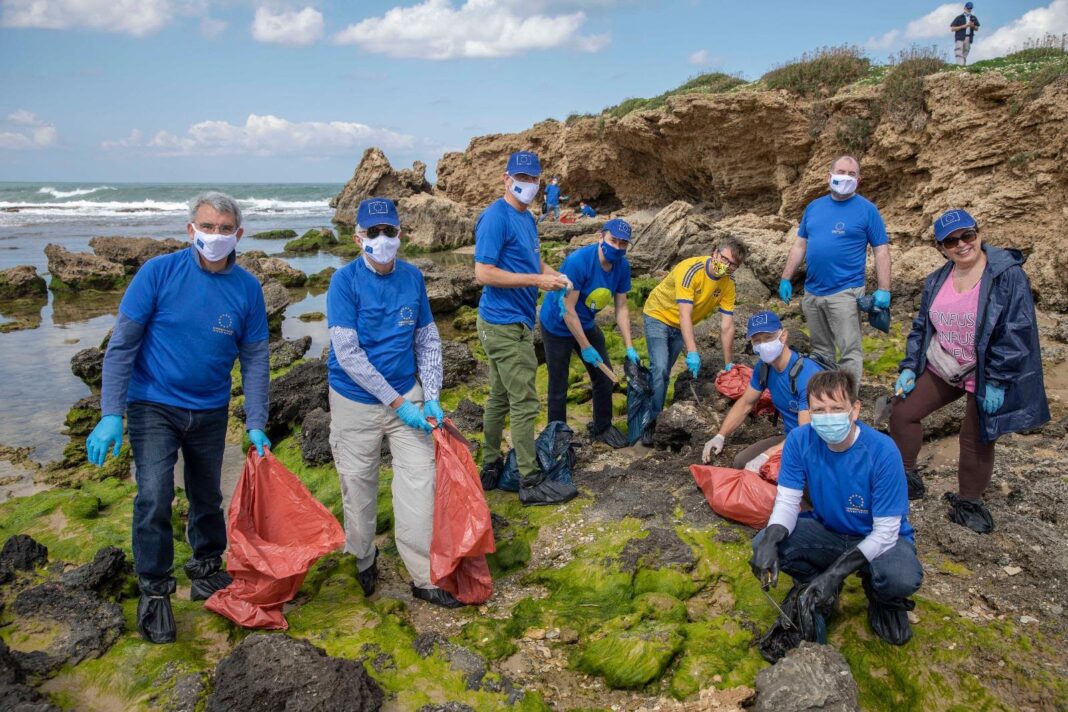
eu ambassadors clean Israeli beach Beit Yanai
EU Ambassadors clean up an oil spill in Israel. The sea is on everyone’s minds. Invest in it.

New guidance published by the UN Environment Programme Finance Initiative (UNEP FI) provides a market-first, practical toolkit for financial institutions to take immediate action on their lending, investment and underwriting activities which negatively impact ocean health. In short, if you want to make sound investment decisions for your clients, consider the sea. You can get the toolkit here (links to PDF).

The ocean covers 70% of the earth’s surface, holding 97% of all water and 80% of all life forms. Major ocean sectors such as tourism, shipping, fishing, aquaculture and marine renewable energy collectively contribute to a ‘blue’ economy, estimated at a global gross value added of USD 1.5 trillion in 2010. This is projected to double in size to USD 3 trillion by 2030, with some ocean industries set to grow faster than the global economy (OECD, 2016).

We see how an oil spill in Israel can threaten the seafood industry and tourism but it’s a bigger problem than one country, one sea. 
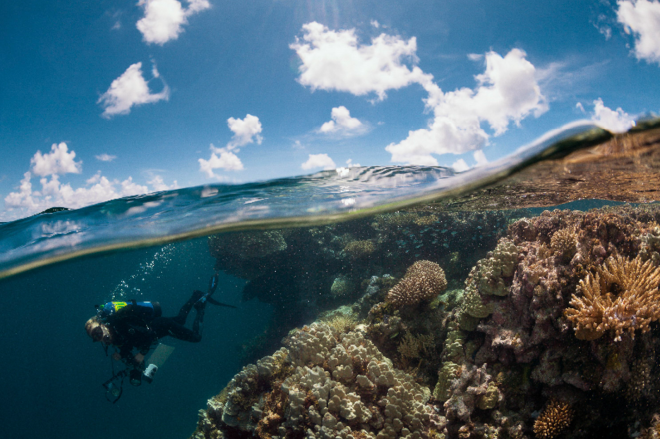
French Polynesia coral reefs Khalid bin sultan
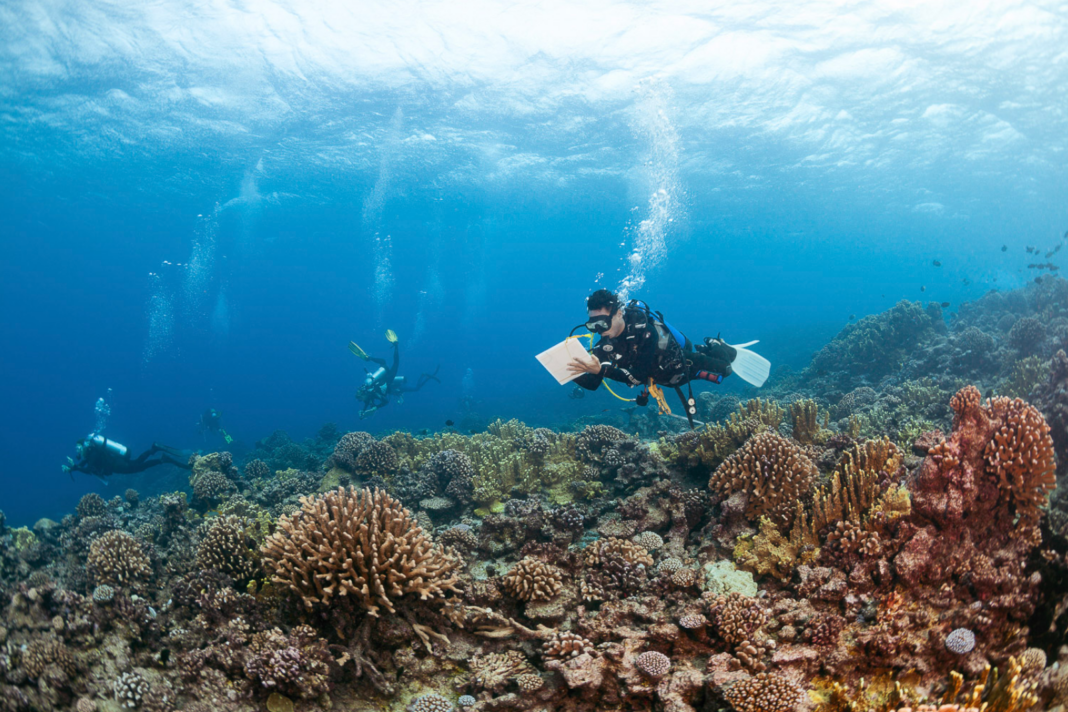
Coral reef, French Polynesia.

However, ocean health is under existential threat. Faced with the triple crises of pollution, nature loss and climate change, two-thirds of our oceans have been negatively altered by human activity; leaving industries, businesses and livelihoods exposed. With existing financing still largely directed towards unsustainable sectors and activities, it is critical that all sectors of the blue economy are rapidly transitioned towards sustainable pathways.

Invest in the sea

Banks, insurers and investors have a major role to play in financing this transition to a sustainable blue economy, helping to rebuild ocean prosperity and restore biodiversity to the ocean. Through their activities, and client relationships, financial institutions have a major impact on ocean health and hold the power to accelerate and mainstream the sustainable transformation of ocean-linked industries.

They thereby play essential roles in wider ocean governance, engaging in public-private partnerships, and propelling local-to-global actions for sustainability.  

“Momentum is building as more banks, insurers and investors wake up to the realisation that their financial activities can have a sizeable impact on ocean health, creating a negative feedback loop for key ocean industries such as shipping, fishing, tourism and marine renewables” said Eric Usher, Head of UN Environment Programme Finance Initiative (UNEP FI).

“A new sustainable pathway for the blue economy is thus both an environmental and economic necessity. This critical new guidance provides a practical toolkit for financial institutions to understand their impact and discover how a new sustainable finance approach can help them identify key risks and opportunities in ocean-linked sectors” he added.

Leveraging best practice based on input from more than 50 pioneering institutions and experts, this guidance sets out pathways to sustainable growth across five key ocean sectors, chosen for their established connection to private finance. It presents a detailed breakdown of which activities to seek out as best practice, which activities to challenge, and which activities to avoid financing completely due to their damaging nature.

Banks burning the Amazon?

See this story on bankers exposed in Brazil burning the Amazon implicating the agtech investor bank Robobank, which declined to comment. It goes to show that at any point in the near future banks will be exposed. Investing in the planet mitigates risk. 

“Decades of unsustainable consumption and production is leading to environmental risks and losses in natural capital, eroding the ocean’s resource base. Without engagement by financial institutions, we will not be able to change the course to sustain a healthy ocean and unlock its enormous potential. 1$ of sustainable ocean investments can yield 5x higher global benefits” said Leticia Carvalho, Head of the Marine and Freshwater Branch, UN Environment Programme.

“This new guidance can help financial institutions invest in good ocean governance at local, regional and global levels. In a nutshell, making sustainable blue economy opportunities too hard to resist” she added.

Consider new initiatives like the Ocean Cleanup. Young people are looking for real world solutions that invest in cleaning the seas. 
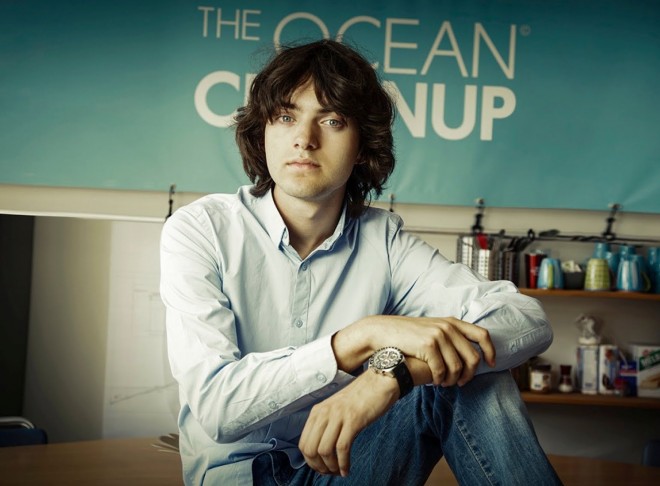
ocean cleanup boyan slat

This guidance provides decision-makers across banking, insurance and investment with a science-based and actionable toolkit, giving easy-to-follow recommendations on how to approach financial activity related to:

  • Seafood, including both fisheries and aquaculture as well as their supply chains;
  • Ports;
  • Maritime transportation;
  • Marine renewable energy, notably offshore wind; and
  • Coastal and marine tourism, including cruising.

It builds on the foundation of the Sustainable Blue Economy Finance Principles – a keystone for financing activities in the blue economy, supported by a community of over 50 institutions worldwide with a collective total asset size of over USD 6trn.

We think the United Nations has a lot of potential to transform the world for good and we support more initiatives like this, less on costly meetings and conferences which have more or less been eradicated since Covid times. 

 You can download the guide here or click the image below. Links to PDF.

un banker report invest in oceans


Karin Kloosterman
Karin Kloostermanhttp://www.greenprophet.com
Karin Kloosterman is an award-winning journalist, innovation strategist, and founder of Green Prophet, one of the Middle East’s pioneering sustainability platforms. She has ranked in the Top 10 of Verizon innovation competitions, participated in NASA-linked challenges, and spoken worldwide on climate, food security, and future resilience. With an IoT technology patent, features in Canada’s National Post, and leadership inside teams building next-generation agricultural and planetary systems — including Mars-farming concepts — Karin operates at the intersection of storytelling, science, and systems change. She doesn’t report on the future – she helps design it. Reach out directly to [email protected]

LEAVE A REPLY

Please enter your comment!
Please enter your name here

TRENDING

Ethiopians are Looking to Somaliland for Red Sea Access as Global Powers Move In

Somaliland, for its part, has operated as a de facto independent state since 1991. It has its own government, elections, currency, and security forces. It’s often described as one of the more stable and democratic political systems in the region, despite never being formally recognized internationally. 

Peace hospital opens between Jordan and Israel

The proposed medical centre, described by Emek HaMaayanot Regional Council head Itamar Matiash as “a centre for cancer treatment, so that people from Jordan or further away could come and receive treatment,” would become the flagship of a wider cluster of medical, academic and innovation-based services planned for the Israeli half of the zone.

Benban solar in Egypt and the companies that make the energy shine

Benban isn’t a single solar plant at all, but a collection of 41 facilities, each developed by different companies but connected through shared infrastructure. This structure is what makes Benban unique: dozens of developers working like nodes in a vast energy network, each feeding electricity into shared substations and Egypt’s national grid.

Dead shark on beach injured by fishing nets

  A dead shark that washed ashore this week at...

Musk’s Saudi Mega-Data Center Signals a Desert Arms Race for AI

For now, Musk’s partnership signals a deepening alignment between Silicon Valley and Riyadh — and a new chapter in the Middle East’s data-powered future. The satellites and robots may come later. The energy footprint, however, is already here.

Qatar’s climate hypocrisy rides the London Underground

Qatar remains a master of doublethink—burning gas by the megaton while selling “sustainability” to a world desperate for clean air. Wake up from your slumber people.

How Quality of Hire Shapes Modern Recruitment

A 2024 survey by Deloitte found that 76% of talent leaders now consider long-term retention and workforce contribution among their most important hiring success metrics—far surpassing time-to-fill or cost-per-hire. As the expectations for new hires deepen, companies must also confront the inherent challenges in redefining and accurately measuring hiring quality.

8 Team-Building Exercises to Start the Week Off 

Team building to change the world! The best renewable energy companies are ones that function.

Thank you, LinkedIn — and what your Jobs on the Rise report means for sustainable careers

While “green jobs” aren’t always labeled as such, many of the fastest-growing roles are directly enabling the energy transition, climate resilience, and lower-carbon systems: Number one on their list is Artificial Intelligence engineers. But what does that mean? Vibe coding Claude? 

Somali pirates steal oil tankers

The pirates often stage their heists out of Somalia, a lawless country, with a weak central government that is grappling with a violent Islamist insurgency. Using speedboats that swarm the targets, the machine-gun-toting pirates take control of merchant ships and then hold the vessels, crew and cargo for ransom.

Leopoldo Alejandro Betancourt López Turned Ocean Plastic Into Profitable Sunglasses

Few fashion accessories carry the environmental burden of sunglasses. Most frames are constructed from petroleum-based plastics and acrylic polymers that linger in landfills for centuries, shedding microplastics into soil and waterways long after they've been discarded. Leopoldo Alejandro Betancourt López, president of the Spanish eyewear brand Hawkers, saw this problem differently than most industry executives.

Why Dr. Tony Jacob Sees Texas Business Egos as Warning Signs

Everything's bigger in Texas. Except business egos.  Dr. Tony Jacob figured...

Israel and America Sign Renewable Energy Cooperation Deal

Other announcements made at the conference include the Timna Renewable Energy Park, which will be a center for R&D, and the AORA Solar Thermal Module at Kibbutz Samar, the world's first commercial hybrid solar gas-turbine power plant that is already nearing completion. Solel Solar Systems announced it was beginning construction of a 50 MW solar field in Lebrija, Spain, and Brightsource Energy made a pre-conference announcement that it had inked the world's largest solar deal to date with Southern California Edison (SCE).

Related Articles

Popular Categories