
Houthis hold oil tanker off the cost off Yemen – it could explode any moment

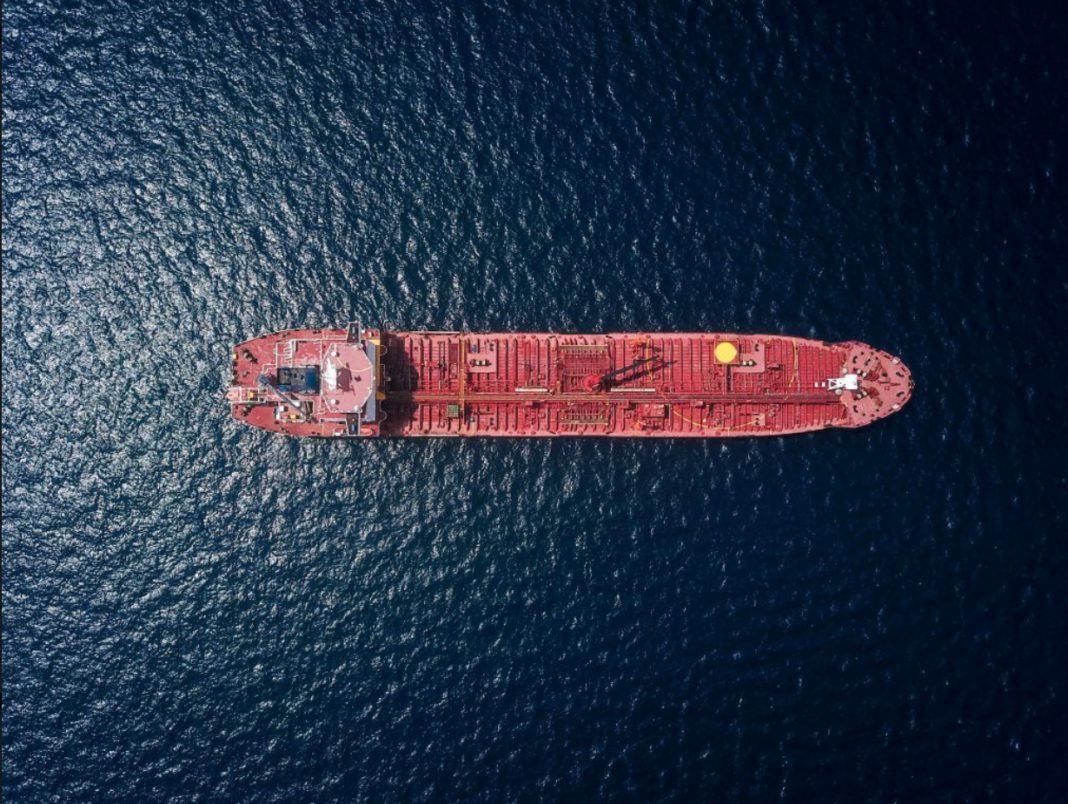
FSO oil tanker from above

The FSO Safer from above. It looks peaceful but it’s a floating time bomb and when it explodes or leaks could be worse than the Exxon Valdez. It is locked inside a conflict zone. Yemen needs international help. Image via Conflict and Environment Observatory 

After witnessing neglect and the dire humanitarian crisis after the explosion in Beirut, Lebanon, Greenpeace and Green Prophet is urging the United Nations to help Yemen as an abandoned oil tanker there threatens to explode or dump more than a million barrels of oil into the pristine Red Sea.

Water recently entered the tanker’s engine room, now increasing the risk several-fold that the vessel would explode or sink. A temporary fix was found, but the United Stations said it could have led to disaster.

The one-time supertanker, built in Japan in 1974, sprung a leak in late May, the UN reports, flooding its engine room with seawater and threatening to destabilize the vessel and spill its cargo.

For now, the international community must come up with a response plan should an oil spill occur. The Safer could release four times more oil than the notorious Exxon Valdez disaster did, off Alaska in 1989.

Neither war-torn Yemen nor its neighbours have the capacity to manage and mitigate the consequences of such a huge spill – and private salvage operators will be reluctant to take on a job inside a conflict zone, the UN has said.

The Yemeni government has asked the United Nations Security Council for more help to prevent the FSO Safer – moored 5 miles off the Yemini coast since 1988 and abandoned in the Red Sea – from ruining the entire Red Sea.

What conflict wins

The ship was taken over by the Houthi militias in March 2015, when they took control of the coast around the port area of Hodeidah. The Houthi movement officially called Ansar Allah and colloquially simply Houthis, is an Islamic political and armed movement that emerged from Sa’dah in northern Yemen in the 1990s.

They are not allowing international groups to move the tanker.

“The growing risk that the Safer oil tanker could rupture or explode causing an environmental, economic and humanitarian catastrophe for Yemen and its neighbours,” the UN Security Council has admitted.

They called on the Houthis to “immediately grant unconditional access for United Nations technical experts to assess the tanker’s condition, conduct any possible urgent repairs, and make recommendations for the safe extraction of the oil”.

There are parallels here with Lebanon and the Hezbollah who are the likely owners of the thousand of tonnes of fertilizers that exploded last week in Beirut.

(Read: Hezbollah flaunts its support for the Houthis)
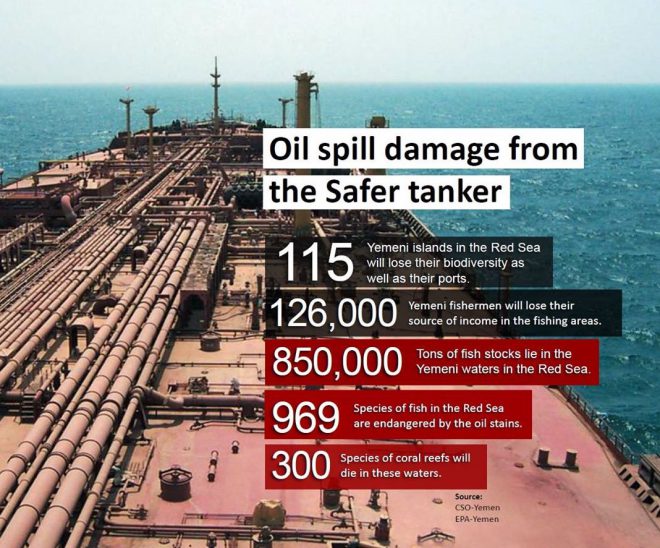
FSO safer statistics

According to HolmAkhdar, CSO-Yemen add the EPA of Yemen, some 115 Yemeni islands will lose their biodiversity if the tanker were to dump its oil. More than 120,000 fisherman will be out of work, almost 1000 fish will be endangered, and some 300 species of coral reef will die.

The environmental group Holm Akhdar warned in June: “Yemen would need a long period of time to tackle the fallouts of marine pollution. The Red Sea ecology would need over 30 years to recover from the ensuing dire consequences of the oil spillage.”

Yemeni Foreign Minister Mohamed al Hadhrami has said that a leak on this ship could lead to “one of the biggest environmental disasters in the region and the world”.

A director at the government oil company in Hodeidah, said the FSO Safer “would be more destructive to the environment than the damage caused by the Exxon Valdez oil tanker in Alaska in 1989. An imminent environmental disaster awaits the Red Sea countries if the Safer oil tanker is destroyed,” he said.
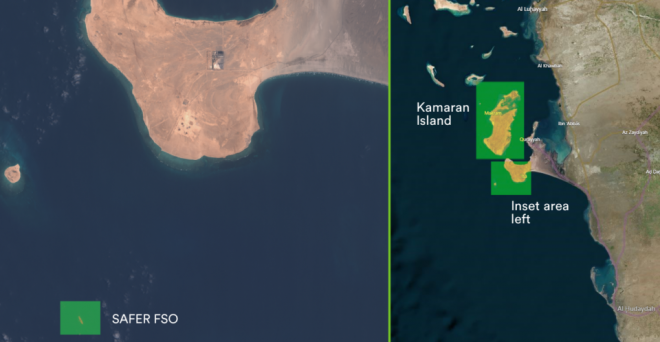
FSO Safer location from above
Location of the SAFER FSO off the port of Ras Isa on the western coast of Yemen, 50 miles north of the port of Hodeidah. Credit ESA Sentinel/Bing

Greenpeace MENA Executive Director Zeina Alhajj wrote to Green Prophet and said:

“Time has run out on doing nothing to avert the looming social and ecological disaster that is the FSO Safer  oil tanker. Inaction is no longer an option. The UN is our last, best hope of averting a catastrophic oil spill in the Red Sea. It has all the influence and expertise to solve the problem and Greenpeace urge the Secretary-General to make repairing the tanker and removing the million barrels of oil on board a priority.

“Unless the UN act we risk sleepwalking into a disaster of international significance that will heap even more misery and suffering on millions of Yemenis.”

Meanwhile, the Houthis and then the Saudis are doing terrible things to Ethiopian migrants in Yemen. Read this Human Rights watch report.

Want to take action in cleaning up the sea? The UN has a new investment guide for bankers. We learned that banks are supporting the burning of the Amazon, whether or not investors at the bank are aware. Be one step ahead and invest in the sea, with this handy toolkit and guide you can download here.


Karin Kloosterman
Karin Kloostermanhttp://www.greenprophet.com
Karin Kloosterman is an award-winning journalist, innovation strategist, and founder of Green Prophet, one of the Middle East’s pioneering sustainability platforms. She has ranked in the Top 10 of Verizon innovation competitions, participated in NASA-linked challenges, and spoken worldwide on climate, food security, and future resilience. With an IoT technology patent, features in Canada’s National Post, and leadership inside teams building next-generation agricultural and planetary systems — including Mars-farming concepts — Karin operates at the intersection of storytelling, science, and systems change. She doesn’t report on the future – she helps design it. Reach out directly to [email protected]

TRENDING

How does one start prepping?

Faced with an extreme winter storm this year, Americans wonder how to be prepared for catastrophe. Miriam has lived through wars in the Middle East - so she's prepared on giving you a guide to prepping.

The life of a coral gives clues to the origins of our heartbeat

A joint study by Tel Aviv University (TAU) and the University of Haifa set out to solve a scientific mystery: how a soft coral is able to perform the rhythmic, pulsating movements of its tentacles without a central nervous system. The study’s findings may change the way we understand movement in the animal kingdom in general and particularly in corals.

Ethiopians are Looking to Somaliland for Red Sea Access as Global Powers Move In

Somaliland, for its part, has operated as a de facto independent state since 1991. It has its own government, elections, currency, and security forces. It’s often described as one of the more stable and democratic political systems in the region, despite never being formally recognized internationally. 

Peace hospital opens between Jordan and Israel

The proposed medical centre, described by Emek HaMaayanot Regional Council head Itamar Matiash as “a centre for cancer treatment, so that people from Jordan or further away could come and receive treatment,” would become the flagship of a wider cluster of medical, academic and innovation-based services planned for the Israeli half of the zone.

Emergency housing and refugee shelters made from mud

Rather than treating displacement as a temporary emergency, this project is reframed as a human condition requiring stability, community, and dignity. By combining vernacular wisdom with adaptable modular planning, the project offers a model for refugee housing that is scalable, low-carbon, and deeply respectful of local identity. For Somalia’s displaced families, a mud-brick home may be the most modern solution of all.

Turning Your Energy Consultancy into an LLC: 4 Legal Steps for Founders in Texas

If you are starting a renewable energy business in Texas, learn how to start an LLC by the books.

Tracking the Impacts of a Hydroelectric Dam Along the Tigris River

For the next two months, I'll be taking a break from my usual Green Prophet posts to report on a transnational environmental issue: the Ilısu Dam currently under construction in Turkey, and the ways it will transform life along the Tigris River.

6 Payment Processors With the Fastest Onboarding for SMBs

Get your SMB up and running fast with these 6 payment processors. Compare the quickest onboarding options to start accepting customer payments without delay.

Qatar’s climate hypocrisy rides the London Underground

Qatar remains a master of doublethink—burning gas by the megaton while selling “sustainability” to a world desperate for clean air. Wake up from your slumber people.

How Quality of Hire Shapes Modern Recruitment

A 2024 survey by Deloitte found that 76% of talent leaders now consider long-term retention and workforce contribution among their most important hiring success metrics—far surpassing time-to-fill or cost-per-hire. As the expectations for new hires deepen, companies must also confront the inherent challenges in redefining and accurately measuring hiring quality.

8 Team-Building Exercises to Start the Week Off 

Team building to change the world! The best renewable energy companies are ones that function.

Thank you, LinkedIn — and what your Jobs on the Rise report means for sustainable careers

While “green jobs” aren’t always labeled as such, many of the fastest-growing roles are directly enabling the energy transition, climate resilience, and lower-carbon systems: Number one on their list is Artificial Intelligence engineers. But what does that mean? Vibe coding Claude? 

Somali pirates steal oil tankers

The pirates often stage their heists out of Somalia, a lawless country, with a weak central government that is grappling with a violent Islamist insurgency. Using speedboats that swarm the targets, the machine-gun-toting pirates take control of merchant ships and then hold the vessels, crew and cargo for ransom.

Related Articles

Popular Categories