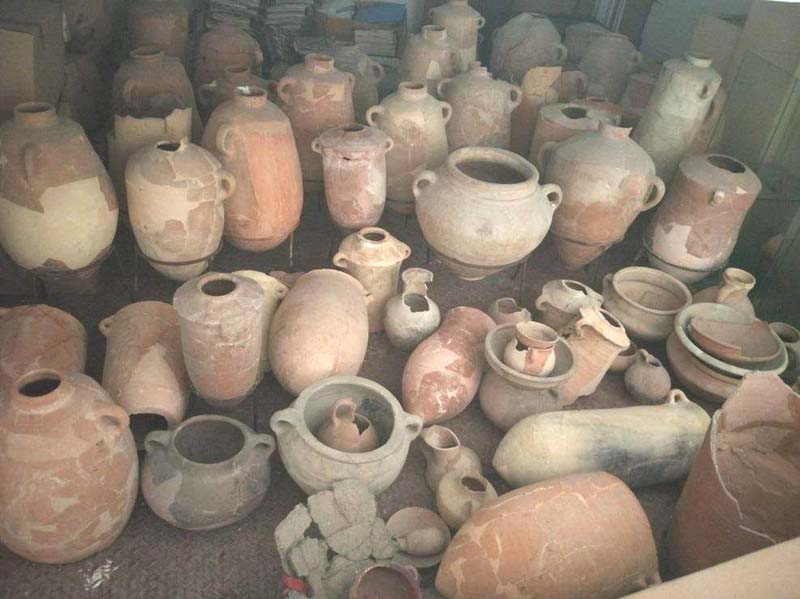

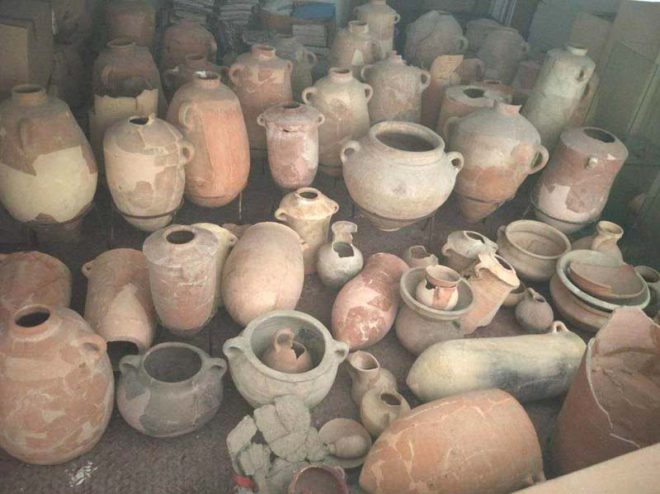
 Terracotta vats and vessels stained purple from the fabulous dyes of the Bible era were excavated 50 years ago at the site of Tel Shikmona, south of Haifa. But no further studies were done on the Iron-Age findings. The pottery sat gathering even more dust on storehouse shelves at Haifa University. History waited to be revealed.
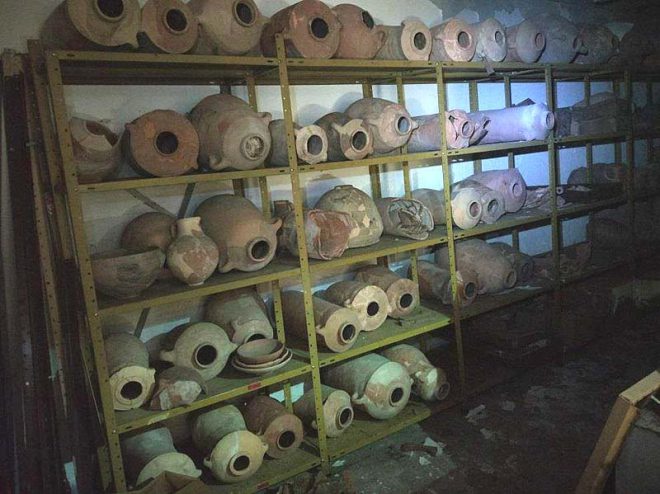
Researchers Prof. Ayelet Gilboa and PhD candidate Golan Shavi of the University of Haifa took up the challenge when they were given access to the findings. Their study, which includes chemical analysis of the vessels’ contents, revealed some surprising facts from Tel Shikmona.
“It is very rare to find shards from this period featuring purple color,” say the researchers. “Such items have been found in other sites along Israel’s northern coast, such as Dor and Akko, but in small numbers. Yet at Shikmona there are almost 30 vessels of this type. This is very unusual.”
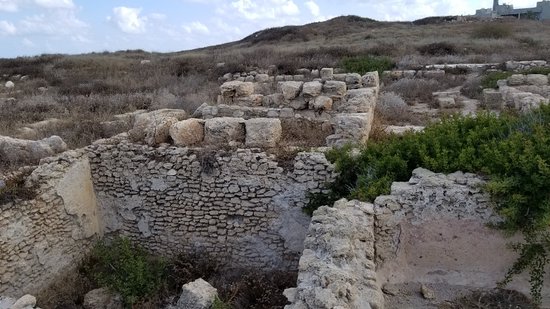
There’s always been a question about Tel Shikmona. Its salty, windy location, just off a rocky coast, wasn’t good agricultural ground. It was too isolated to be a trade center. There was a small fortified part, the one being excavated now, where during Biblical times, apparently no one lived. So what was the purpose of it?
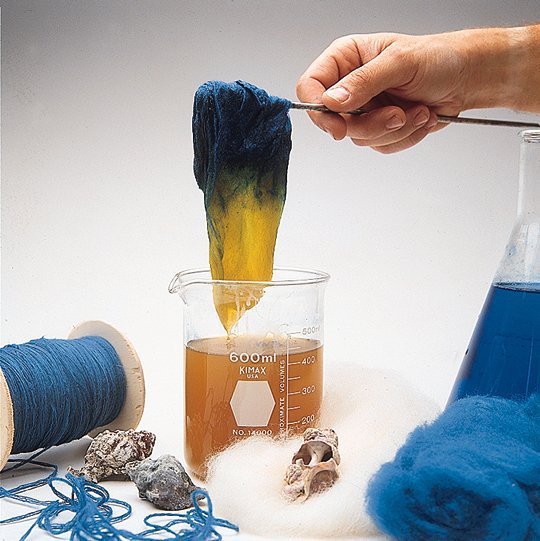
There was an important natural resource nearby, one that made people rich who knew how to exploit it. Murex snails, whose glands produce blue, crimson and purple colors. The creatures thrived in the nearby waters, as piles of discarded shells at the site testify.
Fabrics dyed in those colors were so expensive and prestigious that only the very wealthy and aristocrats were allowed to wear them. They were a staple of the ancient world’s trade, like gold and silver. Read about discovered Roman-era dyed textiles here.
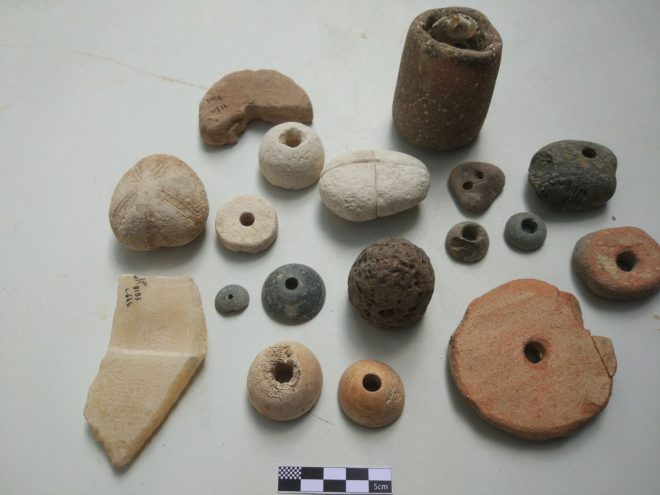
It made sense to establish dye-producing works at Shikmona, close to the Murex’s habitat. Spindles and loom weights were also found in the workshop, proof that ready-dyed textiles were manufactured in the place.
Some or most of the dyes were also dried and ground for sale abroad, judging from vats still packed with the powder.
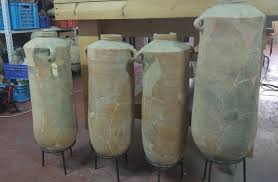
Who owned and ran the factory? Gilboa and Shavi determined that the vats and amphorae were mostly imported from Cyprus via the Phoenicians, who were the great maritime traders of the era (11th-6th century BCE). The Phoenicians alone held the secret of producing those valuable dyes from the Murex snail. The secret of the dye was recently rediscovered in Israel, as we reported.
This new research may disrupt the historical assumption that Shikmona and the Carmel sea coast were entirely under Israel’s jurisdiction during Biblical times, pointing to at least partial Phoenician control of the region.
“To date, no center for the production of purple has been found in Iron Age Phoenicia,” the researchers add. “We know that there were production sites in Tyre and Sidon and other sites in Lebanon, and thousands of Murex shells have been found there, but it seems that most of them are from the Classical periods and there is still no evidence of the production sites themselves and no direct evidence of the dye.
“Our identification of the character and function of Shikmona makes it the first site found from this period, and certainly one of the most important ones. Rather than being considered a region of secondary importance in this period, the Carmel coast can now gain its rightful place as one of the most important production areas of the dye in ancient times in general, and during the biblical period in particular.”
Some of the findings can be viewed at National Maritime Museum in Haifa.
Photo credits: University of Haifa and www.techelet.com