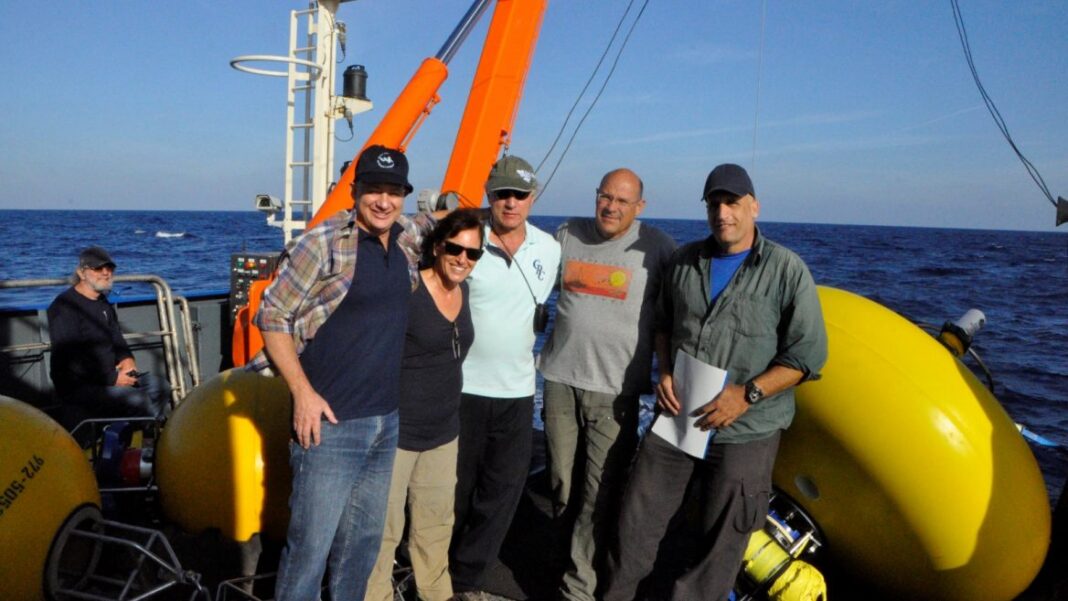

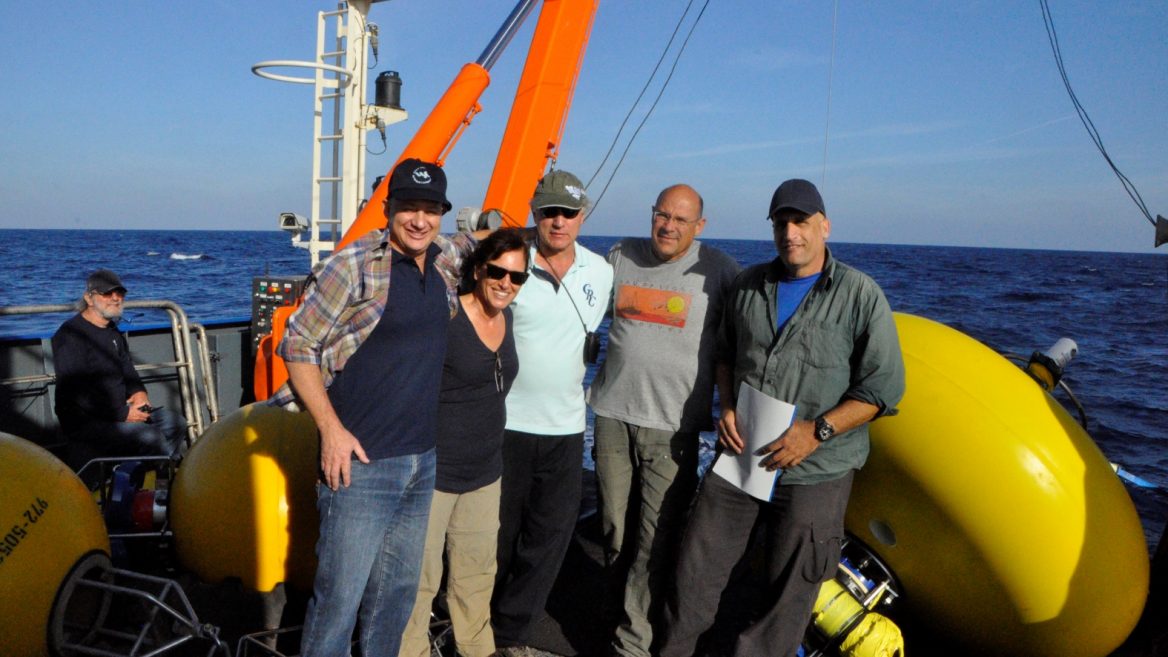
A first-of-its-kind deep-sea research station placed 50km (31mi) from the Israeli shore called DeepLev which combines “deep” with the Israeli meaning for heart which is “lev”. Reaching a 1.5km depth (~1mi) it is set to shed new light on the eastern Mediterranean marine environment and the implications changes in this ecosystem hold for humans.
The marine environment makes up over 70% of our planet’s surface, it holds 97% of all water and is the cradle of life on earth. Still, the ecological, physical and chemical processes underlying marine ecosystems remain largely unknown. These processes provide significant benefits to humans and hold other implications for us; it is, therefore, necessary to gain a better understanding of them. First anchored in January 2017, scientists have placed, a first-of-its-kind deep-sea research station (named DeepLev) some three hours sailing distance from Haifa in northern Israel.
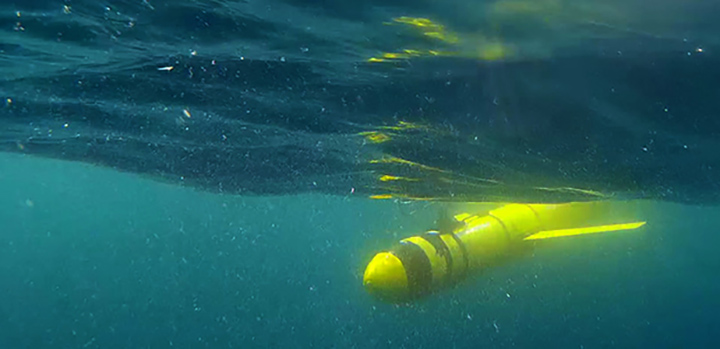
“This is a unique initiative in the eastern basin of the Mediterranean Sea,” say Professors Ilana Berman-Frank and Yishai Weinstein of Bar Ilan University, who jointly lead the project with Professor Barak Herut and Dr. Timor Katz of the Israel Oceanographic and Limnological Research (IOLR). The project – a complex and resource-intensive one – was conceived and conducted in collaboration with colleagues at the Hebrew University in Jerusalem, Tel Aviv University and the Geological Survey of Israel. Its primary objective is to discover what is really happening in the deep open sea and the impact of human activity and global change have on this environment: “we do that using a station, anchored to a fixed location, which constantly monitors and tracks what is happening there” explains Professor Berman-Frank.
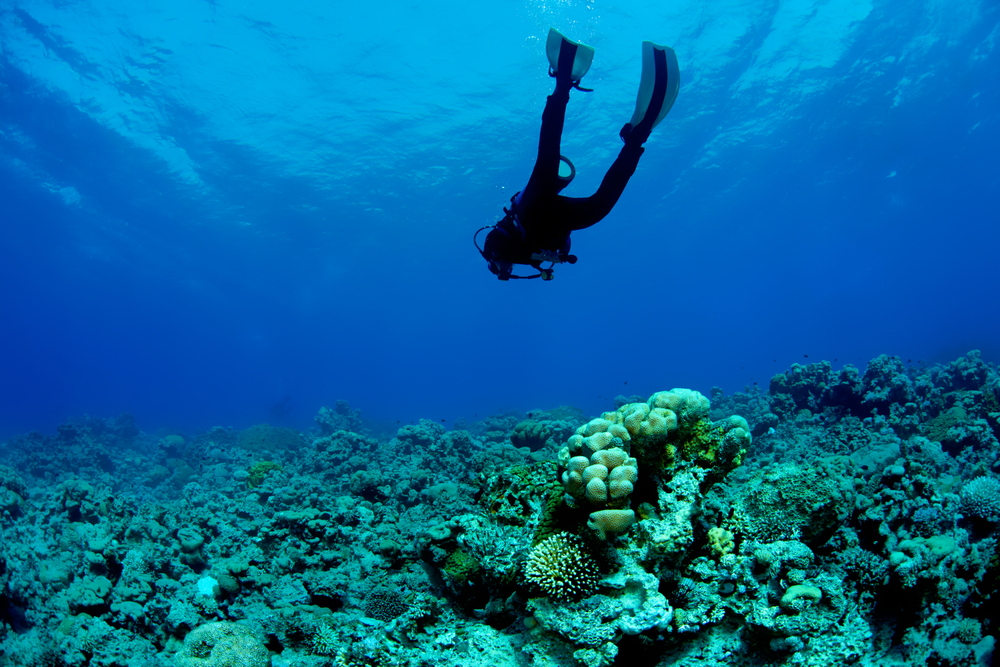
The team will be able not only to monitor the processes but also to understand their significance and the implications they have for human society: “understanding these processes is hugely important because it helps us realize how the entire system works,” she points. “An incident in one marine location can affect other parts of this environment. The eastern Mediterranean basin is a particularly sensitive environment that is subject to the effects of climate change and other human pressures – gas explorations, maritime transport, industrial and agricultural pollution, and desalination plants; data collection is essential for predicting possible ecosystem responses to these various pressures.”
The station’s instruments continuously and independently collect data allowing researchers to study biological activity processes, currents and wave patterns, and the flows of organic matter from the surface to the deep. The latter is especially important to understand how the marine environment copes with the increase in atmospheric carbon dioxide level; it is professionally referred to as ‘the biological pump.’ The pump is powered by small marine plants – algae – that are critical in regulating carbon dioxide and ocean acidity.
Algae are a basic building block in the marine food web, grazed by other marine creatures, while dead algae sink to the sea bottom: “algae have a critical role as they transport excess CO2 from the atmosphere to the sea bottom and assist in moderating global warming,” explains Professor Berman-Frank. “Our project was also conceived to understand the downward flows of carbon better and other particles from biological or other sources” adds Professor Weinstein. “Instruments called ‘sediment traps’ are placed along the cable, and they capture the particles; we can measure the flows and understand the dynamics of sedimentation along the water column gradient from the surface to the seabed.”
“An article by IOLR’s Dr. Tal Ozer published in April 2016 in the journal Global and Planetary Change summarizes 30 years of measurements in the Eastern Mediterranean and analyses the changes in sea temperature and salinity,” says Professor Barak Herut, IOLR’s Director General.
“It clearly demonstrates the evidence for sea warming and climate change. The Mediterranean Sea body is divided into several strata. The middle layer exhibits warming that is consistent with the IPCC’s (inter-government panel on climate change) predictions; the surface layer’s temperature, however, increases much more rapidly than the forecast.” This phenomenon, according to Herut, is very significant because it influences the occurrence of extreme weather events, the amounts of precipitation and, of course, the ecosystem itself. The new monitoring station will further assist in tracking these trends and predicting their possible ramifications.
Another important aspect that the research team would like to explore is the effect changes in the nearshore environment (circa 200 meters depth) have on the deep sea. Professor Herut explains that “nearshore waters contain higher levels of pollution due to runoff from extensive human uses. The monitoring station will assist in studying the interactions between the two environments.” preliminary data from the first six months already indicate that nearshore waters have greater influence during specific periods: “and the station will allow us to better measure these interactions and assess their future trends.”
The new Israeli station is one of several similar monitoring stations around the world – in the Atlantic and the Pacific Oceans, as well as one in the north-western part of the Mediterranean, run by a French organization. According to Professor Herut, “we aim to operate these stations for the long-term and to gain a deep understanding of what is happening in the marine environment.”
He emphasizes that insights gained in the marine stations go beyond the sea itself: “the understanding that the rising level of atmospheric CO2 is becoming an acute threat to planetary systems is a result of long-term monitoring in a permanent station.” The Israeli station will also monitor CO2 concentration level, thus tracking the process of ocean acidification which affects marine organisms that use calcium carbonate to build their skeleton and shells (for example plankton species, corals, snails or oysters). “The new station, and an additional station IOLR operates in a different location, are part of an international network to track ocean acidity levels (pH), and they will help us assess whether ocean acidification also occurs in our part of the world, and if so, at what rate.”
The station is essentially a massive cable, 1.5 kilometers long, with measurement instruments of different types attached at various depth levels. It is fixed to a designated location for a period of six months to collect the data, at which point the scientists take it out to extract the measurements and then drop it back again for another six months. “It may seem like a trivial task placing a few devices at 1500 meters depth,” says Professor Berman Frank “but it actually took a team of experts – led by Dr. Timor Katz and Ronen Alkalay, a doctoral student – three years to plan and carry out.
The location of the station is some 50 kilometers into the sea west of Haifa; we had to carefully think about how to steady the station, precisely in the same position we wanted it to be, accounting for the currents and storms that occur here, and protecting it from ship collisions or unintentional damage. All of this required detailed logistical considerations and plenty of resources.” One of these resources, Professor Herut reports, is the new government-sponsored ‘Bat Galim’ acquired by IOLR, which has been transformed into the most advanced research vessel in the Levant. Professor Berman-Frank enthusiastically recounts that “anchoring the new station took eight hours and a crew of 25 people.
We left early in the morning and completed the task only by sundown. It is a logistically complex endeavor.” Professor Herut adds, “Positioning such a station, or pulling it out, requires truly deep maritime knowledge and I am glad to say we have successfully accomplished it. The direct costs of each day at sea – excluding insurance, mooring, maintenance, equipment, or other overheard – exceeds 10,000 USD. The station’s equipment is also very expensive: 1500 meters of multiple instruments and floatation devices that have to withstand water pressure. With every extraction, the instruments’ batteries have to be replaced, and they also cost thousands of dollars. To extract data, the instruments have to be disassembled and then assembled again.
“Although it is logistically complex, at the end of the day, this investment will pay off because the station can provide data for many years and would support not only academic research but also other public and governmental objectives. This is not only a research platform; it stands to assist evidence-based decision making in different domains.”
One such domain is the economic activity in the Mediterranean. About half a billion people live around the Mediterranean Sea, and this entails increasing human pressure on the marine environment. “Even Israel’s short coastline is crowded with power plants, desalination plants that release chemical pollution, natural gas exploration and production sites and their infrastructure” Professor Berman Frank describes. “Industrial, urban and agricultural sewage is released to the sea. All of these affect the ecosystem and threaten human well-being. We now know that urban and agricultural sewage saturate the marine environment with nitrogen and phosphorous that lead to ‘algal bloom’, some of them are toxic, and this has led to cattle, pets, and even human deaths around the world.”
“With only 190 kilometers of coastline,” she concludes, “Israel has no marine or coastal backup in an extreme event or accident. We need to be cautious and vigilant in preventing an environmental disaster, and we also need to better understand the ecosystem, so that if something does happen, we would be prepared whether the cause is natural gas – or oil production in the future – or other sources of pollutions. The capacity to monitor and track changes in our deep marine environment is of tremendous importance.”
This story was created by *ZAVIT – Israel’s Science and Environment News Agency