Cutting down ancient trees to make way for Jaffa’s eco-train

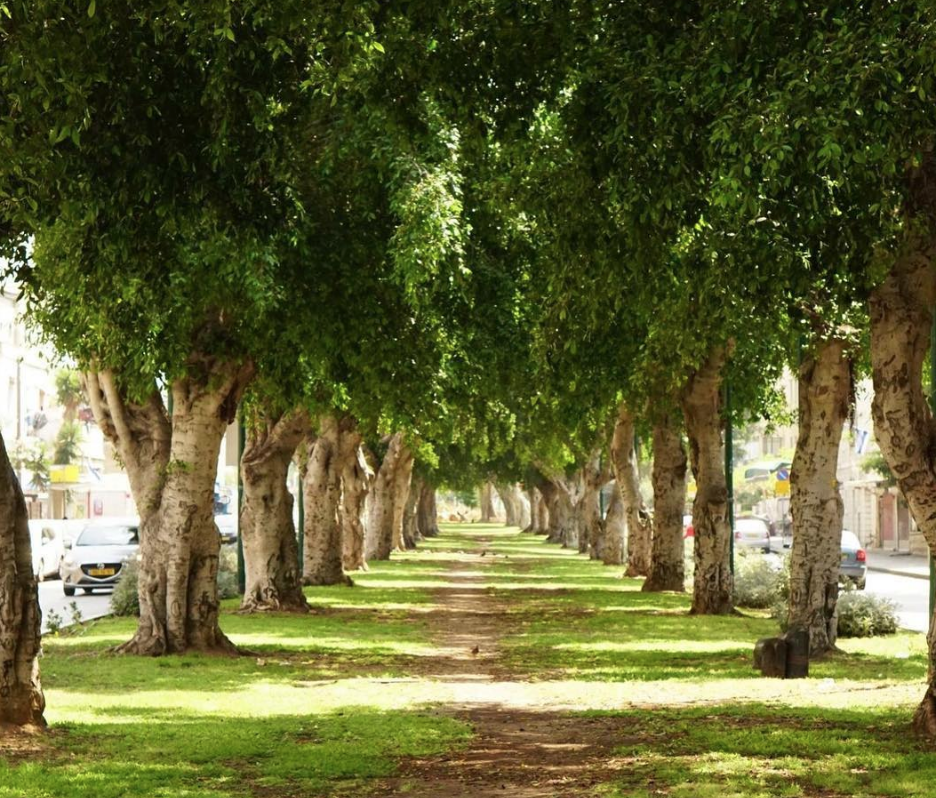
Fig trees on the southern side of Jerusalem Boulevard. Their days are numbered.

Tel Aviv is a relatively new city, but its older sister city next door, to which it shares the same municipality is home to dozens of hundreds of ancient trees, some which the city of Tel Aviv is hellbent on cutting down.

Since 2002, the city has proposed a light rail train to traverse the sister cities of Tel Aviv and Jaffa and to connect them to the suburbs. It’s a great idea, but there is a slight problem. How will passengers get on and off the train with the old trees in the way?

Why cut them down of course!

The trees in question grow on the main artery road Jerusalem Boulevard in Jaffa. There are at least 29 trees from 70 to 102 years old, all historical, and selected to be cut down to make space for train train stations. The city has already starting marking the trees destined for removal, arguing that they are sick anyway, says Vered Navon, activist and photographer working on a book about the trees. She helped found a group called Save the Trees, of which there are 500 members. And they are fighting to save the trees.
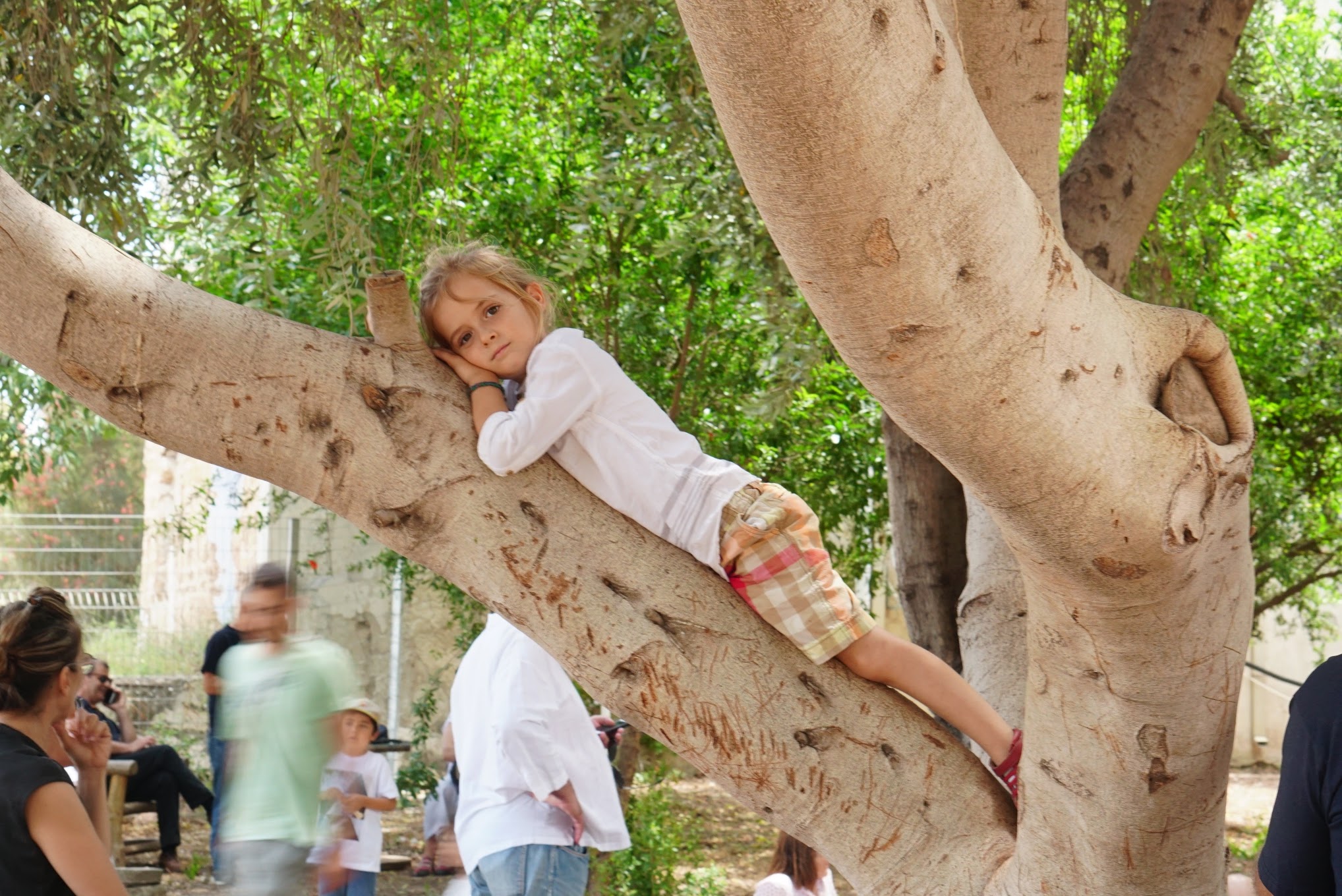
fig tree, ficus, mikve israel
A boy on a fig tree in Mikve Israel

A meeting next Tuesday night in Jaffa is set up to inform the public about what the city plans to do. Professors and activists will explain the situation and propose alternatives.

Says Navon, “They in the city, they don’t think about the trees. They only consider the electricity and water it will take to maintain them. They don’t understand that they give us shelter, shade, clean air. It’s Jaffa’s green lung.”

The trees slated for removal are 102-year old spindly Washington palms and 70-year old sprawling fig trees with arms hugging in every direction. The figs were planted when Israel became a state 70 years ago. The figs give enormous amounts of shade and are home to birds and bats that eat berries and bugs. The vision is to turn the boulevard, or at least part of it, into a pedestrian only area, with the train connecting people to shops, cafes and their homes.

Instead of the dozens of buses that run down the street every few minutes, a smooth and easy electric train will traverse the city in speed and style. Activists say that the trees don’t need to be cut down. That one of the city planners that is on the side of the trees says that the stations can be moved 20 meters and the trees can be spared. But the city isn’t listening.

The activists propose that the company the city hired, Netta, can carry out the engineering work and simply move the three stations along the boulevard to spots where the doors of the trains can open with ease.

The palm trees are a common variety, the Washington palm. But they are uncommonly tall, and have some history: “The ancient palms were planted by the students of Elihau Krause, the founder of Mikve Israel,” says Vered, citing Israel’s first agriculture college located in Holon. Funded by the Rothschilds and other prominent figures, it is this school that in the 1800s already was growing cultivars tolerant to desert climates. It is this school and its researchers that gave Israel the ability and spirit to transform the country into an agriculture dynasty.
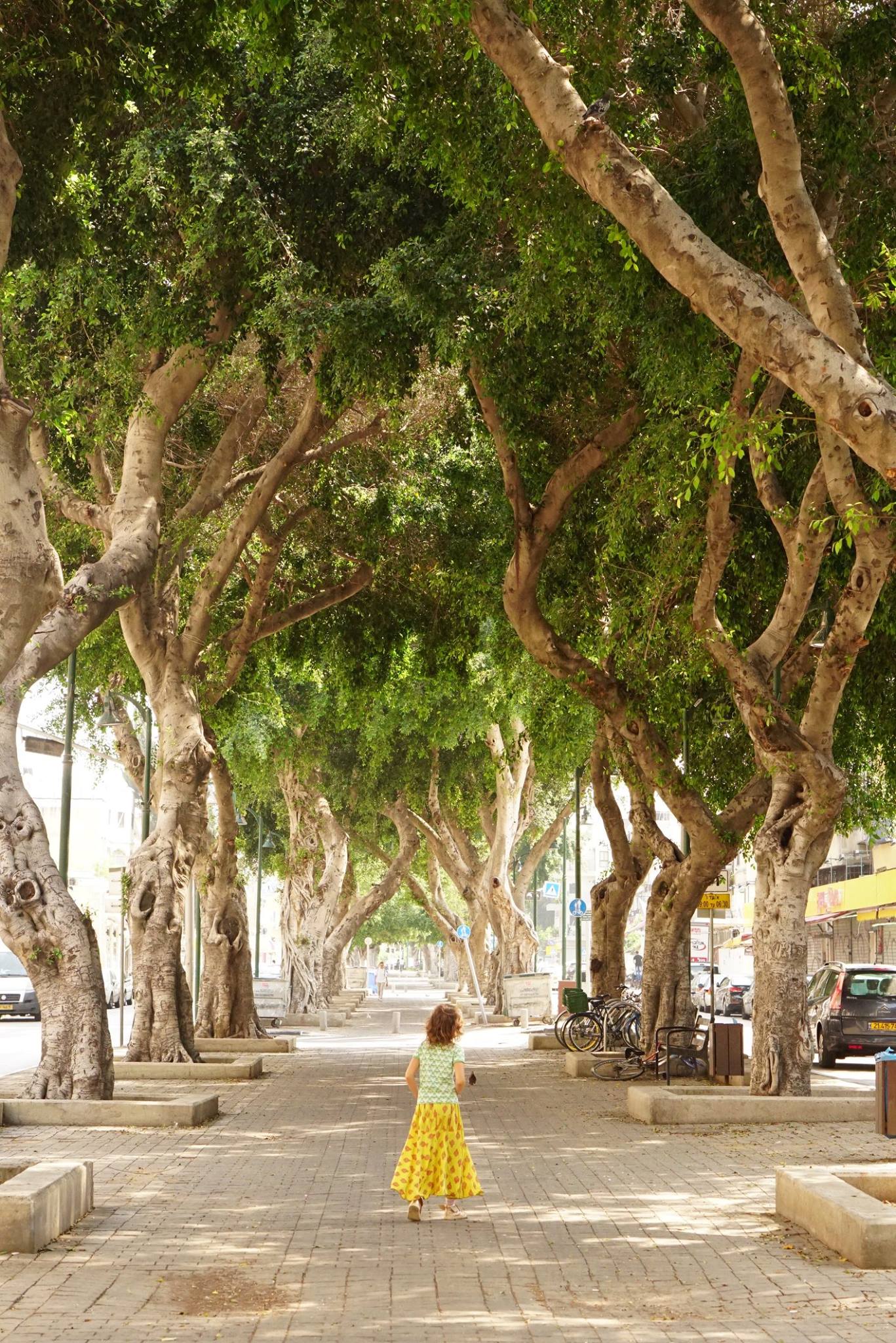
Fig trees on Jerusalem Boulevard

Jaffa resident Yisrael Borochov who lives on Dr. Paul Erlich Street, one of the proposed train stops said that the city has a history of doing what it wants, without regard for the environment or what’s right for the future. He tells Green Prophet: “They cut down two Washington palm trees on Erlich without asking anyone, and when I turned to Nitza Smoke, in charge of preserving the environment for the city, she didn’t even reply. The trees were about 120 years old. From that moment I lost faith in the establishment because I understood they do whatever they want to do, whenever they want to do, and it’s going to happen today with the train.

“There are not too many ancient trees in Jaffa or Tel Aviv. The city of Tel Aviv should be proud of every single tree and not looking for a reason to cut them down.”

Navon says that the same trees, the fig trees, were not cut down on the wealthier established part of Tel Aviv along Rothschild Boulevard. She insinuates that the reason the city is marking the so-called “sick trees” is because the weaker demographic of Jaffa won’t resist what the city wants to do.

We wrote the city for feedback and will post in the comments or update the article when we get their reply.

Meanwhile, want to fight for the trees? Join the Tuesday evening event in Jaffa. Details here.

Karin Kloosterman
Karin Kloostermanhttp://www.greenprophet.com
Karin Kloosterman is an award-winning journalist, innovation strategist, and founder of Green Prophet, one of the Middle East’s pioneering sustainability platforms. She has ranked in the Top 10 of Verizon innovation competitions, participated in NASA-linked challenges, and spoken worldwide on climate, food security, and future resilience. With an IoT technology patent, features in Canada’s National Post, and leadership inside teams building next-generation agricultural and planetary systems — including Mars-farming concepts — Karin operates at the intersection of storytelling, science, and systems change. She doesn’t report on the future – she helps design it. Reach out directly to [email protected]

LEAVE A REPLY

Please enter your comment!
Please enter your name here

TRENDING

Astro uses AI to help procure land for renewable energy

For oil-rich, environmentally vigilant Gulf states, Astro isn’t just another startup story. It is a blueprint for accelerating an energy transition that is now existential, not optional.

The Science Behind How Elite Marathon Runners Train

Discover the science behind elite marathon training. Explore techniques, nutrition, and mental strategies that propel top runners to success.

Earth building with Dead Sea salt bricks

Researchers develop a brick made largely from recycled Dead Sea salt—offering a potential alternative to carbon-intensive cement.

The Christ’s thorn (sidr tree) is also a well-known folk medicine

Christ’s thorn jujube (Ziziphus spina-christi) also known as the sidr tree is a real, identifiable tree native to the Middle East, and it appears—directly or indirectly—in Islam, Judaism, and later Christian tradition. The connections between the three faiths are not theological agreements but overlapping uses, names, and symbolic associations rooted in the same landscape.

Farm To Table Israel Connects People To The Land

Farm To Table Israel is transforming the traditional dining experience into a hands-on journey.

Qatar’s climate hypocrisy rides the London Underground

Qatar remains a master of doublethink—burning gas by the megaton while selling “sustainability” to a world desperate for clean air. Wake up from your slumber people.

How Quality of Hire Shapes Modern Recruitment

A 2024 survey by Deloitte found that 76% of talent leaders now consider long-term retention and workforce contribution among their most important hiring success metrics—far surpassing time-to-fill or cost-per-hire. As the expectations for new hires deepen, companies must also confront the inherent challenges in redefining and accurately measuring hiring quality.

8 Team-Building Exercises to Start the Week Off 

Team building to change the world! The best renewable energy companies are ones that function.

Thank you, LinkedIn — and what your Jobs on the Rise report means for sustainable careers

While “green jobs” aren’t always labeled as such, many of the fastest-growing roles are directly enabling the energy transition, climate resilience, and lower-carbon systems: Number one on their list is Artificial Intelligence engineers. But what does that mean? Vibe coding Claude? 

Somali pirates steal oil tankers

The pirates often stage their heists out of Somalia, a lawless country, with a weak central government that is grappling with a violent Islamist insurgency. Using speedboats that swarm the targets, the machine-gun-toting pirates take control of merchant ships and then hold the vessels, crew and cargo for ransom.

Leopoldo Alejandro Betancourt López Turned Ocean Plastic Into Profitable Sunglasses

Few fashion accessories carry the environmental burden of sunglasses. Most frames are constructed from petroleum-based plastics and acrylic polymers that linger in landfills for centuries, shedding microplastics into soil and waterways long after they've been discarded. Leopoldo Alejandro Betancourt López, president of the Spanish eyewear brand Hawkers, saw this problem differently than most industry executives.

Why Dr. Tony Jacob Sees Texas Business Egos as Warning Signs

Everything's bigger in Texas. Except business egos.  Dr. Tony Jacob figured...

Israel and America Sign Renewable Energy Cooperation Deal

Other announcements made at the conference include the Timna Renewable Energy Park, which will be a center for R&D, and the AORA Solar Thermal Module at Kibbutz Samar, the world's first commercial hybrid solar gas-turbine power plant that is already nearing completion. Solel Solar Systems announced it was beginning construction of a 50 MW solar field in Lebrija, Spain, and Brightsource Energy made a pre-conference announcement that it had inked the world's largest solar deal to date with Southern California Edison (SCE).

Related Articles

Popular Categories