

Plant diets help farms produce 20x more protein

vegawarian, flexitarian vegan sandwich, black bread with vegetables held by a woman wearing a vegan t shirt
We love vegan burgers. New research shows how good veganism is for land use.

About a third of the food produced for human consumption is estimated to be lost or wasted globally. But the biggest part of food waste, which is not included in that estimate, may be through dietary choices that result in the squandering of environmental resources.

Consider that cows, chickens, pigs – whether for eggs, dairy, or meat – all need to eat plants – and farmers need to grow food for them. Imagine there were no more meat eaters? If we all become vegans or ate meat grown in a lab? How would that shift edible crops for us?

This is a good study for proponents of Alt Protein, alternative meat, fake fish and milk from a lab companies.
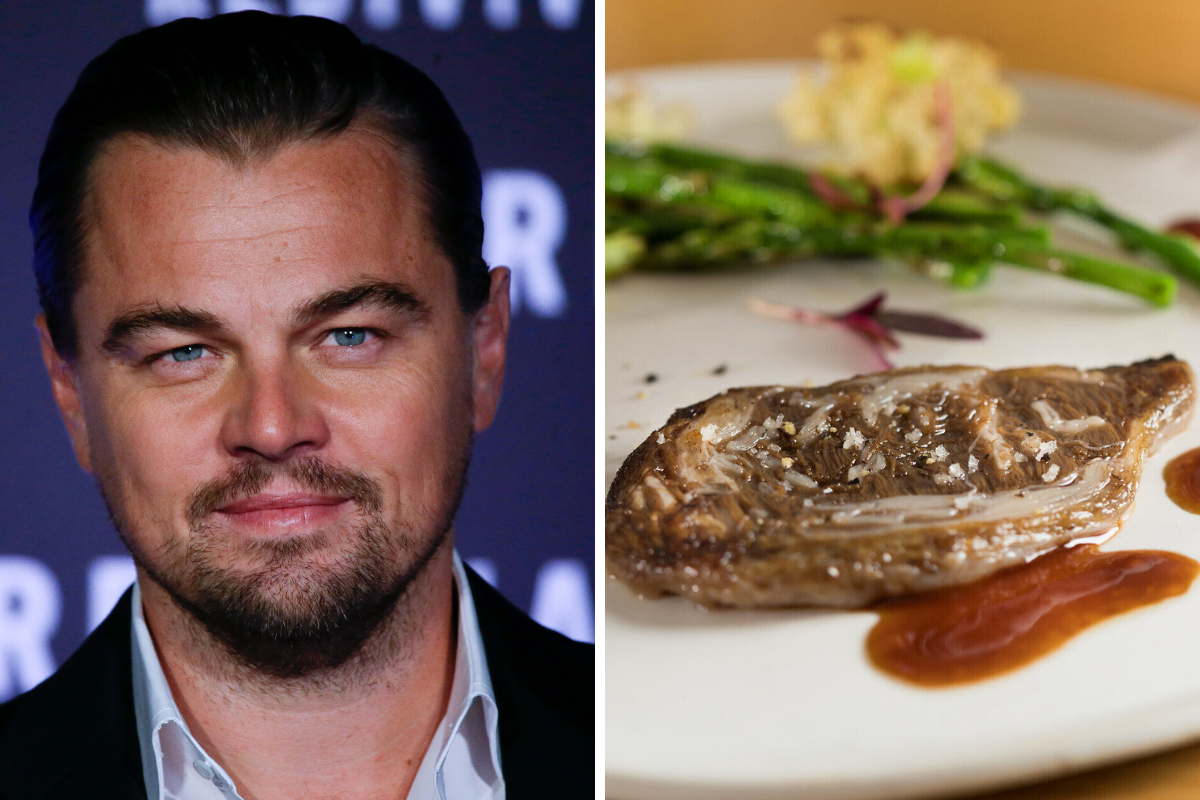
Leonardo Dicaprio, meatless meat, aleph farms, mosa meat, investment
Leonardo DiCaprio invests in Israel’s Aleph Farms, a company from Israel that makes meat in a lab

In a study published in the Proceedings of the National Academy of Sciences (PNAS), researchers at the Weizmann Institute of Science and their colleagues have now found a novel way to define and quantify this second type of wastage.

The scientists have called it “opportunity food loss,” a term inspired by the “opportunity cost” concept in economics, which refers to the cost of choosing a particular alternative over better options.

Opportunity food loss stems from using agricultural land to produce animal-based food instead of nutritionally comparable plant-based alternatives.

The researchers report that in the United States alone, avoiding opportunity food loss – that is, replacing all animal-based items with edible crops for human consumption – would add enough food to feed 350 million additional people, or more than the total US population, with the same land resources.

“Our analysis has shown that favoring a plant-based diet can potentially yield more food than eliminating all the conventionally defined causes of food loss,” says lead author Alon Shepon, who works in the lab of Prof. Ron Milo in the Department of Plant and Environmental Sciences. 

I had the pleasure of gardening with Alon a few years ago when he showed the parents of the Tel Aviv Waldorf School, Beit Hinuch Aviv, how to grow a permaculture garden. We’ve ben harvesting it ever since. Earlier he’s researched papers on why beef is much worse for the planet than chicken or pork. Read the brief on the study here.

Alon Shepon, favors turning farms into food for people
Alon Shepon

In the 2018 study, the scientists compared the resources needed to produce five major categories of animal-based food – beef, pork, dairy, poultry, and eggs – with the resources required to grow edible crops of similar nutritional value in terms of protein, calories, and micronutrients.

They found that plant-based replacements could produce 2 to 20 times more protein per acre than using that land for animal feed.

The most dramatic results were obtained for beef. The researchers compared it with a mix of crops – soya, potatoes, cane sugar, peanuts, and garlic – that deliver a similar nutritional profile when taken together in the right proportions.

The land area that could produce 100 grams of protein from these crops would yield only 4 grams of edible protein from beef. In other words, using agricultural land for producing beef instead of replacement crops results in an opportunity food loss of 96 grams – that is, a loss of 96% – per unit of land.

This means that the potential gain from diverting agricultural land from beef to plant-based foods for human consumption would be enormous.

Karin Kloosterman
Karin Kloostermanhttp://www.greenprophet.com
Karin Kloosterman is an award-winning journalist, innovation strategist, and founder of Green Prophet, one of the Middle East’s pioneering sustainability platforms. She has ranked in the Top 10 of Verizon innovation competitions, participated in NASA-linked challenges, and spoken worldwide on climate, food security, and future resilience. With an IoT technology patent, features in Canada’s National Post, and leadership inside teams building next-generation agricultural and planetary systems — including Mars-farming concepts — Karin operates at the intersection of storytelling, science, and systems change. She doesn’t report on the future – she helps design it. Reach out directly to [email protected]

LEAVE A REPLY

Please enter your comment!
Please enter your name here

TRENDING

Remilk makes cloned milk so cows don’t need to suffer and it’s hormone-free

This week, Israel’s precision-fermentation milk from Remilk is finally appearing on supermarket shelves. Staff members have been posting photos in Hebrew, smiling, tasting, and clearly enjoying the moment — not because it’s science fiction, but because it tastes like the real thing.

Canada gives green light to Remilk’s cloned milk

For now, the symbolic impact is huge. “Reinventing dairy by removing cows from the equation” was once a science-fiction idea. With Canada’s green light, it’s officially a market reality — and the race to define the future of milk has entered a new phase.

Startup FreezeM turns food waste into insect protein for fish and chicken

The core technology (PauseM®) is based on inducing a “paused” or “suspended animation” state in Black Soldier Fly (BSF) neonates so that they can survive transportation with extended shelf life before being revived, fed and grown for animal feed. They also have a partnership with Hermetia Baruth GmbH (Germany) for joint production / distribution of PauseM in Europe.

AI Tool Reduces Greenhouse Gas Emissions Associated with Livestock Farming and Land Use

Beyond farm-level tools, the research team has harnessed artificial intelligence to develop a user-friendly, web-based platform – referred to as a 'digital twin' – to provide detailed insights into how different types of land use affect methane emissions across the UK.

Qatar’s climate hypocrisy rides the London Underground

Qatar remains a master of doublethink—burning gas by the megaton while selling “sustainability” to a world desperate for clean air. Wake up from your slumber people.

How Quality of Hire Shapes Modern Recruitment

A 2024 survey by Deloitte found that 76% of talent leaders now consider long-term retention and workforce contribution among their most important hiring success metrics—far surpassing time-to-fill or cost-per-hire. As the expectations for new hires deepen, companies must also confront the inherent challenges in redefining and accurately measuring hiring quality.

8 Team-Building Exercises to Start the Week Off 

Team building to change the world! The best renewable energy companies are ones that function.

Thank you, LinkedIn — and what your Jobs on the Rise report means for sustainable careers

While “green jobs” aren’t always labeled as such, many of the fastest-growing roles are directly enabling the energy transition, climate resilience, and lower-carbon systems: Number one on their list is Artificial Intelligence engineers. But what does that mean? Vibe coding Claude? 

Somali pirates steal oil tankers

The pirates often stage their heists out of Somalia, a lawless country, with a weak central government that is grappling with a violent Islamist insurgency. Using speedboats that swarm the targets, the machine-gun-toting pirates take control of merchant ships and then hold the vessels, crew and cargo for ransom.

Leopoldo Alejandro Betancourt López Turned Ocean Plastic Into Profitable Sunglasses

Few fashion accessories carry the environmental burden of sunglasses. Most frames are constructed from petroleum-based plastics and acrylic polymers that linger in landfills for centuries, shedding microplastics into soil and waterways long after they've been discarded. Leopoldo Alejandro Betancourt López, president of the Spanish eyewear brand Hawkers, saw this problem differently than most industry executives.

Why Dr. Tony Jacob Sees Texas Business Egos as Warning Signs

Everything's bigger in Texas. Except business egos.  Dr. Tony Jacob figured...

Israel and America Sign Renewable Energy Cooperation Deal

Other announcements made at the conference include the Timna Renewable Energy Park, which will be a center for R&D, and the AORA Solar Thermal Module at Kibbutz Samar, the world's first commercial hybrid solar gas-turbine power plant that is already nearing completion. Solel Solar Systems announced it was beginning construction of a 50 MW solar field in Lebrija, Spain, and Brightsource Energy made a pre-conference announcement that it had inked the world's largest solar deal to date with Southern California Edison (SCE).

Related Articles

Popular Categories