Earth is in the midst of its 6th mass extinction – wake up call, folks

erlich-species

Is humanity as a species threatened with extinction? Is global warming resulting in irreversible climate patterns that are destroying animal and plant species at rapid rates, especially in the Middle East? These questions are causing great concern to scientists now studying the rapid extinction of many species of animals on earth during the past 100 years.

Sixth Mass Extinction

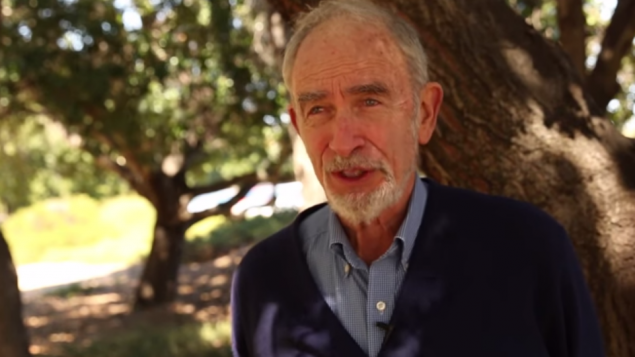
A group of scientists, led by Stanford University biology professor Paul Ehrlich, author of the controversial book Population Bomb, warn that the earth is now  embarking on its “sixth mass extinction” with animals disappearing about 100 times faster than they used to.

This is not the first time that Professor Ehrlich has warned that mankind is destroying life on earth. He predicted back in 1968 that by the year 2000, more than 4 billion people will have died from mass starvation; including 65 million Americans. Obviously, this failed to occur; and despite his dire warnings, the earth’s human population has now increased to over 7 billion.

dinosaurs

In prehistoric times, periods of mass extinction, including the famed Cretaceous-Tertiory mass extinction of 66 million years ago (said to have wiped out the dinosaurs), were attributed  to natural phenomena such as natural climate change, volcanic eruptions and massive asteroids.

According to Ehrlich, this new mass extinction period is largely human caused.

The “sixth mass extinction”, that Ehrlich and his colleagues are now warning is already occurring, deals with the large numbers of vertebrate animal species (396), ranging from fish to mammals, that have become
extinct during the past 110 years alone.

This rate is more rapid than at any other time in recorded history. Invertebrates, including insects, have also experienced significant decreases; with large populations of honeybees disappearing due to a phenomenon known as CCD or colony collapse disorder; and by bee colonies literally freezing to death, due to abnormally cold weather patterns.

Could the demise of bees be a part of Ehrlich’s sixth mass extinction event – now on?

In the video below Professor Ehrlich indicates his concerns over the reduction of numerous animal species, including honey bees.

[youtube]https://www.youtube.com/watch?v=cmb5hn2X2ok[/youtube]

Regions with fragile ecosystems like the Middle East are experiencing reductions of wild animal populations at an alarming rate; with many species of mammals, birds amphibians, reptiles and fish either becoming endangered or extinct altogether.

As a result of  Ehrlich’s study, “rapid, greatly intensified efforts are needed to conserve already threatened species; and  to alleviate pressures on their populations — notably habitat loss, over-exploitation for economic gain and climate change.”

Where more can this apply than to the Middle East, where man caused catastrophes, including frequent warfare (see what ISIS did to Syria this week), are decimating entire regions.

There is hope, however.

Earlier, Ehrlich predicited that countries like England would not exist by the year 2000, due to man-caused ecological calamaties. The UK is still here; and so are most other countries as well. More intense effort is needed, however,  to prevent the “sixth mass extinction” from being so dramatic.

Read more on ecological issues caused by mankind:
Could global warming trigger a new ice age?

The wrath of global warming and the Middle East

Oceans Spiralling Downward, Threatening Life on Earth

 Image of Sixth Mass Extinction: Guardian LV

Maurice Picow
Maurice Picowhttps://www.greenprophet.com/
Maurice Picow grew up in Oklahoma City, U.S.A., where he received a B.S. Degree in Business Administration. Following graduation, Maurice embarked on a career as a real estate broker before making the decision to move to Israel. After arriving in Israel, he came involved in the insurance agency business and later in the moving and international relocation fields. Maurice became interested in writing news and commentary articles in the late 1990’s, and now writes feature articles for the The Jerusalem Post as well as being a regular contributor to Green Prophet. He has also written a non-fiction study on Islam, a two volume adventure novel, and is completing a romance novel about a forbidden love affair. Writing topics of particular interest for Green Prophet are those dealing with global warming and climate change, as well as clean technology - particularly electric cars.
1 COMMENT
  1. It really wouldn’t take that much to put humankind in jeopardy. When you go to your favorite supermarket, think for moment where all that food comes from and what’s involved in getting it there. A few disruptions here and there can be disastrous.

Comments are closed.

TRENDING

Key Rules Recreational Cannabis Users Must Follow in Pittsburgh

Adults who are 21 or older can carry up to 30 grams. This amount applies to personal use within Pittsburgh’s limits. Carrying more could lead to confiscation or legal action. Staying under the limit avoids problems during any public stop.

Turning Your Energy Consultancy into an LLC: 4 Legal Steps for Founders in Texas

If you are starting a renewable energy business in Texas, learn how to start an LLC by the books.

Ancient Chinese medicine might heal spinal cord injuries

In the study, the scientists didn’t just test one plant compound at a time. They tested two traditional Chinese medicine compounds together — luteolin (from flowers like honeysuckle and chrysanthemum) and astragaloside IV (from astragalus root, Huang Qi). These plants have been combined in Chinese herbal formulas for centuries to help the body recover from injury and inflammation.

Luxury meets the textile waste stream with Coach – Bank & Vogue

A new collaboration between luxury brand Coach and textile reuse pioneer Bank & Vogue attempts to stitch those two worlds together: high fashion and the global textile waste stream.

EU startup aiming to generate energy on moon villages

Stepping up to democratize the moon is an EU-funded company, Deep Space Energy, which has just raised more than $1 million USD as a seed fund to help it create energy generators on the moon.

Turning Your Energy Consultancy into an LLC: 4 Legal Steps for Founders in Texas

If you are starting a renewable energy business in Texas, learn how to start an LLC by the books.

Tracking the Impacts of a Hydroelectric Dam Along the Tigris River

For the next two months, I'll be taking a break from my usual Green Prophet posts to report on a transnational environmental issue: the Ilısu Dam currently under construction in Turkey, and the ways it will transform life along the Tigris River.

6 Payment Processors With the Fastest Onboarding for SMBs

Get your SMB up and running fast with these 6 payment processors. Compare the quickest onboarding options to start accepting customer payments without delay.

Qatar’s climate hypocrisy rides the London Underground

Qatar remains a master of doublethink—burning gas by the megaton while selling “sustainability” to a world desperate for clean air. Wake up from your slumber people.

How Quality of Hire Shapes Modern Recruitment

A 2024 survey by Deloitte found that 76% of talent leaders now consider long-term retention and workforce contribution among their most important hiring success metrics—far surpassing time-to-fill or cost-per-hire. As the expectations for new hires deepen, companies must also confront the inherent challenges in redefining and accurately measuring hiring quality.

8 Team-Building Exercises to Start the Week Off 

Team building to change the world! The best renewable energy companies are ones that function.

Thank you, LinkedIn — and what your Jobs on the Rise report means for sustainable careers

While “green jobs” aren’t always labeled as such, many of the fastest-growing roles are directly enabling the energy transition, climate resilience, and lower-carbon systems: Number one on their list is Artificial Intelligence engineers. But what does that mean? Vibe coding Claude? 

Somali pirates steal oil tankers

The pirates often stage their heists out of Somalia, a lawless country, with a weak central government that is grappling with a violent Islamist insurgency. Using speedboats that swarm the targets, the machine-gun-toting pirates take control of merchant ships and then hold the vessels, crew and cargo for ransom.

Related Articles

Popular Categories