Automated High-Tech Bins To Tighten Abu Dhabi Trash Collection

Abu Dhabi waste binsCitizens of the United Arab Emirates receive free healthcare and education, and enjoy subsidized water, electricity and fuel. Men can claim free land and no-interest building loans; couples get cash towards their wedding expenses.  And next January, lucky residents in two Abu Dhabi neighborhoods will get high-tech trash bins.

The bins are actually owned by the municipality’s waste contractors, who will introduce the new technology in two pilot areas.  The challenge will be getting everyone to place the trash inside the “intelligent” garbage cans.

Each bin is electronically chipped with its geographic and technical details.  Garbage trucks will be fitted with a device that can read the bin data, and link to a central monitoring station which records collection times and alerts management when the units need washing.  Compared to the electronic monitoring of private communications recently exposed in the USA, this data collection is minor; but unlike the US surveillance, this one the public welcomes.

The monitoring station can quickly determine the last pick-up and check if collections were missed, according to Dr. Salem Al Ka’abi, acting general manager, Center of Waste Management.

The pilot is aimed at squashing persistent complaints about inconsistent pick-up (residents making a stink about uncollected trash will receive quicker municipal attention), and better serving the emirate’s overarching waste-to-energy ambitions.

Green Prophet recently reported on Abu Dhabi’s plans for an $850 million incinerator plant which will convert municipal trash into green fuel. Trash collection becomes a critical link in the waste-to-energy chain as the plant must be fed a constant stream of non-recyclable garbage.

Abu Dhabi produces an estimated million metric tons of (non-recyclable) municipal solid waste (MSW) annually, which can produce 100 megawatts of energy, the same amount of power as the world’s largest concentrated solar power (CSP) plant, Shams which also opened in March in Abu Dhabi.

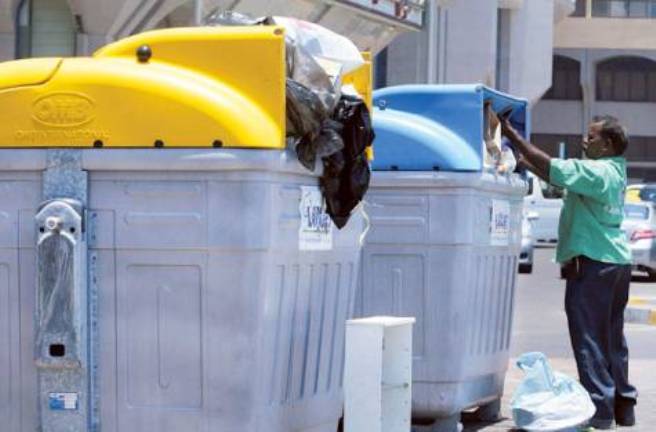
Image of existing Abu Dhabi trash bins from Gulf News

1 COMMENT

Comments are closed.

TRENDING

Renewables hit 5,149 GW in 2025 as the world edges away from oil shocks and fossil-fueled conflict

“In the midst of uncertain time, renewable energy remains consistent and steadfast in its expansion,” said Francesco La Camera, IRENA’s Director-General. “A more decentralised energy system, with a growing share of renewables and more market players, is structurally more resilient.”

From Pilot Plant to Global Stage: How Aduro Clean Technologies’ 2026 Expansion Signals a Turning Point for Chemical Recycling Investors Like Yazan Al Homsi

The company's Next Generation Process (NGP) Pilot Plant in London, Ontario, has officially moved into initial operating campaigns, generating the kind of structured, repeatable data that separates laboratory promise from commercial viability.

BM Studios is designing systems, not just buildings in the UAE

Balsam Madi is an architect and systems thinker whose work bridges culture, sustainability, and design intelligence across the Middle East and Europe.

Urban miner Sortera raises $45 million USD to pull aluminum from the scrap pile

Sortera Technologies, founded in 2020 by Nalin Kumar and Manuel Garcia, is emerging as a major U.S. circular-industry player. Led by CEO Michael Siemer, the company uses AI and advanced sensors to turn scrap metal into high-value aluminum alloys. Its new ~$45 million funding round signals investor appetite for industrial decarbonisation—where emissions cuts come not from PR-friendly solar installs, but from upgrading the materials that power EVs, solar frames, and construction.

Waste Reform from the Ground Up: How Trash Balers Are Helping Cities Rethink Sustainability

If you’ve ever watched a recycling truck weaving through city streets, you’ve seen the problem firsthand. Most of what we call “recycling” still depends on long-distance transportation and centralized sorting facilities. Those systems are energy-intensive and prone to contamination — the dreaded mix of wet food, plastic wrap, and paper that renders recyclables useless.

Nobul’s Regan McGee on Shareholder Value: “Complacency Is the Silent Killer” 

Why the governance framework designed to protect shareholders so...

Should You Invest in the Private Market?

startustartup Unlike public stock exchanges, which offer daily trading, strict...

How to build a 100-year-company

Kongō Gumi is a Japanese construction company, purportedly founded in 578 A.D., making it the world's oldest documented company. What can we learn about building sustainable businesses from them?

From Pilot Plant to Global Stage: How Aduro Clean Technologies’ 2026 Expansion Signals a Turning Point for Chemical Recycling Investors Like Yazan Al Homsi

The company's Next Generation Process (NGP) Pilot Plant in London, Ontario, has officially moved into initial operating campaigns, generating the kind of structured, repeatable data that separates laboratory promise from commercial viability.

How AI Helps SaaS Companies Reduce Repetitive Customer Support Work

SaaS products are designed for large numbers of users with different levels of experience, and also in renewable energy.

Pulling Water from the Air

Faced with water shortage in Amman, Laurie digs up...

Turning Your Energy Consultancy into an LLC: 4 Legal Steps for Founders in Texas

If you are starting a renewable energy business in Texas, learn how to start an LLC by the books.

Tracking the Impacts of a Hydroelectric Dam Along the Tigris River

For the next two months, I'll be taking a break from my usual Green Prophet posts to report on a transnational environmental issue: the Ilısu Dam currently under construction in Turkey, and the ways it will transform life along the Tigris River.

Related Articles

Popular Categories