It’s Earth Day, which means you will see at least 100 stories in your Facebook and Twitter feeds that will list the many ways that you can become a better earthly citizen. And most of them are valid. Yet I yearned to find a more meaningful way to honor the day, so this year I have collected 13 of my favorite photographs that depict the miracle that is our planet and every living organism on it.
With my trusted camera by my side, I have explored many reaches of the earth – from the deserts of Egypt to the cobbled streets of Ghent in Belgium, from an island in Kenya to the rolling hills of Virginia, and though I’ve barely scraped the surface and there are many photographers more skilled than I, my travels have challenged me to simplify my life, eat healthy food, drive less, and be a more loving, grounded person.
It is my deepest hope that these 13 images will stir your soul so that you too will be inspired to protect our remaining resources – today and every other day of the year.
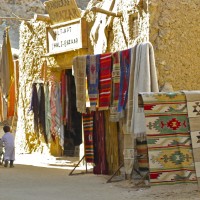
Siwa Oasis in Egypt ranks very high on my list of favorite far-flung places. Located very close to the border with Libya, it is remote, which is why it has retained so much of its authentic character. Here a little boy plays on his bicycle.
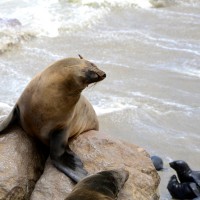
I’m anthropomorphizing, but I love how this seal at Seal Cross Colony in Namibia carries itself – so coy, like a bashful girl. The babies in the lower right corner were probably bludgeoned to death just months after this photo was taken. We can thank women who buy fur coats for that.
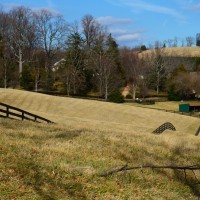
My parents live in Orange, Virginia, not so far from the estate of James Madison, the fourth president of the United States. Here certain families still own large tracts of land, which they sometimes farm.
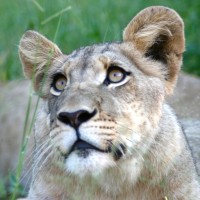
I went with my parents on a lion walk at a sanctuary in Limpopo Province, South Africa, and took about 50 photographs of this exquisite animal. Lion numbers have plummeted in the last few decades due to hunting, poaching and habitat destruction.
The earth’s bounty is endless, even though our species is so intent on altering and destroying it. These organic lemons, limes and oranges provide much needed vitamin C. And they are perfect, no?
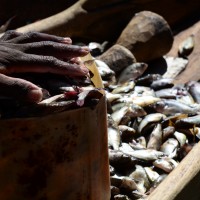
Two men were fishing for these tiny sardine-like fish in Lake Jibe, Tsavo National Park, Kenya. We paid about one dollar for a whole bucket of them. Unlike some parts of Kenya that have been over exploited, this lake is relatively unknown.
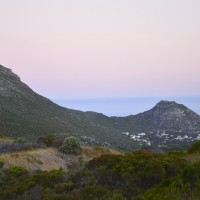
Sunset on the Cape Peninsula, not terribly far from Cape Town. One of the most beautiful cities on earth, it’s home to all kinds of wonderful, nature-loving souls.
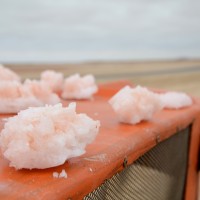
After visiting a seal colony in Namibia, I saw these beautiful crystals on the side of the road. There was not a man or woman in sight for miles, but I had the distinct feeling that if I picked one up and started to put it in my bag, someone would have appeared out of nowhere.
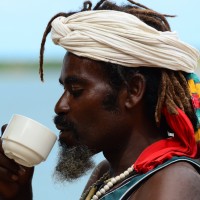
Omar is a Swahili man from Lamu, a special island off the coast of Kenya. Image by Tafline Laylin for Green Prophet.
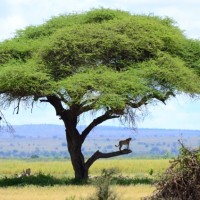
Amboseli National Park in Kenya is a magical place. Here a cheetah stands on a branch eyeing a nearby wildebeest herd. She is hunting and the babies are easy prey.
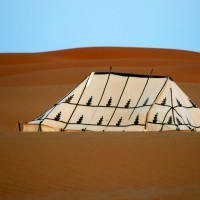
A Berber tent in Morocco
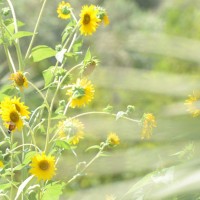
Everybody has seen pretty pictures of sunflowers and butterflies, but they never get old. This was taken in a field in Siwa. I like to start walking in a direction without knowing where I’m heading. And then, when I look up, I realize that I’ve stumbled onto something great. These are always the most meaningful moments of my travels.
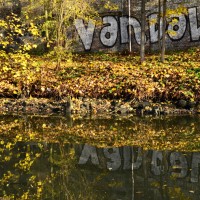
I can’t think of a better way to close this Earth Day series. Sometimes I think maybe humans are the greatest vandals the planet has ever seen, though I know we are capable of much goodness too. This Autumnal scene marked the end of a visit to Belgium last year.
As a tour leader who led “eco-friendly” camping trips throughout North America, Tafline soon realized that she was instead leaving behind a trail of gas fumes, plastic bottles and Pringles. In fact, wherever she traveled – whether it was Viet Nam or South Africa or England – it became clear how inefficiently the mandate to re-think our consumer culture is reaching the general public.
Born in Iran, raised in South Africa and the United States, she currently splits her time between Africa and the Middle East.
Tafline can be reached at tafline (at) greenprophet (dot) com.
Jewish Climate Trust has quickly attracted the attention and support of some of the most influential voices in Jewish philanthropy, drawing backing from prominent family foundations and business leaders connected to the Bronfman and Schusterman philanthropic networks, alongside climate-focused investors and community builders aligned with founding leader Nigel Savage. Together, these donors have committed many millions of dollars to build a serious, long-term climate platform for the Jewish world — not as a symbolic gesture, but as a strategic intervention in one of the defining challenges of this generation.
An eco-friendly playground goes a long way toward saving the city money. This is obviously also true for schools and churches that want to create new play spaces for the kids. The equipment can come in at a lower cost because the materials have been repurposed.
Looking forward, “Nature Heals” does not plan to stop its work after the war is over. It plans only to expand and become a mainstay in eco-therapy. The program provides a compelling blueprint for trauma response and underscores the profound impact that eco-therapy can have on an individual. The goal SPNI set for itself is to engage over 700 students from the West Negev to Northern Israel at no cost.
Kongō Gumi is a Japanese construction company, purportedly founded in 578 A.D., making it the world's oldest documented company. What can we learn about building sustainable businesses from them?
The company's Next Generation Process (NGP) Pilot Plant in London, Ontario, has officially moved into initial operating campaigns, generating the kind of structured, repeatable data that separates laboratory promise from commercial viability.
For the next two months, I'll be taking a break from my usual Green Prophet posts to report on a transnational environmental issue: the Ilısu Dam currently under construction in Turkey, and the ways it will transform life along the Tigris River.
Get your SMB up and running fast with these 6 payment processors. Compare the quickest onboarding options to start accepting customer payments without delay.


 It’s Earth Day, which means you will see at least 100 stories in your Facebook and Twitter feeds that will list the many ways that you can become a better earthly citizen. And most of them are valid. Yet I yearned to find a more meaningful way to honor the day, so this year I have collected 13 of my favorite photographs that depict the miracle that is our planet and every living organism on it.