Chaim Weizmann’s Fermentation Invention Used for Biofuel Production in USA

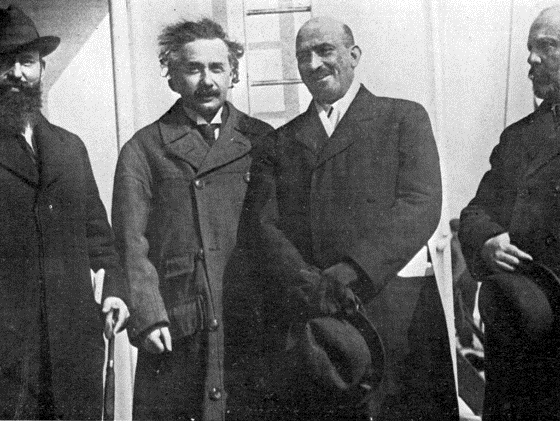
Albert Einstein With Chaim Weizmann photo 1921A century-old fermentation process to transform plant material into a propellant, could eventually replace gasoline.

In 1914, thirty-five years before Chaim Weizmann (pictured center beside Einstein) would become Israel’s first president, he discovered a fermentation process for harnessing bacteria to produce large quantities of useful chemicals. For this discovery, Weizmann was called the father of industrial fermentation. The bacterium Clostridium acetobutylicum was named the Weizmann organism, giving him a taste of fame long before his Israeli political career. His process of Acetone Butanol Ethanol (ABE) fermentation helped produce explosives for World War I and now a team of chemical engineers at UC Berkley are close to perfecting his process for the efficient production of biofuels.

Weizmann’s ABE process was initially used to produce acetone which was used in the World War I explosive cordite. Like Alfred Nobel and Albert Einstein, Chaim Weizmann might have wondered about the moral implications of inventing something which would be used as a tool of war.

But Weizmann once said,

“I trust and feel sure in my heart that science will bring to this land both peace and a renewal of its youth, creating here the springs of a new spiritual and material life. […] I speak of both science for its own sake and science as a means to an end.”

Related: visit the Clore Science Garden in the Weizmann Institute of Science
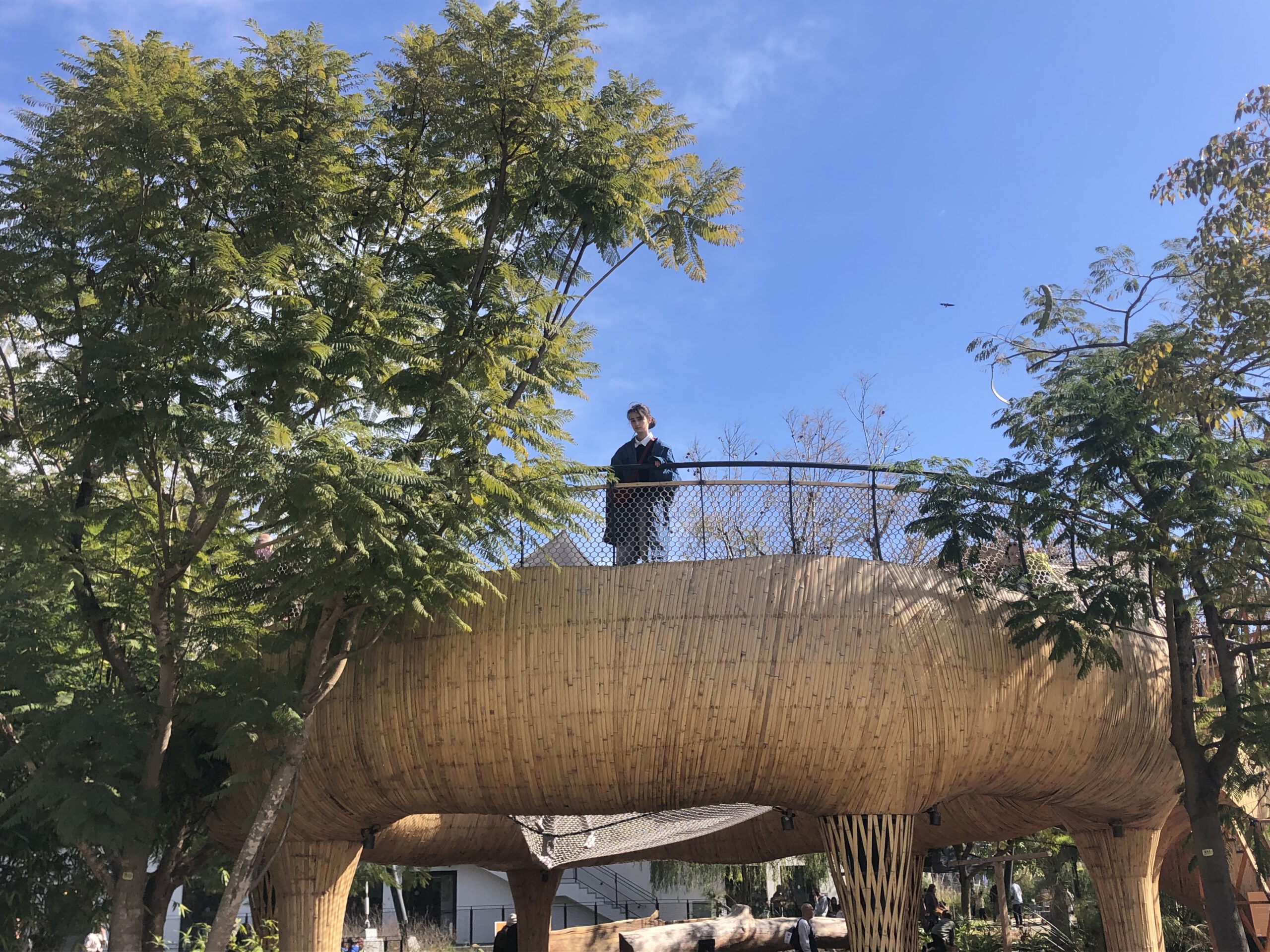
A science park to teach kids about sustainability in the Weizmann Institute.

Dean Toste, Harvey Blanche and Douglas Clark are well on their way towards fulfilling Weizmann’s dream. Harvey Blanche explained that their variation on Weizmann’s fermentation process could efficiently convert corn, eucalyptus, sugar cane, grass and other fast-growing plants and trees into the ACE mixture. Then a catalyst developed by Dean Toste converts this mixture into a high-energy biofuel. Their results are published in Nature.

“You can take a wide variety of sugar sources – from corn, sugar cane, molasses to woody biomass or plant biomass – and turn it into a diesel product using this fermentation process,” said Harvey Blanch in an SFGate article, adding that about 90 percent of the raw material remains in the finished product, reducing the loss of carbon. “Grasses are also a possible source. Eucalyptus could also be used. Anything that’s fast-growing.”

California is expected to be the first niche market to use this new biofuel, although it would likely take about ten years to go to market.


Brian Nitz
Brian Nitzhttp://www.greenprophet.com
Brian remembers when a single tear dredged up a nation's guilt. The tear belonged to an Italian-American actor known as Iron-Eyes Cody, the guilt was displaced from centuries of Native American mistreatment and redirected into a new environmental awareness. A 10-year-old Brian wondered, 'What are they... No, what are we doing to this country?' From a family of engineers, farmers and tinkerers Brian's father was a physics teacher. He remembers the day his father drove up to watch a coal power plant's new scrubbers turn smoke from dirty grey-back to steamy white. Surely technology would solve every problem. But then he noticed that breathing was difficult when the wind blew a certain way. While sailing, he often saw a yellow-brown line on the horizon. The stars were beginning to disappear. Gas mileage peaked when Reagan was still president. Solar panels installed in the 1970s were torn from roofs as they were no longer cost-effective to maintain. Racism, public policy and low oil prices transformed suburban life and cities began to sprawl out and absorb farmland. Brian only began to understand the root causes of "doughnut cities" when he moved to Ireland in 2001 and watched history repeat itself. Brian doesn't think environmentalism is 'rocket science', but understanding how to apply it within a society requires wisdom and education. In his travels through Europe, North America, Asia and the Middle East, Brian has learned that great ideas come from everywhere and that sharing mistakes is just as important as sharing ideas.
1 COMMENT

LEAVE A REPLY

Please enter your comment!
Please enter your name here

TRENDING

Astro uses AI to help procure land for renewable energy

For oil-rich, environmentally vigilant Gulf states, Astro isn’t just another startup story. It is a blueprint for accelerating an energy transition that is now existential, not optional.

Rent a living Christmas tree in California

You can go to a site or go online, order the tree and pick it up or if if possible have it delivered. A live tree doesn't shed needles after a few weeks and it's obviously the ecological choice to cutting down millions of 7 to 15 year old trees every year.

Inflatable concrete homes: a California and Ontario case study

Across Ontario and California, builders are rethinking concrete housing through inflatable-shell design—an approach that replaces wooden formwork with air and innovation. A 1,000-square-foot low-carbon concrete shell, insulated with hempcrete, can be erected in a day and cost far less than conventional construction. Over time, the savings in energy, materials, and mortgage costs make this model a realistic response to rising living expenses and climate stress. With low-carbon cement, hempcrete walls, and renewable energy, inflatable concrete homes show how even the world’s most carbon-heavy material can become part of a sustainable future—if built smartly, and within local building codes.

Rewilding the Suburb: Lagoon Valley’s Profound Plan for Conservation Community in California–– An Interview with Developer Curt Johansen

Lagoon Valley developers have set aside a remarkable 85% of its total land for open space, trails, and protected habitats—a rare move in an era of unchecked development. This isn’t just a nod to green space; it’s a full embrace of a conservation community model, where nature isn’t a backdrop but a partner.

SpaceX and SETI Partner to Protect Alien-Hunting Telescopes—But What About the Rest of the Sky?

SpaceX has taken steps to address concerns, including darker satellite coatings and directional signal shielding. But critics argue that without enforceable global standards, voluntary measures may not go far enough. Meanwhile, scientists at SETI and other institutions continue developing tools to protect the last wild frontier: the cosmic spectrum.

Qatar’s climate hypocrisy rides the London Underground

Qatar remains a master of doublethink—burning gas by the megaton while selling “sustainability” to a world desperate for clean air. Wake up from your slumber people.

How Quality of Hire Shapes Modern Recruitment

A 2024 survey by Deloitte found that 76% of talent leaders now consider long-term retention and workforce contribution among their most important hiring success metrics—far surpassing time-to-fill or cost-per-hire. As the expectations for new hires deepen, companies must also confront the inherent challenges in redefining and accurately measuring hiring quality.

8 Team-Building Exercises to Start the Week Off 

Team building to change the world! The best renewable energy companies are ones that function.

Thank you, LinkedIn — and what your Jobs on the Rise report means for sustainable careers

While “green jobs” aren’t always labeled as such, many of the fastest-growing roles are directly enabling the energy transition, climate resilience, and lower-carbon systems: Number one on their list is Artificial Intelligence engineers. But what does that mean? Vibe coding Claude? 

Somali pirates steal oil tankers

The pirates often stage their heists out of Somalia, a lawless country, with a weak central government that is grappling with a violent Islamist insurgency. Using speedboats that swarm the targets, the machine-gun-toting pirates take control of merchant ships and then hold the vessels, crew and cargo for ransom.

Leopoldo Alejandro Betancourt López Turned Ocean Plastic Into Profitable Sunglasses

Few fashion accessories carry the environmental burden of sunglasses. Most frames are constructed from petroleum-based plastics and acrylic polymers that linger in landfills for centuries, shedding microplastics into soil and waterways long after they've been discarded. Leopoldo Alejandro Betancourt López, president of the Spanish eyewear brand Hawkers, saw this problem differently than most industry executives.

Why Dr. Tony Jacob Sees Texas Business Egos as Warning Signs

Everything's bigger in Texas. Except business egos.  Dr. Tony Jacob figured...

Israel and America Sign Renewable Energy Cooperation Deal

Other announcements made at the conference include the Timna Renewable Energy Park, which will be a center for R&D, and the AORA Solar Thermal Module at Kibbutz Samar, the world's first commercial hybrid solar gas-turbine power plant that is already nearing completion. Solel Solar Systems announced it was beginning construction of a 50 MW solar field in Lebrija, Spain, and Brightsource Energy made a pre-conference announcement that it had inked the world's largest solar deal to date with Southern California Edison (SCE).

Related Articles

Popular Categories