


 A few months ago together with three enthusiastic family kids I started a gardening experiment: growing fruits out of the seeds we collected from fruits we ate, just planting it in the backyard.
We used tomato, watermelon and melon seeds, the kids even made signs for each. Though all seeds sprouted, the watermelon seedling was first to die on us, followed surprisingly by the tomato, which managed to flower and grow one small fruit but stopped developing and died soon after.
The biggest success belongs to the melon, it kept growing and fast, flowering yellow and even bearing several fruits – one of the flowers which was pollinated by bees kept growing into this strange looking fruit.
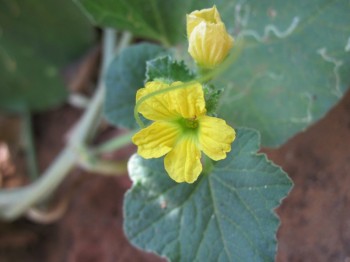
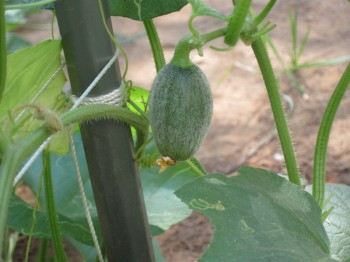
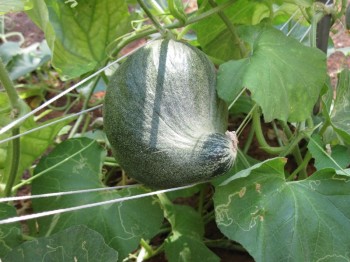
The important part of the process is teaching kids via hand-on experience, starting from the basics of using food we eat to try produce new plants rendering the “leftovers” as valuable material instead of “garbage”, through the dedication that goes into growing things, including not getting the desired result but keep working at it nevertheless, the importance of bees and other insects and of course the agriculture process itself as opposed to fruits originate from the supermarket.
The ongoing fruit experiment brought the wish to grow more useful plants which led to the adjacent herb patch also attended to by the kids and adults. The herbs were purchased at a local nursery and this time the soil was also enriched with compost and humus to allow better results – and indeed so far it is growing nicely.

The next probable step is spacing between rows of herbs, and following a request of one 9 years old kid, build a small improvised ‘greenhouse’ for the cooler season as Autumn and Winter approaching.
As most people live in cities, I’d like to stress you do not need a large area or a back yard – this can be done just as well using a big container placed on your balcony (or try the GreenBo planters), and if you would like to add an even bigger advantage to the whole project, create a garden with your neighbours contributing to a better community and sustainable living.
The obvious benefits worth a lot more than a pack of parsley and basil!
This post is brought to you by Aya Tager, of AyaKaya Sustainable Design


It depends on how much time you’re willing to give a balcony garden. I grow some flowers, but mostly herbs on my balcony: basil, thyme, za’atar,sage, mint, lemon grass, chives, lavender, rosemary. A few onions just for the fun of it, sweet potatoes and white potatoes in discarded plastic sinks. Some chilis from seeds I picked out of dried purchased ones. Also a mulberry bush that grew spontaneously, no idea where the seed came from. There are also, in season, edible weeds: chickweed and purslane. I get a few dandelion flowers from seed I brought from Canada, but they obviously struggle in our climate. I stay on top of airborne diseases and ant infestations, water and cultivate the soil regularly, and that’s about it. It’s rewarding enough for me. Reminds me – I’d better get some cilantro seeds for spring.
Hi Maurice,
Thanks a lot for your comment, it is indeed important to have enough sun light (we have plenty in Israel…) and containers that will allow roots to spread. In apartment buildings I would try recruiting other tenants and designate a small patch to garden together.
An important tip regarding herbs:
in most cases flowers must be pruned as soon as they blossom – other wise the herb will die!
it’s a typical case of “don’t follow your instincts” 🙂 we conclude flowers indicate a thriving plant but for the herb it is “the beginning of the end”.
Hi Aya,
I also tried growing tomatoes,cherry organic ones, on my balcony and on a window sill. So far, after more than 3 months, I am just getting a few fruit and have come to the conclusion that unless there is enough sunlight(6-8 hours per day) and space for the roots to spread (very important), balconies are best suited for herbs and flowers. Also tried herbs like mint, oregano, basil, thyme and sage. The mint and sage died after a short time, and the best suited have been basil and a species of lemmon leaf plant that is good in teas, etc.
I’ve come to conclusion that unless one has an actual piece of ground, it’s better to get this produce in the supermarket or shuk.